


Caffeine Sensitivity – How It Impacts HYROX Women
Struggling with restless energy, racing heart, or sleep troubles after your usual pre-workout coffee? For many HYROX women aiming to fine-tune performance, understanding why the same caffeine dose can fuel one athlete yet overwhelm another is key. Genetics, age, and even day-to-day health influence how your body handles caffeine sensitivity, directly impacting training results. Unpacking these responses helps you make smarter supplement choices and avoid unwanted setbacks during high-intensity sessions.
Table of Contents
- Caffeine Sensitivity Defined for HYROX Athletes
- Types of Sensitivity and Genetic Differences
- Common Signs and Symptoms in Sport
- How Caffeine Influences HYROX Performance
- Risks, Misconceptions, and Safer Supplement Use
- Optimising Pre-Workout Choices for Sensitive Women
Key Takeaways
| Point | Details |
|---|---|
| Caffeine Sensitivity Varies by Individual | Women athletes often experience heightened sensitivity due to genetic and hormonal factors, necessitating a personal caffeine approach. |
| Genetic Influences on Metabolism | Key genetic variants such as CYP1A2 and ADORA2A determine caffeine metabolism speed, affecting tolerance and performance. |
| Common Symptoms of Sensitivity | Symptoms like increased heart rate and anxiety can impair training effectiveness, requiring careful management and monitoring. |
| Tailored Pre-Workout Strategies | Personalised pre-workout caffeine plans, considering individual reactions and timing, can enhance performance while minimising adverse effects. |
Caffeine Sensitivity Defined for HYROX Athletes
Caffeine sensitivity represents a complex physiological response that dramatically impacts how HYROX women experience and metabolise caffeine during high-intensity training. Unlike standard caffeine consumption, athletic sensitivity involves nuanced interactions between genetic factors, metabolic processes, and individual physiological responses.
At its core, caffeine sensitivity occurs when an individual experiences adverse reactions to caffeine even at relatively low doses. Coffee component interactions reveal that sensitivity extends beyond just caffeine, involving multiple biochemical compounds like chlorogenic acids and quinic acid. For HYROX athletes, these interactions can significantly impact performance and recovery.
Key characteristics of caffeine sensitivity include:
- Heightened physiological responses to minimal caffeine intake
- Genetic variations in metabolic enzyme production
- Potential side effects like increased heart rate and anxiety
- Variability in individual tolerance levels
Women participating in HYROX competitions often experience caffeine sensitivity more acutely due to hormonal fluctuations and individual metabolic differences. These variations mean that a standardised caffeine approach simply doesn’t work for every athlete. Understanding personal sensitivity becomes crucial for optimising performance and managing potential negative reactions.
Pro tip: Track your individual caffeine response by maintaining a detailed journal documenting dosage, timing, and physiological reactions during training sessions.
Types of Sensitivity and Genetic Differences
Genetic variations play a crucial role in determining how HYROX women metabolise and respond to caffeine during high-intensity training. Understanding these differences becomes fundamental for optimising individual performance and managing potential adverse reactions.
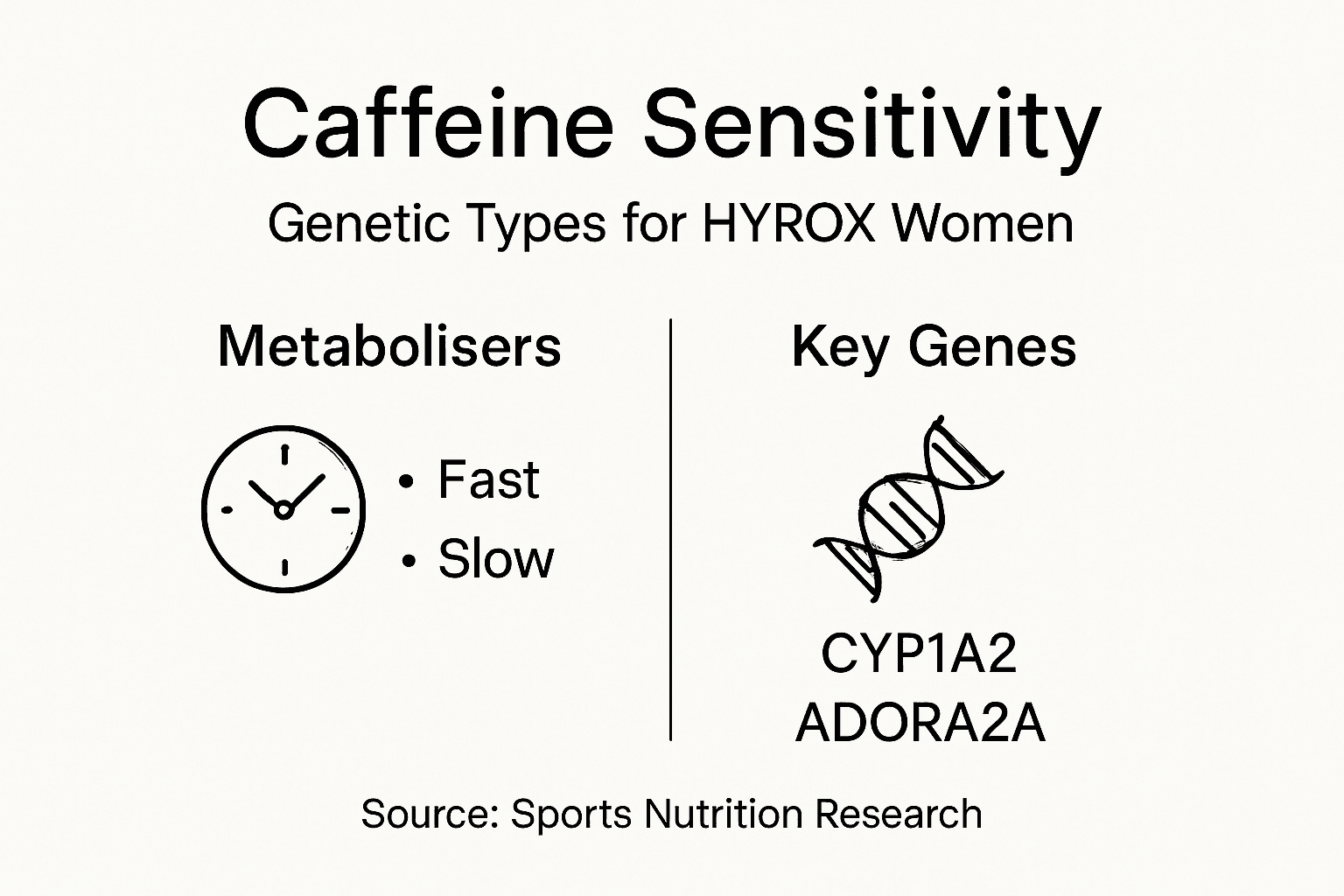
Genetic enzyme variations fundamentally impact caffeine metabolism, categorising individuals into distinct metabolic profiles. The primary genetic markers responsible for these differences include the CYP1A2 and ADORA2A genes, which directly influence how quickly caffeine is processed in the body.
Caffeine metabolizer categories typically include:
- Fast metabolizers: Quickly process caffeine with minimal side effects
- Slow metabolizers: Experience prolonged caffeine effects and higher sensitivity
- High sensitivity individuals: Prone to significant physiological responses
- Low sensitivity individuals: Require higher caffeine doses for performance enhancement
These genetic differences explain why some HYROX athletes can consume multiple caffeine sources without issue, while others experience significant adverse reactions even at minimal intake levels. Metabolic enzyme activity demonstrates that slow metabolizers have a heightened risk of experiencing caffeine-related side effects such as increased anxiety, disrupted sleep patterns, and elevated heart rates.
To help HYROX athletes personalise their caffeine strategy, here is a summary of genetic caffeine metaboliser categories and their typical athletic implications:
| Metaboliser Category | Key Genetic Factor | Typical Response to Caffeine | Athletic Considerations |
|---|---|---|---|
| Fast Metaboliser | CYP1A2 variant | Rapid processing, minimal effects | May benefit from moderate intake |
| Slow Metaboliser | CYP1A2 variant | Prolonged effects, higher sensitivity | Lower intake advised to avoid side effects |
| High Sensitivity | ADORA2A variant | Intense physiological response | Often requires strict caffeine management |
| Low Sensitivity | CYP1A2 & ADORA2A | Minimal response, higher dose needed | Monitor for cumulative impacts |
Pro tip: Consider genetic testing to understand your specific caffeine metaboliser profile and tailor your supplement strategy accordingly.
Common Signs and Symptoms in Sport
Caffeine sensitivity can significantly disrupt a HYROX athlete’s performance, presenting a complex array of physiological and psychological challenges that extend far beyond simple discomfort. Understanding these symptoms becomes crucial for managing training and competition effectively.

Caffeine intolerance symptoms manifest uniquely in athletic contexts, creating potential barriers to peak performance. The most common physiological responses include rapid heart rate, intense nervous system stimulation, and unexpected metabolic reactions that can compromise an athlete’s strategic approach to training.
Key symptoms experienced by HYROX women include:
- Pronounced jitteriness and restlessness
- Unexplained anxiety and heightened stress responses
- Digestive discomfort and potential gastrointestinal disruption
- Elevated heart rate beyond normal training parameters
- Insomnia or significant sleep pattern disruptions
- Reduced concentration and mental clarity
Nervous system responses demonstrate that these symptoms can persist for several hours, potentially impacting multiple training sessions or competition preparation. For HYROX athletes, these reactions mean more than temporary discomfort – they represent potential performance limitations that require strategic management and personalised nutritional approaches.
Pro tip: Maintain a detailed symptom journal tracking caffeine intake, dosage, and corresponding physiological responses to identify your unique sensitivity profile.
How Caffeine Influences HYROX Performance
Caffeine represents a complex performance enhancer for HYROX women, offering nuanced physiological benefits that extend far beyond simple stimulation. Understanding its precise mechanism of action becomes critical for athletes seeking to optimise their competitive edge while managing potential sensitivity challenges.
Stimulatory effects on athletic performance demonstrate how caffeine fundamentally interacts with the body’s neurological systems. By blocking adenosine receptors, it creates a unique biochemical response that increases alertness, enhances motor performance, and potentially improves sustained attention during high-intensity training.
Key performance influences include:
- Enhanced cognitive processing and mental clarity
- Increased muscular endurance and reduced perceived exertion
- Improved reaction times and motor skill coordination
- Potential reduction in muscle pain during intense exercise
- Elevated metabolic rate and potential fat oxidation
- Heightened overall training capacity and mental resilience
Cognitive and motor function research reveals that caffeine’s impact is not uniform across all athletes. Individual tolerance levels, genetic predispositions, and habitual consumption significantly modulate its effectiveness. For HYROX women, this means carefully calibrating intake to achieve optimal performance without triggering sensitivity-related complications.
Pro tip: Conduct controlled caffeine trials during training to precisely map your individual performance response and identify your optimal consumption threshold.
Risks, Misconceptions, and Safer Supplement Use
Caffeine supplementation for HYROX women demands a sophisticated understanding that transcends simplistic performance enhancement strategies. Navigating the complex landscape of caffeine consumption requires nuanced awareness of individual physiological responses and potential risks.
Caffeine intolerance mechanisms reveal that sensitivity is far more complex than a standard allergic reaction. It represents a sophisticated interplay of metabolic inefficiencies that can produce varied physiological responses, making blanket supplement recommendations potentially dangerous for athletes.
Common misconceptions about caffeine supplementation include:
- Believing all athletes respond identically to caffeine
- Assuming higher doses equate to better performance
- Ignoring individual genetic metabolic variations
- Overlooking subtle physiological warning signs
- Treating caffeine as a universal performance enhancer
- Disregarding cumulative consumption effects
Supplement safety strategies demonstrate that safer usage involves personalised approaches. This means carefully monitoring individual symptoms, systematically reducing intake when adverse reactions occur, and selecting lower-concentration products tailored to personal tolerance levels.
Below is a comparison of safer supplement strategies and common misconceptions, aiding HYROX women to avoid pitfalls and optimise caffeine use:
| Misconception | Safer Supplement Strategy | Performance Impact |
|---|---|---|
| All athletes need the same dose | Tailor intake to individual genetics | Avoids adverse reactions |
| Higher doses always boost results | Use controlled, gradual intake increases | Supports sustained performance |
| Ignore warning signs | Track symptoms as part of protocol | Promotes long-term health |
Pro tip: Implement a structured caffeine tracking protocol that documents precise intake, physiological responses, and performance metrics to develop your personalised supplementation strategy.
Optimising Pre-Workout Choices for Sensitive Women
Pre-workout strategies for HYROX women with caffeine sensitivity demand a sophisticated, personalised approach that prioritises individual physiological responses over generic supplementation guidelines. Understanding how to navigate caffeine consumption becomes crucial for maintaining peak performance while minimising potential adverse reactions.
Age-related caffeine sensitivity reveals that hormonal fluctuations and metabolic changes significantly impact how women experience caffeine during high-intensity training. This dynamic landscape requires adaptive strategies that evolve with individual physiological shifts.
Strategic pre-workout caffeine management includes:
- Reducing overall caffeine dosage
- Experimenting with timing of consumption
- Integrating alternative energy sources
- Combining caffeine with food to mitigate side effects
- Monitoring individual physiological responses
- Selecting low-caffeine or decaffeinated alternatives
Personalised caffeine consumption strategies demonstrate that sensitive HYROX athletes benefit from methodical testing and incremental adjustments. This approach involves carefully tracking individual tolerance levels, understanding genetic metabolic variations, and creating tailored supplement protocols that support performance without triggering sensitivity-related complications.
Pro tip: Conduct a systematic two-week caffeine sensitivity audit, documenting precise intake, physiological responses, and performance metrics to develop your personalised pre-workout strategy.
Find Your Personalised Caffeine Balance for HYROX Success
Caffeine sensitivity can create unexpected challenges for HYROX women aiming to boost performance without risking adverse effects like jitters, anxiety, or disrupted sleep. If you are navigating genetic variations or heightened physiological responses described in this article, you deserve a pre-workout solution that respects your unique metabolism and tolerance. At Interval, we offer natural ingredient-based supplements designed specifically for high intensity athletes who require balanced energy without sensitivity spikes.
Discover how our carefully crafted pre-workouts and electrolytes support your training goals while honouring your body’s signals. Avoid the common pitfalls of overconsumption or generic caffeine dosing by trying an approach tailored to sensitive athletes like you. Visit Interval today and take control of your caffeine strategy with confidence.
Frequently Asked Questions
What is caffeine sensitivity, and how does it affect HYROX women?
Caffeine sensitivity is a physiological response where individuals experience adverse reactions to caffeine even at low doses. For HYROX women, this can lead to heightened reactions such as increased heart rate and anxiety, impacting their training and performance.
How do genetic differences influence caffeine metabolism in HYROX athletes?
Genetic variations, primarily in the CYP1A2 and ADORA2A genes, affect how quickly caffeine is metabolised. This results in different caffeine metaboliser categories, influencing individual responses and tolerance levels to caffeine during high-intensity training.
What are the common symptoms of caffeine sensitivity in athletes?
Common symptoms include jitteriness, anxiety, digestive discomfort, elevated heart rate, insomnia, and reduced mental clarity. These symptoms can adversely affect an athlete’s performance and require careful management.
How can HYROX women optimise their caffeine intake for better performance?
To optimise caffeine intake, HYROX women should track their individual responses, conduct controlled trials during training, reduce overall dosage if needed, and consider timing of consumption. Personalised strategies are essential for avoiding sensitivity-related complications while enhancing performance.