


Why Supplement Magnesium for Hyrox Athletes
What happens when every rep feels harder and muscle cramps interrupt your Hyrox training? For many active women in the United Kingdom, keeping up with high-intensity sessions means finding smarter solutions for muscle recovery and energy. Magnesium supports over 300 vital chemical processes in the body, playing an essential part in muscle function, nerve health and overall performance. Discover how natural magnesium supplementation can help you train stronger and recover faster as a dedicated female athlete.
Table of Contents
- Magnesium Basics: Role In The Human Body
- How Magnesium Impacts Female Hyrox Athletes
- Types Of Magnesium Supplementation Explained
- Recognising Deficiency And Associated Symptoms
- Risks, Interactions, And Proper Dosage
- Comparing Magnesium With Other Electrolytes
Key Takeaways
| Point | Details |
|---|---|
| Role of Magnesium | Magnesium is essential for over 300 biochemical processes, supporting muscle function, energy metabolism, and bone health. |
| Importance for Athletes | For Hyrox athletes, adequate magnesium is crucial for muscle recovery, nerve signal transmission, and preventing cramps during intense training. |
| Female Athletes | Female Hyrox athletes must consider hormonal fluctuations that increase magnesium needs for performance and recovery, especially during menstrual cycles. |
| Supplement Types | Athletes should opt for highly absorbable forms of magnesium, such as magnesium citrate or glycinate, to maximise nutritional benefits. |
Magnesium Basics: Role in the Human Body
Magnesium is a fundamental mineral essential for maintaining optimal physiological functioning across multiple body systems. More than 300 critical biochemical processes rely on this remarkable nutrient, making it a cornerstone of human health and performance for athletes and everyday individuals alike.
This crucial mineral plays a pivotal role in numerous bodily functions, including muscle and nerve coordination, energy metabolism, and cellular protection. From supporting bone density to regulating blood pressure and blood sugar levels, magnesium acts as a silent but powerful contributor to our overall wellbeing. Recommended daily intakes vary by individual factors, highlighting the importance of understanding personal nutritional requirements.
For Hyrox athletes specifically, magnesium becomes even more critical. High-intensity training places significant metabolic demands on muscle tissues, making proper magnesium levels crucial for preventing cramps, supporting muscle recovery, and maintaining optimal nerve signal transmission. Athletes require consistent magnesium intake to support intense physical exertion, ensuring muscles contract efficiently and recover rapidly between challenging workout segments.
Pro tip: Consider tracking your daily magnesium intake through a detailed nutrition diary, focusing on whole food sources like spinach, almonds, and whole grains to naturally boost your mineral levels.
How Magnesium Impacts Female Hyrox Athletes
Female Hyrox athletes face unique physiological challenges that make magnesium an exceptionally crucial nutrient for performance and recovery. Hormonal fluctuations impact nutritional requirements in ways that directly influence energy metabolism, muscle function, and overall athletic resilience.
During intense training cycles, magnesium becomes instrumental in supporting muscle contraction, reducing inflammation, and maintaining electrolyte balance. Critical muscle and energy processes depend on optimal magnesium levels, which can help female athletes manage the metabolic stress of high-intensity workouts like Hyrox competitions. Particularly during menstrual phases, when hormonal changes can impact energy availability and nutrient absorption, maintaining consistent magnesium intake becomes even more strategic.
The female body’s unique biochemical landscape means that magnesium supplementation isn’t just about performance—it’s about holistic physiological support. From regulating muscle relaxation to supporting bone density and potentially mitigating menstrual-related discomfort, magnesium serves as a multifaceted nutritional ally for women engaged in demanding athletic pursuits. Understanding these nuanced interactions can help female Hyrox athletes develop more targeted nutrition strategies.
Pro tip: Track your magnesium intake across different phases of your menstrual cycle, adjusting supplementation to support your body’s changing nutritional demands during high-intensity training periods.
Types of Magnesium Supplementation Explained
Hyrox athletes seeking optimal performance must understand the nuanced world of magnesium supplementation, which offers multiple forms tailored to different physiological needs. Magnesium supplements vary significantly in absorption and efficacy, with each type presenting unique characteristics that can impact athletic performance and recovery.
The primary magnesium supplement varieties include organic and inorganic forms, each with distinct bioavailability profiles. Organic magnesium salts like magnesium citrate, aspartate, and lactate demonstrate superior absorption rates compared to inorganic options such as magnesium oxide. Female Hyrox athletes should prioritise forms that offer rapid cellular uptake and minimal digestive disruption, making magnesium citrate and magnesium glycinate particularly appealing for their gentle metabolic integration and quick nutrient delivery.
Specialised magnesium supplements also serve specific athletic requirements. Magnesium malate, for instance, combines magnesium with malic acid and can be especially beneficial for athletes experiencing muscle fatigue, while magnesium chloride offers excellent cellular absorption and potential anti-inflammatory properties. Understanding these subtle distinctions allows athletes to select supplements that align precisely with their individual metabolic demands and training intensities.
Here’s a summary of common magnesium supplement forms and their key characteristics:
| Supplement Type | Absorption Rate | Main Benefits | Typical Consideration |
|---|---|---|---|
| Magnesium citrate | High | Rapid uptake, gentle on digestion | Favoured for general supplementation |
| Magnesium glycinate | High | Supports relaxation, minimal GI issues | Useful for sensitive individuals |
| Magnesium malate | Moderate to high | Reduces muscle fatigue, boosts energy | Suited for endurance athletes |
| Magnesium oxide | Low | Laxative effect, low bioavailability | Generally less effective orally |
| Magnesium chloride | High | Promotes cellular absorption, hydration | Good for combating inflammation |
Pro tip: Consult a sports nutritionist to develop a personalised magnesium supplementation strategy that matches your specific Hyrox training phase and individual physiological needs.
Recognising Deficiency and Associated Symptoms
Magnesium deficiency represents a significant challenge for Hyrox athletes, presenting a complex array of symptoms that can dramatically impact performance and overall physiological functioning. Deficiency symptoms encompass multiple bodily systems, ranging from muscular and neurological disruptions to potentially serious cardiovascular implications.
Female Hyrox athletes should be particularly vigilant about recognising subtle deficiency indicators. These may include persistent muscle cramps, unexplained fatigue, irregular heart rhythms, and pronounced weakness during training sessions. Neurological signs such as numbness, tingling sensations, and unexpected headaches can also signal inadequate magnesium levels. Female athletes experiencing hormonal fluctuations might find these symptoms more pronounced, especially during menstrual cycles when mineral balance becomes increasingly critical.

Chronically low magnesium levels pose significant long-term health risks beyond immediate athletic performance. Potential consequences include increased vulnerability to cardiovascular complications, compromised insulin sensitivity, and reduced muscle recovery capacity. For Hyrox athletes committed to maintaining peak physical condition, understanding these nuanced physiological signals becomes paramount. Tracking symptoms, conducting regular blood tests, and maintaining a comprehensive nutritional log can help identify potential magnesium insufficiencies before they escalate into more significant health challenges.
Pro tip: Maintain a detailed symptom and training journal to track potential magnesium deficiency indicators, enabling early intervention and personalised nutritional adjustments.
Risks, Interactions, and Proper Dosage
Magnesium supplementation requires a nuanced approach, particularly for Hyrox athletes seeking optimal performance while minimising potential health risks. Supplement intake demands careful consideration, with recommended daily allowances varying significantly based on individual physiological requirements and training intensities.
The potential interactions between magnesium and other medications represent a critical area of concern for female athletes. Certain pharmaceuticals, including diuretics, proton pump inhibitors, and specific antibiotics, can dramatically alter magnesium absorption and efficacy. Female Hyrox athletes must be particularly vigilant, understanding that hormonal contraceptives, common medications, and intense training regimens can influence mineral metabolism. Typical recommended dosages range between 310-420 mg per day, though individual needs may fluctuate based on training volume, menstrual cycle phases, and overall metabolic demands.
Potential side effects of magnesium supplementation should not be underestimated. Excessive intake can trigger uncomfortable gastrointestinal symptoms such as diarrhoea, nausea, and abdominal cramping. Supplement interactions require professional guidance, particularly for athletes managing complex nutritional and training requirements. Moreover, magnesium can interfere with calcium absorption and potentially impact medication efficacy, underscoring the importance of comprehensive medical consultation.
Pro tip: Consult a sports nutritionist to develop a personalised magnesium supplementation strategy that accounts for your specific training cycle, medical history, and individual metabolic profile.
Comparing Magnesium with Other Electrolytes
Electrolytes play a crucial role in athletic performance, with each mineral contributing unique physiological functions. Electrolytes carry essential electric charges that support nerve signaling, muscle function, and metabolic processes, making them fundamental to Hyrox athletes’ overall performance and recovery.
Magnesium distinguishes itself from other electrolytes through its complex regulatory capabilities. While sodium and potassium primarily drive muscle contraction and nerve impulse transmission, magnesium operates as a more nuanced biochemical coordinator. Multiple electrolyte interactions support athletic performance, with magnesium acting as a critical co-factor in over 300 enzymatic processes. Female Hyrox athletes benefit from understanding that magnesium supports muscle relaxation, helps regulate blood glucose, and plays a more profound metabolic role compared to its electrolyte counterparts.
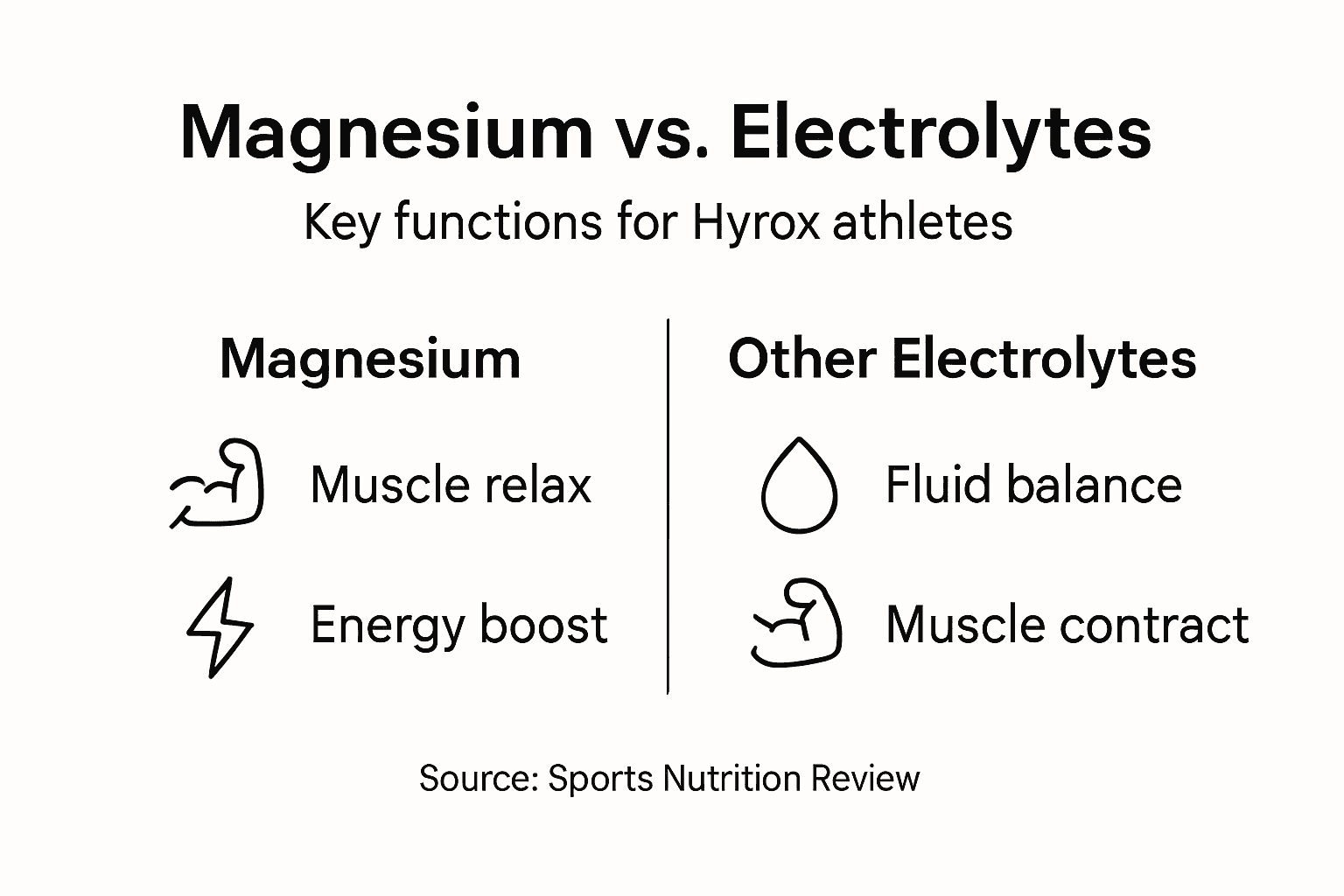
Unlike sodium and calcium which primarily drive muscle contraction, magnesium facilitates muscle relaxation and energy production. This unique characteristic makes it particularly valuable for female athletes managing intense training cycles. The intricate balance between different electrolytes determines not just performance, but also recovery speed, cellular hydration, and overall physiological resilience during high-intensity workouts.
The following table contrasts the primary functions of major electrolytes in sports performance:
| Electrolyte | Primary Athletic Function | Role in Hyrox Training | Key Food Sources |
|---|---|---|---|
| Magnesium | Muscle relaxation, energy | Aids recovery, prevents cramps | Spinach, nuts, grains |
| Sodium | Maintains fluid balance | Prevents dehydration | Table salt, cheese |
| Potassium | Nerve signalling, contraction | Reduces fatigue, muscle power | Bananas, potatoes |
| Calcium | Muscle contraction, bone | Strengthens bones, power moves | Dairy, leafy greens |
Pro tip: Consider tracking your electrolyte intake holistically, recognising that magnesium’s role extends beyond simple muscle function to comprehensive metabolic support.
Boost Your Hyrox Performance with Targeted Magnesium Support
Magnesium deficiency can silently undermine your Hyrox training by causing muscle cramps, fatigue, and slower recovery. If you are striving to maintain optimal muscle function and energy during intense workouts, replenishing magnesium through natural, well-absorbed supplements is essential. The article highlights the importance of tailored magnesium types like citrate and glycinate to match your unique physiological demands especially through hormonal cycles and high-intensity training phases.

Discover a range of electrolyte and pre-workout solutions crafted with natural ingredients designed specifically for athletes like you on UseInterval. Experience the benefits of clean formulations that support muscle relaxation, hydration, and metabolic resilience without harsh additives. Don’t let mineral imbalances hold you back from excelling in your Hyrox goals. Take action now and explore how personalised supplementation can elevate your training and recovery at https://useinterval.co.uk today.
Frequently Asked Questions
What is the role of magnesium for Hyrox athletes?
Magnesium plays a critical role in muscle and nerve coordination, energy metabolism, and cellular protection, which are vital for Hyrox athletes during high-intensity training and recovery.
How can female Hyrox athletes benefit from magnesium supplementation?
Female Hyrox athletes can benefit from magnesium as it helps manage hormonal fluctuations, supports muscle contraction, reduces inflammation, and maintains electrolyte balance, which is essential during intense training cycles.
What are the best types of magnesium supplements for athletes?
The best types of magnesium supplements for athletes include magnesium citrate and magnesium glycinate, as they offer high absorption rates and minimal gastrointestinal disruption, making them effective for meeting the demands of athletic performance.
How can I recognise magnesium deficiency?
Magnesium deficiency can manifest as muscle cramps, fatigue, irregular heart rhythms, and neurological symptoms like numbness or headaches. Female athletes should monitor these signs, especially during training and menstrual phases.
Recommended
- Role of Electrolytes in Heat – Impact on Hyrox Athletes – Interval
- Why Hyrox Athletes Need Electrolytes for Performance – Interval
- Complete Guide to Optimising Electrolyte Intake – Interval
- Why Supplement During Cardio Matters for Hyrox Athletes – Interval
- Modern Basketball Training Methods: Elevate Player Growth – Hoop Mentality