


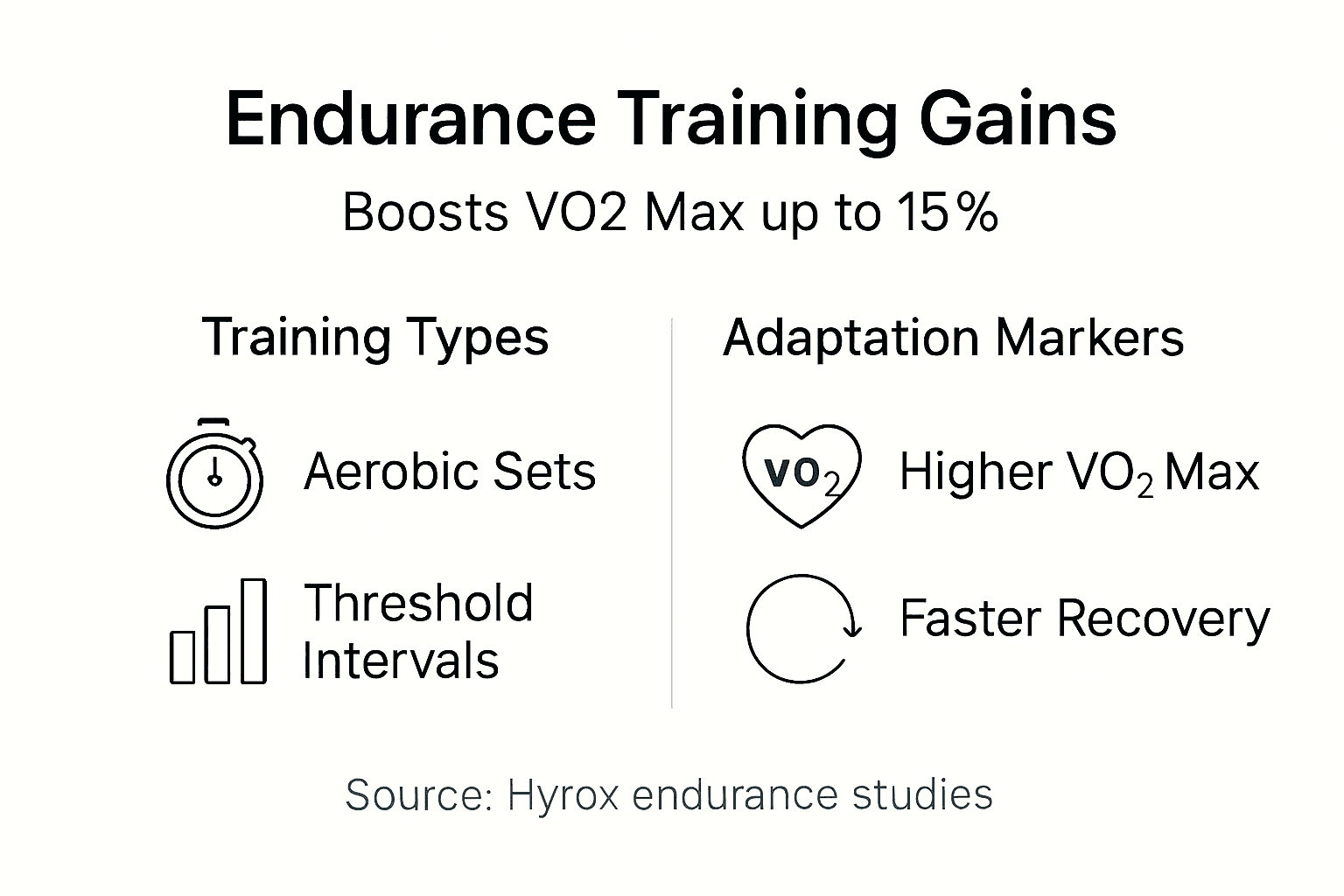
Endurance Training Boosts Hyrox VO2 Max Up to 15%
Many female athletes believe more endurance training automatically improves performance. Yet research shows excessive endurance training without balanced strength and recovery can increase overuse injuries by up to 30%. This guide provides science-based endurance training and natural supplement strategies for female Hyrox athletes aged 30-50 to optimise performance safely.
Table of Contents
- Introduction To Endurance Training
- Physiological Adaptations Triggered By Endurance Training
- Training Protocols Specifically For Hyrox Endurance
- Role Of Natural Supplements In Supporting Endurance Performance
- Common Misconceptions And Risks In Endurance Training
- Measuring And Tracking Endurance Training Progress
- Conclusion: Applying Endurance Training For Hyrox Success
- Optimize Your Hyrox Endurance With Interval’s Natural Supplements
Key Takeaways
| Point | Details |
|---|---|
| Mitochondrial boost | Endurance training improves mitochondrial density by 30-50%, enhancing aerobic energy for Hyrox events. |
| VO2 max gains | Threshold interval training increases VO2 max up to 15% in middle-aged female athletes. |
| Natural supplements work | Beetroot juice and electrolytes enhance endurance by 7-10% through improved blood flow and muscle function. |
| Balance prevents injury | Combining endurance with strength work reduces injury risks linked to excessive training volume. |
| Track your progress | Heart rate variability and lactate threshold tests optimise training adaptations with 80%+ accuracy. |
Introduction to Endurance Training
Endurance training refers to sustained exercise that improves how efficiently your body produces and uses energy over extended periods. For Hyrox competitors, this translates directly into maintaining power output across eight demanding workout stations.
Three types matter most for Hyrox success. Aerobic training builds your baseline capacity to use oxygen for fuel. Threshold training pushes the boundary where your body switches from comfortable aerobic metabolism to harder anaerobic work. Interval training simulates the repeated high intensity bursts you’ll face during competition.
Hyrox events require all three energy systems working together. You need sustained aerobic capacity to recover between stations, threshold power to maintain pace through rowing and running segments, and metabolic stamina to handle sudden demands like sled pushes and wall balls.
These training types prepare different physiological systems:
- Aerobic sessions enhance oxygen delivery and mitochondrial function in muscle cells
- Threshold work trains your body to clear lactate more efficiently at higher intensities
- Interval training improves both anaerobic power and recovery speed between efforts
- Combined training builds the metabolic flexibility to switch fuel sources as intensity varies
Understanding these distinctions lets you structure training that matches actual competition demands rather than simply accumulating mileage.
Physiological Adaptations Triggered by Endurance Training
Your body responds to endurance training through layered adaptations at cellular and system levels. Mitochondrial density increases 30-50% after 6-12 weeks of consistent training. These cellular powerhouses generate aerobic energy, so more mitochondria means greater capacity to sustain effort without fatigue.
Capillarization improves simultaneously. New blood vessels form around muscle fibres, delivering oxygen and nutrients more efficiently while removing waste products faster. This network expansion directly supports longer sustained efforts at higher intensities.

Your metabolism shifts too. Endurance adaptations improve fat oxidation, helping spare glycogen stores and delay fatigue by 30-40%. Since fat provides nearly unlimited fuel compared to limited glycogen, this metabolic flexibility becomes crucial during lengthy Hyrox events.
| Adaptation Type | Timeline | Performance Impact |
|---|---|---|
| Mitochondrial density | 6-12 weeks | 30-50% increase in aerobic capacity |
| Capillarization | 8-16 weeks | Enhanced oxygen delivery and waste removal |
| Fat oxidation | 4-8 weeks | 30-40% delay in glycogen depletion |
| Neuromuscular efficiency | 6-10 weeks | Up to 20% improvement in movement economy |
Neural adaptations improve muscle coordination by up to 20%. Your nervous system learns to recruit muscle fibres more efficiently and coordinate complex movements with less wasted energy. This matters enormously for functional fitness where technique determines power output.
Pro tip: Targeted interval training accelerates these adaptations more efficiently than long slow distance alone. Sessions combining threshold intervals with adequate recovery trigger stronger mitochondrial and metabolic responses in less total training time.
Training Protocols Specifically for Hyrox Endurance
Threshold interval training targets your lactate threshold, the intensity where lactate accumulation begins outpacing clearance. Studies demonstrate 12-15% VO2 max improvements in middle-aged female athletes using this method. These gains come from improved lactate buffering and enhanced aerobic enzyme activity.
Long slow distance training builds base endurance but proves less effective alone for Hyrox demands. While it develops fat oxidation and basic aerobic capacity, it lacks the intensity needed to prepare for competition pace and station transitions.
| Training Method | Primary Benefit | Drawback | Best For |
|---|---|---|---|
| Threshold Intervals | 12-15% VO2 max gains, time efficient | Requires recovery management | Race-specific intensity |
| Long Slow Distance | Builds aerobic base, low injury risk | Less specific to Hyrox demands | Foundation phases |
| Mixed Intensity | Develops multiple energy systems | Needs careful programming | Competition preparation |
A balanced training schedule prevents injury, especially critical for female athletes aged 30-50. Your programme should include:
- Two threshold interval sessions weekly focusing on race pace efforts
- One longer aerobic session for base conditioning
- Two strength training days targeting functional movement patterns
- Adequate recovery between high intensity efforts
- Progressive overload increasing intensity or volume gradually
Periodization prevents plateaus by cycling training focus across mesocycles. Build base fitness, then emphasise threshold development, followed by competition-specific intervals.
Pro tip: Prioritise quality intervals over excessive volume. Three well-executed threshold sets with proper recovery outperform five mediocre sets that accumulate fatigue without adequate stimulus.
Integrating pre-workout strategies and understanding nutrition timing amplifies training adaptations. The importance of electrolytes becomes especially clear during high intensity sessions where sweat losses impact performance.
Role of Natural Supplements in Supporting Endurance Performance
Evidence-based natural supplements amplify endurance gains and recovery when integrated strategically. Beetroot juice improves performance by enhancing nitric oxide availability, with 7-10% improvement in time to exhaustion tests. Nitric oxide dilates blood vessels, improving oxygen delivery to working muscles during sustained efforts.
Tart cherry extract reduces inflammation markers and supports recovery between training sessions. Its anthocyanin compounds combat oxidative stress from high intensity work, helping you maintain training consistency.
Electrolyte supplementation reduces muscle cramps by 35% while supporting muscle function during sweat-heavy events. Sodium, potassium, and magnesium maintain cellular function and nerve signalling crucial for sustained power output.
Timing and dosing influence effectiveness:
- Consume beetroot juice 90-120 minutes before training for peak nitric oxide levels
- Take tart cherry extract daily for cumulative anti-inflammatory effects
- Drink electrolytes during sessions lasting over 60 minutes
- Match electrolyte concentration to individual sweat rates and environmental conditions
Natural supplements offer safe, evidence-backed performance benefits compared to synthetic alternatives. They provide physiological support without artificial stimulants that can disrupt sleep or create dependency.
Exploring natural supplement options and learning how to choose quality products ensures you select effective formulations. Understanding performance nutrition principles helps integrate supplements within your broader fuelling strategy.
Common Misconceptions and Risks in Endurance Training
Several persistent myths undermine training effectiveness and increase injury risk. The belief that more endurance training always improves performance ignores recovery needs and strength balance. Research confirms excessive endurance work without strength training increases injury risk by up to 30%.
Another misconception limits endurance training benefits to cardiovascular fitness alone. As explored earlier, adaptations include muscular changes like mitochondrial density, metabolic shifts in fuel utilisation, and neural improvements in movement efficiency. These combined adaptations explain why proper endurance training transforms overall athletic capacity.
Many athletes assume synthetic supplements outperform natural options. Evidence shows natural supplements like beetroot juice deliver measurable performance gains through physiological mechanisms without artificial stimulants or questionable additives.
Overtraining without adequate recovery creates cumulative stress that degrades performance and increases injury susceptibility. Warning signs include:
- Persistent fatigue despite rest days
- Declining performance in benchmark workouts
- Increased resting heart rate or disrupted heart rate variability
- Mood changes and motivation loss
- Recurring minor injuries or persistent soreness
Training variety and proper supplement safety awareness protect against these risks. Cycling intensity, incorporating different training modalities, and respecting recovery needs create sustainable progression.
Implementing balanced training approaches and following safe supplement practices supports long term athletic development.
Measuring and Tracking Endurance Training Progress
Monitoring physiological markers and subjective feedback optimises training adaptations while preventing burnout. Lactate threshold testing pinpoints the intensity where your aerobic and anaerobic systems transition. This data guides training zones, ensuring threshold intervals target the right intensity for maximum adaptation.
Heart rate variability changes correlate with training adaptations with accuracy above 80% in trained athletes. Higher HRV indicates good recovery and readiness for hard training. Declining HRV suggests accumulated fatigue requiring rest or reduced intensity.
Performance benchmarks provide objective progress measures. Track these metrics:
- Time trial results at race pace over standard distances
- Power output sustainability during rowing or running intervals
- Recovery time between high intensity efforts
- Subjective fatigue ratings using a 1-10 scale
- Sleep quality and morning resting heart rate
Adjust training intensity and volume based on data trends. If HRV drops while fatigue ratings climb, reduce volume or add recovery days. When benchmarks improve alongside stable or improving HRV, you’re adapting well to current training stress.
Practical tools include smartphone apps for HRV tracking, heart rate monitors for zone-based training, and simple training logs documenting workout details and subjective responses. Consistency in measurement matters more than expensive equipment.
Applying supplement timing strategies based on training intensity and recovery needs further optimises adaptation.
Conclusion: Applying Endurance Training for Hyrox Success
Endurance training delivers measurable physiological benefits specifically valuable for Hyrox competition. Mitochondrial density improvements of 30-50% enhance aerobic capacity. Threshold training boosts VO2 max by 12-15% in middle-aged female athletes. Metabolic adaptations improve fuel efficiency and delay fatigue.
Adopt threshold interval training combined with strength work for optimal results. This combination develops the sustained power output Hyrox demands while protecting against the injury risks of endurance training alone. Female athletes aged 30-50 particularly benefit from this balanced approach.
Natural supplements like beetroot juice and electrolytes provide evidence-backed support. They enhance blood flow, reduce cramping, and support recovery through physiological mechanisms without synthetic stimulants.
Balance between training stress and recovery remains essential for sustained performance gains. Monitor HRV, track benchmark performance, and respect subjective fatigue signals. Progressive overload with adequate recovery drives adaptation. Excessive volume without recovery increases injury risk.
Using measurement tools guides training adjustments. Lactate threshold testing, HRV monitoring, and performance benchmarks reveal whether your programme delivers desired adaptations or requires modification.
Optimize Your Hyrox Endurance with Interval’s Natural Supplements
Ready to amplify your training results? Interval offers natural, scientifically supported supplements designed specifically for female Hyrox athletes. Our formulations include beetroot-based pre-workouts that boost nitric oxide for enhanced blood flow and balanced electrolyte blends that prevent cramping during intense training sessions.

Every product uses natural ingredients backed by research, delivering measurable performance benefits without artificial additives or questionable compounds. Our comprehensive pre-workout guide helps you choose products matching your specific training needs. Compare options using our detailed supplement analysis or explore why natural ingredients matter for sustained athletic performance. Boost your training results safely and naturally with solutions designed for high intensity athletes.
What Is Endurance Training FAQ
How does endurance training specifically support Hyrox performance?
Endurance training develops the sustained aerobic capacity needed to maintain power output across all eight Hyrox stations while recovering efficiently between efforts. It improves mitochondrial function, enhances oxygen delivery, and trains metabolic flexibility to switch fuel sources as intensity varies throughout competition.
What training frequency optimizes endurance gains for female athletes aged 30-50?
Two threshold interval sessions plus one longer aerobic session weekly, combined with two strength training days, provides optimal stimulus while allowing adequate recovery. This frequency balances adaptation stimulus with injury prevention, particularly important for athletes managing training alongside other life demands.
Which natural supplements provide the strongest evidence for endurance enhancement?
Beetroot juice shows 7-10% improvement in endurance through enhanced nitric oxide and blood flow. Electrolyte supplementation reduces cramping by 35% and maintains muscle function during prolonged efforts. Both offer physiological benefits without synthetic stimulants, as detailed in our pre-workout supplement guide.
How can I avoid overtraining injuries while building endurance?
Balance endurance work with strength training, monitor heart rate variability for recovery status, and respect subjective fatigue signals. Progressive overload with adequate recovery drives adaptation, while excessive volume without rest increases injury risk by up to 30%. Understanding electrolyte needs also supports consistent training by preventing cramps and maintaining muscle function.
What markers best indicate successful endurance adaptation?
Improving lactate threshold, stable or increasing HRV, better performance in benchmark time trials, and enhanced recovery speed between intervals all signal positive adaptation. Track these alongside subjective measures like energy levels and sleep quality for comprehensive progress assessment.