


How to Transition to Natural Supplements for Sports
Picking the right supplements can quickly become complicated, especially for Hyrox athletes committed to high-intensity training. The British Nutrition Foundation advises sportspeople to regularly review their dietary and supplement routines to support both performance and long-term health. This guide offers a practical roadmap for assessing, swapping, and tracking supplements so you can confidently embrace natural nutrition strategies that truly fit your personal athletic goals.
Table of Contents
- Step 1: Assess Your Current Supplement Routine
- Step 2: Research Suitable Natural Alternatives
- Step 3: Plan Your Transition Strategy
- Step 4: Monitor Your Body’s Response
- Step 5: Adjust Your Protocol For Optimal Results
Quick Summary
| Key Point | Explanation |
|---|---|
| 1. Assess Your Current Supplements | Document each supplement, evaluate its purpose, and identify what supports your training needs. |
| 2. Research Natural Alternatives | Explore plant-based and whole food sources that align with your performance goals to replace synthetic supplements. |
| 3. Create a Transition Plan | Develop a systematic approach for replacing supplements gradually while monitoring performance and recovery. |
| 4. Monitor Your Body’s Response | Track energy, recovery, and performance metrics to understand how new supplements affect your athletic capacity. |
| 5. Be Open to Adjustments | Regularly review and modify your supplement strategy based on your body’s feedback and progressive training requirements. |
Step 1: Assess your current supplement routine
Assessing your current supplement routine is the critical first step in transitioning to natural sports nutrition. This process will help you understand exactly what you’re consuming, identify potential gaps, and create a strategic plan for optimising your performance.
Begin by thoroughly documenting every supplement you currently use. Carefully analyse each product for its ingredients, purpose, and potential interactions. Create a comprehensive inventory that includes:
- Supplement name and brand
- Dosage and frequency
- Primary purpose (recovery, energy, protein)
- Source of ingredients
- Duration of current usage
Next, evaluate the effectiveness and necessity of each supplement. The British Nutrition Foundation recommends considering your specific training demands and overall health goals. Not every supplement is essential, and some might be redundant or unnecessary for your particular sporting requirements.
Understand that no supplement is risk-free, and strict liability applies if a prohibited substance is detected.
Consult with a sports nutritionist to review your current routine. They can provide personalised guidance on which supplements genuinely support your performance and which might be replaced with natural alternatives.
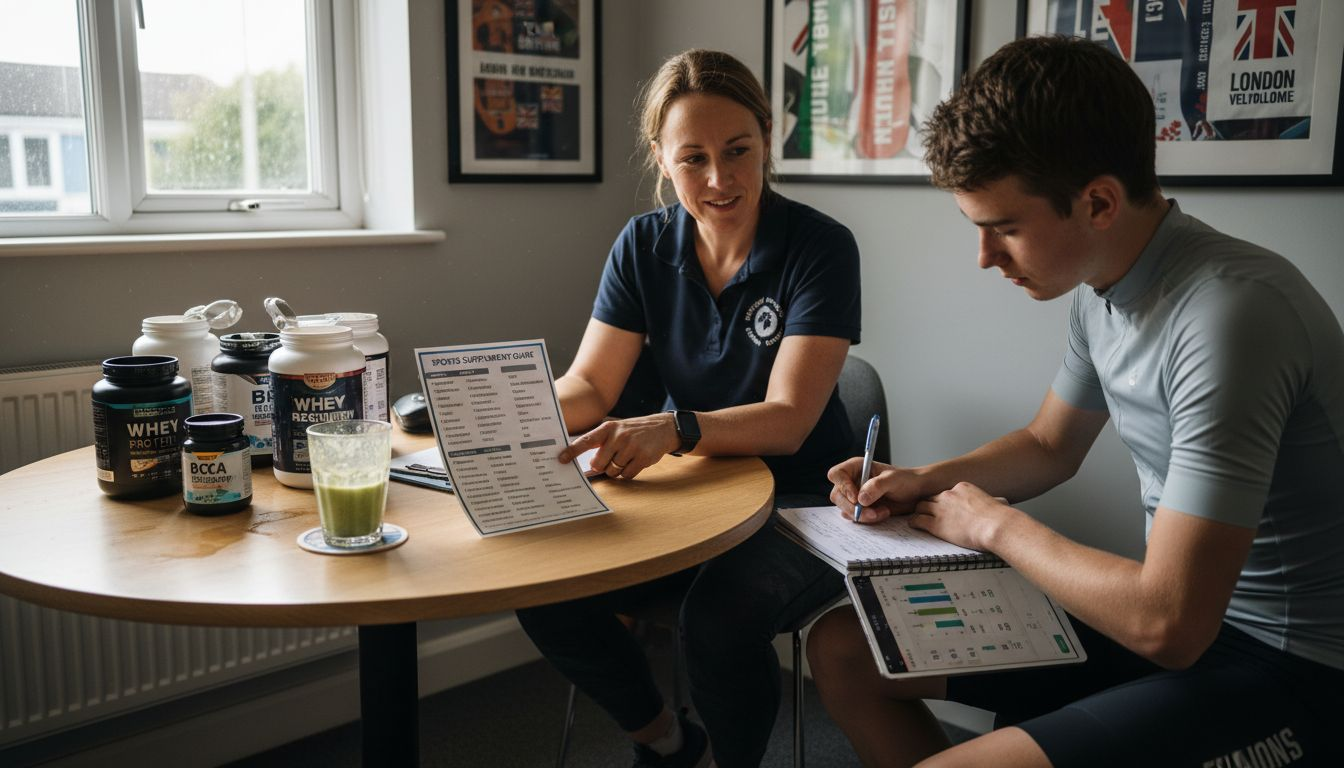
Top tip: Keep a detailed nutrition and performance journal to track how different supplements impact your energy levels, recovery, and overall athletic performance.
Step 2: Research suitable natural alternatives
Researching suitable natural alternatives is a strategic approach to upgrading your sports nutrition. This step involves exploring whole food sources and scientifically-backed natural supplements that can effectively support your athletic performance.
Natural nutrition strategies emphasise a food-first approach, focusing on high-quality, minimally processed ingredients that provide comprehensive nutritional benefits. Consider exploring alternatives that align with your specific sporting demands:
- Plant-based protein sources
- Whole food nutrient concentrates
- Herbal and botanical performance enhancers
- Organic mineral and vitamin supplements
- Adaptogenic herb blends
Prioritise batch-tested natural products to minimise contamination risks. Research batch-tested supplement options carefully, ensuring they meet stringent quality and safety standards. Consulting a sports nutritionist can help you identify precise natural alternatives tailored to your individual metabolic needs and training intensity.
Natural supplements should complement, not replace, a balanced whole foods nutrition strategy.
Evaluate each alternative by considering its nutritional profile, potential performance benefits, and compatibility with your current dietary requirements.
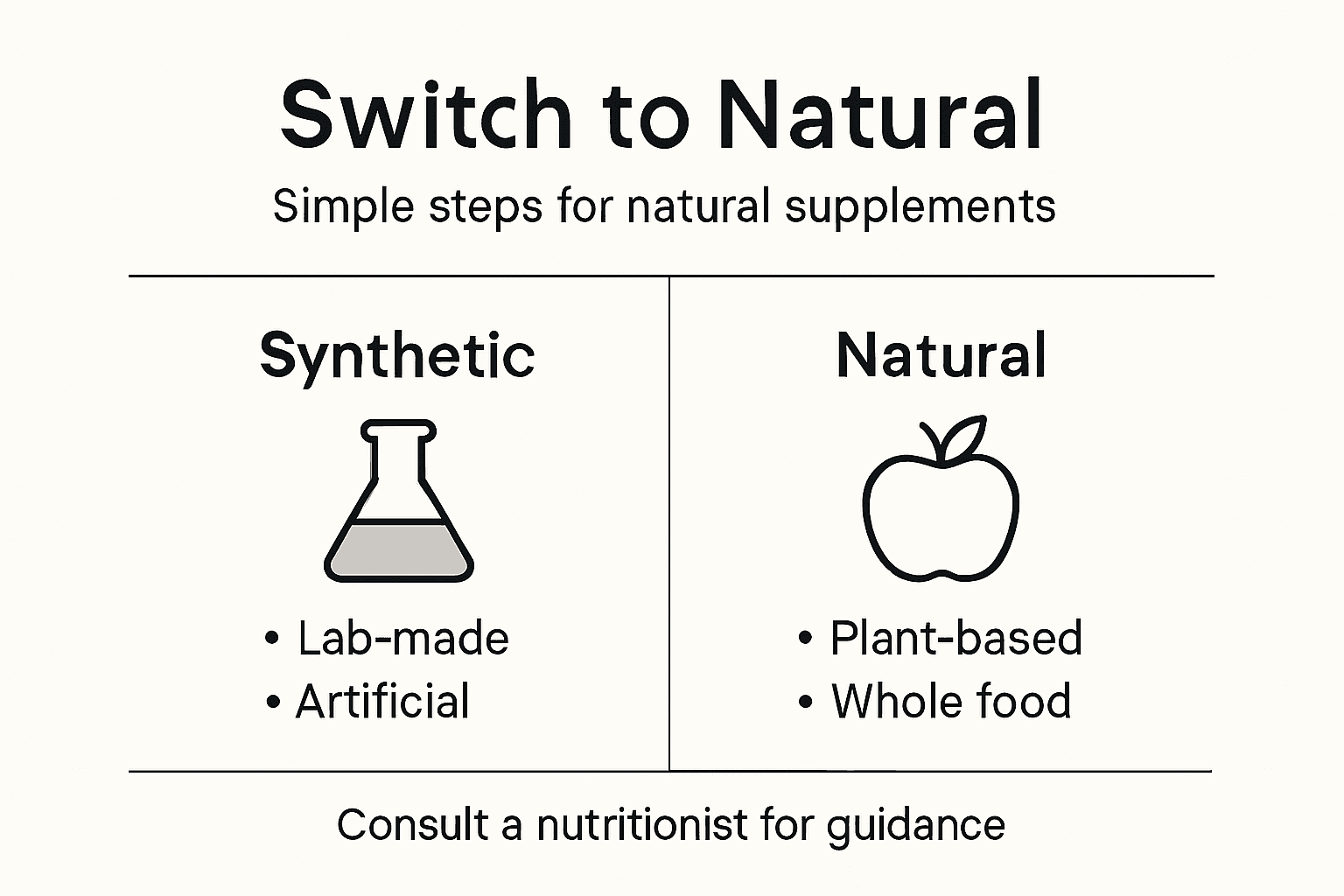
Here is a comparison of common synthetic supplements and their natural alternatives:
| Supplement Type | Typical Synthetic Example | Natural Alternative | Key Benefit of Natural Option |
|---|---|---|---|
| Protein | Whey protein isolate | Pea, hemp, or rice protein | Plant-based, easier digestion |
| Multivitamins | Standard multivitamin tablets | Food-based multivitamin blends | Higher bioavailability |
| Recovery compounds | Creatine monohydrate | Beetroot, watermelon juice | Added phytochemicals, gentle on system |
| Energy boosters | Synthetic caffeine pills | Green tea, matcha, guarana | Antioxidants, slower caffeine release |
| Electrolytes | Flavoured electrolyte tablets | Coconut water, sea salt, banana | Natural source, less artificial additives |
Top tip: Cross-reference natural supplement ingredients with your current training goals to ensure optimal nutritional alignment and performance enhancement.
Step 3: Plan your transition strategy
Planning your transition to natural supplements requires a thoughtful, strategic approach that supports your athletic performance while minimising potential disruptions. Gradual nutritional changes are key to ensuring your body adapts smoothly and maintains optimal performance throughout the process.
Develop a comprehensive transition plan that includes:
- Systematic supplement replacement timeline
- Nutritional assessment milestones
- Performance tracking metrics
- Consultation schedule with sports nutritionist
- Backup nutritional strategies
Adopt the ‘Try, Swap, Change’ methodology, which involves systematically introducing natural alternatives while carefully monitoring your body’s response. This approach allows you to make incremental adjustments, reducing physiological shock and supporting sustained nutritional adaptation.
A well-planned transition minimises performance disruptions and supports long-term athletic success.
Consult with a qualified nutrition professional to create a personalised strategy that aligns with your specific training intensity, metabolic requirements, and performance goals.
Top tip: Document your transition process meticulously, tracking energy levels, recovery times, and overall performance to validate the effectiveness of your natural supplement strategy.
Step 4: Monitor your body’s response
Monitoring your body’s response to new natural supplements is a critical phase in ensuring your nutritional strategy supports your athletic performance. Tracking physical reactions carefully will help you understand how these changes impact your overall health and training effectiveness.
Establish a comprehensive monitoring system that includes tracking:
- Daily energy levels
- Recovery and muscle soreness
- Sleep quality
- Emotional and mental state
- Performance metrics during training
- Digestive comfort and potential side effects
Be proactive in documenting your physiological responses. Maintain a detailed journal that captures both quantitative measurements and subjective experiences. This approach enables you to identify subtle changes and potential interactions between new natural supplements and your existing nutrition plan.
Small, consistent observations can reveal significant insights into your body’s adaptation process.
Schedule regular check-ins with a sports nutritionist to review your monitoring data and make informed adjustments. Professional guidance ensures you’re interpreting your body’s signals accurately and making strategic nutritional decisions.
Top tip: Use a digital tracking app or spreadsheet to create consistent, measurable records that can help you and your nutrition professional analyse your supplement transition effectively.
Step 5: Adjust your protocol for optimal results
Adjusting your natural supplement protocol is an ongoing process that requires strategic thinking and careful observation. Periodically reviewing supplement strategies ensures you maintain peak performance while minimising potential risks.
Develop a flexible approach to protocol adjustment by considering:
- Performance tracking metrics
- Physiological response indicators
- Training intensity variations
- Nutritional balance
- Individual metabolic changes
Responsive nutrition planning means being willing to modify your supplement intake based on empirical evidence. This dynamic approach allows you to fine-tune your natural supplementation strategy, ensuring it remains aligned with your evolving athletic goals and physiological needs.
Small, strategic adjustments can lead to significant performance improvements over time.
Consult with a sports nutritionist who can provide expert guidance on interpreting your body’s signals and making informed nutritional decisions. Their professional insights can help you navigate complex supplement interactions and optimise your protocol.
Top tip: Create a quarterly review schedule to systematically assess and recalibrate your natural supplement protocol, ensuring continuous alignment with your performance objectives.
A summary of key strategies for a successful transition to natural sports nutrition:
| Transition Stage | Main Focus | Professional Input |
|---|---|---|
| Assess current routine | Inventory supplements and evaluate use | Sports nutritionist review |
| Research alternatives | Identify food-based options | Ingredient vetting support |
| Plan transition | Gradual changes with tracking | Personalised strategy advice |
| Monitor response | Track energy and recovery | Data analysis assistance |
| Adjust protocol | Tweak based on outcomes | Ongoing expert consultation |
Embrace Natural Performance with Interval’s Clean Supplements
Transitioning to natural supplements can be a daunting challenge as you seek clean, effective options that align with your high intensity training goals. This article highlights the importance of gradual changes, monitoring your body’s response, and choosing natural alternatives that truly support recovery and energy without unwanted additives or risks. If you want to optimise your nutrition protocol while staying safe and natural, it is crucial to select products that are batch-tested and made from trusted ingredients.
At Interval, we understand these demands and offer a premium range of Pre-workout supplements crafted from natural ingredients designed to fuel your intense workouts sustainably. Our Electrolyte blends provide clean hydration and mineral support to keep you performing at your best. Every option is tailored to help you smoothly transition to natural sports nutrition without compromising performance.
Make the shift today by exploring our full range of natural sports supplements at https://useinterval.co.uk. Experience the benefits of expertly formulated products that empower your training and recovery naturally. Start your natural nutrition journey now and take control of your athletic success.
Frequently Asked Questions
How do I assess my current supplement routine before transitioning to natural supplements?
To assess your current supplement routine, list every supplement you take, including dosage, purpose, and ingredient sources. Conduct a thorough review to identify any overlaps or unnecessary items, and consider consulting a sports nutritionist for personalised advice.
What natural alternatives can I consider for common synthetic supplements?
Common synthetic supplements can often be replaced with natural alternatives, such as using plant-based proteins instead of whey, or coconut water in place of flavoured electrolyte tablets. Research various options and evaluate their nutritional profiles to find the best fit for your needs.
How should I plan my transition to natural supplements to avoid performance disruption?
Plan your transition by setting a gradual replacement timeline and closely monitoring your body’s response to new supplements. Aim to make changes incrementally over a period of 30–60 days to allow your body to adjust while minimising any disruptions in performance.
What methods can I use to monitor my body’s response to natural supplements?
To monitor your body’s response, keep a detailed journal tracking daily energy levels, recovery times, and any noticeable side effects. Regularly assess your performance metrics and adjust your supplement intake based on these observations.
How often should I adjust my natural supplement protocol for optimal results?
Regularly review your natural supplement protocol, ideally on a quarterly basis, to refine your approach based on performance metrics and physiological responses. Make incremental adjustments as needed to ensure alignment with your evolving athletic goals.
Recommended
- Why Use Natural Supplements in Sports Nutrition – Interval
- Why Sustainable Supplementation Matters for UK Athletes – Interval
- Natural Performance Boosters: Elevate High-Intensity Results – Interval
- Why Take Supplements After 40: Sports Performance Impact – Interval
- Advantages of Natural Ingredients for Wellness