


Electrolyte Loss: Everything You Need to Know
Most british fitness enthusiasts are surprised to learn that even mild electrolyte imbalances can cut exercise performance by more than 20 percent. Whether you are a Hyrox competitor or someone who enjoys a daily run, losing these vital minerals through sweat affects energy, focus, and recovery. Understanding how and why electrolyte loss happens helps you spot early warning signs and build smarter habits, so you can train harder and stay healthy.
Table of Contents
- What Is Electrolyte Loss And Why It Matters
- Primary Causes Of Electrolyte Depletion In Athletes
- Symptoms And Consequences Of Imbalance
- Preventing Electrolyte Loss During Intense Exercise
- Natural Supplement Options For Replenishment
Key Takeaways
| Point | Details |
|---|---|
| Electrolyte Function | Electrolytes are essential for regulating body functions and maintaining homeostasis, particularly during intense exercise. |
| Symptoms of Imbalance | Key symptoms of electrolyte imbalance include muscle cramps, fatigue, and cognitive impairment, which can hinder performance. |
| Prevention Strategies | Effective hydration strategies, including electrolyte-rich beverages, are crucial for preventing electrolyte loss during high-intensity activities. |
| Natural Replenishment Options | Natural sources such as coconut water and leafy greens can provide essential electrolytes to support optimal athletic performance. |
 |
|
What Is Electrolyte Loss and Why It Matters
Electrolyte loss is a critical physiological phenomenon that can dramatically impact athletic performance and overall health. According to research from msbm, electrolytes play a fundamental role in regulating essential body functions and maintaining homeostasis. These charged minerals like sodium, potassium, and magnesium are crucial for nerve signalling, muscle contraction, and fluid balance.
When you exercise intensely, especially in high-heat environments, your body loses electrolytes through sweat at an accelerated rate. These losses can lead to significant performance declines and potential health risks.
For Hyrox athletes and high-intensity fitness enthusiasts, understanding electrolyte loss is more than a technical detail it’s a performance imperative. When electrolyte concentrations drop, you may experience symptoms like:
- Muscle cramps
- Reduced endurance
- Increased fatigue
- Potential cognitive impairment
- Decreased power output
Recognising these signs early can help you proactively manage your hydration and mineral balance, ensuring you maintain peak performance during gruelling training sessions and competitions. For a deeper understanding of how electrolytes function in athletic performance, check out our Complete Guide to Optimising Electrolyte Intake.
Primary Causes of Electrolyte Depletion in Athletes
Electrolyte depletion represents a complex physiological challenge that emerges through multiple interconnected mechanisms during high-intensity athletic performance. According to gssiweb, hyponatremia stands out as the most serious cause of exercise-associated collapse, particularly prevalent in endurance events where athletes may replace sweat with low-sodium fluids.
Intense physical activity triggers significant electrolyte loss through several primary pathways. Dvm360 research highlights that insufficient thirst mechanisms, coupled with concurrent water and electrolyte loss through sweat, create an involuntary dehydration process. This means your body might not signal thirst effectively during prolonged exercise, leading to substantial mineral depletion.
The most common causes of electrolyte depletion in athletes include:
- Prolonged high-intensity exercise
- Training in hot and humid environments
- Inadequate hydration strategies
- Excessive sweating
- Insufficient electrolyte replacement during workouts
For Hyrox athletes seeking to optimise their performance, understanding these depletion mechanisms is crucial. Recognising the signs of electrolyte imbalance and implementing strategic replacement can make a significant difference in your training outcomes. Learn more about managing your mineral balance with our Balanced Electrolytes Guide for Athletes.
Symptoms and Consequences of Imbalance
Electrolyte imbalances can manifest through a wide range of physiological disruptions that significantly impact athletic performance and overall health. Wikipedia highlights that excessive sweating during strenuous exercise can lead to muscle cramps, particularly when sodium and other electrolyte levels become deficient, causing contracted interstitial fluid compartments.
The consequences of electrolyte imbalance extend far beyond simple muscle cramping. Athletes may experience a cascade of performance-limiting symptoms that compromise both physical and cognitive capabilities. These symptoms typically progress from mild discomfort to potentially serious health risks if left unaddressed.
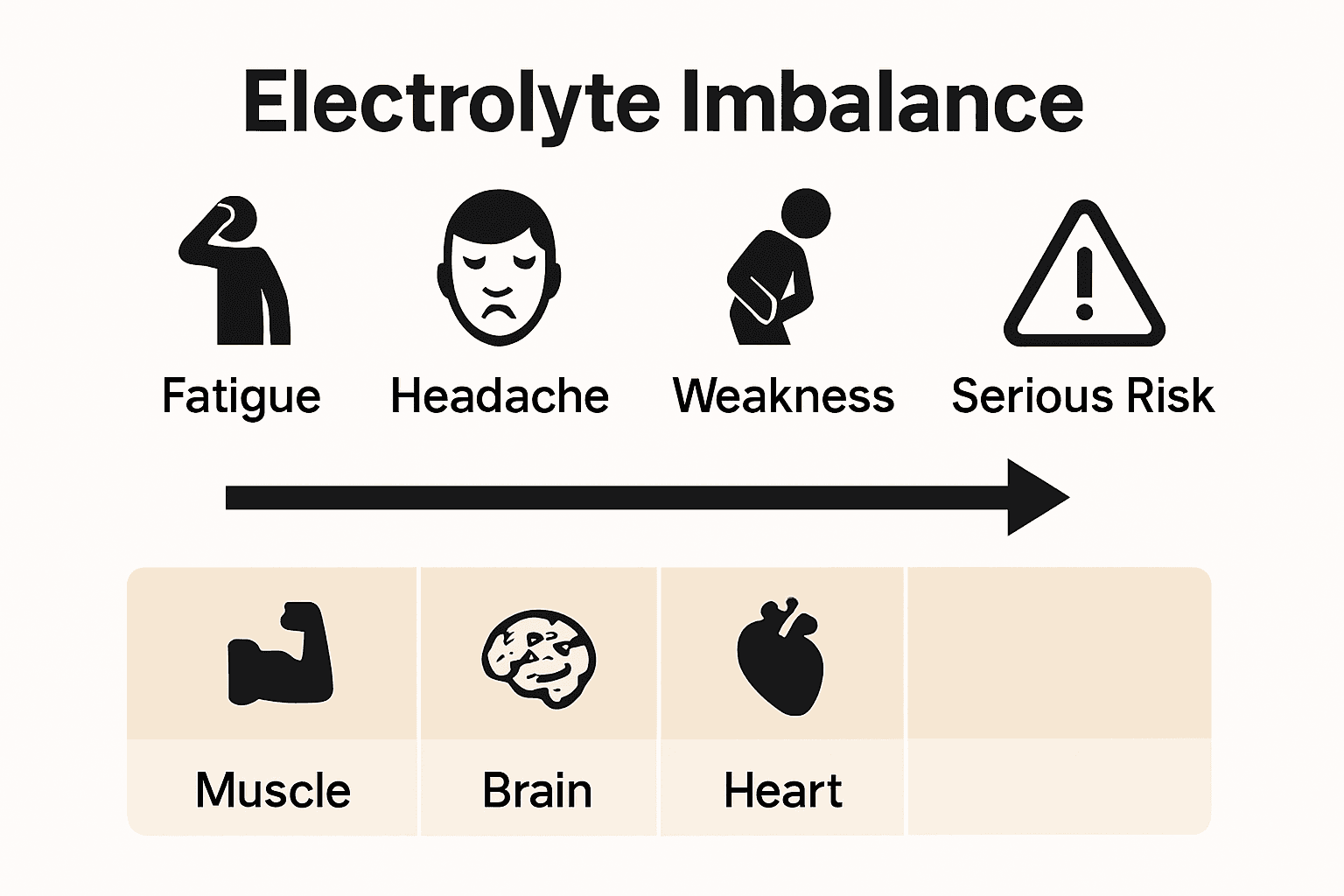
Key symptoms of electrolyte imbalance include:
- Persistent muscle weakness
- Irregular heartbeat
- Sudden onset of muscle cramps
- Significant performance decline
- Mental confusion
- Extreme fatigue
- Dizziness and lightheadedness
For high-intensity athletes like Hyrox competitors, understanding these warning signs is crucial. Prolonged electrolyte disruption can lead to more severe complications such as heat exhaustion, reduced metabolic efficiency, and potentially dangerous physiological stress. To develop a comprehensive strategy for managing your body’s mineral balance, explore our 7 Essential Electrolytes Tips for Muscle Performance Gains.
Preventing Electrolyte Loss During Intense Exercise
Preventing electrolyte loss is a critical strategy for maintaining peak performance during high-intensity training and competitions. Gssiweb research indicates that proper hydration management is essential, recommending oral rehydration solutions or sports drinks when athletes have lost less than 5% of body weight, with intravenous intervention necessary for more severe dehydration scenarios.
Proactive hydration requires a comprehensive approach that goes beyond simply drinking water. Dvm360 highlights that insufficient thirst mechanisms can mask critical electrolyte and water losses, making strategic replacement crucial for endurance athletes.
Effective strategies for preventing electrolyte loss include:
- Consuming electrolyte-rich beverages before, during, and after exercise
- Monitoring your sweat rate and fluid loss
- Implementing pre-hydration techniques
- Using sodium-enhanced hydration solutions
- Timing electrolyte intake with your training intensity
- Acclimatising to training environments
- Tracking your body’s specific electrolyte needs
For Hyrox athletes seeking a comprehensive understanding of electrolyte management, our Master Electrolyte Use for Endurance in Sports guide offers in-depth insights into optimising your hydration strategy. Remember, preventing electrolyte loss is not just about drinking more fluids it’s about smart, strategic mineral replacement.
Natural Supplement Options for Replenishment
Natural electrolyte replenishment strategies are critical for Hyrox athletes seeking to maintain optimal performance and prevent potential health risks. Gssiweb research highlights the dangers of hyponatremia, emphasising that athletes must carefully select sodium-containing fluids to avoid exercise-associated collapse, particularly during longer endurance events.
Comprehensive electrolyte replacement requires a nuanced approach that goes beyond simple hydration. Dvm360 notes that insufficient thirst mechanisms can mask critical mineral losses, making strategic supplementation essential for maintaining physiological balance.
Natural electrolyte replenishment options include:
- Coconut water
- Sea salt
- Trace mineral drops
- Natural electrolyte powders
- Whole food sources like bananas and avocados
- Himalayan pink salt
- Bone broth
- Leafy green vegetables
For female athletes looking to optimise their nutritional strategy, our Best Workout Supplements for Women guide offers expert insights into selecting the most effective natural supplementation approaches. Remember, the key is not just replacing lost minerals, but doing so with high-quality, naturally sourced nutrients that support your body’s unique metabolic needs.
Take Control of Electrolyte Loss with Natural Solutions
Electrolyte loss can silently sabotage your intense workouts and competitions leaving you struggling with muscle cramps fatigue and reduced endurance. This article details how critical electrolytes like sodium and potassium maintain your bodys balance and power output. If you want to avoid the common pitfalls of dehydration and electrolyte imbalance you need a smart approach to replenishment that fits your high intensity demands.
Discover the power of natural ingredients designed precisely for athletes like you in our Bundle Interval collection.
Unlock peak performance today by choosing supplements that replace lost minerals effectively and safely. Visit our website to explore how our electrolyte and pre-workout solutions can help maintain your mineral balance and fuel your next workout. Dont wait until cramps or fatigue slow you down take proactive steps now.
Frequently Asked Questions
What causes electrolyte loss during exercise?
Electrolyte loss during exercise is primarily caused by prolonged high-intensity workouts, excessive sweating, training in hot environments, and inadequate hydration strategies that fail to replenish essential minerals.
What are the symptoms of electrolyte imbalance?
Symptoms of electrolyte imbalance can include muscle cramps, fatigue, dizziness, irregular heartbeat, and mental confusion. Recognising these signs early can help prevent serious health risks.
How can I prevent electrolyte loss while exercising?
To prevent electrolyte loss, consider consuming electrolyte-rich beverages, monitoring your sweat rate, using sodium-enhanced hydration solutions, and employing strategic timing for your electrolyte intake according to your training intensity and environment.
What natural sources can help replenish electrolytes?
Natural sources for replenishing electrolytes include coconut water, sea salt, trace mineral drops, bananas, avocados, and bone broth. These options provide a range of essential minerals needed for optimal performance.