


Electrolyte Stacking: Unlocking Peak Hyrox Performance
High-intensity training pushes every british Hyrox athlete to their limits, yet over 60 percent still struggle with maintaining hydration and mineral balance during competition. The quest for peak performance is more than sweat and grit, especially for women navigating the demands of both age and advanced fitness. This guide cuts through confusion and explains how natural electrolyte stacking can help british women maximise muscle function, boost recovery, and stay one step ahead in every Hyrox event.
Table of Contents
- Electrolyte Stacking Defined For Hyrox Athletes
- Types Of Electrolytes And Stacking Methods
- How Stacking Supports Performance And Recovery
- Timing And Personalisation For Optimal Results
- Risks, Side Effects And Common Mistakes
Key Takeaways
| Point | Details |
|---|---|
| Electrolyte Stacking Is Crucial | Female Hyrox athletes aged 30-50 should consistently replenish key minerals to support muscle function, hydration, and recovery during intense training. |
| Personalised Approaches Are Essential | Individual factors such as sweat rate and hormonal fluctuations necessitate tailored electrolyte strategies for optimal performance. |
| Timing Matters | Implement a three-phase electrolyte strategy: pre-exercise loading, during-event maintenance, and post-event recovery for best results. |
| Be Wary of Overconsumption | Careful monitoring is needed to avoid potential health risks from excessive electrolyte intake; consult a sports nutritionist for tailored guidance. |
Electrolyte stacking defined for Hyrox athletes
Hyrox is a demanding fitness challenge that requires precise physiological preparation, particularly around mineral balance. Electrolyte stacking represents a strategic approach where athletes systematically replenish key minerals lost during high-intensity training and competition. Complex mineral management becomes critical when navigating the intense running and functional exercise combinations that define this unique athletic event.
At its core, electrolyte stacking involves consuming a targeted blend of essential minerals including sodium, potassium, magnesium, and calcium before, during, and after training sessions. These minerals play crucial roles in muscle function, nerve signal transmission, and hydration regulation. Sports hydration strategies reveal that proper electrolyte intake can significantly reduce muscle cramping, support faster recovery, and maintain optimal performance levels throughout gruelling Hyrox competitions.
For female Hyrox athletes aged 30-50, electrolyte stacking becomes even more nuanced. Hormonal fluctuations, metabolism variations, and individual sweat rates mean a personalised approach is essential. Understanding your body’s specific mineral loss patterns through targeted testing and tracking can help create a more precise electrolyte replacement strategy that supports consistent training and competition performance.
Here’s how the main electrolytes benefit female Hyrox athletes:
| Electrolyte | Primary Function | Impact on Performance |
|---|---|---|
| Sodium | Regulates fluid balance and nerves | Reduces muscle cramp risk, sustains endurance |
| Potassium | Supports muscle contraction | Maintains muscle power, prevents fatigue |
| Magnesium | Aids energy production and relaxation | Speeds recovery, decreases post-exercise soreness |
| Calcium | Enables muscle contraction | Improves muscle efficiency and training adaptation |
Pro tip: Conduct a personalised sweat test during training to understand your unique electrolyte loss profile and develop a targeted mineral replacement strategy.
Types of electrolytes and stacking methods
Hyrox athletes must understand the complex world of electrolyte composition and strategic mineral replacement. Sports drink electrolyte profiles reveal four primary minerals critical for peak performance: sodium, potassium, magnesium, and calcium. Each plays a unique role in maintaining physiological function during intense training and competition, with athletes requiring precise balance to optimise muscle function and hydration.
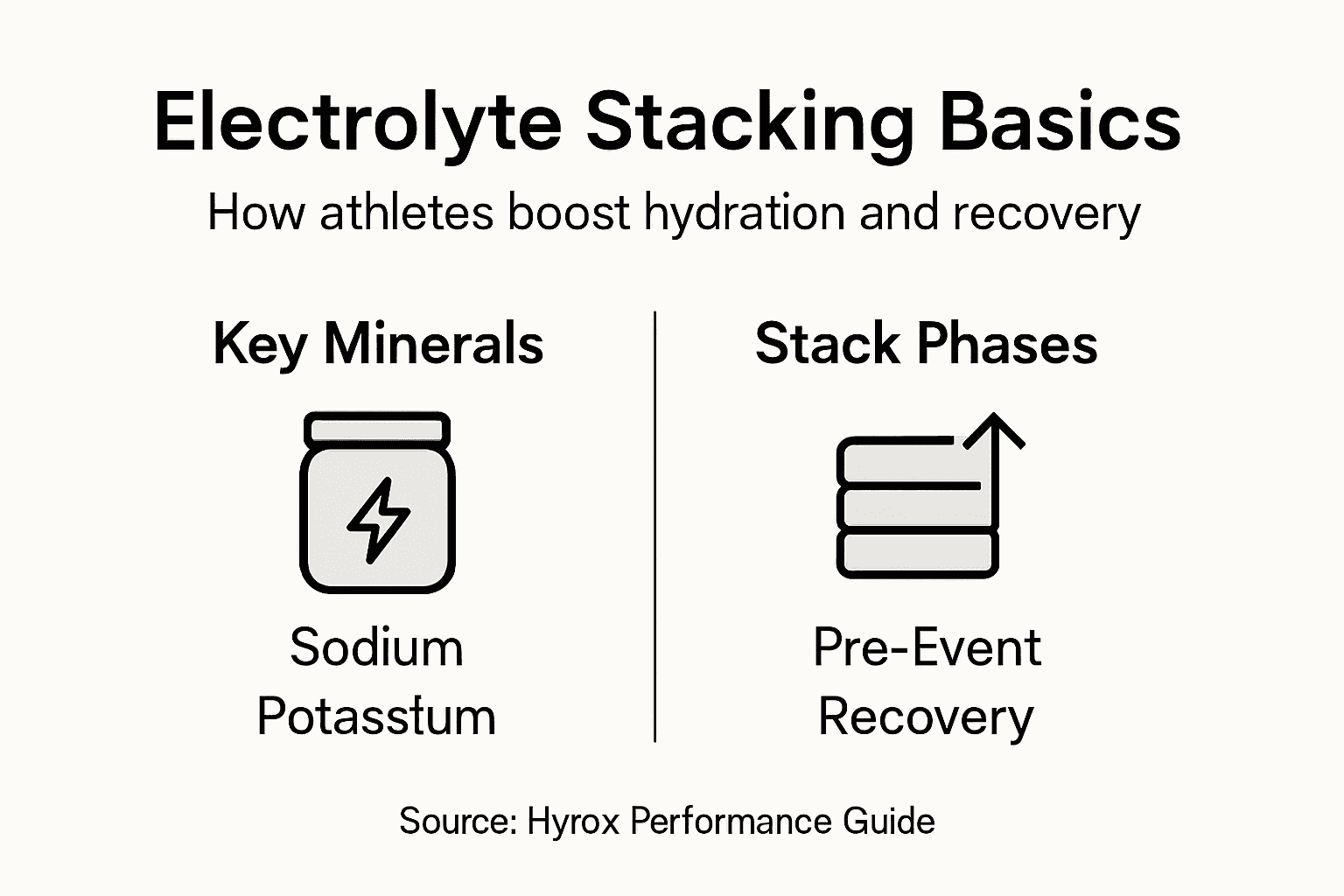
The three primary stacking methods include pre-event loading, during-event maintenance, and post-event recovery. Pre-event loading involves consuming electrolyte-rich fluids to establish baseline mineral levels, typically 2-3 hours before competition. During-event maintenance requires consistent, small electrolyte intake to replace minerals lost through sweat. Electrolyte intake protocols demonstrate that female athletes aged 30-50 often require more nuanced approaches due to metabolic variations and hormonal influences.
Different electrolyte drink types also play crucial roles in an athlete’s strategy. Isotonic drinks match human blood concentration, providing rapid absorption. Hypotonic solutions offer faster hydration, while hypertonic drinks deliver concentrated mineral replacement. Female Hyrox athletes must experiment to discover which formulation works best with their individual physiology, tracking performance metrics and personal comfort during training.

Comparison of electrolyte drink types for Hyrox training:
| Drink Type | Absorption Rate | Best Used For | Key Consideration |
|---|---|---|---|
| Isotonic | Fast | Pre-event hydration | Balances fluid and mineral levels |
| Hypotonic | Very fast | During intense training | Maximises quick hydration |
| Hypertonic | Slow | Post-exercise recovery | Replenishes depleted minerals |
Pro tip: Create a personalised electrolyte tracking journal to document your mineral intake, performance responses, and hydration effectiveness across different training scenarios.
How stacking supports performance and recovery
Electrolyte stacking is a sophisticated performance enhancement strategy that goes far beyond simple hydration. Performance maintenance techniques reveal how precise mineral replacement can transform a Hyrox athlete’s endurance and recovery. By strategically replenishing key electrolytes, athletes can maintain optimal cellular function, prevent performance degradation, and support the body’s complex physiological responses during high-intensity training and competition.
The physiological benefits of electrolyte stacking extend deep into muscle and nerve function. Sodium and potassium work synergistically to support nerve signal transmission, while magnesium and calcium play crucial roles in muscle contraction and relaxation. Dehydration prevention strategies demonstrate that female Hyrox athletes aged 30-50 experience unique metabolic challenges, making precise electrolyte management even more critical for maintaining consistent performance levels.
Recovery represents another critical dimension of electrolyte stacking. The process involves more than simply replacing lost minerals; it’s about supporting cellular repair, reducing inflammation, and preparing the body for subsequent training sessions. Female athletes in this age group often experience longer recovery times and more complex hormonal interactions, making a targeted electrolyte replacement approach essential for maintaining training consistency and preventing potential performance plateaus.
Pro tip: Create a detailed post-workout recovery log tracking your electrolyte intake, subjective energy levels, and recovery speed to personalise your mineral replacement strategy.
Timing and personalisation for optimal results
Electrolyte stacking requires a nuanced approach that recognises the unique physiological demands of female Hyrox athletes. Personalised hydration strategies reveal that optimal mineral replacement is not a one-size-fits-all solution. Individual factors such as body composition, sweat rate, exercise intensity, and hormonal variations significantly influence the precise timing and quantity of electrolyte intake.
The recommended approach involves a three-phase electrolyte strategy: pre-exercise loading, during-event maintenance, and post-exercise recovery. Female athletes aged 30-50 should focus on pre-hydration approximately 2-3 hours before training, consuming electrolyte-rich fluids that align with their specific metabolic needs. Athletic hydration guidelines suggest measuring individual sweat rates through weight tracking and conducting personalised assessments to create a tailored mineral replacement protocol.
Advanced personalisation involves tracking subtle physiological indicators beyond basic hydration metrics. This includes monitoring muscle cramping frequency, perceived energy levels, recovery speed, and subtle changes in performance consistency. By maintaining a detailed log of electrolyte intake correlated with training outcomes, female Hyrox athletes can develop increasingly precise mineral replacement strategies that adapt to their body’s changing requirements and support long-term performance enhancement.
Pro tip: Conduct a monthly sweat rate test under different training conditions to continuously refine your personalised electrolyte stacking approach.
Risks, side effects and common mistakes
Electrolyte stacking for Hyrox athletes demands careful navigation to avoid potential physiological complications. Electrolyte consumption risks highlight the critical importance of balanced mineral intake. Overconsumption can lead to serious health issues, including muscle weakness, cardiac irregularities, and disrupted mineral homeostasis, which may dramatically impair training and competition performance for female athletes aged 30-50.
Common mistakes in electrolyte management often stem from a lack of personalised understanding. Sports drink composition challenges reveal that many athletes inadvertently consume inappropriate electrolyte concentrations, leading to potential risks such as hyponatremia or excessive sugar intake. Female Hyrox athletes must be particularly vigilant about understanding their unique physiological requirements, avoiding generic supplementation approaches that fail to account for individual metabolic differences.
The most significant risks emerge from three primary missteps: neglecting individual sweat rates, using incorrect electrolyte formulations, and failing to adjust strategies across different training phases. Hormonal variations in women aged 30-50 create additional complexity, making it essential to develop a dynamic approach that responds to changing bodily needs. Consistent monitoring, periodic reassessment, and willingness to modify electrolyte protocols are crucial for maintaining optimal performance and preventing potential health complications.
Pro tip: Consult a sports nutritionist to develop a comprehensive electrolyte profile that accounts for your unique physiological characteristics and training demands.
Elevate Your Hyrox Performance with Targeted Electrolyte Stacking
Understanding the critical role of electrolyte stacking in Hyrox events reveals how personalised mineral replenishment can unlock your peak performance. For female athletes aged 30-50 facing unique metabolic challenges, managing sodium, potassium, magnesium, and calcium intake precisely is essential to prevent cramps, enhance endurance, and speed recovery. Your goal is consistent training and competition success supported by tailored hydration and mineral balance.
Discover expertly crafted natural supplements designed to support your electrolyte needs at every stage of your training. Explore our Pre-workout – Interval collection for formulations that prime your body before competition. Combine this with mineral blends from our Staples – Interval category to maintain hydration and recovery.*
Take control of your electrolyte strategy today by visiting Interval. Start stacking smarter with natural ingredients tailored to high intensity sports. Personalise your performance now to avoid pitfalls and reach new Hyrox heights.
Frequently Asked Questions
What is electrolyte stacking and how does it benefit Hyrox athletes?
Electrolyte stacking is a strategy used by athletes to replenish essential minerals like sodium, potassium, magnesium, and calcium before, during, and after training. It helps maintain optimal muscle function, nerve transmission, and hydration, ultimately reducing muscle cramps and enhancing performance.
How should female Hyrox athletes personalise their electrolyte intake?
Female athletes aged 30-50 should consider hormonal fluctuations, sweat rates, and individual metabolic needs when personalising their electrolyte intake. Conducting sweat tests and tracking hydration metrics can help develop a tailored mineral replacement strategy.
What are the different types of electrolyte drinks, and when should I use them?
There are three main types of electrolyte drinks: isotonic, hypotonic, and hypertonic. Isotonic drinks are good for pre-event hydration, hypotonic solutions are ideal during intense training for quick hydration, while hypertonic drinks are best used post-exercise for replenishing minerals.
What are the risks associated with improper electrolyte stacking?
Improper electrolyte stacking can lead to serious health issues, including muscle weakness and cardiac irregularities. Common mistakes include neglecting individual sweat rates and using incorrect formulations. It’s crucial for athletes to monitor their intake and adjust it according to their unique physiological needs.