


Effective Pre-Workout Routine for Women: Boost Your Performance
Over 60 percent of athletes report fatigue or poor performance due to simple hydration or nutrition mistakes. The right pre workout routine not only enhances energy but also shields against injury and burnout. When you start with a clear picture of your body’s needs, every step from your water intake to your warm up delivers better results. Discover practical ways to assess, fuel, and prepare yourself for peak performance each time you train.
Table of Contents
- Step 1: Assess Your Current Hydration And Nutrition
- Step 2: Select Natural Supplements For Optimal Energy
- Step 3: Warm Up Efficiently With Dynamic Movements
- Step 4: Incorporate Mobility Exercises For Injury Prevention
- Step 5: Evaluate Readiness And Track Initial Performance
Quick Summary
| Key Point | Explanation |
|---|---|
| 1. Assess hydration and nutrition daily | Track your water intake and meals to ensure optimal hydration and balanced nutrition for better performance. |
| 2. Choose natural energy-boosting supplements | Select supplements like beetroot juice and magnesium to enhance energy without synthetic ingredients for workouts. |
| 3. Perform dynamic warm-ups effectively | Engage in dynamic exercises to activate muscles and joints, reducing injury risk and boosting overall performance. |
| 4. Incorporate mobility exercises regularly | Use mobility drills to enhance flexibility and prevent injuries, focusing on controlled movements for key areas. |
| 5. Evaluate readiness before workouts | Track sleep, nutrition, and energy levels to make informed training adjustments, prioritizing your body’s signals. |
Step 1: Assess your current hydration and nutrition
Before diving into your pre-workout routine, understanding your current hydration and nutritional status is fundamental. This assessment helps you create a personalised strategy that optimises your performance and prevents potential energy crashes during intense training.
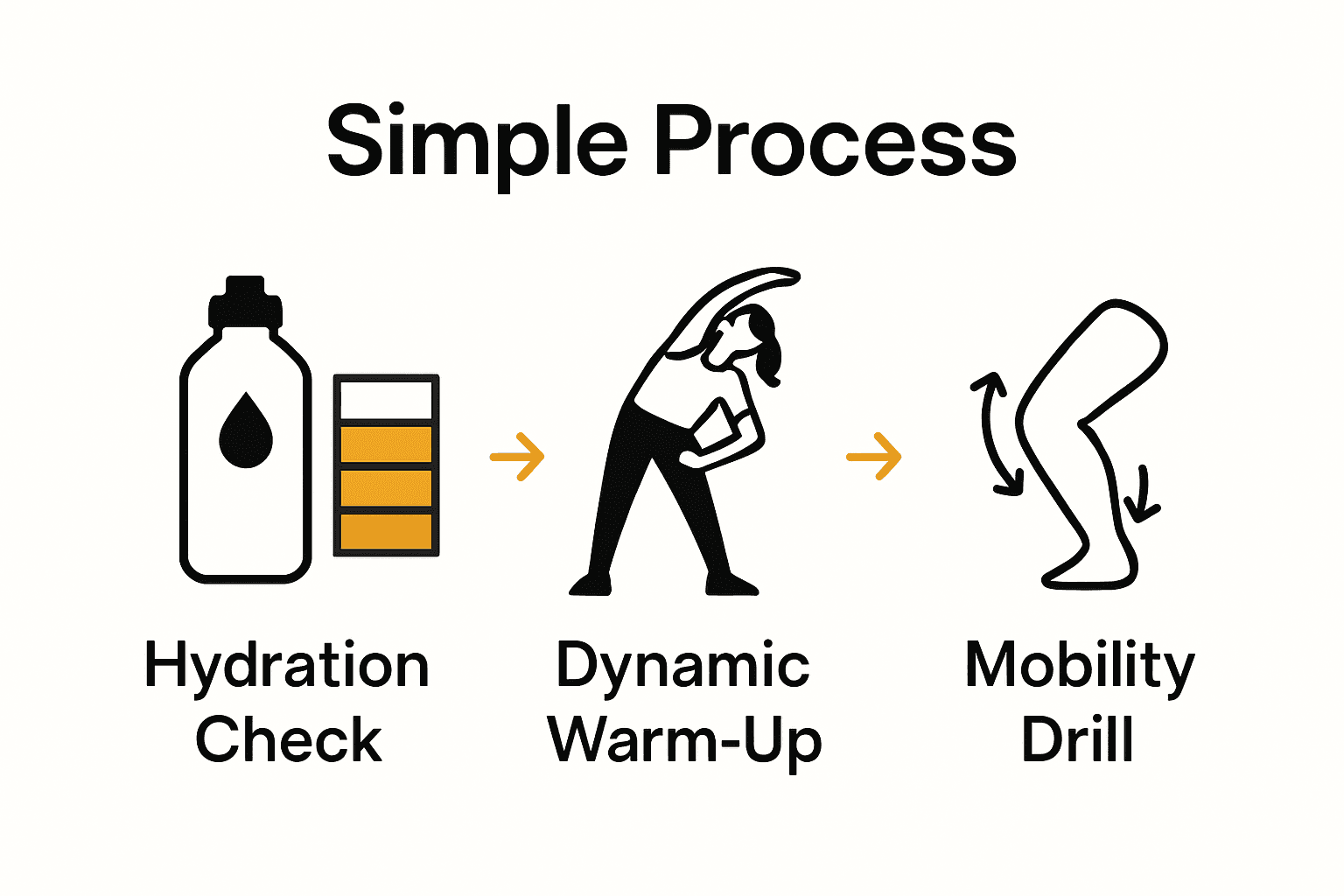
Start by tracking your daily water intake. Aim to consume at least 2-3 litres of water daily, with increased quantities on training days. Your urine colour is an excellent hydration indicator pale yellow suggests good hydration, while dark amber signals potential dehydration. Consider keeping a simple water log or using a tracking app to monitor your intake.
For nutrition assessment, document your typical daily meals for one week. Look for balance in macronutrients protein, carbohydrates, and healthy fats. Complete Guide to Optimising Electrolyte Intake suggests paying special attention to electrolyte balance, which is critical for high intensity athletes. Focus on whole foods that provide sustained energy complex carbohydrates like sweet potatoes, lean proteins such as chicken or tofu, and nutrient dense vegetables.
Warning: Sudden dramatic changes to your diet can disrupt your training. Make incremental adjustments and listen to your body. If you feel consistently fatigued or experience performance drops, consider consulting a sports nutritionist who can provide personalised guidance.
Step 2: Select natural supplements for optimal energy
Choosing the right natural supplements can significantly boost your pre workout performance and energy levels. This step is about identifying supplements that enhance your training without relying on synthetic or artificial ingredients.
Women’s Fitness highlights beetroot juice as a powerful natural supplement packed with nitrates. These compounds increase nitric oxide in your body, promoting better blood flow and improving power output during intense workouts. Similarly, Marie Claire recommends electrolyte supplements containing natural ingredients like magnesium, potassium, and adaptogens such as Peruvian maca, which can enhance energy, focus, and overall exercise performance.
When selecting supplements, prioritise natural options that provide sustained energy. Look for products with whole food ingredients like Benefits of Plant-Based Pre-Workout ingredients such as green tea extract, beetroot powder, and amino acids. Always start with smaller doses to assess your bodys response and consult a healthcare professional if you have any underlying health conditions.

Warning: Not all supplements work identically for everyone. Pay attention to how your body responds and be prepared to adjust your supplement strategy based on your individual performance and energy levels.
Step 3: Warm up efficiently with dynamic movements
A strategic warm up prepares your body for intense physical activity by activating muscles and improving overall performance. Dynamic movements are key to reducing injury risk and maximising your workout potential.
According to NCBI, dynamic warm up exercises like leg swings, arm circles, and torso twists help increase blood flow, enhance muscle elasticity, and improve joint mobility. The key is to perform movements that closely mimic your upcoming workout. Start with gentle motions and progressively increase intensity, focusing on full range of motion and controlled movements.
Begin with a sequence of exercises that target major muscle groups. Try leg swings for lower body activation, arm circles to mobilise shoulders, and walking lunges to engage multiple muscle groups simultaneously. NCBI research suggests that a proper dynamic warm up should gradually build in complexity, effectively activating your neuromuscular system and improving overall coordination.
Warning: Always listen to your body. If a movement causes pain or discomfort, modify or skip it. A good warm up should feel challenging but not painful.
Step 4: Incorporate mobility exercises for injury prevention
Mobility exercises are crucial for maintaining your body’s flexibility, preventing injuries, and improving overall athletic performance. These targeted movements help prepare your muscles and joints for intense training sessions.
NCBI research highlights the importance of incorporating specific mobility drills that target key areas like hips, shoulders, and spine. Start with gentle hip circles to improve lower body rotation, shoulder rolls to release upper body tension, and spine twists to enhance core flexibility. These exercises address movement restrictions and help your body move more efficiently during workouts.
Focus on performing each mobility exercise with controlled, deliberate movements. Aim to spend 5-10 minutes on these drills before your main workout, gradually increasing range of motion and paying attention to any areas of stiffness or discomfort. NCBI suggests that regularly practicing these mobility exercises can significantly reduce injury likelihood and improve overall exercise technique.
Warning: Always perform mobility exercises within your comfort zone. If you experience sharp pain or extreme discomfort, stop immediately and consult a fitness professional or physiotherapist.
Step 5: Evaluate readiness and track initial performance
Understanding your body’s readiness is crucial for optimising workout performance and preventing potential burnout. This step helps you develop a systematic approach to monitoring your physical and mental state before each training session.
NCBI research emphasises the importance of comprehensive tracking. Start by creating a detailed training log that captures multiple factors including sleep quality, nutrition, hydration levels, and overall stress. Utilize heart rate monitors and perceived exertion scales to gain objective insights into your physical condition. These tools will help you understand how different lifestyle factors impact your workout performance.
Consider developing a simple morning assessment routine. Rate your energy levels, muscle soreness, and sleep quality on a scale of 1 to 10. NCBI suggests that consistently tracking these metrics can help you identify patterns and make informed adjustments to your training intensity. Use a digital app or a physical journal to record these daily observations and track your progress over time.
Warning: Be honest with your self assessment. Pushing through when your body signals extreme fatigue can lead to potential injuries or decreased performance. Listen to your body and be willing to modify your training plan accordingly.
Boost Your Pre-Workout Routine with Natural Performance Enhancers
If you struggle to maintain energy throughout your high intensity sessions or find your pre-workout nutrition and hydration plan falling short, you are not alone. Many women face challenges with sustaining focus, preventing energy crashes, and avoiding injury without the right preparation. This article highlights the importance of hydration, natural supplements, and mobility exercises to elevate your training experience. Our selection of carefully formulated products supports those exact needs by using natural ingredients that fuel your body gently yet effectively.
Start your journey towards better workouts with our range of Pre-workout – Interval supplements. Designed to provide clean, sustained energy, they align perfectly with the strategies discussed such as beetroot juice and electrolytes for improved blood flow and muscle function.
Take the next step now and transform how you prepare for intense training sessions. Visit https://useinterval.co.uk to explore our complete collection including the supportive Electrolyte – Interval range for optimal hydration and balance. Experience the natural boost your body deserves and unlock your full performance potential.
Frequently Asked Questions
How can I assess my current hydration before starting my pre-workout routine?
To assess your current hydration, track your daily water intake and aim for at least 2-3 litres, increasing this amount on training days. Use a urine color chart to monitor hydration levels, aiming for pale yellow to indicate proper hydration.
What natural supplements should I consider for boosting my pre-workout performance?
Consider incorporating beetroot juice and electrolyte supplements containing magnesium and potassium, as these can enhance blood flow and energy levels. Start with small doses to gauge your body’s response and adjust based on your performance.
What are effective dynamic movements for my warm-up routine?
Incorporate dynamic exercises like leg swings, arm circles, and walking lunges to prepare your body for intense physical activity. Aim to spend about 10 minutes warming up, gradually increasing the intensity to mimic movements you’ll perform in your workout.
How can I incorporate mobility exercises for injury prevention?
Integrate mobility exercises targeting your hips, shoulders, and spine, such as hip circles and shoulder rolls, into your warm-up routine. Spend 5-10 minutes on these drills before training to improve flexibility and reduce the risk of injury.
What metrics should I track to evaluate my readiness for a workout?
Track metrics such as sleep quality, muscle soreness, and hydration levels to understand your body’s readiness for exercise. Create a simple morning assessment routine using a scale of 1 to 10 to track these factors over time, making adjustments to your training as needed.
How can I make gradual adjustments to my diet for better workout performance?
Start by documenting your typical meals for a week to identify areas for improvement in your macronutrient balance. Make small, incremental changes, such as swapping refined carbs for whole foods, and monitor how these adjustments impact your energy levels and performance.