


Role of Salt in Workouts – Optimising HYROX Results
Sweat loss during a single Hyrox workout can strip away up to one gram of sodium per litre, making salt management vital for every British female athlete pushing through high-intensity sessions. Striking the right electrolyte balance determines not just hydration but also muscle function and endurance. This overview uncovers how salt selection, timing, and intake can empower British Hyrox athletes aged 30 to 50 to perform at their absolute best and recover faster after every workout.
Table of Contents
- What Is Salt and Why Athletes Need It
- Types of Salt and Key Electrolytes Explained
- How Salt Supports High-Intensity Performance
- Risks of Imbalance: Too Little or Too Much Salt
- Effective Strategies for Salt Intake in Workouts
Key Takeaways
| Point | Details |
|---|---|
| Importance of Salt | Salt is crucial for Hyrox athletes, aiding in fluid balance, muscle function, and performance during high-intensity training. |
| Electrolyte Management | Understanding and managing sodium intake is essential for preventing dehydration and maintaining optimal athletic performance. |
| Types of Salt | Different salt varieties offer varying trace minerals; athletes should experiment to find what enhances their performance best. |
| Balance is Key | Both insufficient and excessive salt intake can severely impact performance, necessitating a personalised approach to sodium consumption. |
What Is Salt and Why Athletes Need It
Salt, or sodium chloride, is far more than just a kitchen seasoning. For Hyrox athletes, it represents a critical performance component essential for bodily function and optimal training outcomes. The human body relies on this mineral to maintain crucial physiological processes that directly impact athletic performance and recovery.
At its core, salt provides sodium, a vital electrolyte responsible for regulating fluid balance, nerve signalling, and muscle contraction. Sodium helps control the amount of water in the bloodstream, which becomes particularly important during high-intensity workouts like Hyrox. During extended training sessions, athletes lose significant sodium through sweat, making strategic salt intake paramount for maintaining hydration and preventing performance decline.
Hyrox athletes specifically need salt to support several key physiological functions. The body uses sodium to:
- Maintain proper fluid balance in cells and blood
- Enable nerve impulse transmission
- Support muscle contraction and relaxation
- Help prevent cramping during intense exercise
- Regulate blood pressure and cardiovascular function
The UK Government recommends adults consume no more than 6g of salt daily, a guideline that requires careful navigation for athletes balancing performance needs with overall health. Consuming sodium helps replenish electrolytes lost during exercise, preventing dehydration and maintaining optimal performance levels.
Pro tip: Track your salt intake during training weeks and adjust based on your sweat rate and workout intensity to maintain precise electrolyte balance.
Types of Salt and Key Electrolytes Explained
Electrolytes are essential minerals that play a crucial role in athletic performance, particularly for Hyrox athletes who demand peak physiological function during intense training. These electrically charged minerals are fundamental to maintaining bodily processes that directly impact strength, endurance, and recovery.
The primary electrolytes that Hyrox athletes should understand include:
- Sodium: Regulates fluid balance and nerve signalling
- Potassium: Supports muscle contraction and heart function
- Magnesium: Enables muscle and nerve performance
- Calcium: Critical for muscle movements and bone health
- Chloride: Helps maintain proper blood volume and pressure
Salt varieties differ significantly in their mineral composition and potential benefits. Table salt, sea salt, Himalayan pink salt, and Celtic sea salt each offer unique trace mineral profiles that can influence athletic performance. Sodium chloride remains the primary electrolyte source in most dietary intake, with each salt type providing slightly different mineral concentrations that can subtly impact hydration and cellular function.

For Hyrox athletes, understanding the nuanced differences between salt types becomes crucial. While table salt provides standard sodium chloride, unrefined salts like Himalayan pink salt contain additional trace minerals such as potassium, magnesium, and calcium, which could offer marginal performance advantages during high-intensity training.
Here is a quick comparison of common salt types relevant to Hyrox athletes:
| Salt Type | Key Minerals Present | Refinement Level |
|---|---|---|
| Table Salt | Sodium, Chloride | Highly refined |
| Sea Salt | Sodium, Trace minerals | Moderately refined |
| Himalayan Pink Salt | Sodium, Potassium, Magnesium, Calcium | Minimally refined |
| Celtic Sea Salt | Sodium, Magnesium, Trace minerals | Low refinement |
Pro tip: Experiment with different salt types during non-competition training to understand how various mineral profiles might subtly enhance your individual physiological response.
How Salt Supports High-Intensity Performance
High-intensity performance demands precise physiological balance, and salt plays a pivotal role in maintaining this delicate ecosystem for Hyrox athletes. Sodium intake supports critical bodily functions during extreme physical exertion, enabling athletes to push beyond conventional performance boundaries.
During intense workouts, salt becomes a crucial performance enhancer through several key mechanisms:
- Muscle Contraction: Facilitates rapid and efficient muscle movements
- Nerve Transmission: Enables swift communication between muscles and brain
- Hydration Regulation: Maintains optimal fluid balance in the bloodstream
- Preventing Fatigue: Reduces the likelihood of muscle cramps and exhaustion
- Cardiovascular Support: Helps maintain stable blood pressure during stress
Sodium plays a fundamental role in supporting endurance and preventing performance decline, particularly during prolonged Hyrox training sessions. The intricate balance of sodium helps athletes maintain consistent energy levels, regulate body temperature, and minimise the risk of sudden performance drops caused by electrolyte imbalances.
For Hyrox athletes, understanding salt’s nuanced role means recognising that timing and quantity are as important as the mineral itself. Consuming appropriate salt quantities before, during, and after training can significantly impact recovery, muscle function, and overall athletic performance.
Pro tip: Develop a personalised electrolyte strategy by tracking your sweat rate and sodium loss during different workout intensities to optimise your salt intake precisely.
Risks of Imbalance: Too Little or Too Much Salt
Salt balance represents a critical tightrope walk for Hyrox athletes, where both deficiency and excess can dramatically compromise performance and health. Understanding the nuanced risks of sodium imbalance becomes paramount for maintaining optimal physiological function, particularly during high-intensity training scenarios.
The consequences of insufficient salt intake can be equally dangerous as overconsumption:
Too Little Salt:
- Triggers hyponatremia, a potentially life-threatening condition
- Causes muscle weakness and unexpected cramping
- Leads to profound electrolyte disruption
- Reduces cognitive performance and concentration
- Impairs thermoregulation during intense workouts
Too Much Salt:
The following table summarises signs of salt imbalance for athletes:
| Imbalance Type | Common Symptoms | Potential Athletic Impact |
|---|---|---|
| Too Little Salt | Fatigue, muscle cramps | Reduced strength and focus |
| Too Much Salt | Bloating, high blood pressure | Lower endurance, dehydration risk |
- Increases blood pressure
- Heightens cardiovascular disease risk
- Causes water retention and potential bloating
- Strains kidney function
- Disrupts natural fluid balance
Athletic performance hinges on maintaining precise electrolyte concentrations, where even minor deviations can significantly impact training effectiveness. Hyrox athletes must develop a sophisticated understanding of their individual sodium requirements, considering factors like sweat rate, workout intensity, and personal metabolic characteristics.
Navigation of salt intake requires a personalised approach, recognising that blanket recommendations fail to address individual physiological variations. Professional athletes often work with nutritionists to develop tailored strategies that prevent both sodium deficiency and excessive consumption.
Pro tip: Invest in professional sweat testing to precisely determine your individual sodium loss rates during different training intensities, enabling more targeted electrolyte management.
Effective Strategies for Salt Intake in Workouts
Salt management represents a sophisticated balancing act for Hyrox athletes seeking peak performance. Careful navigation of sodium intake requires strategic planning and personalised approaches, tailored to individual physiological demands and training intensities.
Effective salt intake strategies for Hyrox athletes involve several critical considerations:
- Pre-Workout Preparation: Gradually increase sodium intake 24-48 hours before intense training
- Hydration Synchronisation: Match salt consumption with fluid intake
- Electrolyte Timing: Consume electrolytes before, during, and after workouts
- Quality Over Quantity: Prioritise natural salt sources with trace minerals
- Individual Monitoring: Track personal sweat rates and sodium loss patterns
Public Health guidelines recommend systematic approaches to salt consumption, emphasising the importance of understanding individual metabolic responses. Professional athletes often collaborate with nutritionists to develop nuanced strategies that prevent both sodium deficiency and excessive intake, recognising that blanket recommendations fail to address unique physiological variations.
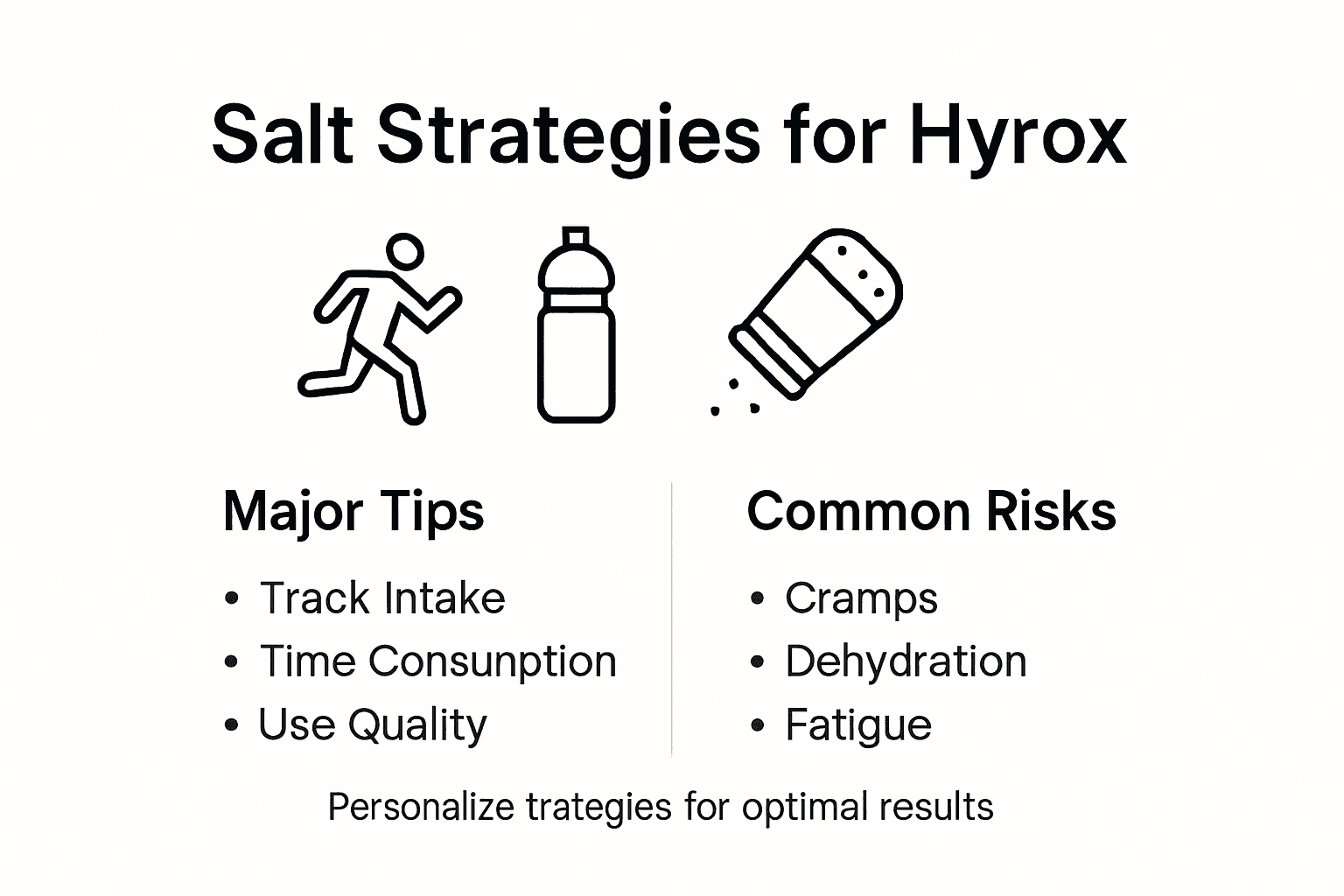
Successful salt intake management requires continuous adaptation. Athletes must remain attentive to their body’s signals, adjusting sodium consumption based on workout intensity, environmental conditions, and personal sweat composition. This dynamic approach ensures optimal electrolyte balance and sustained performance throughout training cycles.
Pro tip: Maintain a detailed nutrition and performance journal to track how different salt intake strategies correlate with your Hyrox workout effectiveness and recovery times.
Enhance Your Hyrox Performance with Precise Salt and Electrolyte Support
Struggling to maintain the perfect balance of salt and electrolytes to support your high-intensity Hyrox training This article highlights the challenge of sodium management and its crucial role in muscle function hydration and preventing cramps Our natural ingredient supplements are designed to help you overcome these common pitfalls and unlock your full athletic potential Whether you want to optimise pre-workout energy or maintain hydration during intense sessions we have tailored solutions that fit your unique needs
Explore our carefully formulated Pre-workout – Interval range packed with essential electrolytes and discover convenient options in our Bundle – Interval collections that take the guesswork out of salt balance Start refining your electrolyte strategy now at https://useinterval.co.uk and experience the difference that targeted supplementation can make to your Hyrox results
Frequently Asked Questions
What is the role of salt in athletic performance?
Salt, primarily through its sodium content, is crucial for regulating fluid balance, nerve signalling, and muscle contraction, all of which directly enhance athletic performance and recovery during high-intensity workouts.
How much salt should athletes consume during training?
The UK Government recommends that adults consume no more than 6g of salt daily. However, athletes should adjust their sodium intake based on individual sweat rates and workout intensity to maintain electrolyte balance.
What are the risks associated with consuming too little or too much salt?
Insufficient salt intake can lead to hyponatremia, causing muscle weakness and cramping, while excessive salt can increase blood pressure and risk of cardiovascular disease. Both extremes negatively impact athletic performance.
What types of salt are most beneficial for athletes?
Different salt types like table salt, sea salt, Himalayan pink salt, and Celtic sea salt each offer unique trace minerals. Unrefined salts may provide additional benefits for hydration and electrolyte balance during intense training.