


Why Whole-Food Supplements Matter for Athletes
Most british athletes are surprised to learn that over 80 percent of dietary supplements lack thorough independent testing, leaving many unsure of what they are actually consuming. For those committed to performance and health, knowing the difference between whole-food and synthetic supplements is more than a detail. This guide unpacks why whole-food nutrition matters for athletic success, how natural ingredients power intense training, and where to find safe, reliable products for peak results.
Table of Contents
- Whole-Food Supplements Explained For Athletes
- Key Differences: Whole-Food Vs Synthetic Options
- How Natural Ingredients Support Intense Training
- Common Myths About Supplement Purity
- Selecting Safe And Effective Whole-Food Products
Key Takeaways
| Point | Details |
|---|---|
| Whole-Food Advantages | Whole-food supplements provide a more comprehensive nutritional profile, preserving natural nutrients that enhance absorption and effectiveness compared to synthetic options. |
| Synergistic Nutrients | Unlike synthetic supplements, whole foods contain a synergistic blend of nutrients that work together for better metabolic support and overall performance. |
| Importance of Certification | Athletes should prioritise third-party certified supplements to ensure safety, quality, and transparency in sourcing to mitigate contamination risks. |
| Avoiding Myths | Understanding the regulatory landscape of supplements is crucial; athletes must recognise that ‘approved’ labels do not guarantee product efficacy or purity. |
Whole-Food Supplements Explained for Athletes
Athletes seeking optimal nutrition require a nuanced understanding of whole-food supplements. Unlike synthetic alternatives, whole-food supplements derive nutrients directly from natural food sources, providing a more comprehensive and bioavailable nutritional profile. The NCAA emphasises that whole foods offer a comprehensive array of nutrients essential for athletic performance, which isolated supplements struggle to replicate.
Whole-food supplements distinguish themselves by preserving the complex nutrient matrices found in natural foods. This means they contain not just individual vitamins or minerals, but also the accompanying enzymes, cofactors, and micronutrients that enhance absorption and effectiveness. UCLA Health advises that most athletes can meet their nutritional needs through a balanced diet, suggesting whole-food supplements should complement rather than replace wholesome nutrition.
Key characteristics of high-quality whole-food supplements include:
- Sourced from minimally processed, organic food ingredients
- Retain the natural nutrient complex from original food sources
- Provide broader spectrum of micronutrients compared to synthetic supplements
- Enhanced bioavailability due to natural nutrient interactions
- Support more holistic nutritional absorption
For high-intensity athletes like Hyrox competitors, whole-food supplements offer a strategic nutritional approach. They provide concentrated nutrients without the artificial additives common in traditional supplements, supporting optimal performance through natural, recognisable nutritional compounds. The goal is not replacement, but intelligent nutritional enhancement that works harmoniously with your body’s inherent metabolic processes.
Key Differences: Whole-Food Vs Synthetic Options
The landscape of nutritional supplementation presents a critical distinction between whole-food and synthetic options. The NCAA highlights that whole foods offer a complex matrix of nutrients and bioactive compounds that synthetic supplements cannot fully replicate, making their approach fundamentally different from isolated nutrient formulations.

Synthetic supplements typically isolate specific vitamins or minerals in their pure chemical form, which means they lack the intricate nutritional complexity found in whole-food sources. UCLA Health notes that whole foods provide a synergistic blend of nutrients, whereas synthetic supplements may lack this complexity and balance, creating significant differences in how these nutritional sources are processed by the human body.
Key comparative aspects between whole-food and synthetic supplements include:
-
Nutrient Composition
- Whole-food: Complete nutritional matrix with natural cofactors
- Synthetic: Isolated, chemically synthesised nutrients
-
Absorption Rates
- Whole-food: Enhanced bioavailability due to natural nutrient interactions
- Synthetic: Potentially reduced absorption and utilisation
-
Additional Compounds
- Whole-food: Contains natural enzymes, phytonutrients, and micronutrients
- Synthetic: Limited to specific chemical structures
For high-performance athletes, understanding these nuanced differences becomes crucial. Whole-food supplements provide a more holistic approach to nutritional support, working in harmony with the body’s natural metabolic processes. While synthetic supplements can serve a purpose, they cannot completely replace the comprehensive nutritional benefits inherent in minimally processed, natural food sources.
How Natural Ingredients Support Intense Training
Natural ingredients play a pivotal role in supporting athletes through intense training regimens, providing essential nutrients that fuel performance and recovery. The Cleveland Clinic highlights how whole food sources deliver a complex nutritional matrix that synthetic supplements struggle to replicate, ensuring metabolic processes function optimally during high-intensity physical demands.
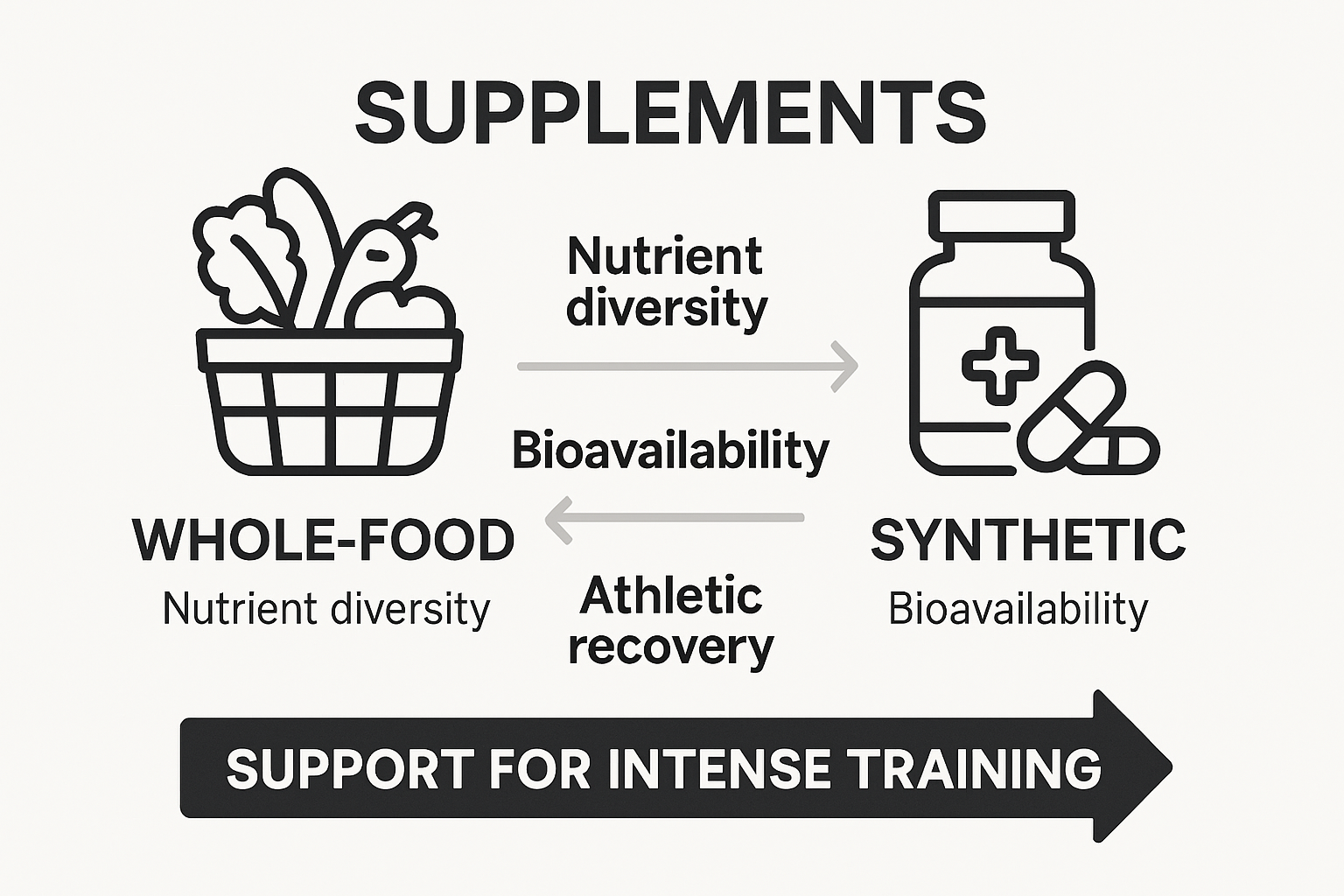
The Academy of Nutrition and Dietetics emphasises the critical importance of natural vitamins and minerals in metabolic pathways, particularly for athletes undergoing rigorous training. Natural ingredients offer more than isolated nutrients, delivering a synergistic blend of compounds that support energy production, muscle function, and overall physiological resilience.
Key mechanisms of natural ingredient support include:
-
Energy Production
- Provides complex carbohydrates for sustained performance
- Supports mitochondrial function through natural enzyme interactions
-
Muscle Recovery
- Contains anti-inflammatory compounds
- Supplies protein cofactors for efficient muscle repair
-
Metabolic Efficiency
- Enhances nutrient absorption through natural cofactors
- Supports hormonal balance during intense training cycles
For Hyrox athletes and high-intensity competitors, embracing natural ingredients means selecting supplements that mirror the body’s intricate nutritional requirements. These whole-food derived compounds work harmoniously with physiological processes, offering a more integrated approach to nutritional support compared to synthetic alternatives. The result is a more holistic strategy for maintaining peak athletic performance and supporting long-term metabolic health.
Common Myths About Supplement Purity
The NCAA warns that dietary supplements are not well regulated, presenting significant challenges for athletes seeking reliable nutritional support. Many athletes mistakenly believe that all supplements undergo rigorous testing and quality control, when in reality, the supplement industry remains largely unregulated, creating potential risks for professional and amateur competitors alike.
The U.S. Equestrian Federation highlights the misleading nature of claims about supplement approvals, exposing critical misconceptions about regulatory oversight. Athletes often assume that terms like ‘FDA Approved’ or ‘USADA Approved’ guarantee product safety and efficacy, when these organisations actually do not approve dietary supplements in the manner consumers typically understand.
Common myths about supplement purity include:
-
Regulatory Misconception
- Myth: All supplements are thoroughly tested
- Reality: Minimal pre-market regulation exists
-
Approval Misunderstanding
- Myth: ‘Approved’ labels guarantee safety
- Reality: Most labels are marketing strategies
-
Contamination Risk
- Myth: Supplements are always pure and clean
- Reality: Cross-contamination is a significant concern
For high-performance athletes, understanding these myths becomes crucial. Selecting supplements requires deep research, third-party testing verification, and a critical approach to marketing claims. Whole-food supplements offer a more transparent alternative, providing nutrients in their natural state with reduced risk of unknown contaminants or synthetic additives.
Selecting Safe and Effective Whole-Food Products
The U.S. Equestrian Federation emphasises the critical importance of third-party certification for supplement safety, highlighting the complex landscape of nutritional supplementation for athletes. Navigating this terrain requires a strategic approach that goes beyond marketing claims, focusing on verifiable quality and transparent sourcing of nutritional ingredients.
The U.S. Anti-Doping Agency recommends rigorous testing protocols for athletes selecting dietary supplements, underscoring the potential risks associated with unverified nutritional products. Professional athletes must adopt a meticulous selection process that prioritises comprehensive third-party testing and verifiable nutrient profiles.
Key criteria for selecting safe whole-food supplements include:
-
Certification Standards
- Independent third-party testing
- Verified nutritional content
- Transparent sourcing documentation
-
Ingredient Transparency
- Minimal processing
- Organic, traceable ingredients
- No artificial additives or preservatives
-
Nutritional Integrity
- Whole-food derived nutrients
- Preservation of natural nutrient complexes
- Demonstrated bioavailability
For high-intensity athletes like Hyrox competitors, choosing whole-food supplements is not just about nutrition, but about maintaining peak performance through scientifically validated, pure nutritional support. The most effective approach involves continuous research, understanding ingredient sources, and prioritising products that demonstrate genuine commitment to athletic health and performance.
Unlock Your Peak Performance with Natural Whole-Food Supplements
Athletes focused on high-intensity training understand the challenge of sourcing nutrients that truly fuel the body without artificial additives. This article highlights the importance of whole-food supplements that provide enhanced bioavailability and preserve natural nutrient complexes for energy production, muscle recovery, and metabolic efficiency. If you are aiming to optimise your training using ingredients that work harmoniously with your body’s natural processes then discover our range of carefully crafted Pre-workout and Electrolyte supplements formulated from natural sources.

Don’t settle for synthetic shortcuts that compromise purity or effectiveness. Visit UseInterval.co.uk today to experience supplements designed specifically to meet the demanding needs of high-performance athletes. Embrace natural nutrition for smarter energy, better hydration, and faster recovery and take your athletic journey to the next level.
Frequently Asked Questions
What is the difference between whole-food supplements and synthetic supplements?
Whole-food supplements are derived from natural food sources and provide a complex array of nutrients, including vitamins, minerals, and phytonutrients that work synergistically. Synthetic supplements, on the other hand, isolate specific nutrients in their chemical forms, which may lack the natural complexities and bioavailability found in whole-food sources.
How can whole-food supplements improve athletic performance?
Whole-food supplements support athletic performance by providing concentrated, natural nutrients that enhance energy production, muscle recovery, and overall metabolic efficiency. They help athletes maintain peak performance through the natural interactions of nutrients, which is critical during intense training regimens.
Are whole-food supplements safe for athletes?
While whole-food supplements are generally safer due to their natural sourcing, athletes should always look for third-party certifications to ensure product purity and safety. It’s also essential to research and understand the ingredients to minimise contamination risks.
Can whole-food supplements replace a balanced diet for athletes?
No, whole-food supplements should complement a balanced diet rather than replace it. Athletes should focus on consuming a variety of whole foods to meet their overall nutritional needs, using whole-food supplements to fill any nutritional gaps or enhance their dietary intake.
Recommended
- Complete Guide to Benefits of Plant-Based Pre-Workout – Interval
- 7 Sustainable Workout Supplements Every Hyrox Athlete Needs – Interval
- Vegan Pre-Workout: Everything You Need to Know – Interval
- Plant-Based Pre-Workouts: Complete Guide for Athletes – Interval
- 7 Top Hair Growth Supplements for Stronger, Fuller Hair | MyHair