


What is dietary nitrate? Boost performance by 5%
Dietary nitrates from beetroot and leafy greens can improve high-intensity exercise performance by approximately 5%, offering female athletes aged 30 to 50 a natural edge in both power output and recovery. This guide explains the science behind dietary nitrate, how it works in your body, practical dosing strategies, and why it matters specifically for women engaged in demanding sports. You’ll learn which foods pack the most nitrate, how to time your intake, and how to avoid common mistakes that undermine effectiveness.
Table of Contents
- Introduction To Dietary Nitrate
- How Dietary Nitrate Works: The Biology Behind The Boost
- Why Female Athletes 30 To 50 Should Consider Dietary Nitrates
- Common Misconceptions About Dietary Nitrate
- How To Use Dietary Nitrate Effectively For Performance
- Proof Of Athletic Benefits Of Dietary Nitrate
- Dietary Nitrate And Recovery Benefits
- Explore Natural Performance Boosters At Interval
- Frequently Asked Questions About Dietary Nitrate
Key takeaways
| Point | Details |
|---|---|
| Dietary nitrates boost nitric oxide | Vegetables like beetroot enhance blood flow and oxygen delivery to muscles. |
| Effective dosage is 300 to 600 mg | Consume 2 to 3 hours before exercise for peak performance gains. |
| Natural sources contain protective antioxidants | These compounds improve safety and enhance nitrate uptake compared to synthetic additives. |
| Consistent use over 7 to 14 days improves power | Regular supplementation enhances muscle performance and speeds recovery. |
| Avoid mouthwash near supplementation times | Antibacterial products reduce nitrate conversion by up to 50%. |
Introduction to dietary nitrate
Dietary nitrate is a naturally occurring compound abundant in certain vegetables, particularly beetroot, spinach, arugula, and celery. When you consume these foods, nitrate concentrations in vegetables vary significantly, with beetroot delivering around 250 mg per 100 g and spinach offering approximately 200 mg per 100 g. These nitrates serve as precursors to nitric oxide, a molecule essential for vascular health and exercise efficiency.
Dietary nitrates convert in the body to nitric oxide, which relaxes blood vessel walls and improves oxygen delivery to working muscles. This process directly enhances your ability to sustain high-intensity efforts. Unlike synthetic nitrate additives used in processed meats, vegetable-derived nitrates come packaged with antioxidants like vitamin C and polyphenols, which prevent the formation of harmful nitrosamines and amplify the beneficial effects on cardiovascular function.
For female athletes engaged in high-intensity sports, understanding nitrate sources helps you make informed dietary choices. The richest natural sources include:
- Beetroot juice or beetroot powder concentrate
- Leafy greens such as spinach, arugula, and rocket
- Celery and celery juice
- Red radishes and turnip greens
Incorporating these foods regularly provides a steady nitrate supply that supports both performance and recovery. The antioxidant content in these vegetables not only protects against oxidative stress but also enhances the bioavailability of nitrate, making natural sources far superior to isolated synthetic forms.
How dietary nitrate works: the biology behind the boost
The performance benefits of dietary nitrate stem from a multi-step conversion process that begins the moment you consume nitrate-rich foods. Understanding this pathway helps you optimise timing and dosage for maximum effect.
Once ingested, nitrate travels to your salivary glands, where oral bacteria convert it to nitrite. You then swallow this nitrite, which enters your bloodstream and converts further into nitric oxide, especially in areas with low oxygen availability like working muscles. Conversion improves blood flow efficiency by up to 20% during exercise, delivering more oxygen precisely where your body needs it most.
This increased nitric oxide availability produces several performance-enhancing effects:
- Vasodilation widens blood vessels, reducing blood pressure and improving nutrient delivery.
- Mitochondrial efficiency increases, meaning your cells produce more energy from the same amount of oxygen.
- Muscle contractility improves, enhancing power output during explosive movements.
- Calcium handling in muscle cells becomes more efficient, supporting sustained contractions.
Supplementation with dietary nitrate can reduce the oxygen cost of moderate-intensity exercise by approximately 5 to 8%, leading to improved endurance and delayed fatigue in high-intensity sports.
This reduction in oxygen cost means you can maintain higher intensities for longer periods or recover faster between intervals. Your muscles simply work more efficiently. For sports requiring repeated bursts of maximum effort, like HIIT training, CrossFit, or competitive cycling, this efficiency gain translates directly into better session quality and faster adaptations.
The nitric oxide pathway also reduces the accumulation of metabolic byproducts that cause fatigue, allowing you to push harder before hitting exhaustion. This biological mechanism makes dietary nitrate particularly valuable for female athletes seeking marginal gains that compound over time into significant performance improvements.
Why female athletes 30 to 50 should consider dietary nitrates
As women age, nitric oxide bioavailability declines, affecting vascular function and reducing exercise capacity. This decline becomes particularly noticeable from age 30 onwards, when endothelial function starts to diminish and blood vessel elasticity decreases. For female athletes maintaining high-intensity training schedules, this physiological shift can mean the difference between steady progress and frustrating plateaus.
Dietary nitrate supplementation offers specific advantages for women in this age bracket:
- Compensates for age-related declines in natural nitric oxide production
- Supports cardiovascular efficiency during demanding training sessions
- Enhances oxygen delivery to muscles working at high intensities
- Improves recovery between training bouts by reducing oxidative damage
High-intensity sports place enormous demands on your cardiovascular system. When you sprint, lift heavy, or perform repeated maximal efforts, your muscles require rapid oxygen delivery and efficient waste removal. The vascular benefits of dietary nitrate directly address these needs, helping you maintain peak performance despite natural age-related changes.
Research focusing on sports nutrition for female athletes demonstrates that women aged 30 to 50 experience notable improvements in both aerobic and anaerobic capacity when consuming adequate dietary nitrate. These benefits appear consistent across various high-intensity disciplines, from rowing to team sports to interval training.

Pro Tip: Combine your nitrate intake with proper hydration and balanced electrolyte consumption to maximise vascular function and muscle performance during intense training sessions.
The targeted benefits for this demographic extend beyond immediate performance gains. Consistent nitrate consumption supports long-term cardiovascular health, helping you sustain athletic pursuits well into later decades while maintaining the intensity necessary for continued adaptation and enjoyment of your sport.
Common misconceptions about dietary nitrate
Despite robust scientific support, several persistent myths about dietary nitrate create unnecessary concern among athletes considering supplementation. Addressing these misconceptions directly helps you make evidence-based decisions.
The most common worry centres on cancer risk. Extensive research shows nitrates from vegetables do not increase cancer risk and are linked to cardiovascular benefits instead. This confusion arises from conflating vegetable nitrates with synthetic nitrate preservatives in processed meats, which exist in entirely different chemical contexts.
Natural nitrate foods contain polyphenols and vitamin C, which inhibit nitrosamine formation, unlike synthetic nitrate additives. These protective compounds actively prevent the conversion of nitrate into potentially harmful compounds, making dietary nitrate from vegetables not only safe but beneficial for overall health. The presence of antioxidants in beetroot and leafy greens fundamentally changes how your body processes these nitrates.
Another critical factor affecting nitrate effectiveness involves oral hygiene products. Effective nitrate conversion depends on oral bacteria, so usage of antibacterial mouthwash can reduce efficacy by up to 50%. Many athletes unknowingly sabotage their supplementation by using mouthwash shortly before or after consuming nitrate-rich foods or supplements.
Key points to remember:
- Vegetable-derived nitrates differ fundamentally from synthetic preservatives
- The antioxidant matrix in whole foods protects against harmful byproducts
- Timing matters, both for nitrate consumption and oral hygiene practices
- Natural sources provide additional nutrients that enhance overall health
Understanding these distinctions allows you to confidently incorporate dietary nitrate into your nutrition strategy without unwarranted health concerns. The science clearly supports both the safety and efficacy of natural nitrate consumption for athletic performance.
How to use dietary nitrate effectively for performance
Maximising the performance benefits of dietary nitrate requires attention to dosage, timing, and consistency. Strategic implementation ensures you capture the full potential of this natural performance enhancer.
Consumption of 300 to 600 mg of dietary nitrate about 2 to 3 hours before exercise yields optimal improvements. This timing allows for complete conversion through the nitrate-nitrite-nitric oxide pathway, ensuring peak nitric oxide availability when you begin your training session. Consuming nitrate too close to exercise doesn’t allow sufficient conversion time, whilst too early may result in dissipated effects.
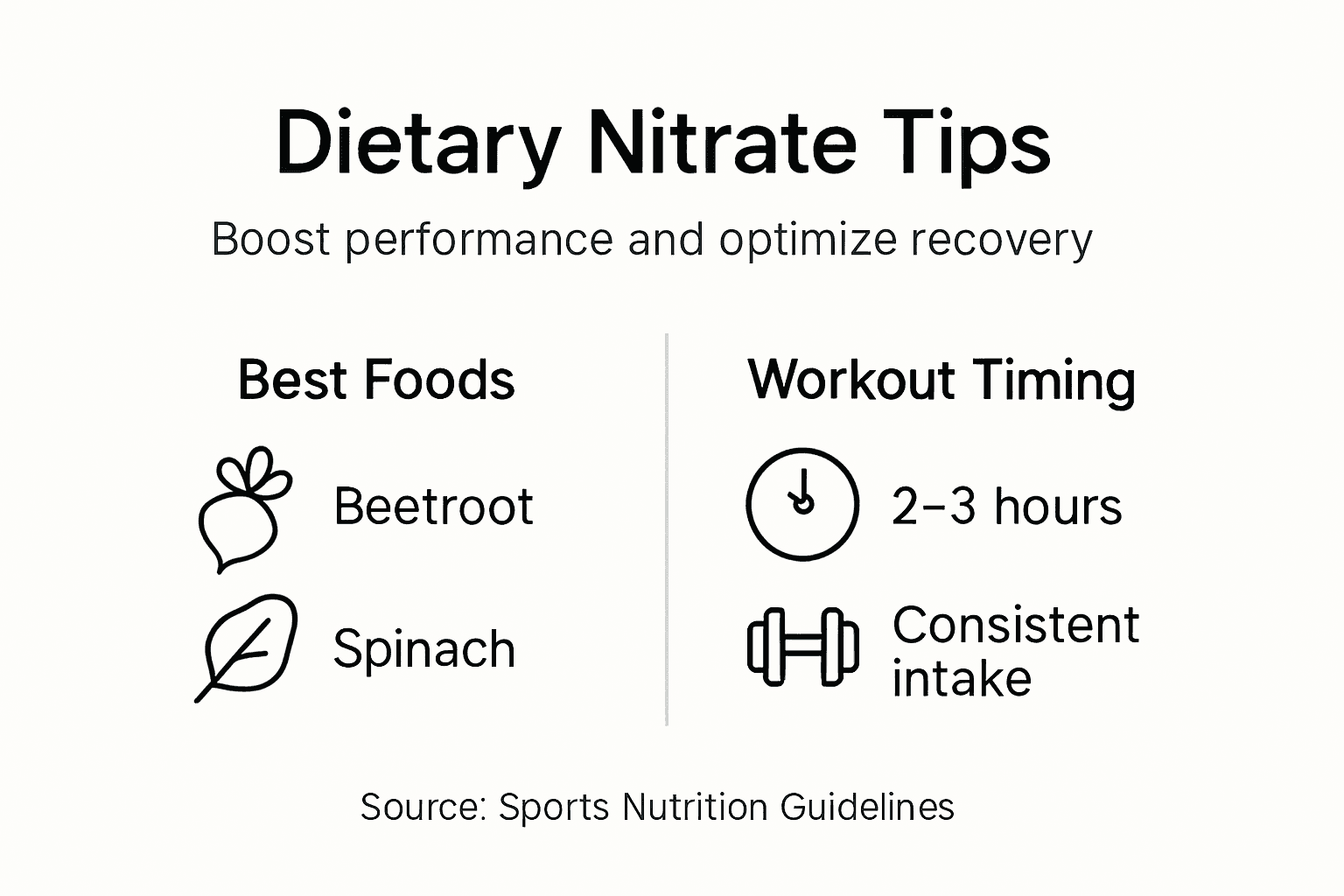
Performance improvements of 3 to 5% in muscle power are observed after 7 to 14 days of supplementation, highlighting the importance of consistent intake rather than sporadic dosing. Building up tissue nitrate stores through regular consumption amplifies the acute benefits seen from single doses.
Follow these steps for optimal results:
- Start supplementation 7 to 14 days before key training blocks or competitions.
- Consume 300 to 600 mg nitrate 2 to 3 hours before high-intensity sessions.
- Avoid antibacterial mouthwash within 6 hours before or after nitrate intake, as up to 50% reduction in effectiveness occurs with mouthwash use.
- Maintain consistent daily intake even on rest days to sustain elevated tissue nitrate levels.
- Track your response by monitoring power output, endurance markers, or recovery metrics.
| Nitrate source | Nitrate content per serving | Typical form | Timing |
|---|---|---|---|
| Beetroot juice concentrate | 400 to 500 mg per 70 ml | Liquid shot | 2 to 3 hours pre-exercise |
| Beetroot powder | 300 to 400 mg per 10 g | Mixed in water or smoothie | 2 to 3 hours pre-exercise |
| Fresh beetroot | 200 to 300 mg per 200 g | Whole food | 3 to 4 hours pre-exercise |
| Spinach | 150 to 250 mg per 100 g | Fresh or lightly cooked | Daily consumption |
For detailed guidance on beetroot extract and nitrates in supplement form, consider formulations specifically designed for athletes. Understanding pre-workout timing helps you coordinate nitrate intake with other performance nutrition strategies.
Pro Tip: Track your performance gains alongside supplementation to personalise your dose and timing, as individual responses can vary based on baseline nitric oxide status and training demands.
Consistency matters more than perfection. Even missing occasional doses whilst maintaining regular intake preserves most benefits, making dietary nitrate a practical addition to demanding training schedules.
Proof of athletic benefits of dietary nitrate
The performance advantages of dietary nitrate aren’t anecdotal. Rigorous scientific studies consistently demonstrate measurable improvements across multiple athletic domains relevant to female athletes in high-intensity sports.
Performance improvements of 3 to 5% in muscle power emerge after 7 to 14 days of supplementation, with benefits most pronounced during maximal and near-maximal efforts. This magnitude of improvement can distinguish between personal records and plateau, between podium finishes and near misses.
Key research findings include:
- Enhanced time to exhaustion during high-intensity interval protocols
- Reduced oxygen cost during submaximal exercise, allowing higher sustainable intensities
- Improved repeated sprint ability with shorter recovery requirements
- Better maintenance of power output during fatiguing exercise bouts
The improved endothelial function and cardiovascular support from nitrate supplementation extends beyond immediate performance gains. Long-term vascular health improvements mean sustained athletic capacity as you age, with potential protective effects against cardiovascular disease.
For female athletes specifically, studies examining sports nutrition interventions show that nitrate responsiveness doesn’t differ significantly by sex, meaning women can expect similar relative improvements to those observed in male athletes. The absolute gains translate effectively across different body compositions and hormonal profiles.
These improvements manifest practically as:
- Faster interval session completions at equivalent perceived exertion
- Ability to sustain higher wattages during cycling or rowing efforts
- Improved sprint performance in the latter stages of competitions
- Better maintenance of technique under fatigue due to improved oxygen delivery
The convergence of multiple studies using different protocols, populations, and sports disciplines strengthens confidence in dietary nitrate as a legitimate performance enhancer. When implemented correctly alongside comprehensive training and nutrition strategies, nitrate supplementation provides reproducible benefits that support your athletic goals.
Dietary nitrate and recovery benefits
Performance gains capture attention, but the recovery advantages of dietary nitrate prove equally valuable for female athletes managing high training loads. Faster recovery enables more frequent quality sessions, accelerating adaptation and reducing injury risk.
Reduction in muscle soreness ratings by 20 to 25% and oxidative stress markers lowered after nitrate intake demonstrate clear recovery benefits. This reduction in delayed onset muscle soreness allows you to approach subsequent training sessions fresher and more capable of high-quality work.
The recovery mechanisms involve several pathways:
- Enhanced blood flow removes metabolic waste products more efficiently
- Reduced oxidative stress lowers cellular damage from intense exercise
- Improved mitochondrial efficiency accelerates tissue repair processes
- Better oxygen delivery supports the energy-intensive recovery processes
For athletes training multiple times per week at high intensities, cumulative recovery benefits become significant. Slightly faster recovery between sessions means more high-quality training volume over weeks and months, directly supporting performance improvements and adaptation.
The anti-inflammatory properties of the vegetable matrix containing dietary nitrate further support recovery. Beetroot, spinach, and other nitrate-rich foods provide additional phytonutrients that combat exercise-induced inflammation, creating a synergistic effect beyond nitrate alone.
Pro Tip: Combine nitrates with balanced electrolyte intake for optimal recovery support, as hydration status significantly influences both nitrate conversion and overall recovery processes.
Consistent nitrate consumption creates a recovery advantage that compounds over time. Athletes often report feeling less beaten up between sessions and better able to sustain training intensity across demanding training blocks. This subjective improvement aligns with objective markers showing reduced muscle damage and faster return to baseline function.
Explore natural performance boosters at Interval
Understanding dietary nitrate science empowers better nutrition choices, but implementing these strategies requires access to quality, naturally formulated supplements designed specifically for female athletes engaged in high-intensity training.
Interval offers expertly formulated natural supplements featuring beetroot extract and dietary nitrates, supporting both immediate performance and long-term recovery. Our formulations avoid synthetic additives, instead leveraging the protective antioxidant matrix found in whole food sources to deliver safe, effective nitrate supplementation.
Whether you’re comparing options or building your pre-workout stack, our best pre-workout supplements 2026 guide provides detailed analysis to help you make informed decisions. For tailored recommendations, our pre-workout checklist for women addresses specific considerations for female athletes.
Discover our range of natural pre-workout products formulated without artificial stimulants or synthetic compounds. Each product combines dietary nitrate with complementary ingredients that enhance absorption and effectiveness, supporting your performance goals through evidence-based nutrition.
Frequently asked questions about dietary nitrate
Addressing common queries helps clarify remaining uncertainties about incorporating dietary nitrate into your training nutrition strategy.
What is the best natural source of dietary nitrate?
Beetroot, spinach, and arugula are among the richest natural nitrate sources, with beetroot juice concentrate offering the highest concentration per serving. Combining multiple vegetable sources throughout your diet increases overall nitrate intake whilst providing diverse nutrients. Fresh preparations generally retain more nitrate than heavily processed forms.
How much beetroot juice should I drink before exercise?
About 140 to 280 ml of concentrated beetroot juice providing 300 to 600 mg nitrate consumed 2 to 3 hours before exercise is optimal for performance benefits. Avoid dosing immediately before training, as the conversion process requires time to reach peak nitric oxide availability. Individual tolerance varies, so start with lower amounts and adjust based on digestive comfort.
Can I use mouthwash whilst taking nitrate supplements?
Using antibacterial mouthwash around supplement times can reduce nitrate conversion by up to 50% by killing the oral bacteria essential for nitrite production. Avoid mouthwash within several hours before and after nitrate intake to preserve full effectiveness. If oral hygiene is necessary near dosing times, use gentle saltwater rinses instead.
Is there any risk of cancer from dietary nitrate?
Extensive studies find no increased cancer risk from dietary nitrates in vegetables, which come packaged with protective antioxidants like vitamin C and polyphenols. These compounds prevent formation of harmful nitrosamines whilst supporting cardiovascular health. The cancer concerns relate specifically to synthetic nitrate preservatives in processed meats, not vegetable sources.
How long before I see benefits from nitrate supplementation?
Most studies show muscle power and recovery improvements after 7 to 14 days of consistent supplementation, though acute benefits from single doses occur within hours. Patience and regularity in dosing optimise results, as tissue nitrate stores build gradually. Track objective performance metrics to identify your individual response timeline and adjust protocols accordingly.