


Easy Electrolyte Workflow for Female Hyrox Athletes
Over 60 percent of british female athletes report feeling dehydrated during high intensity training. In competitive Hyrox workouts, energy levels and muscle recovery often depend on getting electrolytes and hydration exactly right. Understanding your unique physiological needs helps you sidestep common mistakes and find natural solutions that work for your personal training style. This guide arms british women with clear, practical strategies for tailoring electrolyte intake before, during and after every workout.
Table of Contents
- Step 1: Assess Personal Hydration And Recovery Needs
- Step 2: Select Natural Electrolyte Supplements Tailored To Activity
- Step 3: Prepare Daily Electrolyte Drinks For Workouts
- Step 4: Integrate Electrolyte Intake With High-Intensity Training
- Step 5: Monitor Results And Adjust Routine For Optimal Performance
Quick Summary
| Key Takeaway | Explanation |
|---|---|
| 1. Track hydration needs accurately | Monitor your fluid intake and sweat loss to create a personalised hydration strategy. Adjust based on performance and recovery indicators. |
| 2. Choose natural electrolyte supplements | Select supplements rich in essential minerals like sodium, potassium, magnesium, and calcium from whole food sources for better performance. |
| 3. Prepare custom electrolyte drinks | Make daily electrolyte drinks using natural ingredients tailored to your training intensity, ensuring proper mineral balance for hydration. |
| 4. Integrate electrolyte intake during workouts | Strategically consume electrolytes before, during, and after workouts to maintain optimal hydration and performance based on training demands. |
| 5. Regularly monitor and adjust routines | Evaluate your electrolyte strategy every few weeks, using performance data to make necessary adjustments and optimise outcomes. |
Step 1: Assess personal hydration and recovery needs
Understanding your individual hydration requirements is crucial for optimising performance as a female Hyrox athlete. Your body’s unique physiology means a one size fits all approach simply will not work when managing electrolyte balance and recovery strategies. Effective hydration strategies involve comprehensive assessment of your specific metabolic needs and training intensity.
To accurately assess your hydration requirements, start by tracking your current fluid intake and sweat loss during training sessions. Weigh yourself before and after high intensity workouts to calculate precise fluid loss. Monitor the colour of your urine as a quick hydration indicator tracking pale yellow as your optimal baseline. Consider factors like training duration, environmental temperature, and individual perspiration rates which significantly impact your electrolyte replacement needs.
Carefully documenting your hydration patterns allows you to develop a personalised strategy tailored specifically to your body’s demands. Pay attention to how your performance and recovery change when you adjust electrolyte intake, noting energy levels, muscle fatigue, and overall workout quality. Recording these details creates a comprehensive picture of your individual physiological response.
Expert advice: Invest in a dedicated hydration tracking journal to systematically record your fluid intake, sweat loss, and performance metrics for precise personalisation of your electrolyte strategy.
Below is a summary of hydration monitoring methods and their advantages:
| Monitoring Method | What It Tracks | Benefit |
|---|---|---|
| Weight comparison | Pre/post workout fluid loss | Gives precise dehydration measurement |
| Urine colour | Hydration status | Quick visual indicator |
| Hydration journal | Intake, sweat loss, symptoms | Enables personalised strategy refinement |
Step 2: Select natural electrolyte supplements tailored to activity
As a female Hyrox athlete, selecting the right natural electrolyte supplements requires understanding your body’s specific mineral requirements during high intensity training. Natural electrolyte supplements play a critical role in supporting fluid balance, muscle function, and maintaining optimal performance across your training cycles.
Focus on identifying supplements containing key minerals sodium, potassium, magnesium, and calcium derived from whole food sources. Consider options like sea salt extracts, coconut water powders, and mineral rich plant based formulations that provide balanced electrolyte replacement. Evaluate supplements based on their ingredient transparency, bioavailability, and compatibility with your specific training intensity and duration. Look for products without artificial additives, preferring those sourced from natural marine minerals, botanical extracts, and minimally processed ingredients.
Experiment with different supplement formats to match your individual preferences and training needs. Some athletes prefer liquid electrolyte concentrates for quick absorption, while others might select powdered mixes that can be easily transported and mixed during extended training sessions. Always test new supplements during training rather than introducing them during competition to understand how your body responds.

Expert advice: Rotate between different natural electrolyte supplement sources to prevent mineral adaptation and ensure comprehensive nutritional diversity in your hydration strategy.
Here’s a concise reference comparing key electrolytes and their roles in Hyrox training:
| Electrolyte | Function in Training | Natural Sources |
|---|---|---|
| Sodium | Regulates fluid balance and nerve signals | Sea salt, olives, pickled vegetables |
| Potassium | Supports muscle contraction and prevents cramps | Coconut water, bananas, sweet potatoes |
| Magnesium | Reduces muscle fatigue and improves recovery | Nuts, seeds, leafy greens |
| Calcium | Maintains bone health and muscular function | Dairy, tofu, fortified plant milks |
Step 3: Prepare daily electrolyte drinks for workouts
Crafting personalised electrolyte drinks is essential for maintaining optimal hydration and performance during your Hyrox training sessions. Daily electrolyte preparation requires a strategic approach that matches your individual metabolic needs and workout intensity.
Begin by selecting high quality natural ingredients that provide comprehensive mineral support. Create a base using filtered water and incorporate natural sea salt for sodium, coconut water for potassium, magnesium citrate powder, and a small amount of calcium carbonate. Experiment with citrus juices like fresh lemon or lime to enhance flavour and provide additional electrolyte benefits. The key is developing a consistent recipe that you can easily adjust based on training duration and environmental conditions.
Measure your ingredients precisely to ensure balanced mineral content. Prepare your drinks in advance and store them in sealed containers in the refrigerator. Consider creating batches in different concentrations to match varied training intensities from strength work to endurance sessions. Always taste and adjust your mixture to ensure palatability and ease of consumption during high stress workout periods.
Expert advice: Invest in a digital kitchen scale to accurately measure electrolyte powder quantities and maintain consistent mineral concentrations across your homemade drink preparations.
Step 4: Integrate electrolyte intake with high-intensity training
Successfully combining electrolyte consumption with intense Hyrox workouts requires a strategic and personalised approach to mineral replenishment. Electrolyte intake strategies must be carefully tailored to match the specific demands of your training sessions and individual physiological responses.
Develop a systematic approach to electrolyte consumption that aligns with different training phases. For shorter high intensity intervals, consume smaller electrolyte drink quantities with higher mineral concentrations. During longer endurance sessions, opt for gradual sipping and more diluted mixtures to maintain consistent hydration. Track your body’s response by monitoring performance metrics such as muscle fatigue, cramping frequency, and overall energy levels. Pay special attention to sodium and potassium intake during workouts exceeding 60 minutes, as these minerals are critical for maintaining neuromuscular function and preventing performance degradation.
Create a flexible intake protocol that adapts to varying environmental conditions and workout intensities. Experiment with pre-workout, intra-workout, and post-workout electrolyte supplementation to discover the optimal timing and dosage for your specific metabolic needs. Maintain a detailed training log documenting your electrolyte consumption, noting how different strategies impact your recovery and performance across various Hyrox training modalities.
Expert advice: Conduct periodic sweat rate assessments to precisely calibrate your electrolyte replacement strategy and prevent mineral imbalances during intense training sessions.
Step 5: Monitor results and adjust routine for optimal performance
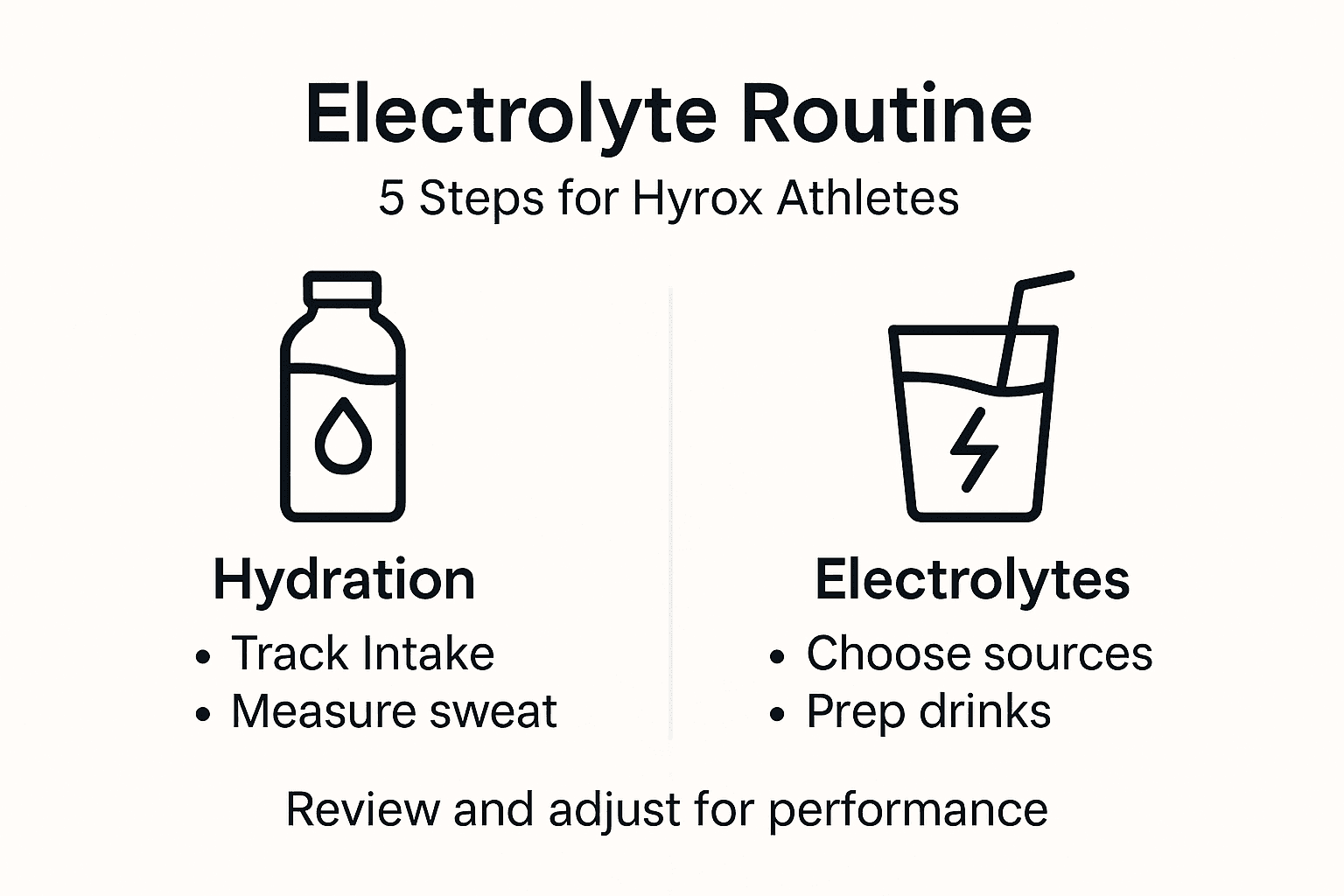
Tracking and refining your electrolyte strategy is crucial for sustained performance as a female Hyrox athlete. Recovery method effectiveness relies on systematic evaluation of multiple performance indicators that reveal the true impact of your hydration approach.
Establish a comprehensive monitoring system that captures both quantitative and qualitative data. Develop a detailed tracking journal documenting key metrics including muscle soreness intensity, perceived energy levels, workout completion times, recovery duration, and subjective feelings of fatigue. Utilise heart rate variability measurements and weekly performance assessments to create an objective baseline for understanding how electrolyte interventions influence your physiological responses. Consider incorporating technology like fitness watches or specialised recovery tracking applications to streamline data collection and analysis.
Periodically review your electrolyte intake strategy every four to six weeks, making incremental adjustments based on accumulated performance data. Look for patterns indicating mineral deficiencies or excess supplementation. Be prepared to modify your approach dynamically rather than maintaining a rigid protocol. Remember that individual metabolic responses can shift with changes in training intensity, environmental conditions, and personal fitness progression.
Expert advice: Create a standardised weekly review template that allows rapid identification of electrolyte strategy effectiveness and provides clear visual indicators of your physiological adaptation.
Unlock Your Best Performance With Natural Electrolyte Support
Female Hyrox athletes face unique challenges balancing hydration and electrolyte replenishment during intense training. This article highlights the critical need for a personalised electrolyte workflow that accounts for individual sweat rates, mineral needs, and recovery goals. If fatigue, muscle cramps or inconsistent energy levels are holding you back from peak performance, it is time to upgrade your hydration routine with high quality, natural supplements.
Discover how our Bundle – Interval collection provides expertly crafted electrolyte formulas designed specifically for high intensity athletes like you.
Take control of your training outcomes today by choosing from our all natural pre-workout and electrolyte options at https://useinterval.co.uk. Explore the Pre-workout – Interval range for energy and focus boosters that complement your hydration plan. Elevate your training and recovery with supplements you can trust. Act now to experience better endurance, faster recovery, and consistent performance tailored just for female Hyrox athletes.
Frequently Asked Questions
How can I assess my personal hydration needs as a female Hyrox athlete?
To assess your hydration needs, weigh yourself before and after high-intensity workouts to calculate fluid loss. Track your fluid intake and urine colour to monitor your hydration status, aiming for a pale yellow baseline.
What natural electrolyte supplements should I consider for my training?
Focus on natural electrolyte supplements that contain essential minerals like sodium, potassium, magnesium, and calcium. Choose whole food sources such as sea salt extracts or coconut water to ensure balanced mineral intake during your workouts.
How can I prepare effective electrolyte drinks for extended training sessions?
Create electrolyte drinks using filtered water, natural sea salt, coconut water, magnesium powder, and calcium sources. Measure ingredients accurately and prepare drinks in advance, adjusting concentrations based on your training duration and intensity.
When should I consume electrolytes during high-intensity workouts?
Consume electrolytes before, during, and after workouts, adjusting the quantities based on workout length. For sessions exceeding 60 minutes, focus on sodium and potassium to maintain performance and prevent fatigue.
How can I monitor and adjust my electrolyte intake strategy?
Keep a detailed journal of key performance metrics such as energy levels and muscle soreness to evaluate your electrolyte strategy. Review this data every four to six weeks to make necessary adjustments based on your individual physiological responses.
What should I include in my tracking system for hydration and electrolyte consumption?
Develop a comprehensive monitoring system that captures fluid intake, performance metrics, and recovery data. Include details like perceived energy levels and muscle fatigue to identify patterns and make informed adjustments to your hydration strategy.
Recommended
- 7 Essential Electrolyte Tips for Female Hyrox Athletes – Interval
- Why Hyrox Athletes Need Electrolytes for Performance – Interval
- Complete Guide to Optimising Electrolyte Intake – Interval
- Electrolyte Stacking: Unlocking Peak Hyrox Performance – Interval
- What Is Electrolyte Drink? Complete Guide UK – MyGymSupplements