


Fasted Workouts – Impact on Hyrox Race Training
Early morning training sessions before breakfast can leave you wondering if you are making the most of your Hyrox preparation. For many British women aged 30 to 50, understanding how fasted workouts interact with energy, hydration, and recovery is key to building endurance and confidence on race day. This guide will break down practical fasted training principles for Hyrox athletes, highlighting the best strategies for natural pre-workouts and electrolytes so you can train smarter, stay safe, and feel strong each week.
Table of Contents
- Fasted Workouts Defined And Key Principles
- Types Of Fasted Workouts For Hyrox Athletes
- How Fasted Sessions Affect Performance And Fat Loss
- Role Of Natural Pre-Workouts And Electrolytes
- Risks, Limitations, And Who Should Avoid Fasted Training
Key Takeaways
| Point | Details |
|---|---|
| Fasted Workouts Strategy | Engage in fasted workouts to enhance fat oxidation and metabolic flexibility, particularly during aerobic base-building phases. |
| Session Types | Focus on suitable session types; fasted training is ideal for steady-state aerobic sessions, while high-intensity efforts should be fed. |
| Individual Variability | Recognise individual differences in performance during fasted training, and adjust based on personal tolerance and response. |
| Electrolyte Importance | Ensure adequate electrolyte intake during fasted workouts to maintain performance and prevent cramping. |
Fasted Workouts Defined and Key Principles
A fasted workout is any training session completed without consuming food for an extended period, typically 8–12 hours or longer. When you train in this state, your body has depleted its readily available glycogen stores and shifts towards burning fat as fuel. For Hyrox athletes like yourself, this doesn’t mean showing up to a training session famished and unprepared. Instead, it’s a deliberate approach to timing your workouts based on physiological principles about how your body accesses energy during intense exercise. The goal isn’t deprivation; it’s strategic engagement with your metabolism during a specific window when your body operates differently.
The core principle underpinning fasted training centres on metabolic adaptation. When you exercise without recent food intake, your body relies more heavily on fat oxidation to power movement. This doesn’t automatically mean you’ll burn more total calories or that fat loss will accelerate—that’s a common misconception. Instead, fasted workouts can enhance your aerobic capacity and teach your body to utilise fat stores more efficiently over longer distances, which proves valuable during endurance focused events. Additionally, understanding energy and macronutrient intake becomes crucial when integrating fasted training because your performance depends on proper pre-session hydration and post-workout nutrition recovery.
Three key principles guide effective fasted training for Hyrox competitors. First, exercise timing matters significantly—short, high-intensity sessions typically handle fasted states better than extended endurance work, though experienced athletes can manage both with proper preparation. Second, individual variability is substantial; your tolerance, energy levels, and performance in a fasted state depend on your training history, metabolic fitness, and overall health status. What works for your training partner may leave you feeling depleted. Third, hydration and electrolyte balance become your primary support mechanism when training fasted. Without fuel, your body’s ability to regulate fluid balance shifts, making adequate electrolyte intake before and during longer sessions absolutely essential for maintaining performance and safety.
For Hyrox training specifically, fasted workouts work best for building aerobic base work and teaching your body to spare glycogen during steady state efforts. They’re less suitable for the high-intensity intervals and functional movement patterns that define race-specific preparation. The principle here is simple: reserve fasted training for sessions where intensity remains manageable and recovery demands are lower, then fuel strategically around your harder, more specific training days when your nervous system and muscles need immediate nutrient support.
Pro tip: Start with one fasted workout per week during a lower intensity base-building phase—perhaps a 40-minute steady pace session—before attempting longer or more demanding fasted efforts. This approach lets your body adapt gradually whilst you gather real data about how your individual physiology responds.
Types of Fasted Workouts for Hyrox Athletes
Fasted training isn’t a one-size-fits-all approach. Different workout types suit different training phases, and as a Hyrox competitor, you’ll benefit from varying your fasted sessions based on what you’re trying to achieve. The key is matching workout type to your current adaptation level and race preparation timeline. What works brilliantly for building aerobic capacity in January may sabotage your performance during race-specific preparation in September.
Steady-State Aerobic Sessions form the foundation of most fasted training programmes. These involve maintaining a conversational pace—roughly 60-70 percent of your maximum heart rate—for 45 to 90 minutes. Your body’s reliance on fat oxidation peaks during this intensity, making fasted conditions ideal for teaching metabolic adaptations. A typical example: a 60-minute easy run at controlled pace, completed before breakfast. This type builds your aerobic base without demanding the glycogen availability that higher intensities require. Pair this with proper pre-workout nutrition timing to understand when to fuel sessions strategically around your training week.
Functional Movement Circuits represent the second major category, though these demand careful management when fasted. Since Hyrox combines running with functional fitness exercises including rowing, sled pushes, and burpees, you might structure a fasted circuit targeting these movements at lower intensity. A 30-minute session alternating between light rowing intervals (2 minutes easy, 1 minute moderate) and movement practice—sled pushes, wall balls, or rowing technique—works well fasted because intensity stays controlled. This approach builds movement familiarity and coordination without depleting your system, preserving muscle mass whilst training the specific demands of race day.
Tempo and Threshold Work sits in the grey zone for fasted training. These higher-intensity efforts require more glycogen utilisation, making them generally unsuitable when fasted, especially as you approach race week. However, some adapted versions can work: a 20-minute session with 3 x 5-minute efforts at comfortably hard pace, separated by walking recovery, stays manageable fasted because recovery periods allow partial glycogen resynthesis. Save true lactate threshold work for fed sessions when your nervous system can handle maximum intensity demands.
Pro tip: Reserve your most challenging fasted workouts for base-building phases, and shift entirely to fed training once you enter race-specific preparation and high-intensity intervals dominate your schedule.
How Fasted Sessions Affect Performance and Fat Loss
The relationship between fasted training and performance is genuinely nuanced, and understanding it helps you make smarter decisions about when to train fasted and when to fuel up. Here’s the honest reality: fasted sessions do increase fat oxidation, meaning your body burns a higher percentage of energy from fat stores rather than carbohydrates. This sounds brilliant for fat loss until you consider the complete picture. Total energy expenditure during the session often decreases because you’re working at lower intensity or duration to maintain safety. You might burn more fat per minute, but fewer total calories during the workout. The real benefit lies in metabolic adaptation and training your aerobic system to function efficiently on fat as fuel—something that takes weeks to develop but pays dividends during endurance events.
Performance during fasted sessions depends entirely on session characteristics. Prolonged or intense fasted workouts may impair performance due to reduced glycogen availability, which becomes especially problematic when you’re attempting high-intensity intervals or complex functional movements like those in Hyrox competition. Your nervous system struggles without readily accessible carbohydrate fuel, coordination deteriorates, and power output drops noticeably. A steady-state run at conversational pace? Your body handles this well fasted. Maximal effort sled pushes or rowing sprints? Your performance will suffer significantly, which undermines the entire purpose of training race-specific movements at race-specific intensity. The critical insight is that fasted training trades immediate performance for metabolic adaptation, a trade worth making only during base-building phases when intensity stays moderate.

Fat loss outcomes require honest assessment as well. Whilst fasted training can support weight management, the research shows that total caloric balance matters far more than when you eat relative to training. Someone training fasted at low intensity burns fewer total calories than someone training at higher intensity whilst fed. Additionally, inadequate post-exercise nutrition after fasted sessions impairs recovery and muscle protein synthesis, potentially sacrificing muscle mass during periods of caloric deficit. You might lose weight, but the composition shifts unfavourably—losing muscle alongside fat.
For Hyrox athletes specifically, the performance slash fat loss equation simplifies considerably. During base-building phases (typically August to November), fasted steady-state work enhances aerobic capacity and teaches metabolic flexibility without compromising race-specific performance development. From December onwards, shift to fed training around all high-intensity and functional movement sessions, preserving fasted work only for easy recovery runs if desired. This approach maximises performance gains during critical race-preparation phases whilst capturing metabolic benefits during periods when intensity demands remain moderate.
Here’s a concise comparison of fasted and fed training approaches for Hyrox athletes:
| Aspect | Fasted Training | Fed Training |
|---|---|---|
| Suitable Session Types | Aerobic base runs, easy circuits | High-intensity intervals, race simulation |
| Primary Benefit | Improved fat oxidation, metabolic flexibility | Maximum power output, optimal coordination |
| Risk Factors | Low energy, dizziness, muscle loss risk | Less risk, but may impair fat adaptation |
| Ideal Timing | Base-building phase, early season | Race preparation, high-intensity blocks |
Pro tip: Track how you feel during and 2-3 hours after fasted sessions using a simple rating scale (1-10 for energy, coordination, and mood) for three weeks to identify your individual response pattern before building fasted training into your regular schedule.
Role of Natural Pre-Workouts and Electrolytes
When you train fasted, you’re removing one major support system—food—so your reliance on other nutritional tools increases substantially. This is where natural pre-workout supplements and electrolytes become genuinely important rather than optional extras. The distinction matters: you’re not adding these to amplify an already-fuelled state. You’re using them to maintain safe, sustainable performance when your glycogen stores are depleted. Natural pre-workout formulations utilising caffeine from coffee or tea, beta-alanine, beetroot juice, or adaptogens like rhodiola provide mental clarity and modest energy support without the digestive load of solid food. For fasted sessions, this approach works brilliantly because you get performance support without triggering hunger or gastrointestinal discomfort that often accompanies training on an empty stomach.
Electrolytes deserve special attention during fasted training because they’re non-negotiable for safety and performance. Electrolyte balance during physical activity maintains fluid retention, prevents cramping, and preserves your nervous system’s ability to coordinate complex movements—all critical in Hyrox competition. Sodium, potassium, magnesium, and calcium work together to regulate muscle contraction and hydration status. Without food intake, your electrolyte supply dwindles, making pre-fasted-session supplementation essential. A practical approach involves consuming a natural electrolyte drink containing sodium (ideally 300–500 mg per 500 ml fluid), potassium, and magnesium approximately 15–20 minutes before training. This timing allows absorption without creating a heavy feeling or urgency to stop for bathroom breaks during your session. Natural sources like coconut water offer solid electrolyte content, though concentrated supplemental forms provide more predictable dosing during intense sessions.
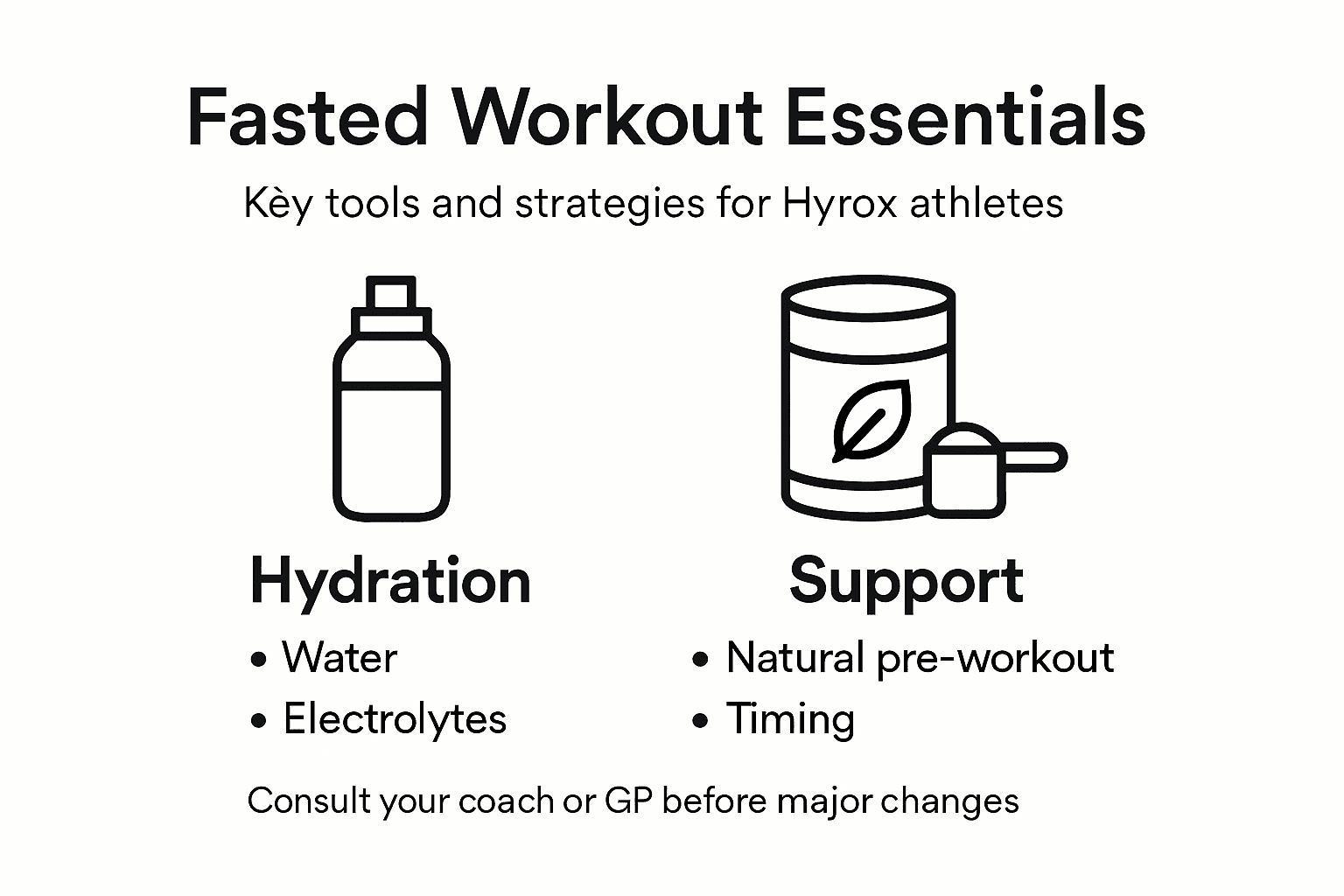
The synergy between natural pre-workouts and electrolytes addresses a specific challenge fasted athletes face: maintaining focus and muscular function whilst working without carbohydrate fuel. Consider a 60-minute fasted run. Without electrolyte support, your plasma volume decreases, your cardiovascular system works harder to maintain blood pressure, and your perceived exertion climbs noticeably—you feel like you’re pushing harder even at the same pace. Add an electrolyte drink consumed during the session (for efforts longer than 45 minutes), and your cardiovascular stability improves, mental fatigue decreases, and your pace stays more consistent. Pair this with a modest natural pre-workout consumed beforehand, and you’ve created conditions where fasted training becomes sustainable rather than brutally difficult. Understanding how to prepare natural pre-workout drinks gives you flexibility to customise formulations to your individual tolerance and preferences, which matters enormously when training without the buffer that food normally provides.
Timing becomes crucial when combining these tools with fasted training. Consume your natural pre-workout 15–20 minutes pre-session; this allows active compounds to reach peak blood levels as you begin training. For sessions exceeding 75 minutes, sip your electrolyte drink throughout, aiming for 150–250 ml every 15–20 minutes depending on sweat rate and temperature. Post-workout, shift focus entirely to recovery nutrition—consume carbohydrates and protein within 30 minutes to replenish glycogen stores and support muscle repair. This protocol treats your fasted session as a deliberate training stimulus, not a missed feeding opportunity.
The table below highlights key considerations for safe and effective use of natural pre-workouts and electrolytes during fasted sessions:
| Factor | Natural Pre-Workouts | Electrolyte Intake |
|---|---|---|
| Purpose | Mental clarity, light energy | Hydration, muscle function, safety |
| Example Sources | Coffee, beetroot juice, rhodiola | Coconut water, sodium tablets, magnesium supplements |
| Timing | 15–20 min pre-session | Before and during sessions over 45 min |
| Main Caution | Avoid overstimulation | Prevent excess intake, monitor response |
Pro tip: Test your pre-workout and electrolyte combination during a low-stakes training session before relying on it during important workouts, as individual tolerance varies dramatically and discovering incompatibility during a race-pace effort creates unnecessary complications.
Risks, Limitations, and Who Should Avoid Fasted Training
Fasted training isn’t universally appropriate, and pretending otherwise creates unnecessary risk for people who genuinely shouldn’t attempt it. The honest reality is that training without food creates physiological stress, and for certain individuals, that stress crosses from beneficial adaptation into genuine danger. Fasted training carries risks including dizziness, hypoglycaemia, and decreased exercise capacity, especially for vulnerable populations including those new to training, individuals managing medical conditions, or women over 40 with hormonal sensitivities. These aren’t minor inconveniences—they’re signals that your body cannot safely operate in that state. A dizzy spell during a Hyrox race simulation that includes sled pushes isn’t just uncomfortable; it’s genuinely dangerous when you’re fatigued and coordinating complex functional movements.
Certain groups should avoid fasted training entirely unless under direct medical supervision. Type 1 or Type 2 diabetics managing their condition face unpredictable blood glucose responses during fasted exercise, making hypoglycaemia risk unacceptably high. Women managing polycystic ovarian syndrome (PCOS) often experience exaggerated cortisol responses to fasted training, which can worsen insulin resistance and mood stability. Those with a history of disordered eating or orthorexia should steer clear completely; fasted training can reinforce unhealthy relationships with food and exercise. Individuals recovering from injury or illness have depleted nutritional reserves and compromised immune function, making the additional stress of fasted training counterproductive to healing. Additionally, if you’re managing thyroid conditions, adrenal fatigue, or chronic stress, fasted training can suppress thyroid hormones and amplify cortisol dysregulation—exactly the opposite of what your system needs.
Practical limitations exist even for suitable candidates. Fasted training becomes unreliable once you exceed approximately 90 minutes of sustained moderate-to-hard effort. Your glycogen stores deplete significantly, your central nervous system begins failing to coordinate complex movements reliably, and performance gains disappear. For Hyrox athletes specifically, fasted race-pace training doesn’t exist. Your race will be fuelled, so your training should mirror those conditions. Fasted training serves base-building phases exclusively. Once you enter specific race preparation, fasted sessions become counterproductive because they train your body to operate under conditions opposite to race day reality. Understanding your physiological limits and health status before attempting fasted training proves absolutely essential for safety and long-term training sustainability.
Medical consultation becomes necessary if you have any uncertainty about your suitability. A GP familiar with your health history can assess whether fasted training poses genuine risk or simply feels uncomfortable because it’s new. Age alone doesn’t disqualify you—women in their 40s and 50s complete successful Hyrox races using strategic fasted training—but individual metabolic factors, medication interactions, and baseline fitness substantially influence appropriateness. The conversation costs nothing and prevents months of struggling with an approach that simply doesn’t work for your particular physiology. This isn’t weakness; it’s intelligent self-awareness that separates sustainable training from injury and burnout.
Pro tip: If you’ve experienced unexplained fatigue, mood disruption, or persistent hunger increases after attempting fasted sessions, accept that approach doesn’t suit your individual physiology and shift to fuelled training without guilt or comparison to others’ experiences.
Enhance Your Fasted Workouts with Natural Support
Training fasted challenges your body to maintain energy, focus and performance without relying on immediate food intake. The article highlights how key aspects like hydration, electrolyte balance and mental clarity become vital to sustain aerobic base sessions and functional movement circuits safely and effectively. If you are pushing through steady-state Hyrox training or moderate fasted efforts, settling for less than optimal support can leave you depleted, uncoordinated or risking muscle loss.
Discover the power of natural ingredients designed to complement your fasted training regimen. Our Bundle – Interval offers a tailored combination of plant-based pre-workout supplements and essential electrolytes that promote mental alertness, muscle function and hydration without breaking your fast or causing discomfort.
Fuel your adaptive training sensibly and protect your performance now by choosing natural solutions that work hand in hand with your fasted efforts. Explore the range on our Collection Page – Interval or visit our Home page – Interval to learn more. Take control at https://useinterval.co.uk and make your fasted workouts safer smarter and more satisfying today.
Frequently Asked Questions
What is a fasted workout?
A fasted workout is any training session completed without consuming food for 8–12 hours or longer, meaning your body relies more on fat as fuel.
What are the benefits of fasted workouts for Hyrox athletes?
Fasted workouts can enhance aerobic capacity and improve the body’s ability to utilise fat stores, making them beneficial for endurance-focused training.
Can I perform high-intensity workouts while fasted?
High-intensity workouts are generally unsuitable for fasted training due to reduced glycogen availability, which can impair performance and coordination.
How should I hydrate during fasted workouts?
During fasted workouts, it’s crucial to maintain proper hydration and electrolyte balance by consuming electrolyte drinks approximately 15–20 minutes before and during sessions longer than 45 minutes.