


Healthy post-workout habits that actually work
TL;DR:
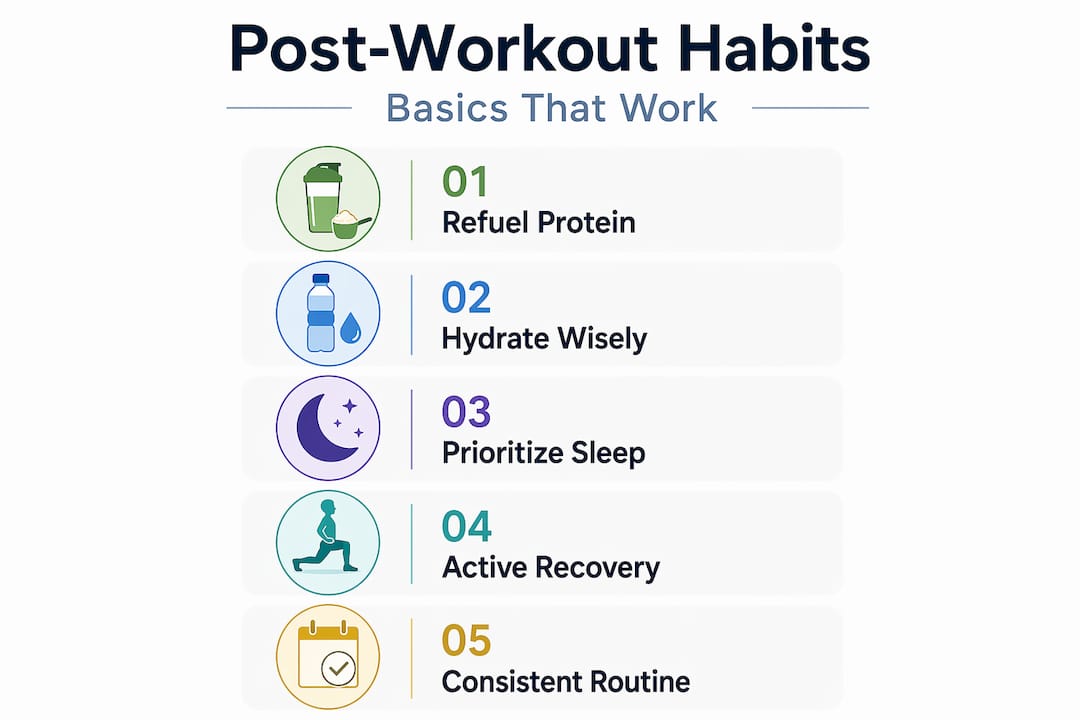
- Most post-workout habits are neglected, and poor nutrition, hydration, and stretching undermine progress. Building consistent recovery routines, focusing on flexible protein timing, adequate sleep, and proper rehydration, drives better results than gimmicks. Prioritize basic habits like balanced meals, sufficient sleep, and gentle cool-downs to optimize muscle repair and prevent setbacks.
Most people put real effort into their training and then undo half of it in the hour that follows. Poor nutrition choices, skipping the cool-down, and treating hydration as an afterthought are far more common than any coach would like to admit. Building healthy post-workout habits is where genuine progress is made or quietly lost. This article covers what the evidence actually says about nutrition timing, hydration after exercise, sleep, and recovery routines — cutting through the myths so you can get more out of every session without overcomplicating your life.
Table of Contents
- Key takeaways
- Nutrition after training: what to eat and when
- Hydration after exercise: what you actually need
- Sleep: the recovery tool most athletes underrate
- Cool-down, stretching, and active recovery
- My honest take on building a recovery routine
- Support your recovery with Useinterval
- FAQ
Key takeaways
| Point | Details |
|---|---|
| Protein timing is flexible | Aim for 20-40g of quality protein within 2-3 hours post-workout, not a rigid 30-minute window. |
| Skip sports drinks for most sessions | Plain water and a balanced meal cover electrolyte needs unless you trained hard for over 90 minutes. |
| Sleep is your best recovery tool | Seven to nine hours nightly, with a consistent bedtime, delivers more muscle repair than any supplement. |
| Cool-down is non-negotiable | Gradual cool-downs and static stretching post-exercise reduce soreness and support long-term mobility. |
| Consistency beats perfection | Reliable daily habits drive results far more than chasing the perfect post-workout protocol. |
Nutrition after training: what to eat and when
Here is a myth worth burying immediately. The “30-minute anabolic window” that gym culture obsessed over for decades is not as narrow as you were told. The post-workout protein window extends to roughly 2-3 hours, which means the world does not end if you shower and cook a proper meal before eating. If you had a protein-rich meal within one to two hours before training, amino acid availability remains elevated well into your session, making immediate post-workout protein even less critical.
That said, what you eat still matters enormously. The target is 20-40g of high-quality protein, and the source deserves attention:
- Whey protein digests quickly and delivers a strong leucine spike, which directly triggers muscle protein synthesis. It is the most studied and reliable option after intense training.
- Casein digests slowly, making it well suited to a pre-sleep meal rather than an immediate post-workout shake.
- Plant-based proteins such as pea or rice blends are viable if dosed slightly higher, around 35-40g, to compensate for lower leucine density.
Carbohydrates matter too, but context determines urgency. Rapid glycogen replenishment via carbohydrates is genuinely important only when you have another training session within eight hours. If you train once a day, a normal mixed meal restores glycogen perfectly well without precise timing. Athletes doing double sessions or competing in multi-event days should aim for 1.0-1.5g of carbohydrate per kilogram of bodyweight in the first two hours post-exercise.
Pro Tip: A bowl of Greek yoghurt with banana and a handful of oats is one of the most practical healthy refuelling options available. It hits protein, carbohydrates, and micronutrients without requiring meal prep or a blender.
Two common mistakes deserve a direct warning. First, excessive dietary fat in the immediate post-workout meal slows gastric emptying and delays the delivery of amino acids and glucose to muscle tissue. Keep fat moderate in that first meal. Second, and more seriously, alcohol post-workout reduces muscle protein synthesis by 37% and compounds sleep disruption on top of that. A post-training pint is not a neutral choice.
| Recovery goal | Best food source | Timing |
|---|---|---|
| Muscle repair | Whey, eggs, Greek yoghurt | Within 2-3 hours post-session |
| Glycogen restoration | Oats, rice, banana | Same meal if training again within 8 hours |
| Overnight repair | Casein (cottage cheese, milk) | 30 minutes before sleep |
Hydration after exercise: what you actually need
Sweat rate varies enormously between individuals and conditions, but the rehydration principle is consistent. Drink enough fluid after training to cover your losses. A simple method is to weigh yourself before and after a session. Each kilogram of bodyweight lost represents approximately one litre of fluid deficit.
Sports drinks are widely misrepresented. Sports drinks are unnecessary for most people unless they are performing intense exercise lasting longer than 60-90 minutes or training in extreme heat. For a 45-minute strength session or a moderate run, water and a balanced post-workout meal cover all your electrolyte needs without the added sugar.
Signs your hydration is off after training:
- Dark urine (amber or deeper) is a reliable early indicator of under-hydration
- Headache and light-headedness suggest significant fluid deficit
- Muscle cramping post-session often points to sodium and magnesium depletion
- Clear, odourless urine after two or three glasses of water signals good restoration
Overhydration is a real and underappreciated risk, particularly for endurance athletes who drink water aggressively without replacing sodium. Hyponatraemia, where blood sodium drops dangerously low, has caused serious harm at mass-participation events. You can learn more about balancing electrolyte intake for high-intensity training, but the short version for most sessions is this: drink to thirst, eat a proper meal with salt, and skip the sports drink unless the session genuinely demanded it.
Pro Tip: Add a small pinch of sea salt to your post-workout water if you trained hard for over an hour, particularly in warm conditions. It costs nothing and replaces sodium without the sugar load of commercial sports drinks.
Sleep: the recovery tool most athletes underrate
Sleep is not passive downtime. It is the window during which the body does its most intensive repair work, and no post-workout protocol substitutes for it. Athletes need 7-9 hours nightly, with research linking fewer than seven hours to an 18% reduction in muscle protein synthesis and a 40% higher injury rate. Those numbers are not marginal. They represent a serious training disadvantage that no supplement can offset.

The quality of sleep matters as much as the duration. Around 70% of daily growth hormone is released during deep slow-wave sleep, which is concentrated in the first half of the night. Going to bed later does not simply shift this window later. It compresses it. Earlier sleep times genuinely deliver more hormonal recovery output, which is why sleep architecture and consistency matter beyond raw hours. Irregular sleep schedules impair testosterone and HGH secretion even when total sleep hours appear adequate.
Practical habits that protect sleep quality:
- Finish high-intensity training at least two hours before bed. Training within 90 minutes of sleep onset impairs deep, restorative sleep stages.
- Avoid caffeine after 2pm if you are sensitive to it. The half-life of caffeine is around five to six hours, meaning an afternoon coffee is still active at 10pm.
- Keep your room cool and dark. Core body temperature needs to drop for sleep onset, and light exposure suppresses melatonin production.
- Eat 30-40g of casein protein before bed. Pre-sleep casein increases overnight muscle protein synthesis by approximately 22%, turning sleep into an active recovery window.
Pro Tip: Cottage cheese is one of the best pre-sleep protein sources available. It contains roughly 25g of casein protein per 200g serving, costs very little, and requires zero preparation.
Strategic napping is also worth considering. A 20-minute nap in the early afternoon can meaningfully restore alertness and reduce the fatigue accumulation that follows intense morning training. Avoid napping after 3pm, as it starts to compete with night-time sleep onset.
Cool-down, stretching, and active recovery
How to cool down after workouts is one of the most undervalued parts of the training process, largely because the benefits are diffuse rather than immediately visible. A proper cool-down does not just feel good. It gradually lowers heart rate, reduces the pooling of blood in the extremities, and begins the shift from sympathetic to parasympathetic nervous system dominance, which is the state where recovery actually happens.
A useful post-workout movement sequence:
- Light cardio for 5-10 minutes. Walking or cycling at low intensity is enough. This maintains blood flow while allowing your cardiovascular system to descend gradually rather than stopping abruptly.
- Dynamic movements for any joints worked. Hip circles, shoulder rolls, and controlled leg swings keep range of motion fluid and reduce early stiffness.
- Static stretching for major muscle groups. Hold each stretch for 30-60 seconds. Static stretching is most effective after exercise when muscles are warm, and stretching routines post-workout consistently show a reduction in delayed-onset muscle soreness over training cycles.
- Foam rolling on tight areas. Work slowly through the glutes, thoracic spine, and calves. Foam rolling after training reduces perceived muscle soreness and improves range of motion in subsequent sessions.
- Breathing. Two minutes of slow diaphragmatic breathing is a fast-track back to parasympathetic state. It is not complicated and it works.
Active recovery days, where you move without imposing significant muscular stress, are some of the best recovery tips for athletes regardless of sport. Light swimming, a slow cycle, or a thirty-minute walk improve circulation, clear metabolic waste, and prevent the stiffness that builds after consecutive rest days. Sitting completely still after hard training blocks is rarely the optimal approach.
My honest take on building a recovery routine
I have watched a lot of people spend real money on recovery gadgets and supplements while consistently sleeping six hours and skipping their cool-down. The gap between what the fitness industry sells as recovery and what actually moves the needle is significant.
In my experience, the biggest wins come from the basics done reliably. Getting your protein in across the day, going to bed at the same time, and spending ten minutes cooling down after every session. These are not glamorous, but consistency in training and recovery habits consistently outperforms any clever protocol applied sporadically.
The marketing around hydration particularly frustrates me. Most people I speak to are drinking electrolyte supplements after a 40-minute gym session because they saw an athlete doing it online. That athlete was likely training for three hours in the heat. Context matters enormously, and the sports nutrition industry has a strong financial incentive to blur that context.
My practical advice: build the floor before worrying about the ceiling. Lock in your sleep, eat enough protein daily, rehydrate with water and food, and stretch properly. Once those are consistent, then consider where targeted supplementation might genuinely add value rather than fill a gap left by skipped basics.
— Tom
Support your recovery with Useinterval
If your training is genuinely high-intensity, your recovery demands are higher than average. The basics still apply, but there are gaps where quality supplementation fills a real role rather than a marketed one.
Useinterval’s Starter Bundle is built around natural ingredients designed to support both performance and recovery. Whether you need clean pre-workout fuel or electrolyte support for sessions that actually challenge your system, it covers both without the unnecessary additives that clutter most products. If you are training hard and taking your recovery seriously, it is worth a look.
FAQ
How long after a workout should I eat?
Aim to eat within 2-3 hours of finishing your session. If you had a protein-rich meal before training, the timing is even more flexible, as post-workout protein timing is less critical when amino acids are already elevated in your system.
Do I need a sports drink after exercise?
For most training sessions under 90 minutes, no. Sports drinks are not necessary when a balanced meal and water will replenish electrolytes adequately. Reserve them for long, intense sessions or training in high heat.
How much sleep do athletes need for recovery?
The research is consistent: 7-9 hours nightly is optimal. Under seven hours is linked to an 18% reduction in muscle protein synthesis and significantly elevated injury risk, making sleep the most important single recovery variable.
What is the best stretching routine after a workout?
Start with 5-10 minutes of light cardio to bring your heart rate down, then move into static stretches held for 30-60 seconds per major muscle group. Foam rolling afterwards on tight areas helps reduce soreness in the days that follow.
Does alcohol affect muscle recovery?
Yes, significantly. Alcohol consumed after training reduces muscle protein synthesis by 37% and compounds sleep disruption, making it one of the most damaging choices you can make in the post-workout window.