


Role of Protein Pre-Workout: Complete Athletic Guide
Over 60 percent of gym-goers overlook how protein timing can shape their results. Understanding when and what protein to take before a workout has the potential to impact muscle growth, energy, and overall recovery. With so much confusion around pre-workout supplements and conflicting advice everywhere, learning the science-backed facts behind protein pre-workout strategies can give your training routine a real advantage.
Table of Contents
- Protein Pre-Workout: Core Concepts Explained
- Types of Protein Used Pre-Workout
- How Protein Supports High-Intensity Training
- Optimal Timing and Dosage for Results
- Risks, Myths, and Mistakes to Avoid
- Natural Protein Supplements for Uk Athletes
Key Takeaways
| Point | Details |
|---|---|
| Protein supplementation enhances performance | Consuming protein before workouts optimizes muscle protein synthesis and improves energy availability during training. |
| Timing and dosage matter | Aim for 20-30 grams of protein 30-45 minutes before exercise for optimal results based on body weight and training intensity. |
| Choose the right protein source | Select protein types that align with your dietary needs and training goals, such as whey for quick absorption or plant-based proteins for sustainability. |
| Avoid common pitfalls | Be cautious of low-quality supplements and the misconception that more protein equals better performance; focus on quality over quantity. |
Protein Pre-Workout: Core Concepts Explained
Protein pre-workout supplementation represents a strategic approach to enhancing athletic performance and muscle development. The core concept revolves around consuming protein before exercise to optimise nutrient timing and metabolic preparation. According to Wikipedia, nutrient timing is a sophisticated sports dieting concept that emphasises synchronising nutrient intake with exercise to improve muscular development and performance.
The metabolic process underlying protein pre-workout consumption centres on preparing your body’s protein synthesis mechanisms. Protein intake before training can help transition your physiological state from potentially catabolic to anabolic. Wikipedia describes this critical period as the “metabolic window” or “anabolic window” - a strategic timeframe where nutrient intake can significantly influence muscle mass development.
Key benefits of protein pre-workout supplementation include:
- Enhanced muscle protein synthesis
- Improved energy availability during training
- Potential reduction in muscle breakdown
- Faster post-exercise recovery
For athletes considering protein pre-workout strategies, understanding individual metabolic responses is crucial. While general principles exist, personalisation remains key. For more detailed insights into optimising your approach, check out our pre-workout timing guide.
Protein pre-workout supplementation isn’t one-size-fits-all. Your body’s unique composition, training intensity, and nutritional requirements will determine the most effective strategy.
Types of Protein Used Pre-Workout
Selecting the right protein type for pre-workout nutrition can significantly impact your athletic performance. According to Best Protein Powder Online, understanding the nuanced differences between protein sources is crucial for optimising your supplementation strategy.
Whey Protein stands out as the most popular pre-workout protein source. Its rapid absorption rate makes it ideal for quick nutrient delivery. Breaking down into three primary variants - concentrate, isolate, and hydrolysate - each offers unique benefits. Concentrate provides a balanced nutritional profile, isolate offers higher protein percentages with minimal fats, while hydrolysate delivers the fastest absorption rate.
Other prominent protein types include:
- Casein Protein: Slow-releasing, excellent for sustained amino acid delivery
- Plant-Based Proteins: Perfect for vegan athletes, including pea, hemp, and rice protein
- Egg Protein: High biological value with comprehensive amino acid profile
- Beef Protein: Rich in creatine and amino acids, popular among strength athletes
For athletes seeking comprehensive nutritional guidance, our vegan pre-workout benefits guide provides in-depth insights into alternative protein sources. Understanding your body’s specific requirements and training goals will help you select the most appropriate protein type for optimal pre-workout performance.

How Protein Supports High-Intensity Training
Protein plays a critical role in supporting high-intensity athletic performance by providing essential nutritional infrastructure for muscle adaptation and recovery. Gala Research highlights that pre-workout multi-ingredient supplements containing protein can produce comparable resistance training outcomes, demonstrating the significant impact of strategic protein consumption.
During high-intensity training, protein metabolism becomes dramatically accelerated. Your muscles require rapid amino acid delivery to support intense physical exertion, prevent muscle breakdown, and initiate immediate repair processes. Research indicates that protein intake before training can help athletes maintain muscle integrity while providing the necessary building blocks for strength and endurance.
Key mechanisms of protein support during high-intensity training include:
- Preventing muscle protein breakdown
- Stimulating muscle protein synthesis
- Providing rapid energy substrate
- Reducing exercise-induced muscle damage
- Supporting hormonal response to training stress
Interestingly, Gala Research also discovered that protein supplementation can lead to notable body composition changes, including reductions in fat mass and increases in fat-free mass during a 6-week resistance training programme. For those looking to dive deeper into nutritional strategies, our intra-workout supplements guide offers additional insights into optimising your training nutrition.
Optimal Timing and Dosage for Results
Nutrient timing represents a critical strategy for maximising athletic performance and muscle development. Wikipedia defines this approach as consuming the right nutrients at ideal times relative to exercise to potentially improve performance and recovery. Understanding the precise window for protein intake can significantly enhance your training outcomes.
The traditional recommendation of consuming protein immediately before or after training has evolved.
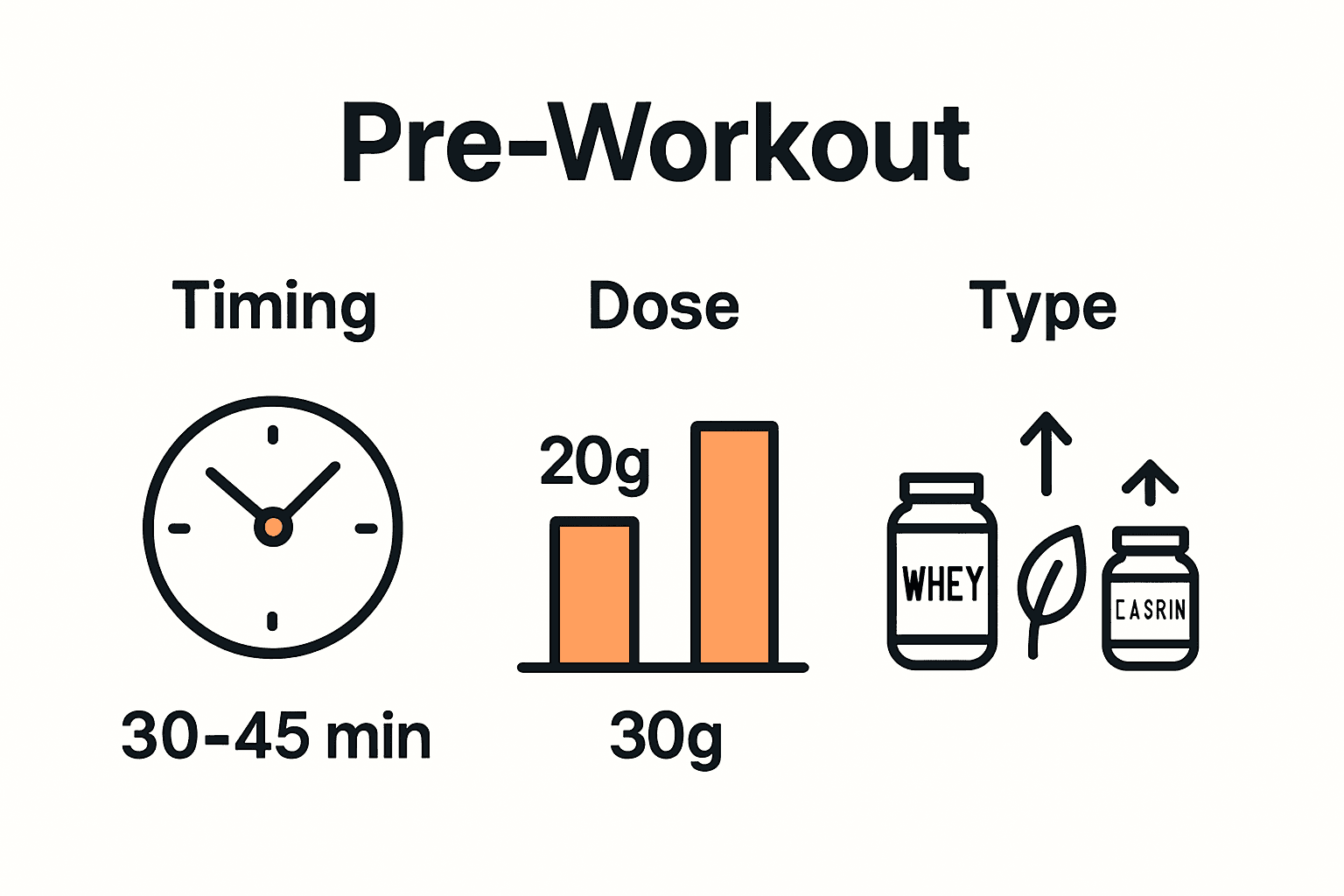 Protein absorption varies depending on the type of protein and individual metabolic factors. For high-intensity athletes, consuming 20-30 grams of protein approximately 30-45 minutes before training typically provides optimal muscle preparation and energy substrate.
Key considerations for pre-workout protein dosage include:
- Body weight (0.4-0.5g of protein per kg of body weight)
- Training intensity
- Specific fitness goals
- Protein type and digestibility
- Individual metabolic response
Wikipedia notes that while the “metabolic window” concept suggests immediate nutrient consumption enhances muscle growth, scientific evidence remains inconclusive. For athletes seeking targeted nutritional strategies, our pre-workout timing guide for Hyrox athletes offers more nuanced insights into personalising your protein intake approach.
Risks, Myths, and Mistakes to Avoid
Pre-workout protein supplementation involves navigating several potential pitfalls that can compromise your fitness goals. Nature highlights a critical concern regarding supplement selection: the hidden sugar content that can sabotage your nutritional strategy. Many athletes unknowingly consume high-calorie supplements that counteract their training efforts.
Common myths and misconceptions about protein pre-workout can lead athletes astray. The belief that more protein automatically means better performance is fundamentally flawed. Protein overconsumption can result in unnecessary caloric intake, potential digestive issues, and metabolic stress. Your body can only process a limited amount of protein effectively during any given timeframe.
Key risks and mistakes to avoid include:
- Consuming low-quality supplements with excessive additives
- Ignoring individual metabolic differences
- Believing protein alone guarantees muscle growth
- Neglecting overall nutritional balance
- Overlooking potential allergenic ingredients
- Assuming all protein sources are equal
Men’s Fitness emphasises the importance of selecting protein powders with minimal additives and sugars. For athletes seeking comprehensive guidance on avoiding these common nutritional traps, our natural pre-workout routine guide provides deeper insights into making informed supplementation choices.
Natural Protein Supplements for UK Athletes
Natural protein supplementation has become increasingly sophisticated for athletes seeking clean, minimally processed nutrition. Men’s Fitness highlights the growing demand for protein powders that prioritise quality ingredients and transparent nutritional profiles specifically for UK athletes.
The landscape of natural protein supplements encompasses diverse sources tailored to different dietary requirements and performance goals. Plant-based proteins have emerged as a particularly compelling option, offering comprehensive amino acid profiles without animal-derived ingredients. These supplements provide athletes with sustainable, allergen-friendly alternatives that support intense training regimens.
Key characteristics of high-quality natural protein supplements include:
- Minimal processing
- Organic ingredient sourcing
- No artificial additives
- Third-party testing
- Complete amino acid profiles
- Transparent ingredient lists
- Sustainable production methods
British GQ emphasises the importance of selecting protein powders free from gluten and unnecessary additives. For athletes looking to explore comprehensive natural supplement strategies, our guide to plant-based pre-workouts offers deeper insights into making informed nutritional choices.
Unlock Your Full Potential with Protein Pre-Workout Solutions
Struggling to optimise your muscle strength and endurance during high-intensity training sessions is a common challenge highlighted in the article. Key goals include enhancing muscle protein synthesis, preventing muscle breakdown, and ensuring optimal nutrient timing within the so-called metabolic window. If you want to feel stronger, recover faster, and push past your limits you need a clean, effective pre-workout formula designed precisely for athletes like you.
Explore our range of natural Pre-workout – Interval supplements crafted to provide the protein support and energy release required for peak performance. Whether you aim to prevent muscle fatigue or achieve better body composition these products align perfectly with the principles discussed.
Take control of your training nutrition today. Visit https://useinterval.co.uk to find premium protein pre-workout supplements, explore complementary Electrolyte – Interval options to stay hydrated and check out our Recovery – Interval products for faster muscle repair. Don’t let suboptimal nutrition hold you back – act now and boost your athletic performance with scientifically informed, natural nutrition solutions.
Frequently Asked Questions
What are the benefits of protein pre-workout supplementation?
Protein pre-workout supplementation offers several benefits, including enhanced muscle protein synthesis, improved energy availability, potential reduction in muscle breakdown, and faster post-exercise recovery.
How much protein should I consume before a workout?
A common recommendation is to consume 20-30 grams of protein approximately 30-45 minutes before training, although individual factors such as body weight and training intensity may affect this guideline.
What types of protein are best for pre-workout nutrition?
Whey protein is highly popular due to its rapid absorption. Other effective options include casein protein for sustained release, plant-based proteins for vegan athletes, and egg protein for a complete amino acid profile.
Can protein pre-workout help with high-intensity training?
Yes, protein pre-workout can support high-intensity training by preventing muscle breakdown, stimulating muscle protein synthesis, and providing rapid energy substrates to aid in performance and recovery.