


Why Take Supplements After 40: Sports Performance Impact
Most British women notice that post-workout recovery gets harder after 40, and more than 60 percent struggle to find supplements that genuinely support their athletic goals. As your training intensifies, the right natural supplements become vital for muscle repair, energy, and long-term health. Understanding which ingredients suit the unique demands of a British woman’s body after 40 helps you make smart, safe choices for sustainable high-performance sport and faster recovery.
Table of Contents
- Supplements After 40: Core Concepts Explained
- Natural Ingredients Versus Synthetic Options
- How Ageing Affects Sports Recovery and Energy
- Navigating Safety, Legality, and UK Supplement Standards
- Common Mistakes and Myths in Supplement Use
Key Takeaways
| Point | Details |
|---|---|
| Personalised Supplementation is Crucial | Women athletes over 40 should focus on tailored supplement strategies to address unique physiological changes and support performance. |
| Quality Over Quantity | Emphasising high-quality nutrients like proteins, omega-3 fatty acids, and micronutrients is essential for joint health and muscle preservation. |
| Natural vs. Synthetic Choices | Prioritising natural supplements can provide a broader nutrient profile and may enhance bioavailability compared to synthetic options. |
| Understanding Regulatory Standards | Staying informed about UK supplement regulations is vital to ensure safety and avoid the risk of inadvertent doping in athletes. |
Supplements After 40: Core Concepts Explained
As women enter their fourth decade, understanding supplement strategies becomes increasingly critical for maintaining sports performance and overall health. Physiological changes demand a more targeted approach to nutritional support, moving beyond generic recommendations towards personalised supplementation strategies. Evidence-based research indicates that our nutritional requirements fundamentally shift after 40, necessitating a nuanced understanding of how supplements can support athletic performance.
The core concept revolves around metabolic adaptation and supporting the body’s changing biochemical landscape. During this life stage, muscle protein synthesis becomes more challenging, recovery times lengthen, and hormonal fluctuations impact energy metabolism. Targeted supplements can help counteract these natural declines by providing essential nutrients that support muscle maintenance, reduce inflammation, and enhance cellular recovery. Strategies for workout supplement selection become increasingly sophisticated, focusing on quality and bioavailability rather than quantity.
Key supplementation considerations for women athletes over 40 include prioritising nutrients that support joint health, muscle preservation, and metabolic efficiency. This means focusing on high-quality protein sources, amino acids, omega-3 fatty acids, and micronutrients that support hormonal balance and cellular repair. The goal is not merely performance enhancement but sustainable athletic longevity, ensuring that your body remains resilient and responsive to high-intensity training.
Pro tip: Consult with a sports nutritionist who specialises in female athletes over 40 to develop a personalised supplementation strategy tailored to your specific training goals and physiological needs.
Here’s a comparison of common supplement types and their benefits for women athletes over 40:
| Supplement Type | Main Benefit | Consideration |
|---|---|---|
| Protein and Amino Acids | Supports muscle maintenance | Choose high bioavailability |
| Omega-3 Fatty Acids | Reduces inflammation | Source from marine oils |
| Micronutrients | Supports hormonal balance | Check for UK-approved sources |
| Plant-Based Extracts | Enhances overall recovery | Look for synergistic nutrients |
Natural Ingredients Versus Synthetic Options
Navigating the complex landscape of sports supplements requires understanding the fundamental differences between natural and synthetic ingredients. Research examining dietary supplement advancements reveals critical nuances in ingredient sourcing, bioavailability, and potential health impacts for athletes over 40. Natural ingredients, derived directly from whole food sources, often provide a more comprehensive nutrient profile compared to their synthetic counterparts.
Synthetic supplements typically offer precise dosage control and concentrated nutrient delivery, but may lack the holistic nutritional complexity found in natural alternatives. Plant-based ingredients contain phytonutrients, enzymes, and cofactors that work synergistically, potentially enhancing absorption and effectiveness. Natural supplement strategies demonstrate particular advantages for women athletes, especially those experiencing metabolic changes and increased oxidative stress after 40.
Key considerations when choosing between natural and synthetic options include bioavailability, potential side effects, and individual physiological response. Natural supplements derived from whole food sources tend to provide more balanced nutrition, reducing the risk of nutrient imbalances common with isolated synthetic compounds. For high-intensity female athletes, this means prioritising supplements that support comprehensive cellular health, hormonal balance, and sustainable performance.
Pro tip: Request third-party testing certificates for any supplements you consider, ensuring purity, potency, and absence of contaminants in both natural and synthetic formulations.
To help navigate supplement choices, here’s how natural and synthetic ingredients differ:
| Ingredient Source | Nutrient Profile | Absorption Potential | Typical Use Case |
|---|---|---|---|
| Natural (Whole Food) | Rich in phytonutrients | Higher with cofactors | Comprehensive health |
| Synthetic | Precise dosage | Variable, may lack complexity | Specific deficiency correction |
How Ageing Affects Sports Recovery and Energy
Scientific research exploring athletic performance transitions reveals profound physiological changes that dramatically impact energy metabolism and recovery processes for women athletes after 40. The ageing process triggers complex biochemical shifts that fundamentally alter muscle regeneration, mitochondrial efficiency, and metabolic responsiveness. These transformations mean that high-intensity training strategies which once yielded quick results now require more nuanced, targeted approaches.

Mitochondrial function becomes a critical determinant of athletic performance during this life stage. Cellular energy production slows, reducing muscle recovery rates and increasing vulnerability to oxidative stress. Hormonal fluctuations further compound these challenges, with decreased testosterone and oestrogen levels directly influencing muscle protein synthesis, muscle mass maintenance, and overall metabolic resilience. Post-workout electrolyte management becomes increasingly important as the body’s natural regenerative mechanisms become less efficient.
Recovery protocols must evolve to address these physiological changes. Women athletes over 40 need longer recovery windows, more targeted nutritional interventions, and strategies that prioritise cellular repair over pure performance metrics. This might involve reduced training intensity, increased recovery periods, and supplementation approaches that support mitochondrial health, reduce inflammation, and enhance cellular regeneration.
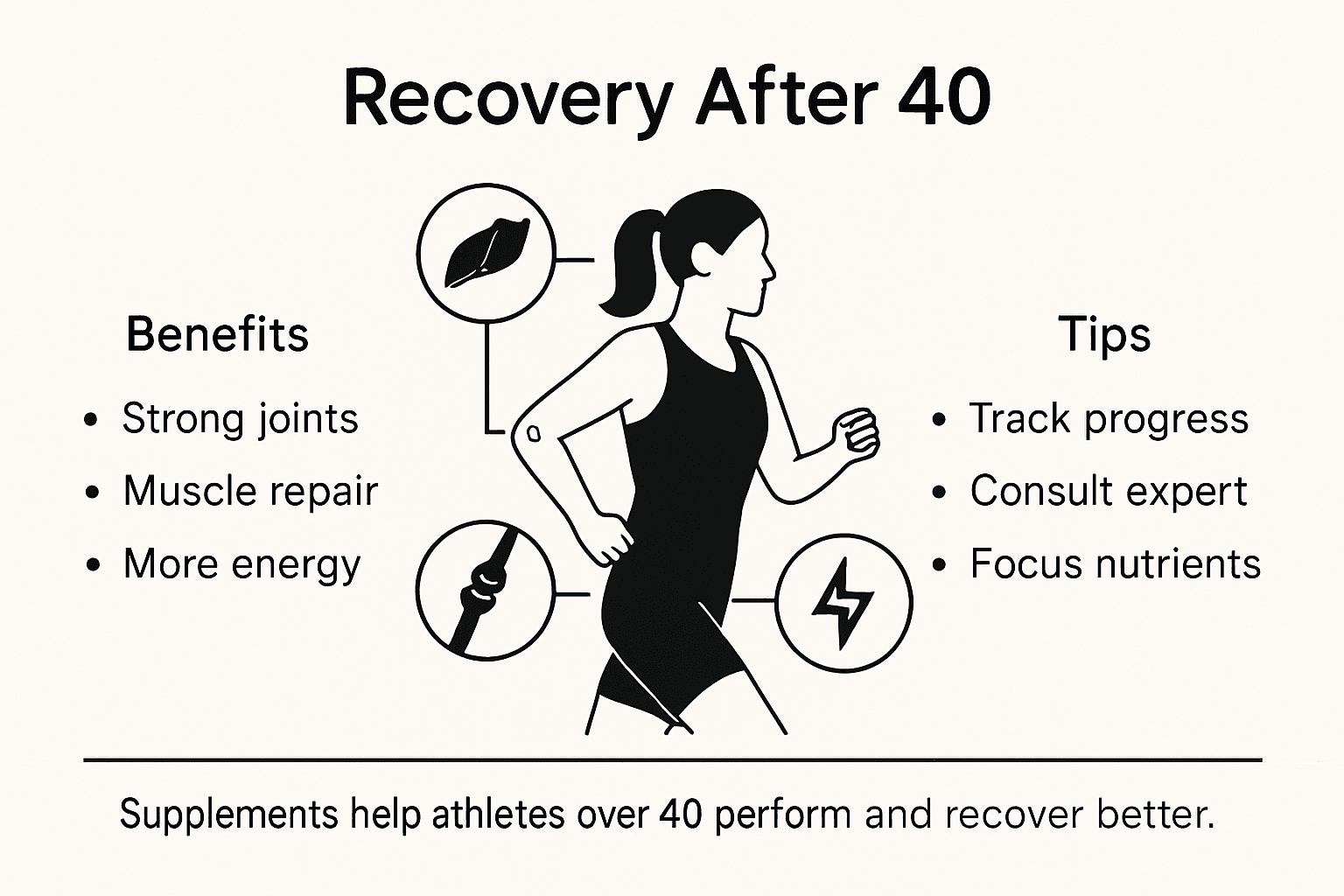
Pro tip: Implement a comprehensive recovery tracking system that monitors not just performance metrics, but also subjective indicators like sleep quality, muscle soreness, and energy levels to personalise your training approach.
Navigating Safety, Legality, and UK Supplement Standards
The IOC consensus statement on dietary supplements provides crucial guidance for athletes navigating the complex landscape of supplement regulations in the United Kingdom. Athletes over 40 must understand that supplement safety extends beyond simple ingredient lists, requiring comprehensive risk assessment and stringent compliance with national standards. The regulatory environment in the UK demands meticulous scrutiny of every supplement to prevent potential legal and health complications.
Understanding inadvertent doping risks becomes paramount for athletes seeking performance enhancement. UK supplement standards mandate rigorous testing and transparent labelling, but athletes remain ultimately responsible for everything entering their system. Performance enhancement strategies must prioritise supplements from reputable manufacturers who can provide comprehensive third-party testing documentation and clear provenance of ingredients.
The UK’s supplement regulatory framework emphasises consumer protection through multiple layers of oversight. This includes monitoring for banned substances, ensuring accurate labelling, and preventing misleading health claims. For women athletes over 40, this means conducting extensive research before introducing any new supplement, understanding potential interactions with existing medications, and maintaining open communication with healthcare professionals about nutritional supplementation strategies.
Pro tip: Request and thoroughly review independent laboratory testing certificates for any supplement, verifying purity, potency, and absence of prohibited substances before incorporating them into your training regimen.
Common Mistakes and Myths in Supplement Use
Research examining supplement misconceptions reveals critical insights into the dangerous landscape of supplement myths for women athletes over 40. The primary fallacy is believing that supplementation can replace a balanced, nutrient-rich diet. Many athletes mistakenly view supplements as a magic solution, overlooking the fundamental principle of nutrition: food should always be the primary source of essential nutrients.
One of the most persistent supplement myths centres on the belief that more is always better. Common workout supplement misconceptions highlight that indiscriminate supplementation can lead to potential health risks, particularly for women experiencing metabolic changes after 40. A systematic review of antioxidant vitamins demonstrates that many popular supplements provide minimal, if any, performance benefits, and can potentially interfere with the body’s natural adaptive responses to training.
Specifically for women athletes, supplement myths often revolve around quick fixes and miracle solutions. The reality is far more nuanced. Hormonal changes, reduced muscle protein synthesis, and altered metabolic efficiency require a targeted, carefully researched approach to supplementation. This means prioritising quality over quantity, understanding individual nutritional needs, and recognising that supplements are precisely that - supplemental to a comprehensive nutrition and training strategy.
Pro tip: Maintain a detailed nutrition and supplement journal to track how different supplements impact your performance, recovery, and overall well-being, allowing for personalised, evidence-based adjustments.
Boost Your Performance After 40 with Targeted Natural Supplements
Transitioning into your forties demands a smart and personalised supplementation strategy that supports muscle maintenance, reduces inflammation, and enhances recovery. If you are engaging in high-intensity sports but notice longer recovery times and reduced energy, you are not alone. Many women athletes face these challenges due to metabolic adaptations and hormonal changes described in the article. Addressing these concerns means choosing supplements rich in natural ingredients that offer high bioavailability, helping you sustain performance and longevity.
Explore our range of Pre-workout – Interval supplements designed specifically with natural components to support energy metabolism and endurance during intense training. For optimal recovery and hydration tailored to your evolving needs, check out our Electrolyte – Interval collection. Both categories focus on quality and purity, aligning with the article’s advice to prioritise trusted, natural ingredients.

Don’t let age define your athletic limits. Visit Use Interval now to discover supplements that empower your high-intensity workout journey after 40. Take action today to enhance recovery, maintain muscle strength, and fuel lasting performance.
Frequently Asked Questions
What are the key benefits of supplements for athletes over 40?
Supplements for athletes over 40 help support joint health, muscle maintenance, and metabolic efficiency. They provide essential nutrients that address physiological changes such as hormonal fluctuations and increased recovery times.
How do age-related changes in metabolism affect athletic performance?
As women age, metabolic adaptation makes muscle protein synthesis more challenging, and recovery times lengthen. Targeted supplementation can help counteract these declines by providing nutrients that support muscle maintenance and reduce inflammation.
Should I prioritise natural or synthetic supplements as an athlete over 40?
Natural supplements often provide a more comprehensive nutrient profile, including phytonutrients and cofactors that enhance absorption. Synthetic supplements offer precise dosage control but may lack the holistic benefits of natural ingredients. Choosing the right option depends on individual needs and responses.
What common mistakes should I avoid when taking supplements after 40?
A common mistake is relying on supplements as a replacement for a balanced diet. It’s essential to remember that supplements should complement, not replace, nutrient-rich foods. Over-supplementation can also lead to health risks, so it’s crucial to focus on quality over quantity.