


Synergistic Supplementation: Boosting Hyrox Performance
Finding the right balance of nutrients can make all the difference when your body is pushed to the limit in a Hyrox competition. For high-intensity female athletes in the United Kingdom, understanding how natural supplementation works together is the edge you need for faster recovery and reliable performance. By focusing on synergistic supplementation, you tap into science-backed benefits that maximise muscle repair, energy refuelling, and hormonal stability. This approach guides you in choosing combinations that truly support every demanding session.
Table of Contents
- Synergistic Supplementation In Sports Nutrition
- Key Supplement Types And Ingredient Interactions
- How Synergy Enhances Athletic Performance
- Practical Applications For Hyrox Athletes
- Risks, Safety, And Uk Anti-Doping Standards
Key Takeaways
| Point | Details |
|---|---|
| Synergistic Supplementation | Combining multiple nutrients optimally supports recovery, energy systems, and muscle adaptation rather than using isolated supplements. |
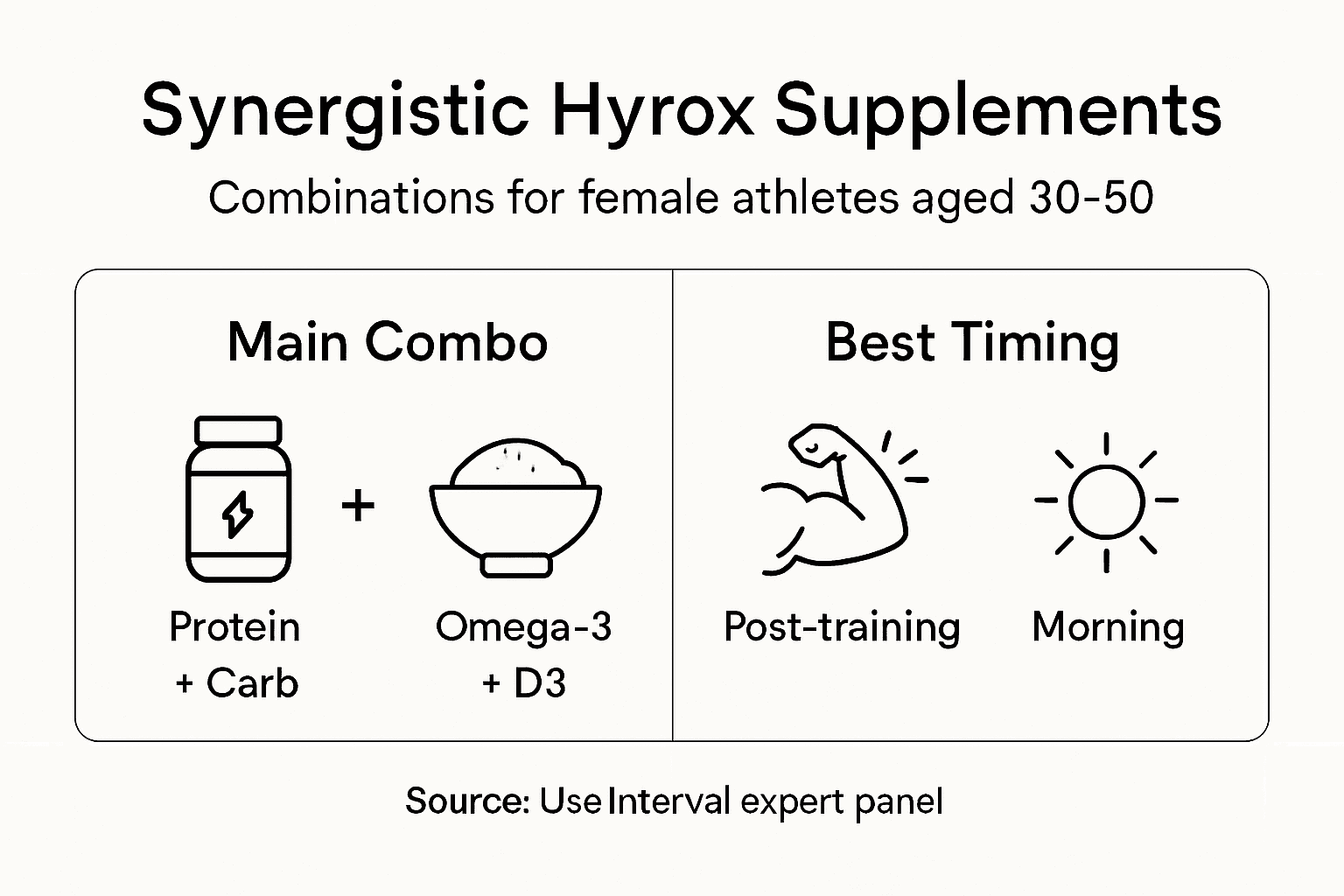
| Timing of Nutrients | Consuming protein and carbohydrates within 30 minutes post-training enhances nutrient absorption and recovery efficiency. |
| Targeted Formulations | Female athletes aged 30-50 benefit from tailored supplementation that considers hormonal shifts and specific physiological needs. |
| Safety and Regulations | Athletes must ensure supplements are batch-tested and comply with UK Anti-Doping policies to avoid contamination risks. |
Synergistic supplementation in sports nutrition
Synergistic supplementation means combining multiple nutrients in ways that amplify each other’s effects—rather like how adding honey to lemon tea makes both the sweetness and tartness more noticeable. When you’re training for Hyrox, your body isn’t asking for isolated nutrients; it’s asking for coordinated support across recovery, energy systems, and muscular adaptation. The science backs this up: combining proteins and carbohydrates in specific ratios optimises glycogen replenishment, muscle regeneration, hormonal balance, and electrolyte restoration—the physiological processes your body prioritises after those intense obstacle course sessions. This isn’t about taking more supplements; it’s about taking the right ones in combinations that work together.
Consider what happens during a typical Hyrox event. Your energy systems deplete. Your muscles develop microscopic tears that need repair. Your electrolytes dissipate through sweat. Your hormonal balance shifts. A single supplement addressing one issue leaves the others unresolved. However, when you combine branched-chain amino acids (BCAAs) with carbohydrates, you’re not just providing building blocks for muscle repair—you’re creating an environment where protein synthesis accelerates and glycogen resynthesis happens faster. Add essential minerals like magnesium and sodium, and your nervous system recovers more completely. Research on synergistic supplementation strategies integrating nutrition and training shows that athletes using coordinated nutrient combinations experience significantly faster strength gains and reduced injury risk compared to those taking random supplements. The timing matters equally. Taking carbohydrates with protein within 30 minutes of finishing your training session creates a metabolic window where nutrient absorption and utilisation reach peak efficiency. This coordination is where the real benefit lives.
For female athletes aged 30-50, synergistic supplementation addresses specific physiological needs that generic approaches miss. Your body’s recovery capacity differs from younger athletes, partly due to hormonal shifts. Your mineral needs around hydration differ based on training intensity and individual sweat rates. Your muscle protein synthesis responds well to adequate protein intake combined with specific micronutrients like vitamin C and vitamin E, which support collagen formation and reduce oxidative stress from intense training. Rather than building a supplement stack based on marketing claims, think about building a recovery system. Start with a natural pre-workout containing carbohydrates and electrolytes designed to fuel your performance during the event itself. Follow with a post-workout recovery combination pairing protein with carbohydrates and key minerals. Layer in additional support based on your individual weaknesses—whether that’s joint integrity, muscular endurance, or hormonal stability. The synergy comes from these layers working together, each one supporting the others’ effectiveness.
One practical approach: map your Hyrox training week and identify the days requiring maximum recovery investment. Those are your days to prioritise comprehensive synergistic support. On lighter training days, simpler nutrition covering protein and carbohydrates suffices. This adaptive approach means you’re not overloading your system unnecessarily, but you’re providing concentrated support exactly when your body needs it most. When evaluating whether supplements work together synergistically, ask yourself whether each component addresses a different physiological need or whether they’re redundantly targeting the same mechanism. Quality natural ingredients—real carbohydrate sources rather than refined sugars, actual amino acid profiles rather than incomplete blends, genuine mineral concentrations rather than trace amounts—determine whether synergy actually occurs or whether you’re simply buying expensive placebo.
Pro tip: Document your recovery quality (sleep depth, soreness levels, energy the following day) for two weeks using basic synergistic supplementation, then compare against your baseline—you’ll quickly see whether the combination your body’s responding to, not just whether individual supplements claim benefits.
Key supplement types and ingredient interactions
Not all supplements work equally well when taken together. Some genuinely amplify each other’s benefits, whilst others simply sit alongside one another doing their individual jobs. Understanding which supplements create meaningful interactions separates effective supplementation from expensive guesswork. The core supplement types in sports nutrition include protein, creatine, branched-chain amino acids (BCAAs), caffeine, omega-3 fatty acids, vitamins, and minerals. Each serves a distinct purpose, but the real power emerges when specific combinations work synergistically. For instance, combining creatine with beta-alanine produces additive effects on lean body mass and delays fatigue onset more effectively than either supplement alone. This isn’t coincidence; it’s chemistry. Creatine enhances phosphocreatine stores for explosive power, whilst beta-alanine buffers lactic acid accumulation during sustained efforts. Together, they address two different limiting factors in high-intensity exercise, meaning your muscles function better across more training scenarios.
The most practical interaction for female Hyrox athletes involves protein combined with carbohydrates. Research shows that protein and carbohydrate combinations optimise glycogen replenishment whilst simultaneously triggering muscle protein synthesis. When you consume them separately, your body handles each nutrient efficiently. When you consume them together in the 30-minute window after training, something more valuable happens. The carbohydrates elevate insulin levels, which acts as a transport mechanism for amino acids into muscle cells. The protein provides the raw materials those cells need to repair and grow. Neither works at its full potential without the other. Magnesium and calcium interact similarly with protein absorption, supporting not just muscle recovery but also nervous system restoration. A natural pre-workout containing real carbohydrates and electrolytes fuels your performance, whilst a post-workout combining whey protein, carbohydrates, and key minerals handles recovery comprehensively. This layered approach means each ingredient type supports multiple physiological processes simultaneously.

Beyond these primary interactions, several secondary combinations warrant attention. Omega-3 fatty acids reduce systemic inflammation whilst vitamins C and E function as antioxidants, protecting against exercise-induced oxidative stress. When taken together, they create broader anti-inflammatory support than either alone, particularly valuable for female athletes navigating hormonal fluctuations that naturally increase inflammation sensitivity. Caffeine works synergistically with carbohydrates by enhancing glucose uptake and improving cognitive clarity during races, making your fuel more effective whilst your mind stays sharper. However, timing matters critically here. Caffeine before training enhances performance; caffeine after training interferes with recovery sleep, which negates the benefits of your supplementation stack. Consider how your ingredients interact not just chemically, but temporally within your training schedule. When evaluating whether to combine specific supplements, ask three questions: Do they target different physiological systems? Do their mechanisms of action support rather than compete with each other? Will the timing of consumption allow each to work optimally? If you answer yes to all three, you’ve likely found a genuine synergistic combination worth pursuing.
One common mistake involves combining too many supplements simultaneously, assuming more creates better results. Your digestive system has limits. Excessive supplement volume can actually reduce absorption efficiency of each component. Instead, build your stack methodically. Start with your foundation: quality protein and carbohydrates in the proper ratio. Layer in electrolytes and minerals supporting hydration and recovery. Only then consider adding performance-enhancing ingredients like creatine or caffeine. When cycling supplements to optimise performance, your body remains responsive to their effects rather than developing tolerance. Track which combinations produce tangible results—improved power output, faster recovery, better sleep quality, reduced soreness. Trust evidence you can measure rather than marketing claims you cannot verify.
Here’s how core supplement combinations support Hyrox performance for female athletes aged 30–50:
| Combination | Target Outcome | Best Timing |
|---|---|---|
| Protein + Carbohydrates | Muscle recovery, glycogen refuelling | Within 30 mins post-training |
| Creatine + Beta-Alanine | Strength gains, delayed fatigue | Daily, pre- or post-training |
| Omega-3 + Vitamins C & E | Reduced inflammation, antioxidant support | With meals |
| Electrolytes + Carbohydrates | Hydration, sustained energy | Pre/and during intense sessions |
Pro tip: Start with just protein and carbohydrates in a 3:1 ratio within 30 minutes of training completion, observe your recovery quality for two weeks, then methodically add one new supplement interaction at a time so you can identify which combinations genuinely benefit your specific physiology.
How synergy enhances athletic performance
Synergy in athletic performance isn’t metaphorical. It’s physiological. When you combine training stimulus with proper supplementation, your body responds differently than it would to either alone. The science is clear: protein supplementation synergistically enhances muscle strength gains when combined with resistance training, with strength improvements proportional to protein intake up to approximately 1.5 grams per kilogram of body weight daily. This dose-response relationship reveals something crucial. A 60-kilogram female athlete consuming 90 grams of protein daily whilst training sees measurable strength gains. That same athlete consuming 100 grams sees better gains. The synergy isn’t just the protein working; it’s the protein working in concert with the mechanical stress your muscles experienced during training. Without the training, extra protein provides minimal benefit. Without adequate protein, even excellent training delivers suboptimal results. Together, they create something greater than their individual effects.
Your muscles don’t function as isolated units during Hyrox. They activate in coordinated patterns. When you’re scaling walls, navigating under obstacles, or sprinting between stations, specific muscle groups work together in precise sequences. Understanding how muscle synergy optimises coordinated motor control reveals why supplementation timing and composition matter so profoundly. Your nervous system coordinates muscular activation patterns refined through training. Supplementation supports the physiological adaptations underlying those patterns. When you take protein and carbohydrates within 30 minutes of training, you’re not just feeding muscles in isolation. You’re supporting the neurological and hormonal signalling that consolidates the movement patterns you just trained. The minerals in your post-workout recovery fuel nerve transmission. The amino acids support neurotransmitter synthesis. The carbohydrates replenish glycogen stores not just in muscles, but in the brain controlling those muscles. This layered support means your body adapts faster and more completely to training demands.
For female athletes aged 30-50, this synergistic approach addresses a specific challenge. Your recovery capacity naturally decreases slightly compared to younger athletes, primarily due to hormonal shifts and accumulated training stress. This doesn’t mean you can’t perform at elite levels. It means synergy becomes non-negotiable rather than optional. A 25-year-old athlete might see decent results with mediocre supplementation and excellent training. A 40-year-old athlete needs the synergy working perfectly to achieve equivalent results. When you pair your training with supplementation that addresses hydration, mineral balance, protein synthesis, and hormonal support simultaneously, you’re not adding complexity. You’re optimising every recovery mechanism your body possesses. The difference emerges over 8-12 weeks. Your power output improves. Your soreness decreases disproportionately compared to just training harder. Your sleep quality improves despite increased training volume. Your injury risk drops because your tissues recover more completely.
The practical reality involves recognising which performance adaptations you’re pursuing and building supplementation supporting those specific adaptations. If your goal involves muscular endurance for the obstacles and running sections, synergistic support focuses on carbohydrate availability, electrolyte balance, and amino acids supporting sustained effort. If your goal involves power for tyre flips and wall climbs, synergistic support emphasises creatine, quick-digesting carbohydrates, and minerals supporting explosive contractions. If your goal involves injury prevention and joint durability for the repetitive impact, synergistic support incorporates omega-3 fatty acids, collagen-supporting nutrients, and antioxidants reducing exercise-induced inflammation. None of these approaches is universally superior. Your synergistic supplementation strategy must align with your actual training goals. This alignment between training focus, supplementation composition, and performance objectives is where the magic lives. When these three elements sync, improvements accelerate noticeably. When they misalign, you’re spending money on supplements supporting adaptations you’re not actually training for.
Starting with natural performance boosters designed for high-intensity results means selecting supplements with transparent ingredient lists and dosages aligned to research. Avoid vague proprietary blends. Look for specific carbohydrate sources, identifiable protein types, and mineral concentrations matching scientific protocols. Track one variable at a time as you build your synergistic stack. Did your power improve when you added creatine? Did your recovery improve when you optimised protein timing? Did your endurance improve when you increased carbohydrate availability during training? This evidence-based approach means your supplementation becomes genuinely customised to your physiology rather than generic.
Pro tip: Establish your baseline performance metrics (power, speed, soreness, sleep quality) for two weeks without changing supplementation, then introduce your synergistic stack and measure identical metrics weekly, allowing you to quantify precisely which combinations actually work for your individual physiology rather than assuming research outcomes apply universally.
Practical applications for Hyrox athletes
Theory only gets you so far. At some point, you need to know exactly what to take, when to take it, and how much. For Hyrox athletes, three supplement categories deliver measurable results when implemented strategically. Creatine monohydrate boosts strength and rapid energy production during explosive movements like tyre flips and wall climbs. The standard protocol involves 3 to 5 grams daily, consistently, for at least 4 weeks before expecting performance gains. This isn’t a supplement you take only on race day; it’s a foundation you build over months. Beta-alanine buffers lactic acid accumulation during high-intensity intervals, which is precisely what Hyrox demands. Most athletes use 3 to 5 grams daily in divided doses to minimise the tingling sensation some experience. The real benefit emerges after 4 to 6 weeks of consistent use. Electrolytes maintain hydration and muscle function throughout the event. During a typical Hyrox race lasting 60 to 90 minutes, you’ll need sodium, potassium, and magnesium replenishment alongside carbohydrate fuelling. Supplementation strategies emphasising creatine, beta-alanine, and electrolytes work synergistically because each addresses a different limiting factor in your performance.
Your race day nutrition requires a different mindset than your training supplementation. During training, you’re building adaptations. During the race, you’re preserving the adaptations you’ve built and maintaining performance despite fatigue. Start your Hyrox morning with a familiar breakfast containing carbohydrates and protein approximately 2 to 3 hours before the race. This isn’t the time to experiment. Your gut has trained on this meal dozens of times. Approximately 30 to 60 minutes before starting, consume a quick carbohydrate source with electrolytes. This tops up your muscle glycogen and primes your hydration system. During the race itself, if it lasts longer than 60 minutes, you need carbohydrate and electrolyte intake mid-race. Most athletes favour sports drinks or gels providing 30 to 60 grams of carbohydrates per hour alongside sodium to enhance absorption and fluid retention. The synergy here involves matching your fuel timing to the specific obstacles and running sections. Take your carbohydrates before the intense obstacle clusters, not after, so the fuel is available when you need it most. After crossing the finish line, prioritise protein and carbohydrates within 30 minutes. This is where your synergistic post-workout stack activates. Your muscles are primed to absorb nutrients. Your hormones are optimised for recovery. The combination of protein, carbohydrates, and minerals you consume in this window drives adaptation more effectively than the same nutrients consumed hours later.
Implementing this practically means planning backwards from race day. Eight weeks before your Hyrox event, establish your supplement foundation. Confirm your creatine and beta-alanine protocols are consistent. Optimise your daily protein intake to support muscle recovery from training. Test your race-day nutrition plan during long training sessions so your digestive system adapts before the actual event. Four weeks out, refine your intra-race fuelling strategy. Know exactly which carbohydrate product your stomach tolerates during intense effort. Practise consuming it whilst moving between obstacles during training. Know precisely how much electrolyte concentration feels comfortable. Weak sports drinks won’t provide enough sodium; overly concentrated ones cause nausea. Find your individual sweet spot. Two weeks before the race, reduce your training volume whilst maintaining intensity. This is where your supplementation becomes most important. Your body still needs protein, carbohydrates, and minerals to recover from these high-intensity sessions, but the reduced volume means you’re not overwhelmed with training stress. Your supplementation supports cleaner recovery, meaning you arrive race day fresher.
The week before your Hyrox event, focusing on race nutrition preparation becomes your primary concern. Maintain your daily supplement stack. Increase your carbohydrate intake slightly, roughly 6 to 8 grams per kilogramme of body weight daily, to maximise muscle glycogen stores. Maintain your protein intake at 1.5 to 2.0 grams per kilogramme to support muscle integrity. Ensure your sodium intake is adequate, roughly 3 to 5 grams daily, to improve fluid retention and maintain blood volume. This carbohydrate loading combined with sodium emphasis is distinctly different from your normal training nutrition. You’re not creating a training stimulus; you’re building physiological reserves for competition.
One critical mistake emerges here. Athletes often increase supplement doses dramatically before races, thinking more means better. This backfires. Your digestive system becomes stressed. Your electrolyte balance destabilises. Your energy levels fluctuate unpredictably. Instead, maintain your normal supplement doses. Trust the months of consistent supplementation you’ve built. Your synergistic stack has been working all along. Race day simply executes the plan you’ve refined through training.
Pro tip: Race your supplements during training before race day by consuming your exact race-day plan (breakfast, pre-race carbohydrates, intra-race fuelling, post-race recovery) during one long training session identical in duration to your expected Hyrox time, allowing you to identify any digestive issues in a low-stakes environment.
Risks, safety, and UK anti-doping standards
Here’s the uncomfortable reality about supplements. You are responsible for every substance in your body, regardless of whether you intentionally put it there. This principle, known as strict liability, forms the foundation of UK Anti-Doping policy. It means that if a banned substance appears in your system during testing, you face consequences even if contamination occurred through manufacturing error or labelling mistakes. You cannot claim ignorance. You cannot blame the supplement company. The responsibility sits entirely with you. This isn’t punishment without reason; it’s the framework protecting competitive integrity across all UK sport. Understanding strict liability in supplement use means understanding that good intentions provide no legal protection. A supplement contaminated with a banned anabolic agent, even at trace levels from shared manufacturing equipment, could end your athletic career. This isn’t hypothetical. It happens to athletes every year, and many didn’t intentionally take anything banned. They simply chose poorly when selecting supplements.
The contamination risks are genuine and varied. Manufacturing facilities processing multiple products sometimes cross-contaminate ingredients. Labelling errors result in products containing undisclosed substances. Some supplement manufacturers deliberately add unlisted banned substances to make their products more effective, banking on athletes not testing them. Others operate in countries with minimal regulatory oversight, where quality control is inconsistent. Your local health shop supplement may have been manufactured anywhere, tested by no independent body, and verified by no external authority. The supply chain is opaque. The only solution involves rigorous verification. First, consult qualified sports nutrition professionals who understand UK Anti-Doping rules, not social media influencers or gym staff suggesting random supplements. Second, use only batch-tested supplements with verified batch numbers available for checking. Third, keep detailed records of every supplement you consume, including batch numbers and purchase dates. If you’re ever tested, you’ll need this documentation to demonstrate you chose responsibly. This due diligence won’t guarantee protection, but it demonstrates you took contamination risks seriously.
Selecting supplements safely requires understanding what makes a product trustworthy. Look for supplements carrying third-party testing certifications from organisations like Informed Sport or NSF. These certifications mean independent laboratories tested the product against banned substance lists. Check that the batch number on your specific product matches the tested batch; manufacturers sometimes change formulations. Read ingredient labels carefully. If you cannot pronounce an ingredient or don’t understand what it does, research it before consuming it. Avoid products making extraordinary performance claims or using deliberately vague “proprietary blend” labels hiding exact ingredient amounts. Supplement purity standards protect female athletes from contamination risks by ensuring transparent labelling and rigorous testing. Look for natural ingredient sourcing and British or European manufacturing when possible, as regulatory oversight is stricter. Cost matters here too. Genuinely premium supplements tested and verified cost more. If a product seems suspiciously cheap, ask yourself why. Often it’s because testing and verification didn’t happen.
Below is a safety reference for supplement selection under UK Anti-Doping standards:
| Requirement | Importance for Athletes | Practical Tip |
|---|---|---|
| Third-party batch testing | Reduces risk of contamination | Always check batch numbers |
| Transparent ingredient labelling | Ensures substance awareness | Avoid proprietary blends |
| UK/EU manufacturing | Higher regulatory oversight | Favour British or EU brands |
| Maintain usage records | Proof of compliance | Photograph labels and keep dates |
Beyond contamination risks, individual safety considerations matter. Some female athletes experience adverse reactions to specific supplements. Beta-alanine causes tingling sensations in some people, which isn’t dangerous but can be disconcerting during racing. Creatine may cause water retention, which some athletes dislike. Caffeine affects sleep differently across individuals. High electrolyte concentrations can cause digestive upset in some athletes. The synergistic approach we’ve discussed works beautifully when individual components suit your physiology. It backfires when you’re sensitive to specific ingredients. Start new supplements individually, not in combinations, so you can identify any problematic reactions. Wait at least one week between introducing new supplements. Track any physical changes, including sleep quality, digestive comfort, energy levels, and performance. This methodical approach takes longer but prevents discovering problematic reactions during your Hyrox race.
The UK Anti-Doping framework aligns with the World Anti-Doping Code, meaning rules remain consistent across international competition. If you compete in other countries, the same strict liability applies. Current prohibited substances lists update regularly. Substances banned today may be approved tomorrow as research evolves, though this happens rarely. Always check the UK Anti-Doping website directly before starting any new supplement, particularly if you’re competing at higher levels. For local Hyrox participation, contamination risk is lower than for elite international athletics, but the principle remains identical. You’re responsible. That responsibility is non-negotiable.
Pro tip: Before starting any new supplement, verify it against the UK Anti-Doping prohibited list, purchase only batch-tested products with printed batch numbers, photograph the label and batch number for your records, and wait at least one week after introducing each new supplement before adding another, tracking any physical changes in a training journal.
Unlock Your Hyrox Potential with Synergistic Natural Supplements
The article highlights the crucial challenge of optimising recovery and performance through carefully combined nutrients rather than isolated supplements. Female Hyrox athletes aged 30 to 50 face unique physiological demands such as hormonal shifts and hydration needs that require a balanced intake of protein, carbohydrates, and minerals in precise timing. Achieving true synergy between these elements is the key to faster recovery, greater strength gains, and enhanced endurance without risking overload or digestive issues.
At UseInterval, we understand these vital needs for natural, effective supplementation designed specifically for high-intensity sports. Our natural pre-workout and electrolyte products focus on clean ingredients that fuel your performance and support hydration with scientifically backed nutrient combinations. If you want to experience real results from your synergistic supplementation strategy, start by choosing products you can trust to work together seamlessly. Explore how our targeted solutions can help you master your supplementation timing and composition for Hyrox success. Take control of your training adaptations by visiting UseInterval today and fuel your best performance yet.
Discover the difference natural synergistic supplements make in your Hyrox journey. Visit UseInterval now to start building your perfect recovery system.
Frequently Asked Questions
What is synergistic supplementation in sports nutrition?
Synergistic supplementation involves combining multiple nutrients to enhance their effects, improving recovery, energy systems, and muscular adaptation, particularly beneficial for athletes preparing for events like Hyrox.
How does the timing of nutrient intake affect recovery for Hyrox athletes?
Taking carbohydrates with protein within 30 minutes post-training creates a metabolic window where nutrient absorption is optimised, leading to improved muscle recovery and glycogen replenishment.
Which supplement combinations are particularly effective for female Hyrox athletes?
Key combinations include protein with carbohydrates for recovery, creatine with beta-alanine for strength gains, and electrolytes with carbohydrates for hydration and sustained energy during events.
Why is it important to track the recovery quality when using supplements?
Documenting recovery quality, such as sleep depth and soreness levels, helps you identify which synergistic combinations of supplements genuinely enhance your performance and recovery, allowing for more tailored supplementation strategies.