


Training Aid Benefits for Female Hyrox Athletes
Finding the right training aid feels confusing when every product promises results yet your body demands something different as you move through your 30s and 40s. For many British female Hyrox athletes, natural supplements offer a safer alternative to synthetic options, addressing shifting recovery needs and hormone fluctuations. This guide clarifies what actually counts as a training aid, exposes misconceptions, and helps you prioritise evidence-based aids that fit your individual physiology and competition rules.
Table of Contents
- Training Aids: Definition And Misconceptions
- Natural Training Aids For High-Intensity Sports
- How Training Aids Enhance Athletic Performance
- Safety, Banned Substances, And UK Regulations
- Common Mistakes Using Training Aids
Key Takeaways
| Point | Details |
|---|---|
| Understanding Purpose | Training aids must have a specific, measurable purpose and should not replace proper training methods. |
| Focus on Individual Needs | Personalised training aids optimise performance; what works for one athlete may not work for another. |
| Timing and Dosage Matter | The timing of supplement intake significantly affects its efficacy; gradual dosage increases are crucial. |
| Stay Informed on Regulations | Always check the current WADA Prohibited List to avoid banned substances in training aids. |
Training aids: definition and misconceptions
A training aid is any tool or resource designed to enhance your athletic performance and learning process. For female Hyrox athletes, this spans everything from natural supplements and electrolyte drinks to structured workout programmes and recovery devices. The key distinction: a training aid must serve a specific, measurable purpose in your training routine.
The confusion often starts here. Many athletes assume all training aids work equally well. They don’t. What works brilliantly for endurance runners might not suit someone tackling obstacle-heavy Hyrox courses. Context matters enormously.
Common misconceptions plague this category. Here’s what most athletes get wrong:
- Thinking supplements replace proper training. No supplement creates fitness; they only support the work you’re already doing.
- Assuming more is better. Additional products don’t compound benefits linearly; poor selection wastes money and potentially stresses your body.
- Applying aids beyond their intended use. A pre-workout formulated for strength training won’t optimise your Hyrox performance the same way.
- Overlooking individual needs. What fuels your friend’s performance might cause digestive issues for you.
The right training aid amplifies your existing effort, not replaces it.
For female athletes aged 30-50, the stakes feel different. Your recovery demands shift with age. Your nutritional requirements change. Hormonal fluctuations affect energy levels and hydration needs. Generic training aids simply don’t account for these realities.
Natural supplements deserve specific attention here. Your body processes ingredients differently than younger athletes. Synthetic additives sometimes trigger sensitivities that weren’t problems previously. This is why choosing training aids with natural ingredients becomes non-negotiable for many athletes in your demographic.
The misconception that training aids are “nice to have” rather than “strategically necessary” costs athletes real performance gains. Done correctly, evidence-backed aids reduce recovery time by measurable amounts. They stabilise energy levels throughout gruelling Hyrox training blocks. They support your body’s ability to adapt to high-intensity demands.
Pro tip: Start by identifying one specific performance gap in your training, then select a single training aid that directly addresses it—this prevents overwhelm and helps you measure whether it actually works for you.
Natural training aids for high-intensity sports
Natural training aids are substances and strategies that enhance performance without synthetic additives. For female Hyrox athletes, this means focusing on ingredients your body recognises and processes efficiently. The difference between natural and synthetic matters more than many athletes realise, especially as you enter your 30s, 40s, and 50s.
Your body’s ability to utilise different compounds shifts with age. Synthetic fillers and artificial stimulants can trigger digestive discomfort or sleep disruption that younger athletes might tolerate. Natural alternatives work with your physiology rather than against it.
Key natural training aids that work
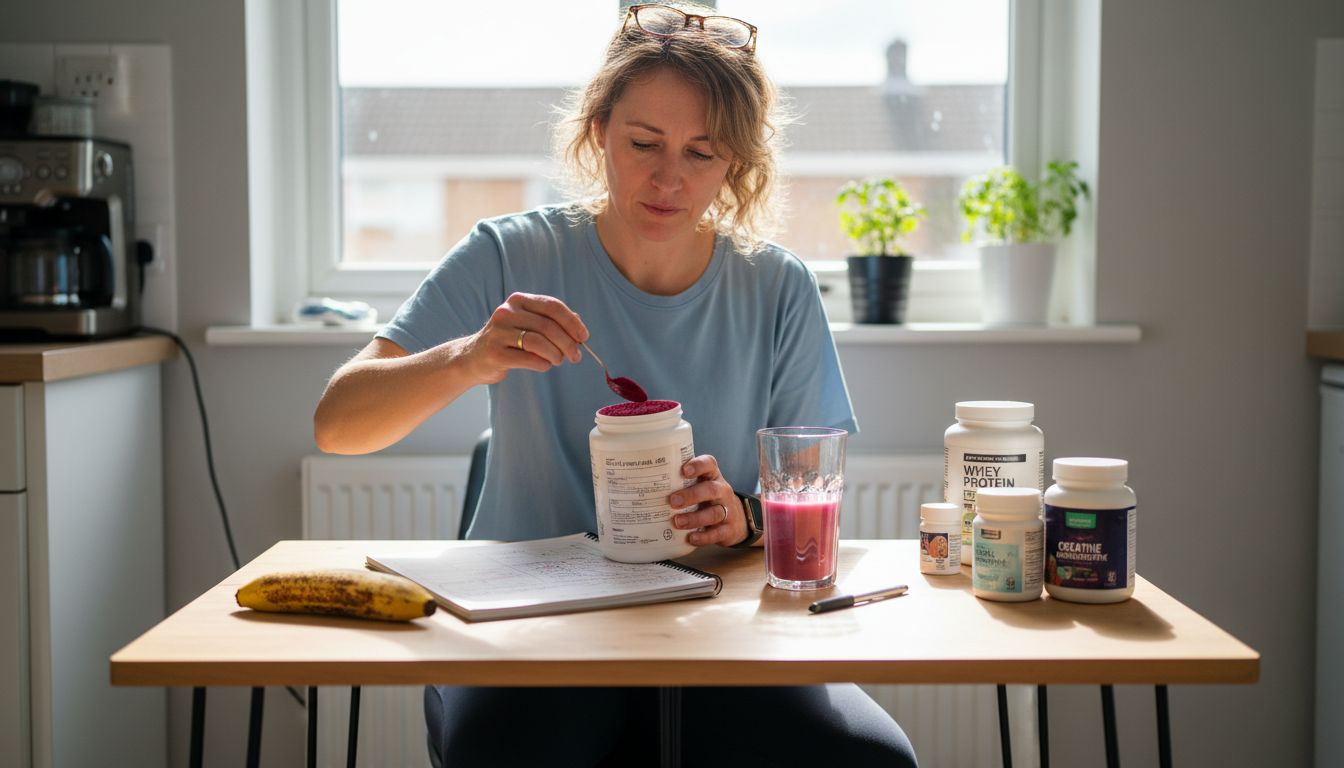
Research confirms that creatine and amino acids significantly improve muscle function during high-intensity effort. Caffeine remains one of the most studied natural aids, offering measurable endurance gains when timed correctly. Branched-chain amino acids support recovery between training sessions.
Other natural options gaining evidence include:
- Ginseng for sustained energy without the crash of artificial stimulants
- Beta-alanine to buffer muscle fatigue during obstacle courses
- Beetroot juice for improved blood flow and oxygen delivery
- Electrolytes from natural sources to maintain hydration and mineral balance
Not every natural aid works for every athlete. Individual genetic factors affect how your body responds. What delivers dramatic results for one athlete might produce modest gains for another.
Personalised supplementation beats generic protocols every time.
The temptation exists to combine multiple aids hoping for compounded benefits. Resist this. Too many supplements strain your digestive system and create interactions you cannot predict. Starting with scientific evidence for each individual supplement prevents wasting money on ineffective combinations.
Timing matters considerably. Consuming a natural energy supplement two hours before training differs fundamentally from taking it thirty minutes beforehand. Your stomach’s capacity to absorb and process compounds changes based on what else you have consumed and your current hydration status.
Regulatory considerations exist even with natural aids. Some sports organisations restrict certain substances. Research your competition rules before committing to any supplementation strategy.
Pro tip: Choose one natural training aid, use it consistently for four weeks during training, and track specific metrics like recovery time or energy levels—this simple test reveals whether it actually benefits your individual physiology.
Here is a comparison of key natural training aids, their main function, and specific considerations for female Hyrox athletes:
| Training Aid | Main Benefit | Female Athlete Consideration |
|---|---|---|
| Creatine | Increases high-intensity power | May require adjusted dosage for body mass |
| Amino acids | Accelerates muscle recovery | Supports hormone-related protein synthesis |
| Beetroot juice | Enhances oxygen delivery | May impact blood pressure, monitor usage |
| Ginseng | Provides sustained energy | Lower risk of stimulant side-effects |
| Electrolytes (natural) | Maintains hydration balance | Crucial for hormonal shifts affecting fluids |
| Caffeine | Boosts endurance | Increased sensitivity post-40, dose carefully |
| Beta-alanine | Buffers muscle fatigue | Watch for tingling, start with low doses |
How training aids enhance athletic performance
Training aids work by targeting specific physiological, nutritional, and psychological factors that limit your performance. For female Hyrox athletes, understanding this mechanism transforms how you select and use supplements. You’re not simply taking a pill; you’re strategically supporting your body’s capacity to perform and recover.
The enhancement happens across multiple pathways simultaneously. Nutritional aids improve energy metabolism by optimising how your muscles access fuel during intense effort. Mechanical aids enhance movement efficiency, reducing wasted energy. Psychological aids strengthen focus and motivation when fatigue tempts you to slow down.
The four mechanisms of enhancement
Your body responds to training aids through specific adaptations:
- Energy production – Compounds like caffeine and creatine improve how your cells generate ATP, the chemical fuel for muscle contractions
- Oxygen delivery – Certain supplements enhance blood flow, ensuring your muscles receive oxygen when demand peaks
- Recovery acceleration – Amino acids and electrolytes repair muscle damage faster, reducing soreness between sessions
- Mental resilience – Psychological aids maintain focus during grinding obstacle sections where concentration fades
These mechanisms don’t work in isolation. The best training aids create a cascading effect: better energy production enables harder training, which stimulates faster adaptation, which improves your baseline fitness. Over weeks, this compounds into measurable performance gains.
The right training aid amplifies your training stimulus, not replaces it.
Age changes how these mechanisms operate in your body. Women aged 30–50 experience different hormonal environments that affect nutrient absorption and utilisation. Your recovery demands shift. Your hydration requirements change. Generic training aids designed for younger athletes often miss these nuances entirely.
The timing of supplementation matters as much as the supplement itself. Taking a pre-workout supplement 45 minutes before training allows optimal absorption. Consuming electrolytes during effort maintains mineral balance when sweat losses peak. Post-training amino acids trigger muscle protein synthesis when your body’s recovery window opens.
Personalised strategies outperform one-size-fits-all protocols. What enhances endurance for your training partner might tax your digestive system differently. This is why testing individual supplements during low-stakes training sessions prevents disasters on race day.
Pro tip: Document your energy levels, recovery speed, and performance metrics for one week using a specific training aid, then remove it for one week—comparing these two periods reveals the actual enhancement benefit rather than relying on subjective feelings.
Safety, banned substances, and UK regulations
Not all training aids are equal in the eyes of sport regulators. The UK Anti-Doping Agency (UKAD) enforces strict rules on what you can consume before competition. Ignorance about banned substances offers no protection—you are strictly liable for whatever appears in your system.
Hyrox competitions in the UK operate under anti-doping rules aligned with World Anti-Doping Agency (WADA) standards. This means understanding what substances are banned becomes non-negotiable before selecting any supplement. One contaminated product could disqualify you from competition and damage your athletic reputation.
Common misconceptions create genuine risk. Many athletes assume natural supplements automatically pass scrutiny. Wrong. A supplement marked “natural” may contain undisclosed banned substances or contaminants that trigger a positive test. Brands sometimes cut corners on purity, either through negligence or deliberate adulteration.
What actually gets banned
UKAD and WADA prohibit:
- Anabolic agents – Performance-enhancing steroids and their precursors
- Peptide hormones – Growth hormone, erythropoietin, and similar compounds
- Stimulants – Certain amphetamines and excessive caffeine concentrations
- Masking agents – Substances designed to hide banned compounds in testing
- Beta-blockers – Prohibited in some sports to maintain fair competition
Ban categories change regularly. The WADA Prohibited List updates annually. Staying current requires checking official sources before purchasing any new supplement.
Strict liability means intent doesn’t matter—contamination equals violation.
The supplement industry operates with varying quality standards. Cheap products often contain fillers, undisclosed ingredients, or cross-contamination from banned substances during manufacturing. Reputable brands invest in third-party testing to verify purity and label accuracy, but this costs more money.
Female athletes face particular challenges. Some supplements marketed to women contain ingredients banned in sport that male-targeted products avoid. Always read ingredient lists thoroughly. Check for warning labels about anti-doping compliance.
Testing procedures are rigorous. In-competition testing catches banned substances immediately. Out-of-competition testing can occur randomly, meaning banned substances in your system weeks after consumption still result in violations.
UK regulations require supplement transparency so athletes can make informed decisions. Look for products explicitly certified as compliant with anti-doping rules. Third-party testing certifications from recognised laboratories provide genuine reassurance.
Pro tip: Before purchasing any supplement, visit the UKAD website and cross-reference every ingredient against the current WADA Prohibited List—spending five minutes checking prevents months of competition bans and career damage.
Common mistakes using training aids
Most female Hyrox athletes sabotage their own performance by using training aids incorrectly. The supplement itself matters less than how and when you deploy it. One poorly timed dose or hasty dosage increase can cost weeks of lost training.
The biggest mistake happens before supplementation even begins. Athletes skip proper warm-ups and cool-downs, assuming training aids eliminate the need for preparation. Wrong. Proper technique and gradual progression remain non-negotiable regardless of what supplement you consume. A pre-workout drink does not magically bulletproof your joints against injury from cold muscles.
Mistakes that derail progress
These errors happen repeatedly across all experience levels:
- Ramping intensity too fast – Adding a new supplement, then immediately doubling training volume and intensity
- Skipping baseline testing – Starting supplements without knowing your baseline performance metrics
- Ignoring digestion timing – Consuming supplements too close to training, causing stomach distress during effort
- Stacking untested combinations – Mixing multiple new supplements simultaneously, then blaming one when side effects appear
- Neglecting recovery strategies – Assuming supplements replace sleep, nutrition, and active recovery days
- Abandoning too quickly – Stopping a supplement after one week because results feel subtle
Timing kills more supplementation plans than poor product selection. Consuming a pre-workout supplement 15 minutes before training leaves insufficient time for absorption. Your stomach is still processing, not delivering benefits. Taking it 90 minutes beforehand means peak effectiveness happens during your warm-up, wasting the window when you need maximum support.
Proper implementation beats perfect products every time.
Women aged 30–50 experience particular timing complications. Hormonal cycles affect how your body absorbs and utilises supplements. What works brilliantly during follicular phases might cause bloating or energy crashes during luteal phases. Tracking these patterns prevents blaming the supplement when the issue is cycle timing.
Overtraining represents another silent killer. Supplements enable harder training, which feels productive. But harder training without adequate recovery triggers burnout, injuries, and hormonal disruption. Your body needs rest days regardless of what aids you consume. More training plus supplements does not equal better adaptation—it equals breakdown.
Increasing dosage too quickly creates tolerance and side effects. A standard pre-workout dose should stabilise before increasing. Most athletes give supplements only 2–3 sessions before concluding they don’t work, when benefits emerge after consistent use over weeks.
Pro tip: Introduce one new training aid every two weeks, maintain your existing training schedule unchanged for that period, then review energy levels and performance metrics before adding anything else—this isolation method prevents confusion about what actually works.
This table summarises the main types of training aid errors and their typical impact on performance:
| Mistake Type | Typical Impact | Prevention Tip |
|---|---|---|
| Skipping warm-up/cool-down | Higher injury risk, reduced gains | Always use proper routines |
| Combining new supplements | Unpredictable side effects | Test supplements one at a time |
| Poor timing of intake | Ineffective or adverse response | Adjust and track supplement timing |
| Overtraining with aids | Increased fatigue, possible burnout | Prioritise scheduled recovery |
| Fast dosage increases | Tolerance, digestive upset | Increase gradually after adaptation |
Elevate Your Hyrox Performance with Natural Training Aids
Struggling to find the right natural supplement that truly supports your high-intensity Hyrox training goals? Female athletes aged 30 to 50 face unique challenges such as hormonal fluctuations, recovery demands and sensitivity to synthetic additives. At Use Interval, we understand these specific needs and offer natural pre-workout and electrolyte solutions crafted to amplify your energy, enhance hydration and accelerate recovery without compromise.
Discover how our carefully formulated training aids align with the science behind improved energy production, oxygen delivery and muscle recovery detailed in this article. Start your personalised supplementation journey today by visiting Use Interval’s homepage. Don’t wait until exhaustion slows you down – choose supplements designed to work with your body’s natural rhythms and take control of your performance now.
Frequently Asked Questions
What are training aids and how do they benefit female Hyrox athletes?
Training aids are tools or resources designed to enhance athletic performance, offering benefits such as improved recovery, stabilised energy levels, and support for adapting to high-intensity training.
How do natural supplements differ from synthetic ones for female athletes?
Natural supplements contain ingredients the body can recognise and process efficiently, minimising side effects like digestive discomfort that may occur with synthetic additives.
What are the main types of training aids recommended for female Hyrox athletes?
Key natural training aids include creatine for power, amino acids for recovery, beetroot juice for oxygen delivery, and electrolytes to maintain hydration balance.
How should I incorporate training aids into my workout regimen?
Start by identifying a specific performance gap, choose one training aid that addresses it, and use it consistently while tracking metrics like recovery time and energy levels to evaluate its effectiveness.