


What Are Adaptogens – Natural Support for Athletes
Finding a natural edge in training can feel like a challenge, especially when you are balancing ambitious Hyrox goals with daily life in the United Kingdom. For many British female athletes, the search for effective, gentle pre-workout support often leads to the world of adaptogens. These unique herbal compounds offer a subtle, cumulative way to strengthen your body’s natural resilience and recovery without harsh stimulants or empty promises.
Table of Contents
- Defining Adaptogens And Common Misconceptions
- Key Types Of Adaptogens For Sport
- How Adaptogens Support Physical Performance
- Evidence-Based Benefits And Current Research
- Risks, Side Effects, And Uk Legal Status
Key Takeaways
| Point | Details |
|---|---|
| Understanding Adaptogens | Adaptogens are herbal compounds that support the body’s stress response and enhance resilience, rather than acting as quick fixes for performance. |
| Selecting Adaptogens | Athletes should choose adaptogens based on specific training needs and consult with a sports nutritionist for personalised guidance. |
| Research Validation | Current studies highlight adaptogens’ effectiveness in improving stress management and athletic performance, but further research is necessary. |
| Regulatory Awareness | In the UK, adaptogens are classified as herbal products with strict quality controls; athletes must ensure supplements are sourced from reputable suppliers. |
Defining Adaptogens and Common Misconceptions
Adaptogens represent a unique class of herbal compounds designed to support the human body’s natural stress response. Originating from scientific research on stress adaptation, these natural substances help athletes manage physiological and mental challenges more effectively.
The term ‘adaptogen’ specifically describes herbal products that enhance bodily resilience against stressors. Key characteristics of true adaptogens include:
- Normalising physiological functions
- Supporting energy metabolism
- Reducing cellular stress responses
- Improving overall physical performance
- Maintaining hormonal balance
Misconceptions about adaptogens often stem from overly broad claims and limited scientific understanding. Many athletes mistakenly believe these compounds are miracle supplements that instantly boost performance, when in reality, they provide subtle, cumulative support to the body’s stress management systems.
Adaptogens work through non-specific pharmacological actions, supporting the body’s ability to respond to multiple stressors simultaneously.
Physiological mechanisms of adaptogens are complex and multifaceted. Clinical perspectives highlight their role in raising vitality across multiple body systems, rather than functioning as a quick-fix performance enhancer.
Common examples of adaptogens include Rhodiola rosea, Panax ginseng, and Schisandra chinensis - each offering unique properties that support athletic resilience. These natural compounds interact with the hypothalamic-pituitary-adrenal axis, helping athletes maintain equilibrium during intense training periods.
Pro tip: Integrate adaptogens gradually into your nutrition plan, monitoring your body’s individual response and consulting with a sports nutritionist for personalised guidance.
Key Types of Adaptogens for Sport
Athletes seeking natural performance enhancement have several powerful adaptogenic herbs to choose from, each offering unique benefits for training and recovery. Top adaptogens demonstrate remarkable potential in supporting physical and mental performance across various sporting disciplines.
Key adaptogenic herbs for athletes include:
- Ashwagandha: Supports strength training, reduces cortisol, improves sleep quality
- Rhodiola rosea: Enhances endurance, increases energy levels, improves VO2 max
- Cordyceps: Boosts oxygen utilization, supports stamina and respiratory function
- Schisandra: Improves mental clarity and endurance performance
- Ginseng: Supports energy production, immune function, and stress reduction
Physiological benefits of these adaptogens extend beyond simple performance enhancement. Athletes can leverage adaptogenic properties to manage stress, support recovery, and maintain overall physiological balance during intense training periods.
To help athletes select the right adaptogen, here’s a comparison of popular options and their ideal use cases:
| Adaptogen | Typical Sports Use | Most Suitable For | Caution/Consideration |
|---|---|---|---|
| Ashwagandha | Strength and recovery | Muscle repair, stress control | May affect sleep patterns |
| Rhodiola rosea | Endurance and stamina | Cycling, running, VO2 max | Can cause headaches in some |
| Cordyceps | High-intensity, stamina | Interval training, lung health | Check mushroom allergies |
| Schisandra | Focus, endurance events | Concentration, stress balance | May interact with medications |
| Ginseng | Energy, immune support | All-round performance, recovery | Avoid high doses |
Adaptogens work synergistically with the body’s natural systems, providing nuanced support rather than aggressive intervention.
Each adaptogen offers unique mechanisms of action. Ashwagandha, for instance, helps regulate cortisol and supports muscle recovery, while Rhodiola improves mitochondrial function and energy production. Cordyceps mushrooms are particularly effective for athletes seeking improved oxygen utilization and stamina.

Pro tip: Consult with a sports nutritionist to develop a personalised adaptogen protocol tailored to your specific athletic goals and individual physiological requirements.
How Adaptogens Support Physical Performance
Athletes seeking enhanced performance have powerful natural allies in adaptogenic herbs, which work at a cellular level to support physiological resilience. Adaptogenic mechanisms demonstrate remarkable performance benefits by modulating the body’s stress response and energy utilisation.
Key performance support mechanisms include:
- Reducing exercise-induced muscle damage
- Balancing stress hormone levels
- Enhancing mitochondrial energy production
- Improving oxygen utilisation
- Supporting faster recovery times
- Minimising oxidative stress during intense training
Physiological adaptations triggered by adaptogens are sophisticated and multifaceted. Adaptogenic herbs help manage physiological stress by creating a more resilient internal environment that supports sustained athletic performance.
Adaptogens act like intelligent performance optimisers, helping athletes maintain equilibrium during extreme physical challenges.
Unique adaptogenic compounds interact with the hypothalamic-pituitary-adrenal axis, effectively modulating the body’s stress response. Rhodiola rosea, for instance, can improve time-to-exhaustion metrics, while Ashwagandha supports muscle recovery and reduces fatigue markers.
Pro tip: Integrate adaptogens strategically into your nutrition plan, starting with low doses and monitoring your individual physiological response.
Evidence-Based Benefits and Current Research
Contemporary scientific research is increasingly validating the potential of adaptogenic compounds in athletic performance and physiological resilience. Clinical studies reveal compelling performance benefits by demonstrating their complex interactions with the body’s stress response systems.
Key research findings include:
- Modulation of hypothalamic-pituitary-adrenal (HPA) axis function
- Reduction of exercise-induced cortisol levels
- Enhanced nitric oxide production
- Improved glucose utilisation during physical activity
- Increased endurance and psychological resilience
- Potential hormonal balance improvements
Scientific investigations highlight nuanced mechanisms of adaptogenic compounds. Research indicates sustained performance enhancements through regular adaptogen consumption, though researchers emphasise the need for more comprehensive, large-scale clinical trials.
Current evidence suggests adaptogens offer a promising natural approach to supporting athletic performance and stress management.
Mechanistic studies demonstrate that adaptogens interact dynamically with multiple physiological systems, particularly the stress response and energy metabolism pathways. While initial research is promising, scientists continue to explore the precise molecular interactions and long-term implications of adaptogenic supplementation.
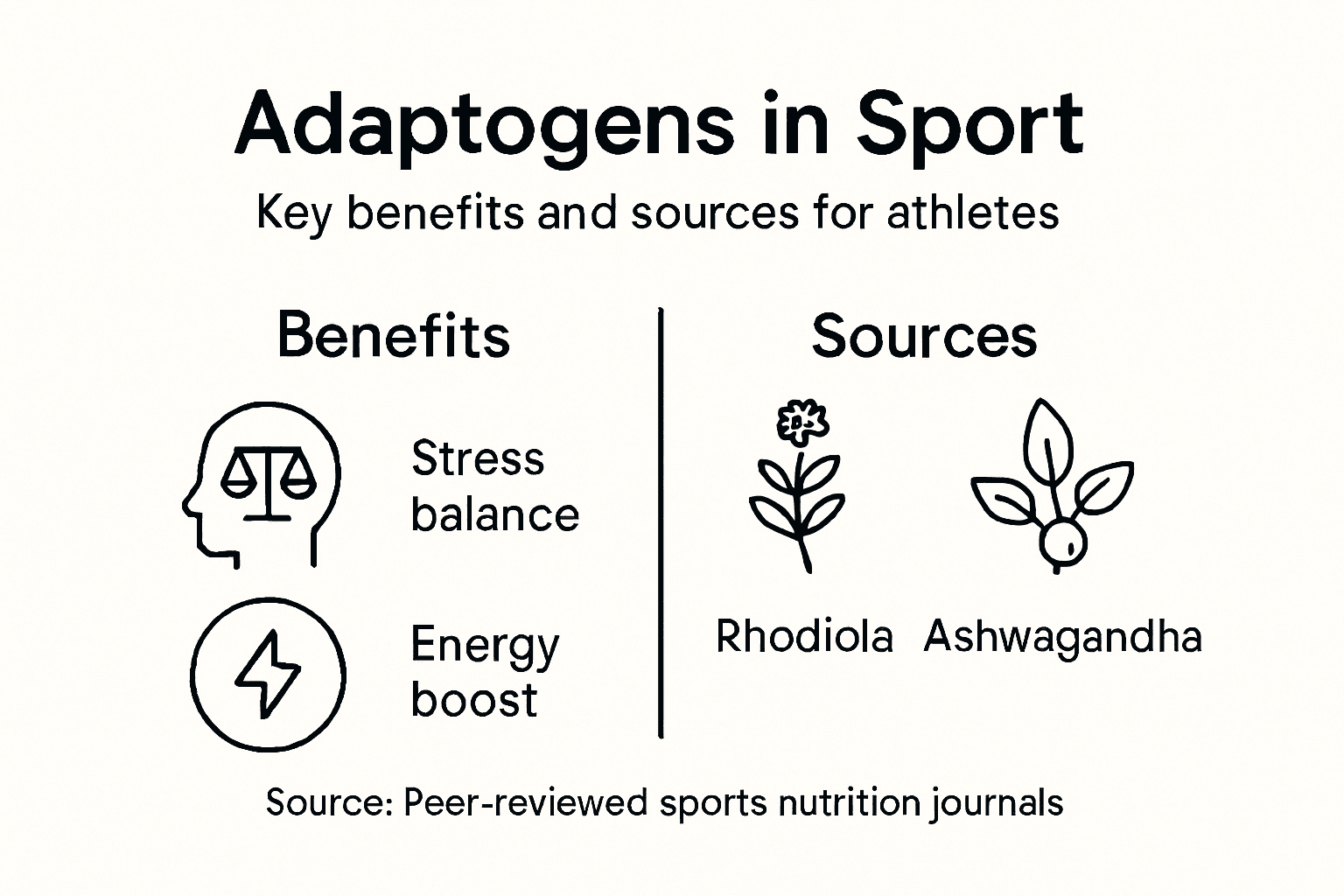
Pro tip: Approach adaptogen research critically, consulting peer-reviewed scientific literature and professional sports nutritionists for personalised insights.
Risks, Side Effects, and UK Legal Status
While adaptogens offer promising performance benefits, athletes must understand their potential risks and regulatory landscape. Safety considerations remain crucial for responsible supplementation to ensure optimal health and performance outcomes.
Potential side effects and risks include:
- Mild digestive disturbances
- Occasional headaches
- Sleep pattern disruptions
- Potential interactions with medications
- Individual variability in tolerance
- Risks of overconsumption
Regulatory frameworks in the United Kingdom provide clear guidelines for adaptogenic herbal products. Herbal medicine regulations emphasise consumer safety and require rigorous standards for product claims and manufacturing processes.
Athletes should always consult healthcare professionals before introducing new supplements into their nutrition strategy.
Under current UK regulations, adaptogens are classified as herbal medicinal products, not controlled substances. This means they are legally available but subject to strict quality control and advertising standards. Manufacturers must substantiate performance claims and ensure product safety through comprehensive testing and transparent labelling.
A brief overview of UK legal and safety considerations for adaptogenic supplements:
| Regulatory Focus | UK Status | Safety Recommendation | Consumer Tip |
|---|---|---|---|
| Quality control | Strict standards | Require third-party testing | Buy from reputable suppliers |
| Product claims | Must be substantiated | Avoid exaggerated marketing | Check ingredient transparency |
| Legal classification | Herbal product, not controlled | Subject to medicinal product laws | Consult healthcare professionals |
Pro tip: Purchase adaptogenic supplements only from reputable sources with third-party testing and clear ingredient transparency.
Optimise Your Performance Naturally with Adaptogenic Support
Struggling to maintain peak energy and recover quickly during high intensity training could stem from your body’s stress response not keeping pace. As the article outlines, adaptogens like Rhodiola and Ashwagandha are nature’s way of helping athletes manage fatigue, optimise endurance, and balance cortisol levels. At UseInterval, we understand the importance of these subtle but powerful effects and have crafted pre-workout and electrolyte supplements infused with natural ingredients that complement your body’s own stress adaptation systems.

Ready to experience intelligent nutrition that supports your physiological resilience and elevates performance without artificial additives? Discover our range designed specifically for athletes pushing their limits by visiting UseInterval. Learn how natural compounds can work alongside your training regimen on our landing page, and take control of your recovery and stamina today with reliable, science-inspired supplements.
Frequently Asked Questions
What are adaptogens and how do they work?
Adaptogens are herbal compounds designed to support the body’s natural stress response, enhancing resilience against various stressors while promoting overall physical performance. They exert non-specific pharmacological actions that help the body adapt to stressors and maintain balance.
What are the benefits of using adaptogens for athletes?
Adaptogens help athletes by reducing exercise-induced muscle damage, balancing stress hormone levels, enhancing energy production, and improving recovery times. They support overall physiological resilience, which can lead to improved athletic performance and mental clarity.
How should athletes incorporate adaptogens into their training regimen?
Athletes should integrate adaptogens gradually into their nutrition plan, starting with low doses. It’s essential to monitor individual responses and consider consulting with a sports nutritionist for personalised advice tailored to specific athletic goals.
Are there any risks or side effects associated with adaptogens?
While generally considered safe, adaptogens may cause mild digestive disturbances, occasional headaches, or sleep disruptions in some individuals. It’s advisable to consult a healthcare professional before introducing new supplements, especially if you are on medication or have underlying health conditions.