


What is pH balance in sports: your performance guide
TL;DR:
- Maintaining proper pH balance helps athletes delay fatigue, improve muscle strength, and recover faster during high-intensity efforts. Sodium bicarbonate supplementation and electrolyte management are proven strategies to enhance buffering capacity and sustain performance. Regular training and a diet rich in fruits and vegetables support long-term acid-base resilience.
pH balance in sports is the measure of acidity and alkalinity inside your body that directly controls how hard your muscles can work, how quickly you fatigue, and how fast you recover. Most athletes train hard and eat well but never consider the acid-base chemistry running underneath every sprint, lift, and interval. That oversight costs real performance. Understanding acid-base balance, the recognised physiological term for what athletes call pH balance, gives you a concrete lever to pull. This guide covers the science, the supplementation, and the practical steps that matter for high-intensity training.
What is pH balance in sports and why does it matter?
Acid-base balance is the body’s ability to keep blood pH within a narrow range of 7.35 to 7.45. That range sounds small. The consequences of drifting outside it are not. When you push into high-intensity effort, your muscles produce hydrogen ions as a byproduct of energy metabolism. Those ions accumulate faster than your body can clear them, dropping muscle pH and triggering the burning sensation that forces you to slow down or stop.
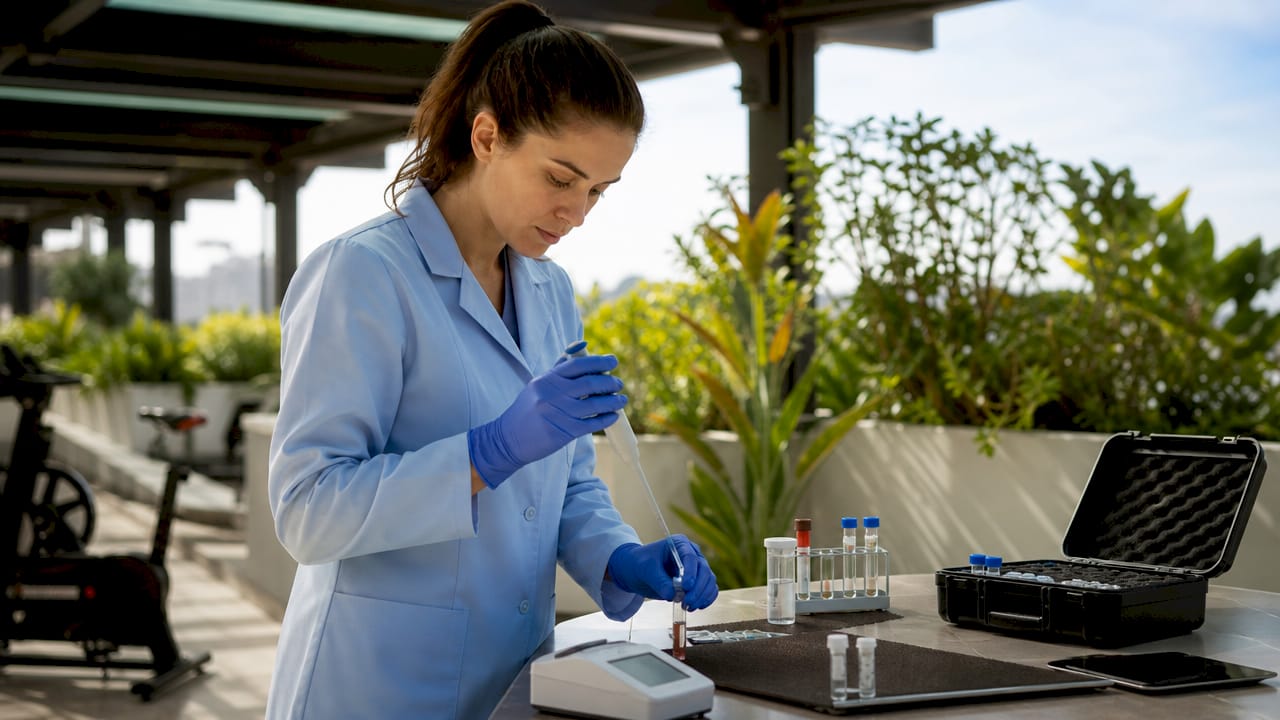
The key substances involved are hydrogen ions, bicarbonate, and lactate. Bicarbonate acts as the primary buffer, mopping up excess hydrogen ions in the blood. Lactate is often blamed for fatigue but is more accurately a fuel and a transport molecule. The real villain is hydrogen ion accumulation, which disrupts the enzyme activity your muscles depend on. Understanding pH balance in fitness starts with knowing which of these substances you can actually influence.
How does pH affect muscle function and fatigue?
The drop in muscle pH during intense exercise is steep and fast. Muscle intracellular pH in fast-twitch fibres falls from roughly 7.1 at rest to as low as 6.0 during maximal efforts. That single change reduces peak power output by 22–39%. For a sprinter, a cyclist, or a Hyrox athlete, that is the difference between a personal best and blowing up mid-effort.
The mechanism is specific. Hydrogen ion accumulation reduces myofilament calcium sensitivity and ATPase activity. In plain terms, your muscle fibres cannot contract as forcefully, and the cellular machinery that generates energy slows down. Acidosis reduces maximum force by roughly 12%, shortens contraction velocity by roughly 5%, and lowers peak power by roughly 22%. These are not marginal numbers.
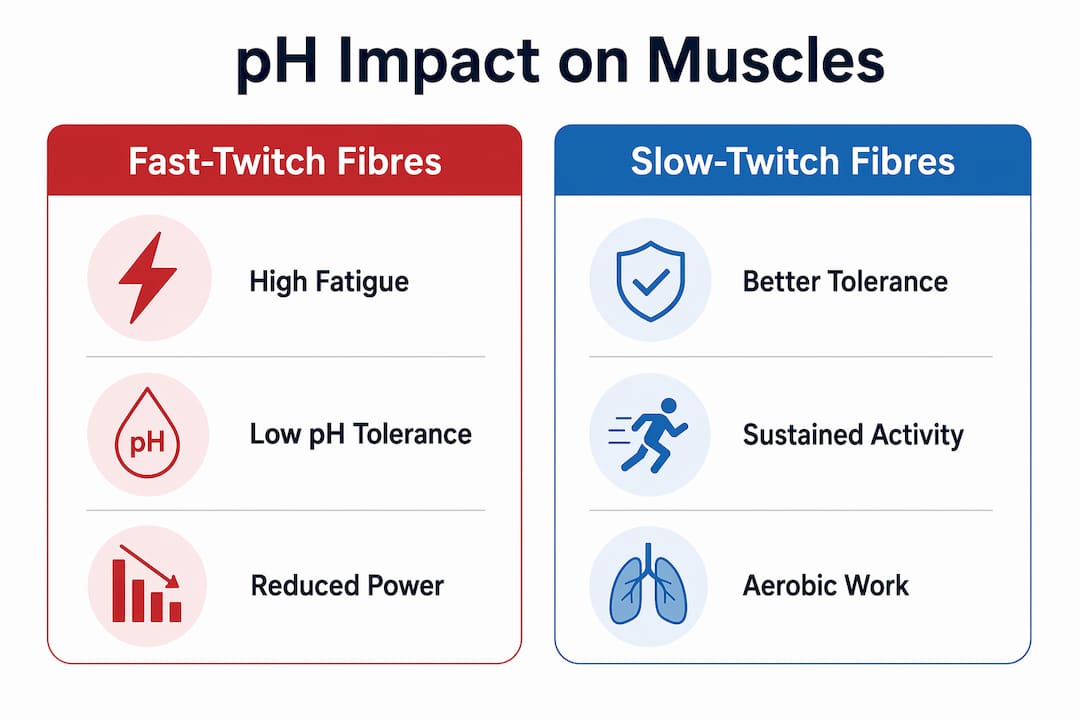
Fast-twitch muscle fibres are hit hardest. Slow-twitch fibres, which power steady aerobic work, tolerate acidosis better. This is why pH disruption matters most in sports built around explosive, repeated efforts: track cycling, CrossFit, football, and interval-based training. The athletes who need to understand acid-base balance most are exactly those doing the hardest, shortest work.
What the data shows
| Metric | At rest | During maximal effort |
|---|---|---|
| Intracellular pH (fast-twitch) | ~7.1 | As low as 6.0 |
| Maximum force reduction | Baseline | ~12% decrease |
| Peak power reduction | Baseline | ~22% decrease |
| Contraction velocity reduction | Baseline | ~5% decrease |
Key effects of acidosis on muscle performance:
- Reduced calcium sensitivity in myofilaments, weakening contraction force
- Impaired ATPase activity, slowing energy production
- Accelerated fatigue in fast-twitch fibres during repeated sprints
- Increased perceived exertion, causing athletes to reduce effort before true muscular failure
How does the body regulate pH during exercise?
The bicarbonate buffer system is the body’s primary defence against rising acidity. When hydrogen ions build up in muscle cells, they are transported into the bloodstream, where bicarbonate neutralises them. This process delays the point at which intracellular pH drops far enough to impair performance. The buffer system buys time, but it has a finite capacity.
Elevated blood bicarbonate buffers hydrogen ions and supports lactate efflux from working muscles. This is why athletes with higher resting bicarbonate levels tend to perform better. Elite 10km runners have resting bicarbonate at 28.5 mmol/L compared to 25.7 mmol/L in amateur runners. That gap reflects years of training adaptation, not just genetics.
Training adaptations can raise resting bicarbonate levels over time, improving the body’s natural buffering efficiency. Consistent high-intensity training is itself a pH management tool. Electrolytes also play a direct role: sodium and potassium regulate fluid movement across cell membranes, which affects how efficiently hydrogen ions are transported out of muscle tissue.
- Bicarbonate neutralises excess hydrogen ions in the blood
- Lactate efflux from muscles depends on adequate extracellular buffering
- Sodium and potassium support ion transport across muscle cell membranes
- Hydration status affects blood volume and buffering capacity
- Training raises baseline bicarbonate, improving long-term acid-base resilience
Pro Tip: If you train consistently at high intensity, your body is already building buffering capacity. Structured interval sessions, not just steady-state cardio, are the most direct way to raise your natural bicarbonate baseline.
What supplementation strategies support pH balance for athletes?
Sodium bicarbonate is the most researched and effective supplement for acute pH management. It works by raising blood bicarbonate before exercise, giving your buffer system more capacity to absorb hydrogen ions during the effort. Sodium bicarbonate improves power output by 1–3% in high-intensity efforts lasting 30 seconds to 10 minutes. That range covers sprints, time trials, and interval training blocks.
The standard protocol is straightforward:
- Take 0.3g per kg of body weight. A 75kg athlete takes 22.5g.
- Consume it 60–90 minutes before exercise to allow blood alkalosis to peak.
- Take it with a carbohydrate-rich meal to slow absorption and reduce stomach upset.
- Test the protocol in training first. Never use it for the first time on race day.
- Consider mini-tablet or enteric-coated forms if standard powder causes gastrointestinal distress.
High sodium bicarbonate intake commonly causes nausea, bloating, and diarrhoea. Enteric-coated tablets or mini-tablets mixed with a carbohydrate hydrogel reduce this risk significantly. The gastrointestinal side effects are the main reason athletes abandon the supplement before finding the right form and dose for their body.
Dietary choices also influence acid-base balance, though less acutely than supplementation. Fruits and vegetables produce bicarbonate precursors during metabolism, supporting a slightly more alkaline internal environment. Diets heavy in processed foods and animal protein increase the acid load the kidneys must manage. For athletes doing multiple sessions per week, consistent fruit and vegetable intake is a practical, low-cost buffering support.
Pro Tip: Sodium bicarbonate is a tactical supplement, not a daily one. Use it for your hardest sessions and key races, not every workout. Build your tolerance over several training blocks before committing to a competition dose.
How do hydration and electrolytes affect pH balance?
Hydration directly affects blood pH and buffering capacity. When you are dehydrated, blood volume drops. Lower blood volume means less bicarbonate circulating to neutralise hydrogen ions. The result is faster acidosis onset during exercise, particularly in heat. Electrolyte balance influences blood pH and muscle contraction quality throughout prolonged effort.
Sodium is the most critical electrolyte for pH regulation during exercise. It drives fluid retention, maintains blood volume, and supports the ion exchange mechanisms that move hydrogen ions out of muscle cells. Potassium works alongside sodium to regulate membrane potential in muscle fibres. Without adequate potassium, muscle cells become less responsive to contraction signals, compounding the effects of acidosis. Athletes training in heat face a double threat: sweat losses accelerate electrolyte depletion while heat stress independently raises metabolic acid production.
Practical electrolyte and hydration guidance for athletes:
- Drink to maintain urine colour at pale yellow, not clear, before training
- Include sodium in pre-exercise hydration, especially for sessions over 60 minutes
- Replace potassium through whole foods such as bananas, sweet potatoes, and leafy greens
- During prolonged efforts, use an electrolyte supplement rather than plain water to maintain ion balance
- Post-exercise, prioritise sodium-containing fluids to accelerate rehydration and support recovery
The connection between electrolytes in heat stress and pH management is direct. Athletes who lose significant sodium through sweat without replacing it experience faster blood pH decline during subsequent efforts. This is particularly relevant for Hyrox competitors, CrossFit athletes, and anyone training in warm conditions. Getting hydration right is not separate from managing acid-base balance. It is part of the same system.
Key takeaways
Acid-base balance is the single most underrated physiological variable in high-intensity sports, and sodium bicarbonate, consistent training, and electrolyte management are the three most direct tools to control it.
| Point | Details |
|---|---|
| pH drop impairs power sharply | Fast-twitch muscle pH falling to 6.0 reduces peak power by up to 39%. |
| Bicarbonate is your primary buffer | Higher resting bicarbonate levels directly correlate with better endurance performance. |
| Sodium bicarbonate adds 1–3% power | Take 0.3g per kg bodyweight 60–90 minutes before high-intensity efforts. |
| Electrolytes maintain buffering capacity | Sodium and potassium support ion transport and blood volume during exercise. |
| Test before race day | Always trial sodium bicarbonate in training to manage gastrointestinal tolerance. |
pH balance, marginal gains, and what I have actually seen work
The phrase “marginal gains” gets overused. In the context of acid-base balance, it is accurate. A 1–3% power improvement from sodium bicarbonate sounds small until you are 45 seconds into a maximal sprint interval and your legs are screaming. At that point, the difference between holding power and cracking is exactly the kind of margin that separates podium finishes from mid-pack results.
What I have seen consistently is that athletes who struggle most with pH management are not the ones ignoring supplements. They are the ones who try sodium bicarbonate once, get stomach cramps, and write it off entirely. The supplement works. The delivery method matters enormously. Mini-tablet forms and enteric-coated options exist precisely because the powder form is poorly tolerated by a large proportion of athletes. Dismissing the intervention because of one bad experience with the wrong format is a real performance cost.
The dietary side is where compliance falls apart. Athletes will spend money on supplements but resist eating more vegetables. The alkaline load from consistent fruit and vegetable intake is not dramatic, but it reduces the background acid burden the kidneys manage daily. Over a training block, that matters. The lactic acid buffer system is not something you switch on for race day. You build it over weeks through training, diet, and hydration habits. The athletes who treat pH management as a daily practice rather than a race-week trick are the ones who see consistent gains.
— Tom
Useinterval’s Starter Bundle for pH and electrolyte support
Useinterval builds supplements for athletes who train at high intensity and need their nutrition to keep pace with their output.
The Starter Bundle combines Useinterval’s pre-workout and electrolyte formula, both built with natural ingredients that support acid-base balance and hydration during hard efforts. The electrolyte blend covers sodium and potassium to maintain buffering capacity and blood volume through prolonged sessions. The pre-workout is formulated for athletes who need sustained power output, not just a short caffeine spike. If you are applying the pH management strategies in this guide, the Starter Bundle gives you the nutritional foundation to make them work.
FAQ
What is the ideal blood pH range for athletes?
Blood pH should stay within 7.35 to 7.45 for normal function. During intense exercise, muscle intracellular pH can drop significantly lower, which is what drives fatigue.
How does sodium bicarbonate improve sports performance?
Sodium bicarbonate raises blood bicarbonate levels before exercise, increasing the body’s capacity to neutralise hydrogen ions. This delays acidosis and improves power output by 1–3% in efforts lasting 30 seconds to 10 minutes.
What are the side effects of sodium bicarbonate for athletes?
The most common side effects are nausea, bloating, and gastrointestinal cramps. Enteric-coated mini-tablets or mixing with a carbohydrate hydrogel significantly reduces these effects.
Do electrolytes affect pH balance during exercise?
Sodium and potassium directly support the ion exchange mechanisms that move hydrogen ions out of muscle cells. Adequate electrolyte intake maintains blood volume and buffering capacity, particularly during heat stress.
Can diet improve acid-base balance for athletes?
Consistent intake of fruits and vegetables produces bicarbonate precursors during metabolism, reducing the daily acid load. This supports the kidneys and complements acute supplementation strategies for high-intensity training.