


Complete Guide to Why Cycle Supplements
Over 80 percent of british cyclists use supplements to power through demanding training sessions and speed up recovery. With such high adoption rates, understanding how these products work and why they matter has never been more relevant for athletes at all levels. This article sheds light on the science behind cycling supplements, explains key types and cycles, and helps you make informed decisions for your own performance and health.
Table of Contents
- Cycling Supplements: Definition And Core Concepts
- Types Of Supplement Cycles And Key Differences
- How Supplement Cycling Supports Athletic Performance
- Common Myths And Misconceptions About Cycling
- Potential Risks And Safe Usage Practices
- Alternatives To Cycling Supplements Explained
Key Takeaways
| Point | Details |
|---|---|
| Cycling Supplement Categories | Cycling supplements are classified into performance, sports foods, and medical supplements, each serving distinct purposes for athletes. |
| Supplement Cycling Strategy | Athletes utilise loading, maintenance, deloading, and performance peaking cycles to optimise nutrient intake and physiological adaptation. |
| Safety and Quality | It’s crucial to verify the quality of supplements, conduct health screenings, and manage dosages to mitigate health risks. |
| Alternative Nutrition Approaches | Whole food nutrition and individualised dietary planning are effective alternatives to enhance athletic performance beyond supplementation. |
Cycling Supplements: Definition And Core Concepts
Cycling supplements represent specialised nutritional products designed to support athletic performance, recovery, and training adaptation specifically for cyclists and high-intensity athletes. According to research from BCU Open Access, these supplements play a critical role in supporting the substantial training volumes and intensities characteristic of professional and amateur cycling disciplines.
In the realm of sports nutrition, cycling supplements can be comprehensively categorised into three primary domains: performance supplements, sports foods, and medical supplements. As detailed in the Canterbury University Repository, each category serves a distinct physiological purpose for athletes:
- Performance Supplements: Directly enhance athletic output and energy systems
- Sports Foods: Provide targeted nutritional support during training and competition
- Medical Supplements: Address specific physiological deficiencies or health requirements
The strategic implementation of cycling supplements requires a nuanced understanding of individual metabolic needs, training objectives, and physiological responses. Professional nutritionists and sports scientists now recognise that supplement protocols must be personalised, moving beyond generic recommendations to tailored nutritional strategies that align with an athlete’s specific performance goals and biological profile.
For athletes seeking deeper insights into optimising their nutritional approach, our guide on intra-workout supplements offers comprehensive strategies for effective supplementation during high-intensity training sessions.
Types Of Supplement Cycles And Key Differences
Cycling supplements are strategically structured nutritional interventions designed to optimise athletic performance through carefully planned intake and recovery periods. According to research from Birmingham Etheses, athletes utilise different supplement cycles to manipulate macronutrient and micronutrient intake, targeting specific physiological adaptations and performance outcomes.
The primary supplement cycle classifications can be comprehensively divided into distinct strategic approaches:
- Loading Cycles: Intense initial supplementation phase to saturate physiological systems
- Maintenance Cycles: Consistent supplementation to sustain performance parameters
- Deloading Cycles: Reduced intake periods allowing metabolic recovery and preventing adaptation plateaus
- Performance Peaking Cycles: Targeted supplementation preceding critical competition windows
Research from BCU Open Access further categorises these cycles into sports supplements, medical supplements, and ergogenic aids, emphasising that each cycle serves a unique physiological purpose. Professional athletes meticulously design these cycles to align with training periodisation, ensuring optimal nutrient absorption, metabolic efficiency, and performance enhancement.
Understanding the nuanced differences between supplement cycles requires athletes to consider individual metabolic responses, training intensity, and specific performance goals. For those seeking deeper insights into strategic supplementation, our guide to workout supplements for Hyrox athletes provides comprehensive strategies for effective nutritional planning.
How Supplement Cycling Supports Athletic Performance
Supplement cycling represents a sophisticated nutritional strategy that enables athletes to optimise performance, recovery, and physiological adaptation through targeted nutrient manipulation. According to research from BCU Open Access, nutrition practitioners play a critical role in developing evidence-based supplementation protocols that enhance training outcomes and support athletes’ comprehensive performance goals.
The primary mechanisms through which supplement cycling supports athletic performance include:
- Metabolic Priming: Strategically timing nutrient intake to prepare physiological systems for intense training
- Recovery Acceleration: Optimising nutrient absorption during critical post-exercise restoration windows
Physiological Adaptation emerges as the cornerstone of effective supplement cycling. Research from Birmingham Etheses demonstrates that judicious supplement use, carefully coordinated with training periodisation, can significantly enhance an athlete’s capacity to improve performance metrics and manage metabolic stress.
Athletes seeking comprehensive insights into electrolyte management can explore our guide to balanced electrolytes for athletic performance, which provides advanced strategies for optimising nutritional interventions and supporting high-intensity training protocols.
Common Myths And Misconceptions About Cycling
The world of supplement cycling is riddled with persistent myths that can mislead athletes and compromise their performance potential. According to research from BCU Open Access, the evolution of nutritional practices demands a critical approach to understanding supplement strategies, challenging long-standing misconceptions that often lead athletes astray.
Some of the most prevalent supplement cycling myths include:
- More is Always Better: Believing that increasing supplement intake automatically enhances performance
- Universal Supplements: Assuming the same supplement protocol works identically for all athletes
- Instant Results: Expecting immediate performance improvements without consistent training
- Supplements Replace Training: Misconception that supplements can compensate for inadequate training
Research from Birmingham Etheses emphasises the critical need for evidence-based evaluation of supplement efficacy. Athletes must understand that supplement cycling is a nuanced strategy requiring individualised approaches, carefully tailored to specific physiological requirements, training intensities, and performance goals.
For athletes seeking to navigate the complex landscape of nutritional supplementation, our guide to essential electrolytes for muscle performance offers comprehensive insights into developing a scientifically grounded approach to supplement cycling.
Potential Risks And Safe Usage Practices
Navigating the complex landscape of supplement cycling requires a nuanced understanding of potential health risks and proactive safety strategies. According to research from Birmingham Etheses, athletes must exercise rigorous caution, as dietary supplements carry inherent risks of contamination, adverse effects, and unintended physiological interactions.
Key safety considerations for supplement cycling include:
- Quality Verification: Selecting supplements from reputable manufacturers with transparent production practices
- Individual Health Screening: Conducting comprehensive medical assessments before initiating supplement protocols
- Dosage Management: Strictly adhering to recommended intake levels
- Interaction Assessment: Evaluating potential conflicts with existing medications or health conditions
Research from BCU Open Access emphasises the critical importance of understanding supplement production methods and active ingredient profiles. Professional athletes must prioritise informed decision-making, recognising that not all supplements are created equal and that rigorous scientific scrutiny is essential for safe and effective usage.

For athletes seeking comprehensive guidance on navigating these complex nutritional landscapes, our complete guide to buffered electrolytes offers advanced insights into safe and strategic supplementation practices.
Alternatives To Cycling Supplements Explained
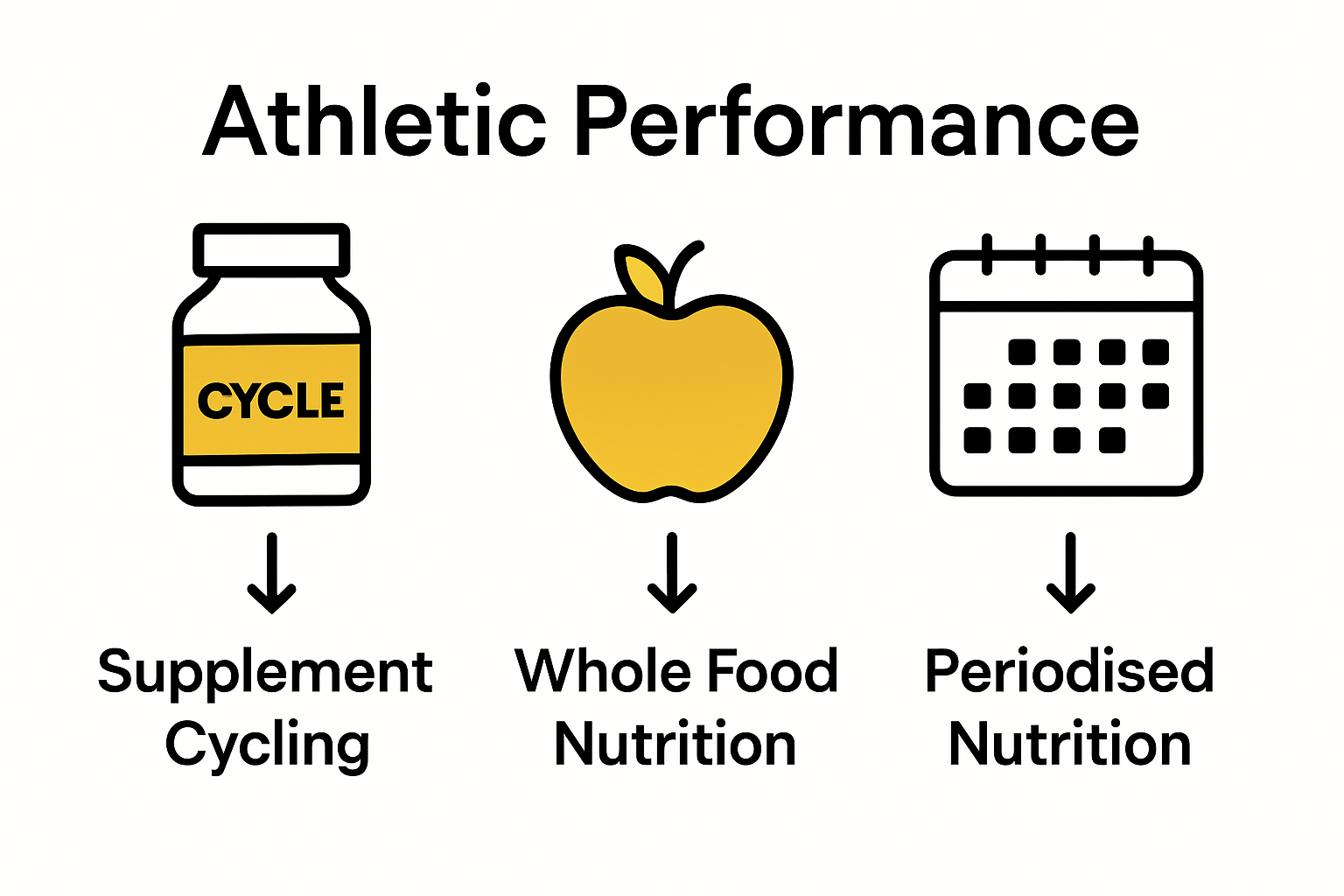
Athlete performance enhancement extends far beyond traditional supplement cycling, with numerous evidence-based alternatives offering compelling nutritional strategies. According to research from BCU Open Access, whole food nutrition represents a powerful approach to supporting athletic performance without relying on supplementation.
Key alternative performance enhancement strategies include:
- Nutrient-Dense Whole Foods: Prioritising unprocessed, high-quality nutrition sources
- Periodised Nutrition: Synchronising dietary intake with specific training phases
- Metabolic Conditioning: Developing nutritional strategies through targeted training adaptations
- Individualised Dietary Planning: Creating personalised nutrition protocols based on specific physiological requirements
Research from Birmingham Etheses highlights that non-supplemental approaches can provide performance benefits comparable to traditional supplement cycling. Professional athletes can achieve significant improvements by focusing on comprehensive dietary strategies, precise training methodologies, and holistic physiological understanding.
Athletes interested in exploring sustainable nutritional approaches may find valuable insights in our guide to sustainable workout supplements for Hyrox athletes, which offers alternative strategies for optimising athletic nutrition.
Enhance Your High-Intensity Training with Smart Supplement Choices
Understanding the importance of cycling supplements can transform your approach to high-intensity sports. The article highlights the challenges of optimising performance, recovery, and metabolic adaptation through tailored nutrient timing and supplement cycling. If you want to overcome common hurdles like ineffective supplementation or recovery plateaus it is essential to embrace natural ingredients that work in harmony with your body’s needs.
For athletes serious about consistent gains and safe supplementation, our Pre-workout – Interval products are designed to boost energy naturally while supporting endurance. Combine them with our carefully balanced Electrolyte – Interval range to maintain optimal hydration and muscle function during intense sessions.
Take control of your supplement cycle today with Interval’s natural solutions that prioritise your body’s unique demands. Visit https://useinterval.co.uk now to explore how strategic supplementation can help you unlock new performance levels and faster recovery.
Frequently Asked Questions
What are cycling supplements?
Cycling supplements are specialised nutritional products designed to enhance athletic performance, recovery, and training adaptation specifically for cyclists and high-intensity athletes.
What types of cycling supplements are available?
Cycling supplements can be categorised into performance supplements, sports foods, and medical supplements, each serving distinct physiological purposes for athletes.
How does supplement cycling support athletic performance?
Supplement cycling optimises performance by strategically timing nutrient intake, enhancing metabolic adaptation, and accelerating recovery through targeted nutrient manipulation.
What are common myths about cycling supplements?
Common myths include the belief that more supplements result in better performance, that one-size-fits-all supplement protocols work for every athlete, and that supplements can replace the need for consistent training.
Recommended
- 7 Types of Workout Supplements Every Hyrox Athlete Should Know – Interval
- Best Pre-Workout Supplements Reviewed – Expert Comparison 2025 – Interval
- Pre-Workout Supplement Guide for Hyrox Female Athletes – Interval
- What Is Female-Centric Pre-Workout? Complete Overview – Interval
- MOTS-C Dosage Chart
- Plant Based Diet Guide: Complete Wellness Resource – naturessoulshop