


Antioxidant Support: Boosting Hyrox Recovery Naturally
Late-night muscle aches after a tough Hyrox session can leave even the most determined athletes searching for answers. With every high-intensity workout, your body tackles a surge of oxidative stress that can slow down recovery and make progress feel harder than it should. Discover how natural antioxidant support from whole foods like berries, green tea, and turmeric can strengthen your body’s defences and help you stay resilient for the next challenge. Oxidative stress management is the hidden advantage for active women aiming for sustainable peak performance.
Table of Contents
- Antioxidant Support Explained For Athletes
- Types Of Antioxidants And Natural Sources
- Antioxidants’ Role In Intense Exercise Recovery
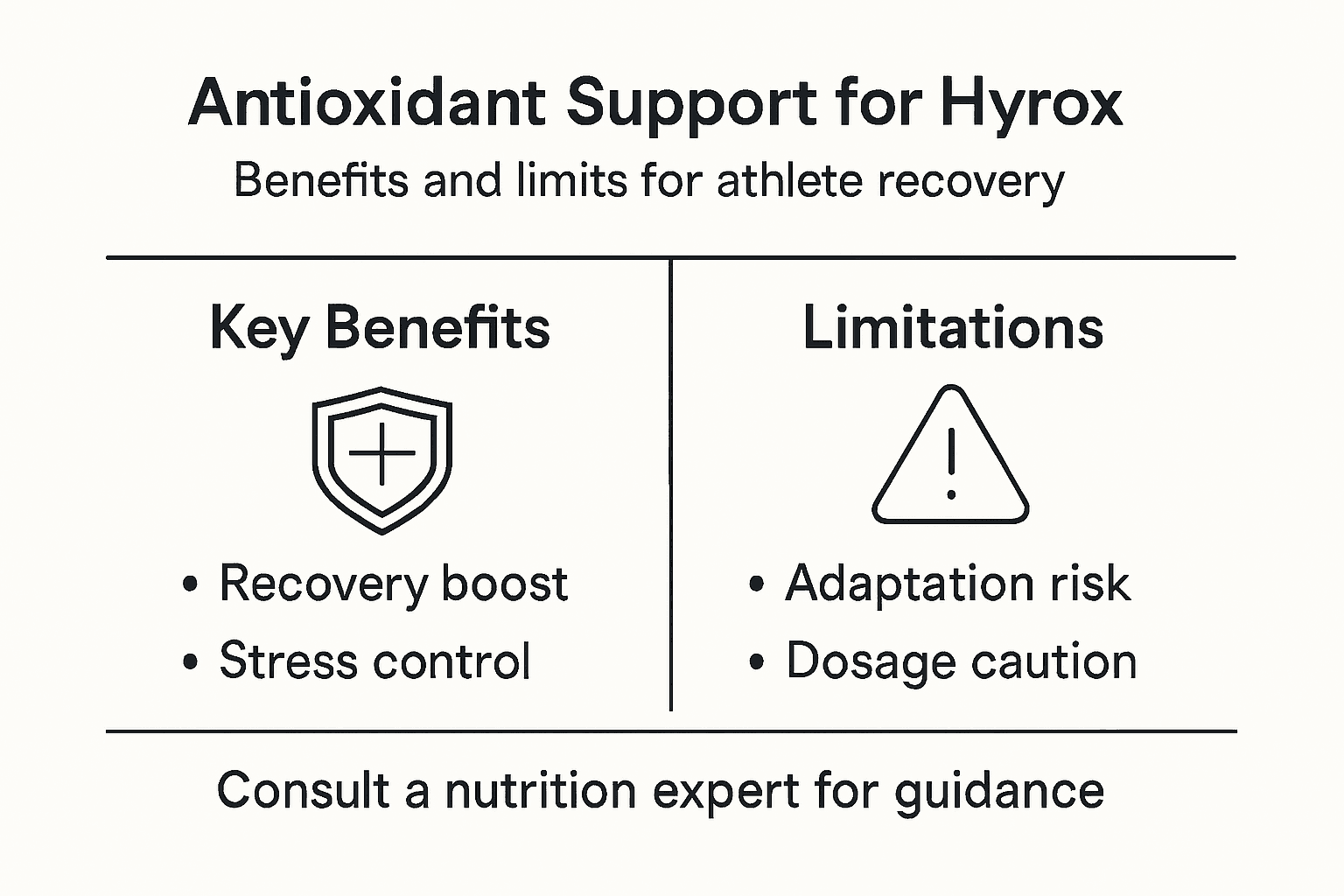
- Benefits And Limitations For Hyrox Performance
- Risks Of Supplementation And Safe Practices
Key Takeaways
| Point | Details |
|---|---|
| Role of Antioxidants | Antioxidants play a significant role in managing oxidative stress for Hyrox athletes, aiding recovery and performance. |
| Balanced Supplementation | Excessive antioxidant supplementation may hinder natural adaptations; a moderate strategy is more effective. |
| Natural Sources Preferred | Whole-food sources of antioxidants are superior to isolated supplements for optimal health benefits. |
| Personalised Strategies | Consulting a sports nutritionist is crucial for developing tailored antioxidant strategies to meet individual training needs. |
Antioxidant support explained for athletes
Understanding the role of antioxidants in athletic performance requires delving into the complex relationship between exercise-induced stress and bodily recovery mechanisms. For Hyrox athletes, managing oxidative stress becomes crucial in maintaining peak physical condition and supporting consistent training outcomes.
Reactive oxygen species (ROS) generated during high-intensity workouts can significantly impact muscle function and overall recovery. Research examining ROS and antioxidant responses reveals that these molecules play a nuanced role in training adaptations and inflammation processes.
Key micronutrients that support antioxidant defence include:
- Vitamin C
- Vitamin E
- Resveratrol
- Coenzyme Q10
- Selenium
- Curcumin
While supplementation seems promising, clinical studies suggest varied outcomes regarding performance improvements. The critical factor lies in understanding that antioxidants aren’t a magic solution but part of a comprehensive recovery strategy.
Balance between oxidative stress and antioxidant defence determines athletic performance potential.
Athletes must recognise that excessive antioxidant intake can potentially blunt natural training adaptations. The body’s intrinsic stress response contributes to muscle growth and performance enhancement, making strategic, moderate antioxidant support more beneficial than indiscriminate supplementation.
To clarify the functions and impacts of key antioxidant micronutrients for Hyrox athletes, see the table below:
| Micronutrient | Primary Function | Impact on Recovery | Notable Caveats |
|---|---|---|---|
| Vitamin C | Scavenges free radicals | Supports immune resilience | Excess may inhibit adaptation |
| Vitamin E | Protects cell membranes | Reduces exercise inflammation | Overuse can lower benefits |
| Resveratrol | Modulates signalling | Enhances cell repair | Limited clinical efficacy |
| Coenzyme Q10 | Boosts mitochondrial activity | Improves energy metabolism | May interact with medications |
| Selenium | Enzyme cofactor | Reduces oxidative damage | Toxic in high doses |
| Curcumin | Anti-inflammatory support | Decreases soreness | Poor bioavailability |
Pro tip: Consult a sports nutritionist to develop a personalised antioxidant strategy tailored to your specific Hyrox training intensity and individual metabolic needs.
Types of antioxidants and natural sources
Understanding the diverse landscape of antioxidants requires exploring both endogenous and exogenous sources that support athletic performance and recovery. For Hyrox athletes, knowing the right natural sources can make a significant difference in managing oxidative stress and supporting overall physiological resilience.
Natural antioxidant discovery strategies reveal a rich ecosystem of compounds found in various dietary sources. These powerful molecules can be categorised into several key groups that offer unique protective mechanisms:
Primary Types of Natural Antioxidants:
- Polyphenols: Found in green tea, berries, and dark chocolate
- Flavonoids: Abundant in citrus fruits, apples, and onions
- Carotenoids: Present in carrots, sweet potatoes, and leafy greens
- Vitamins: Specifically A, C, and E from fruits, vegetables, and nuts
Specific plant-based sources offer remarkable antioxidant concentrations. Advanced extraction methods now enable athletes to access concentrated antioxidant compounds from sources like rosemary, turmeric, and medicinal plants with enhanced bioavailability.
Natural antioxidants provide a holistic approach to managing exercise-induced oxidative stress.
Each antioxidant category interacts differently with bodily systems, providing multi-layered protection against cellular damage. The complexity of these interactions means that a diverse, whole-food approach trumps single-supplement strategies for most athletes.
This table summarises natural antioxidant groups, their biological roles, and recommended dietary sources:
| Antioxidant Group | Biological Role | Top Food Sources |
|---|---|---|
| Polyphenols | Cellular protection | Berries, green tea, cocoa |
| Flavonoids | Anti-inflammatory activity | Citrus, apples, onions |
| Carotenoids | Support cellular repair | Carrots, greens, sweet potatoes |
| Vitamins (A, C, E) | Immune and recovery support | Leafy veg, nuts, fruit |
| Terpenoids | Reduce oxidative damage | Rosemary, turmeric, herbal teas |
Pro tip: Incorporate a rainbow of fruits and vegetables into your diet to maximise natural antioxidant intake and support comprehensive nutritional defence.
Antioxidants’ role in intense exercise recovery
Hyrox athletes experience significant physiological stress during high-intensity workouts, making understanding oxidative mechanisms crucial for optimal recovery and performance. The complex interaction between exercise-induced stress and the body’s natural defence systems determines how quickly and effectively an athlete can bounce back after intense training.

Antioxidant interactions during exercise reveal a nuanced relationship between reactive oxygen species (ROS) and muscular adaptation. While these molecules can potentially cause cellular damage, they also serve as critical signalling mechanisms for muscle repair and growth.
Key Recovery Mechanisms of Antioxidants:
- Neutralising harmful free radicals
- Reducing inflammation
- Supporting cellular repair processes
- Mitigating exercise-induced muscle damage
- Enhancing immune system response
Interestingly, systematic reviews on muscle soreness suggest that high-dose supplementation might offer marginal benefits, indicating that strategic, balanced approaches are more effective than indiscriminate consumption.
Optimal recovery is about intelligent stress management, not complete elimination of oxidative processes.
The biochemical complexity means that antioxidants are not a magic solution but part of a sophisticated nutritional strategy. Individual variation in metabolism and training intensity means athletes must personalise their approach carefully.
Pro tip: Consult a sports nutritionist to develop a personalised antioxidant strategy that matches your specific Hyrox training demands and individual physiological responses.
Benefits and limitations for Hyrox performance
Hyrox athletes face a unique challenge in balancing cardiovascular endurance with functional strength across a demanding, multi-disciplinary event. Understanding the physiological requirements and potential performance constraints is crucial for developing an effective training and recovery strategy.
Hyrox performance dynamics reveal a complex interplay between aerobic capacity, muscular strength, and fatigue management. The event’s hybrid nature demands athletes possess exceptional cross-functional fitness abilities that extend beyond traditional athletic specialisations.
Key Performance Considerations:
- High cardiovascular demand
- Intense muscular load across multiple exercise types
- Significant metabolic stress
- Rapid recovery between exercise stations
- Mental resilience requirement
Accessible fitness race characteristics demonstrate that while Hyrox challenges athletes comprehensively, it also offers scalable opportunities for fitness improvement across different performance levels.
Performance limitations are often more mental than physical in high-intensity events.
The standardised format provides a consistent benchmark, allowing athletes to track progress and identify specific areas requiring targeted improvement. Individual metabolic responses and recovery capabilities will significantly influence overall performance outcomes.
Pro tip: Develop a personalised training programme that progressively adapts to Hyrox’s unique performance demands, focusing on integrated strength and endurance development.
Risks of supplementation and safe practices
Navigating the complex world of antioxidant supplementation requires a nuanced understanding of potential risks and responsible consumption strategies. For Hyrox athletes, the temptation to rely on quick nutritional solutions can often overshadow the importance of balanced, evidence-based approaches.
Antioxidant supplement safety considerations reveal critical insights into how high-dose interventions can potentially disrupt cellular functions. The body’s delicate free radical balance means that indiscriminate supplementation might actually impede natural physiological adaptations.
Key Risks of Antioxidant Supplementation:
- Interference with cellular redox signalling
- Potential disruption of natural defence mechanisms
- Possible increased risk of certain health complications
- Reduced effectiveness of training adaptations
- Unpredictable interactions with individual metabolic processes
UK healthcare perspectives emphasise that many antioxidant supplements demonstrate low clinical effectiveness, with recommendations favouring dietary sources over isolated supplementation.
Natural food sources provide superior nutritional complexity compared to isolated supplements.
The most prudent approach involves understanding individual metabolic requirements and prioritising whole-food nutrition. Professional guidance becomes crucial in developing personalised strategies that align with an athlete’s specific physiological demands.
Pro tip: Consult a sports nutritionist to develop a personalised nutrition strategy that emphasises whole-food antioxidant sources over isolated supplements.
Elevate Your Hyrox Recovery with Natural Antioxidant Support
Managing oxidative stress and balancing antioxidant defence are essential for Hyrox athletes to maximise recovery and training adaptations. If you are navigating the challenges of exercise-induced muscle soreness and want to avoid the pitfalls of indiscriminate supplementation, natural solutions designed specifically for high-intensity sports can make all the difference. Boost your body’s natural resilience with clean, effective nutrition that respects your unique metabolic needs.

Discover how our pre-workout and electrolyte formulations harness powerful natural ingredients to support energy metabolism and reduce inflammation without compromising your essential training adaptations. Take control of your recovery strategy today by visiting Use Interval and explore nutritional tools crafted for athletes who demand both performance and safety. Don’t settle for quick fixes when you can achieve sustainable results with scientifically informed, natural antioxidant support tailored for your Hyrox journey.
Frequently Asked Questions
What are antioxidants and how do they benefit athletes?
Antioxidants are compounds that help neutralise reactive oxygen species (ROS) generated during intense exercise. They aid in reducing oxidative stress, supporting recovery, and enhancing overall athletic performance.
Which antioxidants are most beneficial for Hyrox athletes?
Key antioxidants for Hyrox athletes include Vitamin C, Vitamin E, Resveratrol, Coenzyme Q10, Selenium, and Curcumin. Each plays a unique role in supporting recovery and mitigating exercise-induced oxidative damage.
Can high doses of antioxidants negatively impact training adaptations?
Yes, excessive antioxidant intake may blunt the body’s natural stress response, which is crucial for muscle growth and performance improvements. A balanced approach to supplementation is essential for optimal results.
What natural food sources are rich in antioxidants?
Natural sources of antioxidants include fruits and vegetables like berries, citrus fruits, leafy greens, and carrots, along with nuts and spices such as turmeric and rosemary. A diverse whole-food diet is recommended for maximum antioxidant intake.
Recommended
- 7 Essential Types of Workout Drinks for Hyrox Athletes – Interval
- Post-Workout Recovery Process for Enhanced Athletic Results – Interval
- Synergistic Supplementation: Boosting Hyrox Performance – Interval
- 7 Types of Workout Supplements Every Hyrox Athlete Should Know – Interval
- 7 Essential Nutritional Supplements for Recovery Success