


Essential Minerals: Boosting Performance for Female Athletes
Intense training sessions and relentless competition mean your body needs more than just discipline and determination. For British female Hyrox athletes, managing energy levels, muscle recovery, and peak performance often comes down to understanding the role of essential minerals in sports nutrition. Minerals like calcium, magnesium, iron, zinc, and potassium are vital for muscle response, nerve health, and fighting fatigue, all of which are key to your results on race day. Learn how the right nutritional strategies can help you meet higher demands and stay at your athletic best.
Table of Contents
- What Are Essential Minerals In Sports Nutrition
- Major Mineral Types And Their Functions
- Why Female Athletes Need More Minerals
- How Essential Minerals Enhance Performance
- Meeting Daily Needs: Diet Versus Supplements
Key Takeaways
| Point | Details |
|---|---|
| Essential Minerals for Female Athletes | Critical minerals such as Calcium, Iron, and Magnesium are vital for supporting athletic performance and physiological health in female athletes. |
| Unique Requirements | Female athletes face increased mineral needs due to factors like menstrual cycles and higher training intensities, necessitating tailored nutritional strategies. |
| Diet versus Supplements | A ‘food first’ approach is recommended, with whole foods providing superior nutrient absorption, while supplements should complement dietary intake where necessary. |
| Consultation with Experts | Regular consultations with sports nutritionists are essential for developing personalised mineral intake plans that align with individual training demands and physiological needs. |
What Are Essential Minerals In Sports Nutrition
Essential minerals represent critical micronutrients that play fundamental roles in athletic performance and physiological functioning. For female athletes specifically, understanding these nutritional building blocks becomes paramount in achieving peak fitness and recovery. Minerals contribute critically to energy metabolism and support numerous bodily processes essential for high-intensity training.
Athletes require specific mineral profiles that differ from sedentary populations due to increased metabolic demands and physiological stress. The key essential minerals for female athletes include:
- Calcium: Critical for bone density and muscle contraction
- Magnesium: Supports muscle and nerve function
- Iron: Essential for oxygen transportation and energy production
- Zinc: Supports immune system and protein synthesis
- Potassium: Regulates fluid balance and muscle responses
These minerals work synergistically to support complex physiological functions. Mineral intake directly influences performance parameters such as muscle response, energy metabolism, and recovery speed. Female athletes often have unique mineral requirements due to factors like menstrual cycles, higher iron loss, and specific training intensities.
Proper mineral intake involves understanding individual metabolic needs and creating balanced nutritional strategies. Factors like training intensity, sweat loss, dietary preferences, and individual physiology all impact mineral requirements. Consultation with sports nutritionists can help develop personalised mineral supplementation plans tailored to specific athletic goals.
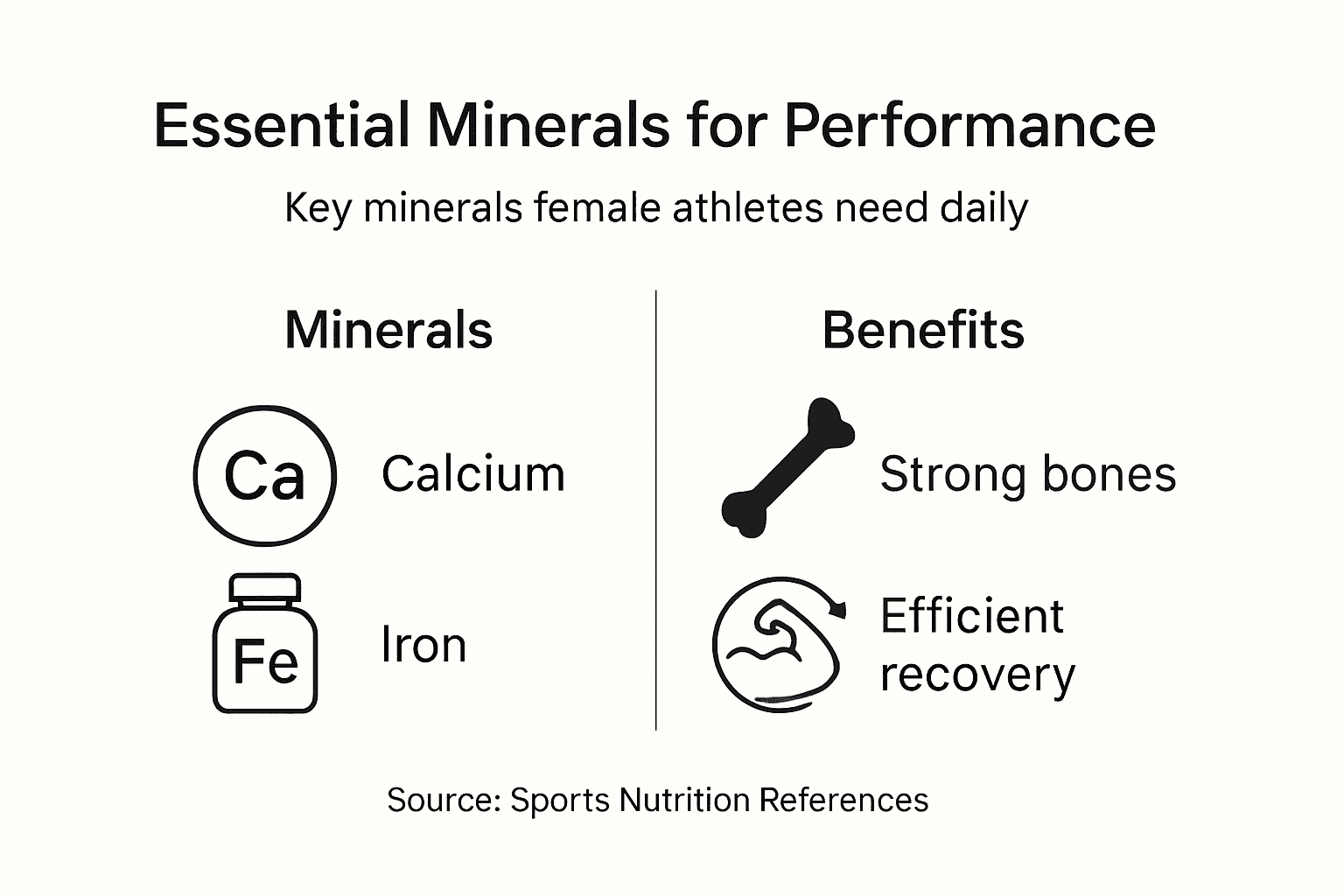
Here is a summary of key minerals for female athletes and their primary sources:
| Mineral | Main Dietary Sources | Unique Female Requirement |
|---|---|---|
| Calcium | Dairy, leafy greens, tofu | Needed for bone density, especially post-menstruation |
| Magnesium | Nuts, seeds, whole grains | Supports muscle recovery and combats menstrual cramps |
| Iron | Red meat, beans, spinach | Essential due to menstruation-related loss |
| Zinc | Shellfish, pumpkin seeds | Maintains immune health under training stress |
| Potassium | Bananas, potatoes, pulses | Offsets loss from sweat and high-intensity exercise |
Pro tip: Regularly monitor your mineral levels through blood tests and work with a sports nutritionist to develop a targeted supplementation strategy that matches your specific training demands.
Major Mineral Types And Their Functions
Athletes require a comprehensive understanding of minerals categorised into two primary groups: macrominerals and trace minerals. Minerals play crucial roles in physiological functions that directly impact athletic performance and overall health. These essential nutrients support various metabolic processes and are fundamental to maintaining optimal physical condition.
Macrominerals represent minerals required in larger quantities and include:
- Calcium: Critical for bone strength and muscle contraction
- Magnesium: Supports energy production and muscle recovery
- Potassium: Regulates fluid balance and nerve signalling
- Sodium: Maintains electrolyte balance and hydration
- Chloride: Assists in maintaining proper blood volume and pH levels
Key minerals demonstrate specific physiological impacts that are particularly relevant for female athletes. Trace minerals, though required in smaller quantities, are equally significant. These include iron for oxygen transportation, zinc for immune function, and selenium for cellular protection.

Understanding the intricate roles of these minerals helps athletes develop targeted nutritional strategies. Female athletes, in particular, must pay attention to mineral intake due to unique physiological demands such as menstrual cycles, higher iron requirements, and specific metabolic needs associated with intense training regimens.
Pro tip: Consult a sports nutritionist to develop a personalised mineral supplementation plan that addresses your specific athletic demands and physiological requirements.
Why Female Athletes Need More Minerals
Female athletes experience unique physiological challenges that significantly increase their mineral requirements compared to sedentary populations. Female athletes face complex micronutrient needs that demand specialised nutritional strategies to maintain optimal performance and health.
The primary factors driving increased mineral requirements include:
- Menstrual Cycle: Monthly blood loss increases iron depletion risks
- Hormonal Fluctuations: Impact metabolic processes and mineral absorption
- Higher Training Intensities: Create greater physiological stress and mineral depletion
- Body Composition: Lower muscle mass affects mineral metabolism
- Reproductive Health: Mineral balance critical for hormonal regulation
Specifically, female athletes are more prone to deficiencies in critical minerals such as iron, calcium, and magnesium. These deficiencies can compromise bone density, oxygen transportation, muscle recovery, and overall athletic performance. Intense training regimens, combined with potential dietary restrictions or inadequate nutrition, further exacerbate these challenges.
Understanding and addressing these unique mineral requirements is crucial for female athletes seeking to maintain peak physical condition. Comprehensive nutritional assessments, targeted supplementation, and personalised dietary strategies can help mitigate potential deficiencies and support optimal performance across training and competition cycles.
Pro tip: Schedule regular blood panel tests to monitor mineral levels and consult a sports nutritionist specialising in female athlete nutrition for personalised supplementation recommendations.
How Essential Minerals Enhance Performance
Athletic performance relies fundamentally on precise mineral interactions within the body’s complex physiological systems. Essential minerals optimise physiological functions that directly impact training intensity, recovery, and overall athletic potential.
Key performance enhancement mechanisms include:
- Muscle Contraction: Calcium and magnesium regulate muscle responsiveness
- Oxygen Transportation: Iron enables efficient oxygen delivery to muscle tissues
- Energy Production: Magnesium activates enzymatic processes for ATP generation
- Nerve Signalling: Sodium and potassium facilitate rapid neural communications
- Recovery Acceleration: Zinc supports protein synthesis and cellular repair
Understanding the intricate roles of minerals reveals their profound impact on athletic performance. Trace minerals like zinc and selenium play critical roles in reducing oxidative stress, supporting immune function, and mitigating inflammation, which are essential for consistent high-intensity training.
Female athletes, in particular, must pay close attention to mineral balance, as hormonal fluctuations and intense training can significantly deplete these crucial micronutrients. Targeted mineral supplementation and strategic nutritional planning can help maintain optimal physiological conditions for peak performance.
Pro tip: Develop a comprehensive mineral intake strategy with a sports nutritionist, focusing on personalised supplementation that addresses your specific training demands and physiological needs.
Meeting Daily Needs: Diet Versus Supplements
Female athletes face complex nutritional challenges that require strategic approaches to mineral intake. Nutrition fundamentals emphasise balanced dietary approaches before considering supplementation as a secondary strategy.
Key considerations for mineral intake include:
- Whole Food Priority: Natural food sources provide superior nutrient absorption
- Individual Metabolism: Unique physiological needs vary between athletes
- Training Intensity: Higher performance demands may require targeted supplementation
- Dietary Restrictions: Potential gaps in nutrition might necessitate mineral supplements
- Blood Panel Insights: Regular testing reveals specific micronutrient requirements
The fundamental principle remains a ‘food first’ approach, where whole food sources provide primary nutritional support. Supplements should complement, not replace, a nutrient-rich diet. Female athletes over 30 participating in high-intensity sports like Hyrox require particularly nuanced nutritional strategies that balance dietary intake with potential supplementation needs.
Consultation with sports nutritionists can help develop personalised mineral intake plans that account for individual training loads, metabolic differences, and specific physiological demands. Understanding the intricate balance between dietary sources and targeted supplementation is crucial for optimal performance and long-term athletic health.
The following table contrasts the reliability of food versus supplements for meeting mineral needs:
| Approach | Advantages | Limitations |
|---|---|---|
| Whole Foods | Superior absorption, broad nutrients | May not meet high training demands |
| Supplements | Convenient, precise dosing | Overuse risks, absorption varies |
| Combined Method | Maximises intake and flexibility | Requires ongoing nutritional review |
Pro tip: Conduct comprehensive blood panel tests every six months to precisely track mineral levels and adjust your nutritional strategy accordingly.
Unlock Your Peak Performance with Essential Mineral Support
Female athletes face unique challenges such as higher iron loss, mineral depletion through sweat, and increased recovery demands. The detailed roles of minerals like calcium, magnesium, and potassium are vital to muscle function, energy production, and immune defence as described in the article. Balancing these essential minerals through natural nutrition is crucial but sometimes challenging during high intensity training sessions.
Empower your training with specially formulated pre-workout and electrolyte supplements from Use Interval that harness natural ingredients designed to address the exact mineral needs highlighted in the article. Our range supports muscle recovery, hydration, and sustained energy so you can meet your performance goals without compromise. Discover how to optimise your mineral intake and tackle intense workouts with confidence at Use Interval Supplements. Start transforming your nutrition strategy today to elevate your athletic potential.
Frequently Asked Questions
What essential minerals do female athletes need for optimal performance?
Female athletes require essential minerals such as calcium, magnesium, iron, zinc, and potassium. These minerals support critical functions like bone density, muscle contraction, oxygen transportation, and immune health, which are vital for peak performance.
How do essential minerals impact recovery in female athletes?
Essential minerals like magnesium and zinc play significant roles in muscle recovery and cellular repair. They help regulate energy production and support protein synthesis, which accelerates recovery after training or competition.
What are the best dietary sources for essential minerals?
Key dietary sources of essential minerals include dairy and leafy greens for calcium, nuts and seeds for magnesium, red meat and beans for iron, shellfish and pumpkin seeds for zinc, and bananas and potatoes for potassium. A balanced diet rich in these foods can help meet mineral needs.
How can female athletes identify mineral deficiencies?
Regular blood tests can help female athletes monitor their mineral levels and identify deficiencies. Additionally, consulting with a sports nutritionist can provide personalised assessments and recommendations for a targeted dietary and supplementation strategy.
Recommended
- Role of Trace Electrolytes: Boosting UK Female Athletic Performance – Interval
- 7 Best Electrolytes Sources List for Female Hyrox Athletes – Interval
- 7 Essential Electrolyte Tips for Female Hyrox Athletes – Interval
- 7 Key Pre-Workout Nutrients for UK Female Athletes – Interval
- Nährstoffe für die Haut: Tipps für Sportler und sensible Haut – Kühlkern UG (Haftungsbeschränkt)
- Biostarks | Sport Performance