


Role of Trace Electrolytes: Boosting UK Female Athletic Performance
Most british female athletes overlook how tiny minerals shape their high-intensity performance. Over 60 percent of Hyrox competitors report muscle cramps or unexplained fatigue during demanding training, yet the answer often lies within trace electrolytes. For women training hard in the United Kingdom, pinpointing these microscopic powerhouses can mean the difference between thriving and struggling on race day. You will discover how attention to trace electrolytes elevates endurance, recovery, and competitive results—all backed by scientific evidence.
Table of Contents
- Trace Electrolytes In Sports Explained
- Major Trace Electrolytes And Their Functions
- Effects On Muscle Performance And Recovery
- Common Misconceptions And Risk Factors
- Natural Sources And Supplement Selection
- Optimising Hydration For UK Female Athletes
Key Takeaways
| Point | Details |
|---|---|
| Importance of Trace Electrolytes | Trace electrolytes like sodium, potassium, magnesium, and calcium are crucial for female athletes, influencing muscle function and metabolic efficiency during high-intensity activities like Hyrox. |
| Strategic Mineral Intake | Female athletes should conduct sweat electrolyte testing to develop personalised hydration strategies, addressing unique mineral loss profiles to enhance performance and recovery. |
| Dietary Sources vs. Supplements | Whole food sources of trace electrolytes are preferred over supplements, offering a balanced combination of nutrients that support optimal physiological function. |
| Hydration Management | Hydration strategies must be tailored to individual needs, considering factors such as menstrual cycle, training intensity, and environmental conditions to optimise athletic performance. |
Trace electrolytes in sports explained
Trace electrolytes represent microscopic yet powerfully influential minerals that play a critical role in female athletic performance across high-intensity sports like Hyrox. Unlike standard electrolyte discussions, these minute quantities trigger profound physiological responses essential for peak muscular function and metabolic efficiency.
Understanding the intricate balance of trace electrolytes becomes paramount when exploring athletic endurance. Recent research highlights how electrolyte loss through perspiration significantly impacts thermoregulation and performance, particularly for female athletes experiencing unique physiological demands. Sodium, potassium, magnesium, and calcium operate as fundamental conductors enabling precise neuromuscular communication, muscle contraction, and energy transmission during demanding training sessions.
The systematic breakdown of trace electrolyte function reveals their multifaceted contributions to athletic performance. Comprehensive studies demonstrate that electrolyte imbalances can trigger exercise-induced muscle cramps and potentially dangerous conditions like hyponatremia, underscoring the necessity of strategic mineral intake. Female Hyrox athletes must recognise that these microscopic minerals are not merely supplementary, but integral to maintaining optimal physical resilience and competitive edge.
Pro Performance Tip: Conduct regular sweat electrolyte testing to understand your unique mineral loss profile and develop personalised hydration strategies tailored to your specific physiological needs.
Major trace electrolytes and their functions
Trace electrolytes represent a sophisticated network of minerals crucial for female athletes, particularly those engaged in high-intensity sports like Hyrox. Core electrolytes play fundamental roles in muscle function, nerve transmission, and metabolic regulation, creating a complex biochemical symphony that enables peak physical performance.
Four primary trace electrolytes dominate athletic biochemistry: sodium, potassium, calcium, and magnesium. Each mineral operates with remarkable precision, governing critical physiological processes. Sodium manages fluid balance and nerve signalling, potassium controls muscle contractions and heart rhythms, calcium drives muscle movement and bone strength, while magnesium supports energy production and muscle recovery. Their interactions are intricate, with even minute imbalances potentially disrupting athletic capability.

Comprehensive research demonstrates that these electrolytes are not merely supplementary components but integral mechanisms supporting cardiovascular function, power output, and sustained athletic performance. Female Hyrox athletes must understand that strategic electrolyte management goes beyond simple hydration—it represents a nuanced approach to metabolic optimization and physiological resilience.
Here is a summary showing the primary roles of major trace electrolytes in athletic performance:
| Electrolyte | Main Function | Deficiency Risk |
|---|---|---|
| Sodium | Regulates fluid and nerve signals | Muscle cramps, hyponatraemia |
| Potassium | Controls muscle contraction, heart rhythm | Fatigue, irregular heartbeat |
| Calcium | Powers muscle movement, strengthens bone | Weakness, bone loss |
| Magnesium | Enables energy production, recovery | Soreness, slow repair |
Pro Performance Tip: Create a personalised electrolyte tracking log to monitor your mineral intake, recording your training intensity, sweat rates, and any performance variations to develop a targeted nutritional strategy.
Effects on muscle performance and recovery
Trace electrolytes represent a critical biochemical infrastructure that directly influences muscle performance and recovery mechanisms for female athletes. Scientific investigations demonstrate that strategic electrolyte supplementation substantially enhances body water retention and exercise performance capabilities, providing a nuanced approach to optimising physiological responses during intense training.
Muscle performance relies fundamentally on precise electrolyte interactions. Sodium enables nerve signal transmission, allowing muscle fibres to contract efficiently, while potassium regulates intracellular fluid balance and supports rapid muscle recovery. Magnesium plays a pivotal role in muscle protein synthesis and reducing inflammation, effectively minimising post-exercise muscle soreness and accelerating repair processes. These microscopic minerals function as cellular conductors, coordinating complex muscular responses that determine an athlete’s endurance and resilience.
For female Hyrox athletes, understanding electrolyte dynamics means recognising that muscle performance is not merely about strength, but about sophisticated cellular communication. Electrolyte balance influences muscle contractility, prevents cramping, maintains optimal hydration levels, and supports metabolic efficiency. The intricate mineral network within muscles determines not just immediate performance but long-term adaptive capacity, making strategic electrolyte management a cornerstone of athletic development.
Pro Performance Tip: Implement a structured electrolyte replacement protocol that matches your specific training intensity, tracking both pre and post-exercise mineral consumption to optimise muscle recovery and prevent performance plateaus.
Common misconceptions and risk factors
The realm of electrolyte management is fraught with widespread misunderstandings that can significantly compromise female athletes’ performance and health. Systematic research reveals that athletes often erroneously believe macronutrients are the sole performance determinant, overlooking the critical role of trace electrolytes in endurance and physiological function, a misconception that can lead to substantial training setbacks.
Critical risk factors emerge from both under- and over-consumption of electrolytes. Female Hyrox athletes must recognise that excessive water intake can trigger exercise-associated hyponatremia, a potentially dangerous condition characterised by dangerously low sodium levels. Conversely, insufficient electrolyte replacement can cause muscle cramps, reduced cognitive function, and impaired recovery. Comprehensive medical reviews highlight that individualised hydration strategies are paramount, as blanket recommendations fail to account for unique physiological variations, particularly when considering factors like sweat rate, training intensity, and personal metabolic profiles.
Perhaps the most insidious misconception is the belief that all electrolyte supplements are identical. Female athletes must understand that mineral requirements vary dramatically based on individual biochemistry, training modalities, and environmental conditions. Blindly following generic supplementation protocols can lead to imbalances that compromise both short-term performance and long-term athletic development. The nuanced approach demands careful monitoring, periodic testing, and a willingness to adapt nutritional strategies based on personal physiological responses.
Pro Performance Tip: Conduct a comprehensive sweat test with a sports nutritionist to establish your unique electrolyte loss profile, enabling precise and personalised mineral replacement strategies tailored to your specific metabolic needs.
Natural sources and supplement selection
Comprehensive scientific research emphasises the primacy of whole food sources for trace electrolyte intake, challenging the widespread assumption that supplements are the primary nutritional solution for female athletes. Natural dietary sources offer a complex matrix of minerals, vitamins, and micronutrients that work synergistically to support optimal physiological function, making them the foundational approach for electrolyte management.
Key natural electrolyte sources for female Hyrox athletes include dark leafy greens like spinach and kale, rich in magnesium and potassium; sea vegetables such as kelp and nori; nuts and seeds including almonds and pumpkin seeds; and lean proteins like chicken and fish. Whole grains, dairy products, and coconut water also provide essential mineral profiles. Professional sports nutrition guidelines consistently recommend a ‘food first’ strategy, supplementing only when clear nutritional gaps are identified through expert assessment, ensuring athletes maintain a balanced and individualised approach to mineral intake.
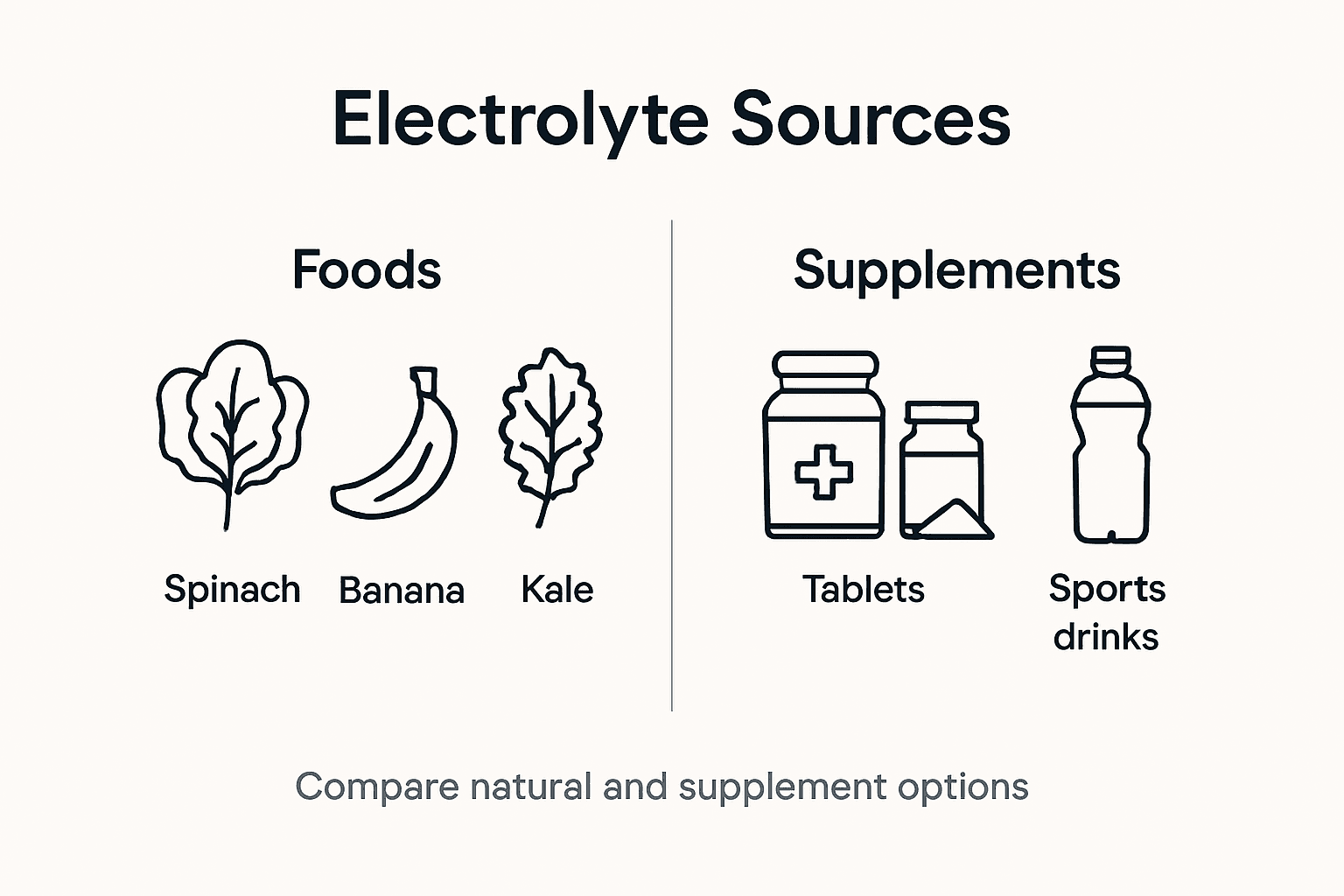
When selecting electrolyte supplements, female athletes must prioritise products with transparent ingredient lists, minimal processing, and third-party testing. Factors like bioavailability, additional micronutrient content, and compatibility with individual metabolic profiles become crucial. Natural, plant-based supplements derived from whole food sources often provide more comprehensive nutritional benefits compared to synthetic alternatives, supporting not just mineral replacement but overall cellular health and athletic adaptation.
This table provides a quick comparison between whole food sources and supplements for electrolyte intake:
| Aspect | Whole Foods Approach | Supplement Approach |
|---|---|---|
| Nutritional Benefits | Broad nutrient profile | Targeted mineral replacement |
| Absorption | Highly bioavailable forms | Varies by product formulation |
| Risk of Imbalance | Lower with balanced diet | Higher if misused |
| Suitable For | General daily nutrition | Addressing specific deficiencies |
Pro Performance Tip: Create a detailed food and supplement diary tracking your mineral intake, consulting a sports nutritionist to develop a personalised electrolyte strategy that optimises your unique physiological requirements.
Optimising hydration for UK female athletes
Research exploring fluid dynamics in female athletes reveals complex physiological considerations unique to the female body, challenging traditional one-size-fits-all hydration strategies. Female Hyrox athletes must recognise that optimal hydration extends far beyond simple water consumption, demanding a nuanced understanding of individual metabolic responses and hormonal influences.
Hydration strategies for UK female athletes require a sophisticated approach that accounts for individual variability. Menstrual cycle phases, training intensity, and environmental conditions critically impact fluid and electrolyte requirements. While average sweat rates may not dramatically differ from male counterparts, hormonal fluctuations can significantly influence fluid retention, electrolyte balance, and overall physiological performance. This necessitates a personalised approach that adapts hydration protocols throughout different stages of the athlete’s monthly cycle.
Precision in hydration management demands more than generic recommendations. Female Hyrox athletes should implement a comprehensive hydration assessment that includes measuring individual sweat rates, electrolyte composition, and metabolic responses during different training intensities. Advanced strategies might involve using bioelectrical impedance analysis, conducting sweat electrolyte testing, and maintaining detailed hydration logs that track fluid intake, performance metrics, and subjective energy levels. The goal is creating a dynamic, responsive hydration protocol that evolves with the athlete’s changing physiological needs.
Pro Performance Tip: Develop a personalised hydration tracking system using a dedicated smartphone app or journal, recording your fluid intake, training context, and physiological responses to create a comprehensive understanding of your unique hydration requirements.
Unlock Your Peak Performance with Tailored Electrolyte Support
Female athletes tackling high-intensity sports like Hyrox face unique challenges with maintaining the delicate balance of trace electrolytes critical for muscle function, hydration and recovery. Understanding sodium, potassium, magnesium and calcium’s vital roles can empower you to avoid common pitfalls such as muscle cramps and fatigue while optimising your endurance and resilience.

Take control of your performance today with scientifically backed natural ingredients designed specifically for your needs. Explore our Bundle – Interval for expertly formulated electrolyte blends that support your personalised hydration and nutrition strategy. Visit UseInterval.co.uk to discover how precise supplementation can elevate your training and recovery. Start building your customised electrolyte plan now and experience the difference of targeted support that honours your unique physiology.
Frequently Asked Questions
What are trace electrolytes and why are they important for female athletes?
Trace electrolytes are essential minerals, including sodium, potassium, calcium, and magnesium, that play a crucial role in muscle function, nerve transmission, and metabolic regulation. For female athletes, particularly in high-intensity sports, maintaining an optimal balance of these electrolytes is vital for peak performance and recovery.
How can I determine my electrolyte needs as a female athlete?
To understand your electrolyte needs, consider conducting regular sweat electrolyte testing. This can help identify your specific mineral loss profile during training, allowing you to develop personalised hydration and nutritional strategies tailored to your physiological requirements.
What are common misconceptions about electrolyte intake among athletes?
Many athletes mistakenly believe that macronutrients are the sole determinants of performance, overlooking the importance of trace electrolytes in endurance and physiological function. Additionally, there is a risk of both under- and over-consumption, which can lead to performance issues and health complications.
How can I optimise my hydration strategy as a female athlete?
Optimising hydration involves understanding individual factors such as menstrual cycle phases, training intensity, and environmental conditions. Implement a personalised hydration assessment that measures your sweat rates and electrolyte composition, enabling you to adapt your hydration protocol based on your unique physiological needs.