


Hyponatremia in Sport – Risks for Female Athletes
Pushing through every Hyrox event in the United Kingdom, you want your performance to reflect your dedication—not be undermined by unexpected setbacks. For female athletes aged 30 to 50, understanding hyponatremia is more than caution—it’s about safeguarding your health and results when pushing your limits. This guide reveals why electrolyte balance is the backbone of safe, high-intensity competition, explains risks specific to British women, and clarifies smart strategies to keep you strong from the start to the finish line.
Table of Contents
- Hyponatremia and Exercise: Core Definition
- Types of Hyponatremia in Athletes
- How Sodium Loss Impacts Performance
- Primary Causes and Risk Factors in Sport
- Preventing Hyponatremia During Intense Events
Key Takeaways
| Point | Details |
|---|---|
| Understanding Hyponatremia | Exercise-associated hyponatremia occurs when serum sodium drops below 135 mmol/L, particularly in female athletes, which poses a significant risk beyond dehydration. |
| Risk Factors for Female Athletes | Women aged 30 to 50 are more vulnerable to hyponatremia due to physiological differences, hormonal shifts, and outdated hydration strategies. |
| Drink to Thirst | Athletes should adopt a thirst-based hydration strategy instead of rigid drinking schedules to prevent the dangers of overhydration. |
| Recognising Symptoms | Early symptoms of hyponatremia include mild nausea and headache; recognising these can help prevent serious complications during competition. |
Hyponatremia and Exercise: Core Definition
Exercise-associated hyponatremia (EAH) is a condition where serum sodium drops below 135 mmol/L during or within 24 hours of intense physical activity. For female athletes like you training at high intensities, this represents a genuine medical risk that goes beyond typical dehydration.
The condition emerged prominently in ultramarathon runners and ironman competitors, but it now appears across diverse sports—including high-intensity interval training like Hyrox. What makes it different from simple dehydration is the mechanism: your body isn’t just losing sodium through sweat; something more complex is happening internally.
How Hyponatremia Develops During Exercise
Three main factors drive hyponatremia during intense activity:
- Excessive fluid intake – Drinking too much water or sports drinks during prolonged effort
- Hormonal shifts – Your body releases arginine vasopressin, a hormone that signals your kidneys to retain fluid
- Sodium imbalance – Despite sweat losses, the overall dilution of blood sodium becomes the primary problem
The key insight: sodium loss through sweat is actually less significant than fluid accumulation and hormonal responses during exercise.
Unlike dehydration (where you’ve lost more fluid than you’ve consumed), hyponatremia means your blood sodium concentration has become dangerously diluted. Your cells, particularly brain cells, struggle to function when sodium levels fall too low.
Why Female Athletes Face Heightened Risk
Women aged 30 to 50 competing in high-intensity events need to understand their specific vulnerability. Research shows females are at elevated risk during endurance activities lasting three or more hours, though Hyrox’s intense 60-minute format creates different—but real—challenges.
Hormonal fluctuations, body composition differences, and sweat rate variations all play roles. More importantly, many female athletes still follow outdated “drink as much as possible” hydration strategies that were never evidence-based.
Symptoms You Should Recognise
Hyponatremia presents on a spectrum from mild to life-threatening:
- Mild symptoms – Nausea, headache, dizziness
- Moderate symptoms – Confusion, restlessness, muscle weakness
- Severe symptoms – Seizures, pulmonary oedema, altered consciousness
The dangerous part: mild symptoms feel similar to normal exercise discomfort, making them easy to dismiss during competition.
Prevention Through Smart Hydration
The modern approach to hyponatremia prevention contradicts old advice. Instead of preemptive drinking schedules, sports medicine now emphasises drinking according to thirst. For Hyrox athletes, this means listening to your body’s signals rather than following rigid fluid protocols.
Your individual sweat rate, climate conditions, and intensity level all vary. One-size-fits-all hydration strategies often cause more problems than they solve.
Pro tip: During training, test your actual thirst-driven fluid intake rather than using fixed ml-per-hour targets; this personalised approach prevents both dehydration and overhydration come race day.
Types of Hyponatremia in Athletes
Hyponatraemia isn’t a single condition—it manifests in two distinct forms, each with different causes and implications for how you manage your hydration strategy during competition. Understanding which type you’re at risk for helps you prevent the wrong problem entirely.
The two main categories are dilutional hyponatraemia and depletional hyponatraemia. Both result in dangerously low sodium levels, but they arrive there through completely different physiological pathways.
Here’s a comparison of the two main types of exercise-induced hyponatraemia in athletes:
| Type of Hyponatraemia | Primary Cause | Common Scenario | Key Distinguishing Feature |
|---|---|---|---|
| Dilutional | Overconsumption of fluids | Short to mid-length endurance | Blood sodium diluted, volume normal |
| Depletional | Excessive sodium loss via sweat | Ultra-endurance or multi-day races | Body sodium drops, true dehydration |
Dilutional Hyponatraemia: The Overhydration Problem
Dilutional hyponatraemia occurs when excessive fluid intake dilutes blood sodium whilst your kidneys fail to excrete that extra water properly. This is the most common type you’ll encounter in Hyrox athletes and endurance sport competitors.
The mechanism involves two culprits working together:
- Hypotonic fluid consumption – Drinking plain water or low-sodium sports drinks in excessive amounts
- Impaired water clearance – Your body releases arginine vasopressin, which signals your kidneys to hold onto water instead of eliminating it
You end up with normal total body sodium but abnormally diluted blood because you’ve added too much fluid relative to electrolyte content. Your cells swell as water moves into them, causing the neurological symptoms we discussed earlier.
Dilutional hyponatraemia dominates in sports contexts because athletes typically follow outdated “drink as much as possible” protocols rather than drinking to thirst.
Depletional Hyponatraemia: The Sodium Loss Problem
Depletional hyponatraemia results from excessive sodium loss through sweat without adequate replacement. This type is less common in shorter events like Hyrox but becomes relevant during ultra-distance training or multi-day competitions.
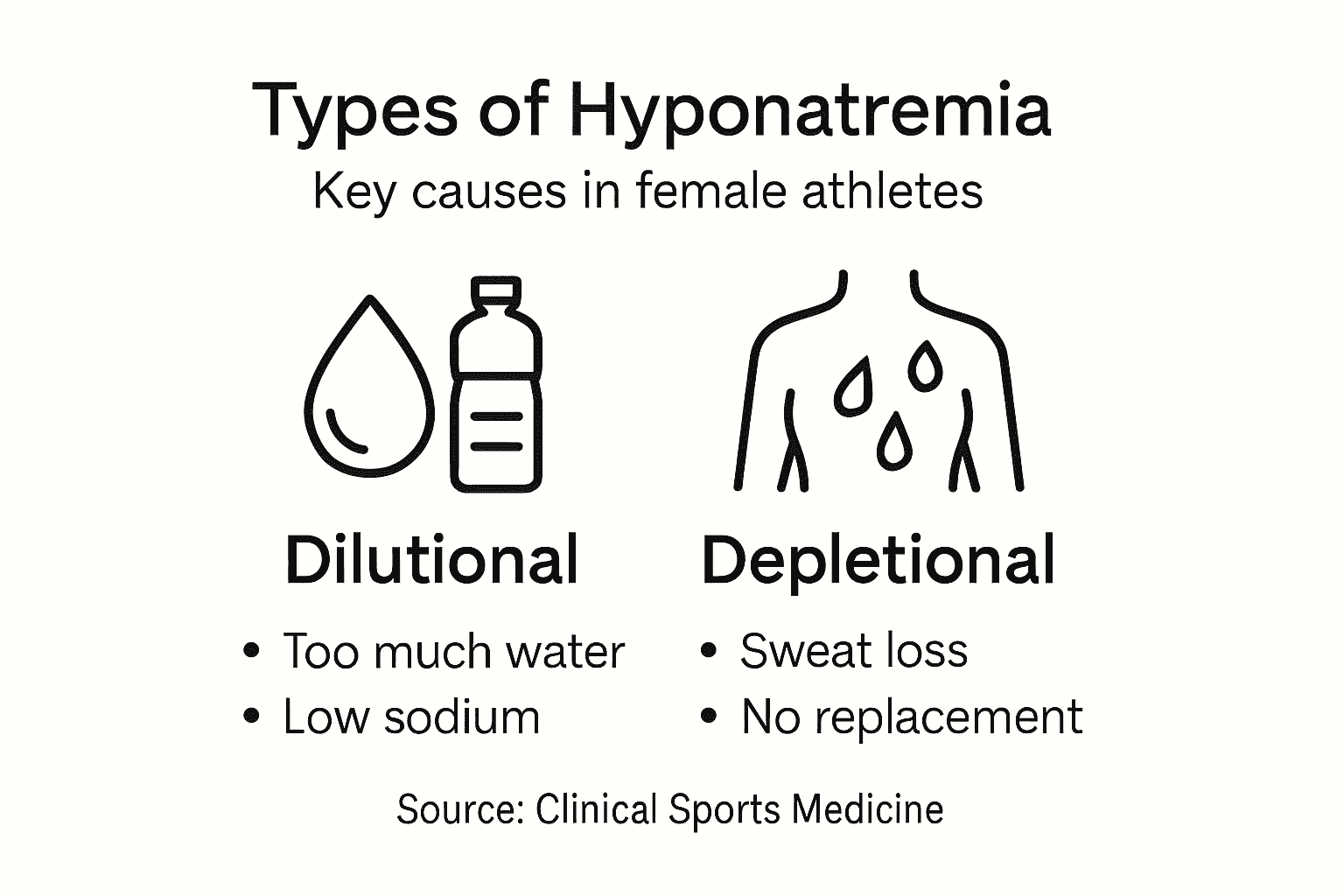
With depletional hyponatraemia, your body actually loses sodium faster than it loses water. You experience genuine dehydration alongside low sodium—a dangerous double impact. Your blood volume shrinks, your heart must work harder, and your sodium concentration plummets simultaneously.
This type develops when:
- You sweat profusely for extended periods
- You replace fluid but neglect electrolyte replenishment
- You rely purely on plain water between intense training sessions
Distinguishing Based on Volume Status
Clinically, specialists also classify hyponatraemia by your body’s fluid volume status:
- Hypovolaemic – Low total body fluid (typical in depletional cases)
- Euvolaemic – Normal total fluid volume despite low sodium (typical in dilutional cases)
- Hypervolaemic – Excess total body fluid with diluted sodium (rare in athletes)
Sports-related cases predominantly fall into the dilutional, euvolaemic category because overhydration with hypotonic fluids is the primary driver.
Which Type Threatens You Most?
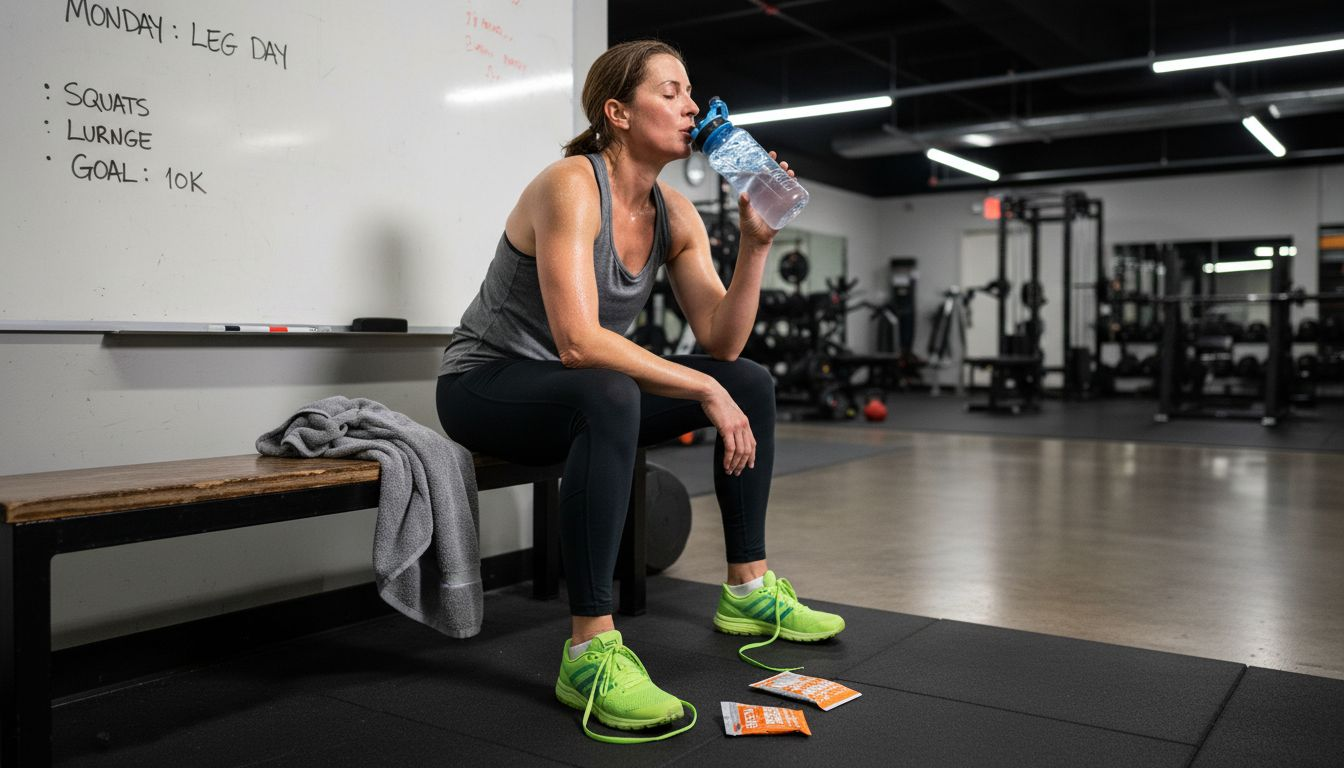
For female Hyrox athletes aged 30 to 50, dilutional hyponatraemia represents your greater practical risk. The intensity and duration of Hyrox events, combined with modern hydration marketing that promotes aggressive fluid consumption, creates the perfect storm for overhydration.
Depletional cases matter primarily during extended training sessions where you might not be carrying adequate electrolyte supplementation.
Pro tip: Before your next Hyrox race, calculate your personal sweat rate by weighing yourself before and after a 60-minute training session; this single measurement guides whether you need additional electrolyte support beyond thirst-based drinking.
How Sodium Loss Impacts Performance
Sodium isn’t just another electrolyte—it’s the primary driver of your cardiovascular stability, muscle function, and sustained power output during high-intensity sport. When sodium levels drop through sweat losses, your athletic performance declines measurably, even before you notice symptoms.
Understanding how sodium depletion specifically damages your Hyrox performance helps you appreciate why electrolyte replacement isn’t optional—it’s foundational to competitive results.
The Cardiovascular Impact
Your heart depends on sodium to maintain blood volume and pressure during exercise. When sodium lost through sweat isn’t replaced, your blood becomes more diluted, reducing its ability to carry oxygen to working muscles.
This creates a vicious cycle:
- Blood volume drops
- Your heart must beat faster to maintain oxygen delivery
- Cardiovascular strain increases
- Aerobic capacity declines
For female athletes aged 30 to 50, this cardiovascular stress compounds the natural aerobic demands of Hyrox’s obstacle course and running sections. Your heart is working overtime at precisely the moment you need maximum efficiency.
Sodium replacement maintains the blood volume your cardiovascular system requires to sustain high-intensity performance—without it, your VO₂ max effectively drops mid-race.
Muscle Function and Cramping
Sodium controls how your muscles contract and relax by regulating electrical signals across cell membranes. Excessive sodium loss without adequate replacement impairs this neural signalling, leading directly to muscle weakness and cramping.
You’ll experience:
- Reduced contractile force – Your muscles generate less power with each contraction
- Increased cramping risk – Especially in legs during the running and rig section
- Earlier fatigue onset – Your muscles fatigue faster because they’re working inefficiently
- Impaired recovery – Post-exercise muscle damage becomes more severe
This matters enormously during Hyrox because you’re combining sustained running with explosive obstacle movements. The sodium depletion directly undermines your ability to generate power when you need it most.
Thermoregulation and Heat Stress
Sodium helps your body regulate core temperature by maintaining sweat function and blood flow to your skin. When sodium drops, your thermoregulatory system becomes less efficient, meaning your core temperature rises faster under the same exercise intensity.
This triggers earlier fatigue, reduced cognitive function, and potentially dangerous heat stress—especially problematic if you’re competing in warmer UK conditions or during summer events.
Real Performance Decline
The combined effect of these three mechanisms produces measurable performance loss. Research shows imbalanced sodium levels during exercise lead to reduced aerobic capacity, impaired muscle contraction, increased fatigue, and compromised recovery.
For a 60-minute Hyrox event, sodium depletion translates to:
- Slower obstacle completion times
- Reduced running pace in final sections
- Difficulty maintaining power on the rig
- Increased perceived exertion at the same pace
Pro tip: Track your power output or pace on a specific Hyrox section (like the rowing machine or running intervals) before and after implementing sodium supplementation to see your personal performance gain.
Primary Causes and Risk Factors in Sport
Hyponatraemia doesn’t strike athletes randomly. Specific biological, environmental, and behavioural factors combine to create your individual risk profile. Understanding which factors apply to you matters because some are controllable and others simply require awareness.
Female Hyrox athletes aged 30 to 50 face a distinct cluster of risk factors that deserve your attention, particularly when training or competing in certain conditions.
Key risk factors for female Hyrox athletes aged 30–50 at a glance:
| Risk Factor | Why It Matters | Risk Increase In Hyrox? |
|---|---|---|
| Female physiology | Different hormonal and sodium responses | Significantly elevated |
| Event duration >60 mins | More time for over-drinking or sweat loss | Mostly during training only |
| Warm environments | Higher sweat and thirst urge | Yes, with summer or indoor events |
| NSAID/ibuprofen use | Kidneys excrete water less efficiently | Notable if used pre-competition |
| Free access to fluids | Promotes unnecessary drinking at stations | Frequent in most UK events |
Female Sex as a Biological Risk Factor
Female athletes face higher hyponatraemia risk than their male counterparts across most sporting contexts. This isn’t a weakness—it reflects real physiological differences in how your body handles fluid balance during intense activity.
Women experience:
- Different sweat composition and sodium losses
- Hormonal influences on fluid retention and vasopressin secretion
- Variations in fluid distribution across menstrual cycle phases
- Lower average body weight relative to fluid intake recommendations
These biological realities mean generic hydration protocols designed for males often don’t suit your physiology. Your body’s response to the same fluid volume differs fundamentally from men’s responses.
Being female isn’t a risk you can eliminate, but understanding your specific vulnerability allows you to personalise your hydration strategy accordingly.
Exercise Duration and Intensity
Risk factors including longer exercise duration and slower pace significantly elevate hyponatraemia likelihood. However, Hyrox presents a unique context: it’s only 60 minutes, yet combines high intensity with sustained exertion.
For Hyrox specifically:
- Longer training sessions (two to three hours) carry greater risk than race day itself
- Your individual pace matters—slower competitors often spend more time drinking at fluid stations
- Intensity variations during the course mean periods of lower intensity encourage more drinking
- Back-to-back training sessions within days compound sodium depletion
A slower Hyrox pace isn’t safer from a hyponatraemia standpoint because you’ll consume more total fluid throughout the event.
Environmental Temperature Extremes
Hot weather increases sweat losses, making electrolyte replacement more critical. However, the relationship is paradoxical: heat also prompts excessive drinking as a thermoregulatory strategy.
You’re at heightened risk during:
- Summer races or training sessions
- Warmer UK venues or overseas competitions
- Indoor facilities with poor ventilation
- Events combining physical exertion with environmental heat stress
Medication and NSAID Use
Non-steroidal anti-inflammatory drugs (NSAIDs) like ibuprofen impair kidney function and fluid excretion, directly increasing hyponatraemia risk. Many female athletes take NSAIDs pre-event for perceived pain prevention, unknowingly amplifying their hyponatraemia vulnerability.
Avoid NSAIDs before and during competition unless medically necessary.
Fluid Availability During Events
When sports drinks and water are freely available, athletes tend to drink excessively—especially those following pre-emptive hydration strategies. Hyrox events provide multiple fluid stations, creating an environment conducive to overconsumption.
Your risk increases if you:
- Arrive at each station planning to drink rather than drinking to thirst
- Consume large volumes at individual stations
- Don’t track your total fluid intake across the event
Pro tip: Record your body weight, fluid intake volume, and weather conditions during a training session mimicking race conditions; use this data to calculate your personal safe fluid intake threshold and build confidence in thirst-driven rather than station-driven drinking.
Preventing Hyponatremia During Intense Events
Preventing hyponatraemia isn’t complicated, but it requires abandoning traditional hydration wisdom you’ve probably followed for years. The modern approach prioritises simplicity over rigid protocols, which paradoxically makes it harder to execute because it demands trust in your body’s signals rather than external rules.
For female Hyrox athletes, implementing these strategies before race day transforms your safety profile dramatically.
Drink to Thirst, Not to Schedule
The foundational prevention strategy is straightforward: drinking according to thirst rather than predetermined schedules eliminates the overhydration mechanism that drives hyponatraemia in most athletes.
Your thirst mechanism evolved over millennia to regulate fluid intake precisely. Modern hydration guidance that says “drink 500 ml every 20 minutes” contradicts this biological system and creates the problem you’re trying to prevent.
Instead:
- Drink when genuinely thirsty, not when you “should” based on time
- Ignore peer pressure at fluid stations—your body’s needs differ from others’
- Accept that some athletes won’t drink at every station
- Trust that moderate thirst is normal and safe during 60-minute events
This approach feels uncomfortable initially because it violates decades of hydration marketing messaging.
Thirst-based drinking prevents hyponatraemia because your body won’t signal thirst once sodium and fluid balance reach dangerous imbalances—you’re working within your safety margin.
Limit Hypotonic Fluid Consumption
Plain water and low-sodium sports drinks present the greatest hyponatraemia risk. If you do drink, prioritise beverages containing sodium and carbohydrates rather than water alone.
During Hyrox specifically:
- Avoid plain water at fluid stations
- Choose sports drinks with minimum 500 mg sodium per litre
- Consider electrolyte supplements that dissolve in water if you prefer familiarity
- Never pre-load with excessive water before the event
Sodium Replacement Strategy
Sodium replacement during prolonged physical activity may be beneficial and represents your primary intervention beyond thirst-based drinking. For Hyrox’s 60-minute duration, sodium supplementation isn’t strictly necessary if you drink only to thirst, but it provides extra safety margin.
Timing your sodium intake matters:
- Consume sodium-containing beverages with any fluid you drink during the event
- Pre-event sodium loading (salty breakfast) can boost sodium stores beforehand
- Post-event sodium replacement accelerates rehydration if you consumed significant fluid
Pre-Event Preparation
Three weeks before your Hyrox race, establish your personal hydration baseline through training simulation. This removes guesswork and builds confidence in thirst-driven drinking.
Test during training:
- Replicate race-day conditions exactly
- Measure your sweat rate by weighing before and after
- Note your thirst pattern at different intensities
- Identify which available fluids taste acceptable when fatigued
Education and Early Recognition
Knowing hyponatraemia’s early symptoms allows you to adjust behaviour before serious problems develop. Mild nausea during Hyrox doesn’t automatically mean hyponatraemia, but if it accompanies excessive fluid consumption, reduce drinking immediately.
Warn your support crew about symptoms so they can intervene if you lose objectivity during fatigue.
Pro tip: Before race day, write your personal thirst-based drinking strategy on your race bib or wrist tape (e.g., “drink only when thirsty, max 200 ml per station”); this visible reminder prevents panic-driven overconsumption when race chaos creates uncertainty.
Protect Your Performance from Hyponatremia Risks Today
Hyponatraemia poses a real challenge for female athletes engaging in high intensity sports like Hyrox. Excessive fluid intake and sodium imbalance can threaten your heart, muscle function and overall race results. Knowing how to prevent dilutional hyponatraemia by drinking to thirst and prioritising electrolyte replacement is vital. Our natural pre-workout and electrolyte supplements are designed specifically to support fluid balance and muscle power so you can tackle every event with confidence.
Take control of your hydration strategy now and safeguard your performance. Discover how our carefully formulated products help maintain optimal sodium levels and prevent the dangers of overhydration. Visit UseInterval to explore effective, natural solutions tailored for your intense training. Make your next race safer and stronger by starting with the right fuel and electrolytes today.
Frequently Asked Questions
What is exercise-associated hyponatremia (EAH)?
EAH is a condition where serum sodium levels drop below 135 mmol/L during or within 24 hours of intense physical activity, posing severe health risks, especially for female athletes.
How does hyponatremia differ from dehydration?
Hyponatremia occurs when blood sodium concentration becomes dangerously diluted, often due to excessive fluid intake or hormonal responses, whereas dehydration is a result of fluid loss exceeding intake.
What are the symptoms of hyponatremia I should look out for during exercise?
Symptoms range from mild to severe and include nausea, headache, dizziness, confusion, muscle weakness, seizures, and altered consciousness. Mild symptoms can easily be mistaken for normal exercise discomfort.
How can female athletes prevent hyponatremia during high-intensity events?
Female athletes should drink according to thirst rather than adhering to strict hydration schedules, limit consumption of plain water, and consider electrolyte supplementation to maintain sodium levels during prolonged exercise.
Recommended
- 7 Essential Electrolyte Tips for Female Hyrox Athletes – Interval
- Easy Electrolyte Workflow for Female Hyrox Athletes – Interval
- Why Hyrox Athletes Need Electrolytes for Performance – Interval
- 7 Best Electrolytes Sources List for Female Hyrox Athletes – Interval
- Ekstrēmi sporta veidi: Drošība, veidi un pieredzes – Skydive Latvia
- Τι Είναι Το Hydration Booster – Οφέλη και Χρήσεις | B Woman