


Pre-training supplement workflow: your 2026 guide
TL;DR:
- Following a structured supplement protocol ensures that athletes arrive at training sessions primed and focused, avoiding wasted resources and compromised performance. Proper timing, consistent dosing, and high-quality products are essential components, with caffeine used acutely before exercise and beta-alanine and creatine building long-term benefits through daily intake. Tracking individual responses and maintaining routine habits maximize gains, emphasizing that supplement effectiveness relies on discipline and transparency rather than haphazard use.
Most fitness enthusiasts have stood in front of a supplement shelf, read conflicting advice online, and ended up either taking everything at once or nothing at all. A structured pre-training supplement workflow, what sports nutritionists often call a “supplementation protocol,” cuts through that noise. Get it right and you arrive at your session primed, focused, and ready to push hard. Get it wrong and you are either wasting money or, worse, compromising your training. This guide gives you the specific steps, timings, and ingredient knowledge to build a protocol that actually works.
Key takeaways
| Point | Details |
|---|---|
| Caffeine timing is precise | Take 3–6 mg/kg body weight 45–60 minutes before training for measurable performance gains. |
| Beta-alanine needs weeks, not minutes | Load at 3.2–6.4 g daily for at least four weeks before expecting meaningful results. |
| Creatine rewards consistency | A daily 3–5 g dose delivers strength and power benefits without loading phases. |
| Split doses to reduce side effects | Dividing beta-alanine doses into smaller amounts significantly reduces the tingling sensation. |
| Quality over quantity | Third-party tested products with transparent labelling protect both your results and your health. |
The pre-training supplement workflow explained
A pre-workout supplement routine is not simply “take a scoop, train hard.” It is a structured process that combines the right ingredients, at the right doses, at the right times, supported by solid hydration and nutritional foundations. Understanding what each supplement actually does is where a strong supplement preparation process begins.
Caffeine is the most evidence-backed acute ergogenic aid in sports nutrition. Optimal caffeine dosing sits at 3–6 mg/kg body weight, taken 45–60 minutes before training. At that dose, you can expect measurable improvements in power output, endurance, and reaction time. The critical point: caffeine works within a session, not over weeks.
Beta-alanine operates entirely differently. Its ergogenic benefit comes from raising muscle carnosine levels, which buffer acid during high-intensity efforts. Beta-alanine requires consistent loading at 3.2–6.4 g per day over 3–10 weeks to produce that effect. Taking it once before a session does nothing meaningful. Think of it as a long-term infrastructure investment rather than a quick boost.
Creatine monohydrate follows a similar consistency-based logic. Daily dosing of 3–5 g saturates the phosphocreatine system over time, supporting short, intense bursts of effort. No loading phase is required when you stick to this daily protocol.
A few common myths worth addressing directly:
- More caffeine is not better. Beyond 6 mg/kg you typically get more anxiety and sleep disruption, not more performance.
- Pre-workout supplements do not replace food. Glycogen from carbohydrates is still your primary fuel source.
- You do not need a rest day from creatine. Consistent daily intake is precisely the point.
- Habitual caffeine drinkers still benefit. Daily coffee consumers show meaningful performance gains from a timed pre-training dose on top of their normal intake.
Pro Tip: Hydration is not a supplement, but it underpins all of them. Arriving even 2% dehydrated before a session will blunt the performance gains you are trying to build.
Building your step-by-step dosing plan
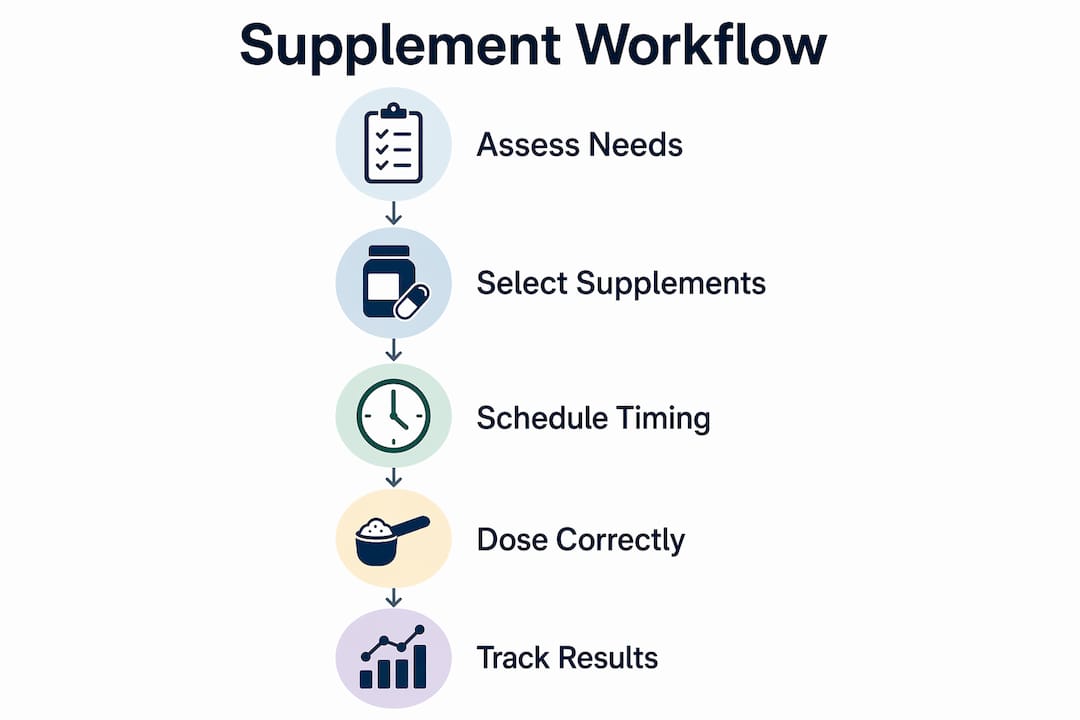
This is where planning supplement intake becomes practical. A good pre-workout supplement routine is built in layers: you schedule your acute supplements around your session, then layer in your chronic supplements as daily habits.
-
Calculate your caffeine dose. Take your body weight in kilograms and multiply by 3. That is your starting dose in milligrams. Most people training at high intensity sit between 150 mg and 300 mg. Start conservatively and adjust upward only if you tolerate it well and feel the need.
-
Set your caffeine timing window. Caffeine reaches peak plasma concentration 30–90 minutes after ingestion. Target the 45–60 minute mark before your first set. If you are training after a full meal, add 15–30 minutes to your window since food delays absorption slightly.
-
Establish your beta-alanine daily habit. Split your total daily dose across two or three servings. Plasma beta-alanine peaks around 30–45 minutes post-dose, and splitting to no more than 1.0 g per serving for immediate-release forms significantly reduces the tingling known as paresthesia. One of those servings can coincide with your pre-training window, but the rest of the day’s doses matter just as much.
-
Take creatine at any consistent time. The most important variable with creatine is not the hour you take it but whether you take it every single day. Morning with breakfast works perfectly well for most people.
-
Plan your hydration schedule. Drink 500 ml of water in the two hours before training. If your session exceeds 60 minutes or involves high sweat loss, electrolytes become relevant during the session itself, not just before.
-
Time your pre-training meal or snack. A light, carbohydrate-focused snack 60–90 minutes before training supports fuel availability without causing gastric discomfort during your session.
Pro Tip: Write your supplement schedule on your phone for the first two weeks. The difference between a good protocol and a forgotten one is almost always habit formation, not knowledge.
For a deeper look at how timing affects outcomes, Useinterval’s guide on pre-workout timing covers the nuances in practical detail.
Common mistakes that undermine your workflow
Even experienced athletes make these errors. Recognising them before they cost you weeks of progress is worth the time.
-
Overdosing caffeine chasing a better session. Beyond the therapeutic range, excess caffeine delivers diminishing returns and often disrupts sleep. Poor sleep blunts recovery, which undoes your training gains faster than any supplement can replace them.
-
Expecting beta-alanine to work immediately. This is one of the most common misunderstandings in gym culture. Beta-alanine’s benefits are chronic, meaning the tingling you feel on day one is not a performance effect. It is just a nerve response. The actual gains come four to twelve weeks in.
-
Ignoring label transparency. Proprietary blends hide individual ingredient doses behind a total weight. You cannot build a reliable workflow if you do not know exactly what you are taking. Third-party tested supplements with clear labelling remove this guesswork entirely. Useinterval’s expert comparison of reviewed pre-workout supplements is worth reading before you buy.
-
Skipping days on chronic supplements. Missing a day of beta-alanine or creatine is not catastrophic. Missing a week because your routine slipped is. Consistency is the active ingredient.
-
Ignoring individual response. Caffeine timing varies individually. Someone with fast caffeine metabolism may need to dose closer to 30 minutes pre-session; a slow metaboliser may need 70 minutes. Track your own response over several sessions before drawing conclusions.
The single most overlooked variable in any supplement workflow is not the supplement itself. It is whether you are taking it consistently enough and at the right quality level to see the effect it was designed to produce.
Tracking results and adjusting your protocol
Knowing how to use pre-training supplements is half the work. The other half is knowing whether they are working. Different supplements deliver benefits across different timelines, and conflating them causes confusion.
| Supplement | Effect type | Timeline to benefit | Key performance marker |
|---|---|---|---|
| Caffeine | Acute | 30–60 minutes | Perceived effort, power output, focus |
| Beta-alanine | Chronic | 4–12 weeks | High-rep endurance, delayed fatigue |
| Creatine | Chronic | 2–4 weeks (daily use) | Strength, sprint performance, recovery |
Supplement effects manifest across different timelines: caffeine within a single session, beta-alanine after four to twelve weeks of consistent loading, and creatine after two to four weeks of daily intake.
Track three things weekly: a subjective energy score before training (1 to 10), a performance marker relevant to your sport such as reps completed or sprint time, and your sleep quality. These three data points will tell you more than any single session can. If your energy scores are consistently low despite good caffeine timing, look at sleep and nutrition first. If your sprint times are not improving after eight weeks on beta-alanine, check whether your loading protocol has actually been consistent.
Adjust one variable at a time. Change timing before changing dose. Change dose before changing product. This approach gives you clean data.
My take on building a protocol that sticks
I have worked with and around high-intensity athletes for long enough to see the same pattern repeat: people treat their supplement intake as an event rather than a process. They are meticulous on game day and completely haphazard the rest of the week. That mentality works for kit bags. It fails completely for anything that requires chronic loading.
What I have found actually works is treating your supplement workflow the same way you treat your training plan. It is scheduled, repeatable, and non-negotiable. The athletes who get the best results from beta-alanine are not the ones who read the most about carnosine buffering. They are the ones who split their doses and take them every day for ten weeks without drama.
I am also firm on quality. Proprietary blends are a red flag. If a product will not tell you the exact dose of each ingredient, lab-certified transparency becomes non-negotiable, especially if you compete in a tested sport. The cost difference between a certified product and an uncertified one is trivial compared to the risk.
One more thing: your caffeine timing is personal. I have seen people swear by 30 minutes and others who need a full hour. Spend two weeks actually recording the time you dose and how you feel at the start of your session. The data will be more useful than any general guideline, including this one.
— Tom
Start your workflow with Useinterval
If you want to put everything in this guide into practice straight away, Useinterval’s Starter Bundle is designed exactly for this moment. It brings together a transparent, natural-ingredient pre-workout with electrolytes for session hydration, both third-party tested and dosed for high-intensity training. You get precise amounts on the label, no proprietary blend guesswork, and a format that fits neatly into the dosing structure outlined above. It takes the supplement preparation process from a decision you have to make every week to a routine that simply runs. If you want to learn more before you buy, Useinterval’s guide on timing supplement intake is a solid next read.
FAQ
How long before training should I take a pre-workout supplement?
For caffeine-based pre-workouts, take your dose 45–60 minutes before your session. If you have eaten a full meal, extend that window by 15–30 minutes to account for delayed absorption.
Does caffeine stop working if I use it every day?
No. Habitual caffeine users still show meaningful performance benefits from a timed pre-training dose, so a daily coffee habit does not cancel out your pre-workout.
Why does beta-alanine make my skin tingle?
The tingling, called paresthesia, is a harmless nerve response to beta-alanine entering the bloodstream quickly. Splitting your dose to no more than 1.0 g per serving or using a sustained-release form significantly reduces the sensation.
Do I need to cycle creatine on and off?
No. Current evidence supports consistent daily intake of 3–5 g without cycling. Taking breaks serves no performance purpose and simply delays the saturation your muscles need.
What should I look for when choosing a pre-workout supplement?
Prioritise products with clearly listed individual doses, no proprietary blends, and third-party certification. Transparent labelling is the clearest sign that what is on the label is actually in the product.