


How to time supplement intake for peak performance
You train hard, fuel carefully, and choose quality supplements, yet you still wonder why your energy dips mid-session or recovery drags. The missing piece is often timing. Taking the right supplement at the wrong moment can waste its potential, whilst precise timing unlocks measurable gains in power, endurance, and recovery. This guide walks you through preparing, executing, and verifying a supplement timing strategy tailored to high-intensity sport, so you maximise every dose and every session.
Table of Contents
- Preparing For Optimal Supplement Timing
- How To Time Each Supplement For Best Results
- Common Mistakes And How To Avoid Them
- How To Verify And Optimise Your Supplement Timing
- How Interval Supports Your Supplement Timing Journey
- Frequently Asked Questions
Key takeaways
| Point | Details |
|---|---|
| Timing boosts performance | Precise supplement timing significantly enhances energy, strength, and recovery outcomes. |
| Three key windows | Pre-workout, intra-workout, and post-workout phases each require distinct timing strategies. |
| Personalisation matters | Your sport, schedule, and body dictate optimal timing, not generic rules. |
| Avoid common errors | Inconsistent timing and poor hydration undermine supplement effectiveness. |
| Track and refine | Logging intake and performance reveals patterns that let you optimise further. |
Preparing for optimal supplement timing
Before you set timers or open containers, you need a clear picture of your sport, your supplements, and your daily rhythm. High-intensity sports such as CrossFit, Hyrox, or interval running demand rapid energy turnover, so understanding your sport’s energy demands helps determine the best timing strategy. Start by identifying whether your sessions rely more on explosive power, sustained aerobic effort, or a mix of both. This shapes which supplements matter most and when your body needs them.
Next, audit your supplement cabinet. List each product, its active ingredients, and its absorption profile. Caffeine peaks in your bloodstream 30 to 60 minutes after ingestion, whilst whey protein digests faster than casein. Electrolytes work almost immediately, but creatine requires consistent daily intake rather than acute timing. Knowing these windows lets you choreograph your intake around training.
Your daily schedule is the final puzzle piece. Do you train early morning, lunchtime, or evening? Are your sessions fasted or fed? Map your typical day, noting meal times, work commitments, and sleep patterns. This reveals practical constraints and opportunities. For example, a 6am session might mean taking pre-workout at 5.30am, whilst an evening workout allows a mid-afternoon snack plus pre-workout 30 minutes before.
Create a simple checklist:
- Sport type and primary energy systems
- Supplement list with absorption times
- Training schedule and meal timing
- Tools needed (timer, shaker, supplement organiser)
Pro Tip: Use a pill organiser or small containers to pre-portion supplements for each training day. This removes guesswork and ensures you never miss a dose.
| Supplement type | Typical absorption time | Best timing window |
|---|---|---|
| Caffeine | 30-60 minutes | 30-45 min pre-workout |
| Whey protein | 30-60 minutes | Within 30 min post-workout |
| Electrolytes | 10-20 minutes | During or immediately pre-workout |
| Creatine | N/A (daily saturation) | Anytime daily, consistently |
How to time each supplement for best results
Now you understand your context, let’s build your timing protocol. Each supplement category has an optimal window, and stacking them correctly amplifies your results without overwhelming your gut.
Pre-workout timing
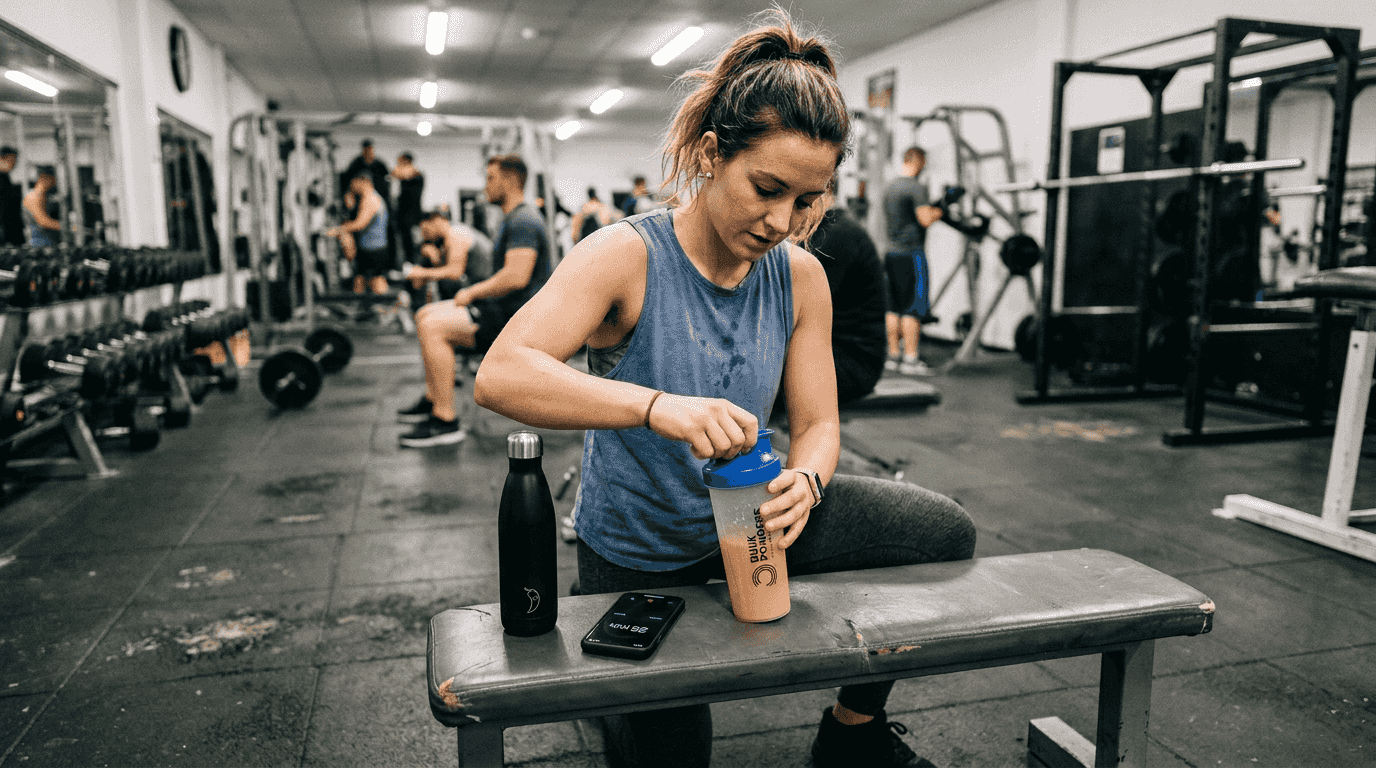
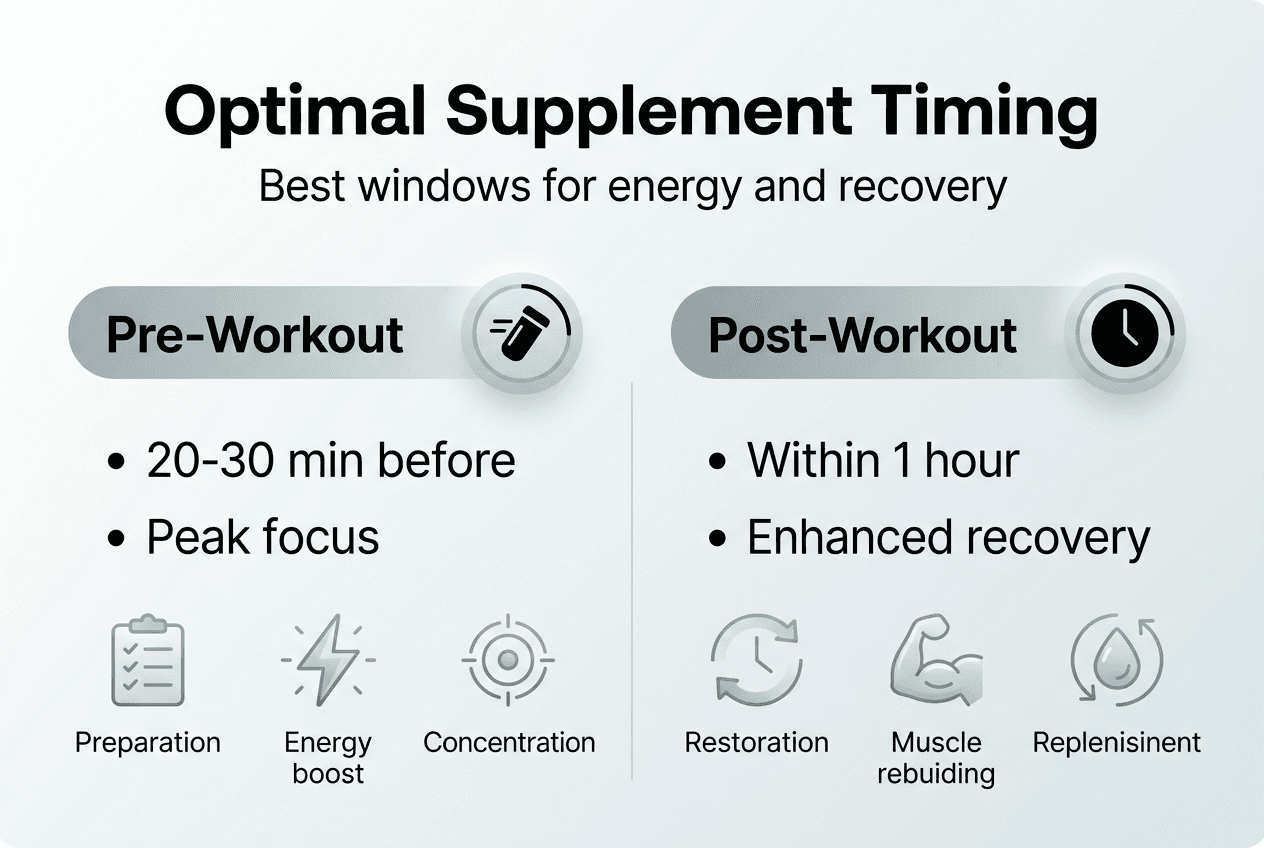
Take your pre-workout supplement 20 to 30 minutes before you begin warming up. This window allows caffeine, beta-alanine, and other stimulants to reach peak blood concentration as you start your first working set. Pre-workout supplement timing is crucial for peak energy, so set a phone alarm if needed. If your pre-workout includes carbohydrates, extend the window to 45 minutes to allow partial digestion and avoid stomach discomfort during high-intensity efforts.
Intra-workout timing
For sessions longer than 60 minutes or exceptionally intense intervals, sip electrolytes throughout. Sodium, potassium, and magnesium prevent cramping and maintain fluid balance. Start drinking 10 minutes into your session and continue every 10 to 15 minutes. If you add carbohydrates (such as dextrose or maltodextrin) for endurance events, aim for 30 to 60 grams per hour, split into small, frequent sips. This steady drip-feed sustains blood glucose without spiking insulin or causing GI distress.
Post-workout timing
The anabolic window is real but more flexible than old myths suggest. Post-workout protein intake of 20-40g aids recovery, ideally within 30 to 60 minutes post-session. Whey protein is fastest, making it ideal immediately after training, whilst a mixed meal with protein and carbohydrates works well if you finish within two hours. Pair protein with simple carbs (banana, rice cakes) to replenish glycogen and drive amino acids into muscle tissue.
Pro Tip: If you train twice daily, prioritise post-workout nutrition after your harder session. The second session can rely on pre-workout timing alone if recovery time is short.
| Supplement | Timing window | Key benefit |
|---|---|---|
| Pre-workout | 20-30 min before | Peak energy and focus |
| Electrolytes | During session | Hydration and cramp prevention |
| Whey protein | 0-60 min after | Rapid muscle repair |
| Carbohydrates | 0-120 min after | Glycogen replenishment |
Combining supplements requires care. Take pre-workout on a light stomach (a small snack 90 minutes prior works well). Avoid mixing high-dose caffeine with large meals, as fat and fibre slow absorption. Post-workout, protein shakes can sit alongside electrolytes without issue, but space creatine and beta-alanine away from caffeine if you experience jitters. For a complete comparison of formulations and timing strategies, explore best pre-workout supplements 2025 comparison to match products to your needs.
Common mistakes and how to avoid them
Even with a solid plan, small errors can sabotage your results. Recognising these pitfalls keeps you on track.
Inconsistent timing
Taking pre-workout 15 minutes before one session and 60 minutes before the next creates unpredictable energy peaks. Your body adapts to routine, so stick to the same window daily. Set recurring alarms or link supplement intake to a fixed habit, such as leaving for the gym or finishing your warm-up.
Neglecting hydration
Supplements work best in a well-hydrated system. Dehydration slows absorption, thickens blood, and impairs performance. Drink 500ml of water 60 to 90 minutes before training, sip electrolytes during, and rehydrate with 150% of fluid lost (weigh yourself pre- and post-session to estimate loss). Caffeine is mildly diuretic, so increase water intake on pre-workout days.
Stacking too aggressively
Taking pre-workout, BCAAs, creatine, and beta-alanine all at once can overwhelm your gut, causing bloating or nausea. Space non-urgent supplements (creatine, daily vitamins) away from workout windows. Reserve the 30-minute pre-workout slot for performance-critical items only.
Ignoring individual response
Generic advice is a starting point, not gospel. Some athletes metabolise caffeine slowly and need 60 minutes’ lead time, whilst others feel jittery if they take it too early. Personalised nutrition timing improves athletic outcomes, so treat your first few weeks as an experiment. Note how you feel at different intervals and adjust.
Missing recovery signals
If you experience persistent fatigue, muscle soreness lasting beyond 48 hours, or declining performance despite consistent timing, your post-workout nutrition may be insufficient or mistimed. Increase protein intake, move your post-workout shake earlier, or add a small carbohydrate source immediately after training.
Pro Tip: Keep a simple yes/no checklist in your training log: “Pre-workout taken on time? Hydrated during session? Post-workout protein within 60 minutes?” A quick glance reveals patterns in your best and worst sessions.
How to verify and optimise your supplement timing
Timing isn’t static. As your training volume, intensity, and goals shift, so should your supplement schedule. Systematic tracking turns guesswork into precision.
Set measurable goals
Define what success looks like. Are you chasing faster sprint times, heavier lifts, quicker recovery, or reduced cramping? Write down one to three specific metrics (e.g., “complete 10 rounds of intervals without energy drop” or “reduce post-session soreness by half”). These targets guide your adjustments.
Log daily intake and performance
Use a notebook, spreadsheet, or app to record:
- Supplement type and exact timing (e.g., “pre-workout at 5.45am”)
- Meal timing and composition
- Training session details (duration, intensity, type)
- Subjective energy, focus, and recovery ratings (1 to 10 scale)
- Objective metrics (weights lifted, times recorded, heart rate)
After two weeks, patterns emerge. You might notice that taking pre-workout 25 minutes before yields better focus than 40 minutes, or that post-workout protein within 30 minutes reduces next-day soreness compared to 90 minutes.
Interpret and adjust
Look for correlations. Did your three best sessions all follow the same timing protocol? Did poor sessions share a common error (e.g., skipped electrolytes, late pre-workout)? Adjust one variable at a time. If you suspect your pre-workout timing is off, shift it by five-minute increments and track results for another week. Tracking nutrition and supplement timing leads to improved performance outcomes, so commit to the process.
Pro Tip: Review your log monthly, not daily. Daily fluctuations are normal, but monthly trends reveal true cause and effect.
| Week | Pre-workout timing | Energy rating (1-10) | Performance notes |
|---|---|---|---|
| 1 | 40 min before | 6 | Felt sluggish early |
| 2 | 25 min before | 8 | Strong throughout |
| 3 | 25 min before | 9 | PR on intervals |
| 4 | 30 min before | 8 | Consistent energy |
Sustain improvements
Once you identify your optimal windows, automate them. Prep supplements the night before, set phone reminders, or pair intake with existing habits (e.g., “I take pre-workout when I fill my water bottle”). Consistency compounds small gains into significant performance leaps over months.
How Interval supports your supplement timing journey
You’ve mapped your sport, built your timing protocol, and started tracking results. Now simplify execution with products designed for precision. Interval offers expertly formulated supplement bundles that align with pre-, intra-, and post-workout windows, removing guesswork from your routine. Each serving is portioned for optimal absorption and effect, so you spend less time measuring and more time training.
Our starter bundle includes pre-workout for energy, electrolytes for hydration, and post-workout protein for recovery, all using natural ingredients tailored to high-intensity athletes. The Interval website hosts expert guides on nutrition timing, supplement stacking, and performance optimisation, giving you the knowledge to refine your strategy as your training evolves. By combining quality formulations with actionable education, Interval helps you turn timing theory into tangible results, session after session. Visit the Interval home page to explore products and resources that fit your goals.
Frequently asked questions
What is the best time to take pre-workout supplements?
The ideal window is 20 to 30 minutes before you start your warm-up. This allows caffeine and other active ingredients to reach peak blood concentration as you begin working sets. If your pre-workout contains carbohydrates or you have a sensitive stomach, extend the window to 45 minutes. Pre-workout supplement timing is crucial for maximising energy and focus, so consistency matters more than perfection.
Can I take multiple supplements at the same time?
Some supplements combine well, whilst others cause digestive discomfort or reduced absorption when taken together. Pre-workout and electrolytes pair safely, as do post-workout protein and carbohydrates. However, stacking high-dose caffeine with creatine, beta-alanine, and BCAAs all at once can overwhelm your gut. Space non-urgent supplements (creatine, vitamins) away from workout windows and monitor your body’s response. If you experience bloating or nausea, separate doses by 30 to 60 minutes.
How do I know if my supplement timing is effective?
Track subjective and objective markers. Rate your energy, focus, and recovery on a 1 to 10 scale after each session, and record performance metrics such as weights lifted, times, or rounds completed. After two to four weeks, compare your best sessions. If they share a common timing pattern, you’ve found your sweet spot. If you notice persistent fatigue, slow recovery, or declining performance despite consistent timing, adjust your post-workout nutrition or hydration strategy.
Should I adjust supplement timing on rest days?
Yes, but the focus shifts. On rest days, prioritise daily supplements such as creatine (take anytime for consistent saturation) and general hydration. Skip pre-workout unless you have a light activity planned. Consider a protein-rich meal or shake mid-morning and mid-afternoon to support muscle repair without the urgency of a post-workout window. Rest day timing is more flexible, so use it to establish habits that carry over to training days.
How long does it take to see results from optimised timing?
Most athletes notice improved energy and focus within one to two sessions of correcting pre-workout timing. Recovery improvements (reduced soreness, faster strength return) become apparent after one to two weeks of consistent post-workout nutrition. Performance gains such as increased power output or endurance take four to six weeks, as your body adapts to reliable nutrient delivery. Patience and consistency are key, so commit to your timing protocol for at least a month before making major changes.
Recommended
- Supplement Timing: Enhancing Performance in Hyrox Athletes – Interval
- Building a Supplement Routine Naturally for Peak Performance – Interval
- How to Enhance Athletic Focus Naturally for Intense Training – Interval
- Pre-Workout Timing Explained: Optimise Your Results – Interval
- Why Lucent Works | Matcha, Green Tea & Brain Nutrients