


Optimise electrolyte mixing for female athletic performance
You train hard, you sleep well, you eat right. Yet somewhere around the 45-minute mark, your legs start to cramp, your focus blurs, and your pace drops. Sound familiar? For high-intensity female athletes aged 30 to 50, this scenario is frustratingly common, and it rarely comes down to fitness. More often, it traces back to electrolyte imbalances that undermine everything you have worked for. This guide walks you through exactly how to mix electrolytes for workouts, covering the right ingredients, precise quantities, and smart adjustments that match your body’s unique demands.
Table of Contents
- Why electrolytes matter for female athletes
- What you need: Ingredients and equipment for optimal electrolyte mixing
- Step-by-step: How to mix your electrolytes for workouts
- Troubleshooting: Common mistakes and how to fix them
- How to know it’s working: Measuring success and adjusting your mix
- Take your electrolyte routine further with Interval
- Frequently asked questions
Key Takeaways
| Point | Details |
|---|---|
| Optimal ratios matter | Mixing sodium, potassium, and magnesium in the right proportions enhances endurance and recovery for female athletes. |
| Precision mixing is safer | Careful measurement of ingredients prevents mistakes and supports consistent performance. |
| Individual needs vary | Monitoring your body’s response and adjusting mixes leads to the best hydration results. |
| DIY or ready-made | Homemade solutions are effective, but pre-formulated mixes save time and reduce error risk. |
Why electrolytes matter for female athletes
Electrolytes are minerals that carry an electrical charge and regulate everything from muscle contractions to fluid balance. The three you need to understand are sodium, potassium, and magnesium. Sodium controls fluid distribution and nerve signalling. Potassium supports muscle function and prevents cramping. Magnesium drives energy production and aids recovery. Understanding what are electrolytes is the first step to using them effectively.
Women sweat differently to men. Sweat rate, sodium concentration, and fluid needs shift across the menstrual cycle, and these changes become more pronounced in your 30s and 40s. During the luteal phase, for example, your body retains more fluid, which affects how much you need to drink and how concentrated your mix should be. Cycle-phase hyperhydration shows measurable performance gains when women account for these hormonal shifts.
Here are the key roles of the major electrolytes:
- Sodium (Na): Regulates fluid balance, prevents hyponatraemia, drives thirst response
- Potassium (K): Supports muscle contraction, reduces cramping risk, balances sodium
- Magnesium (Mg): Powers ATP production, aids sleep and recovery, reduces muscle soreness
Sodium is essential, but more is not always better. The goal is balance. For sessions over 60 minutes, 400-1000mg Na per serving in 16 to 24oz of water, alongside 80 to 200mg potassium and 20 to 80mg magnesium, gives you the foundation for real performance. Chasing high-sodium trends without balancing other minerals is a common mistake that can backfire.
The fluid replacement process for athletes is more nuanced than simply drinking more water. Prioritising optimising electrolyte intake means understanding your individual sweat profile and adjusting accordingly.
What you need: Ingredients and equipment for optimal electrolyte mixing
Before you mix anything, gather the right components. Precision matters here. A rough estimate can leave you under-fuelled or, worse, cause stomach issues mid-session.
Here is what you need:
- Table salt or sodium chloride: Your primary sodium source
- Potassium chloride (NoSalt or similar): Adds potassium without extra sodium
- Magnesium supplement (glycinate or citrate form): Better absorbed than oxide forms
- Carbohydrate source: Honey, fruit juice, or glucose powder for energy and improved absorption
- Water: 16 to 24oz (roughly 475 to 710ml) per serving
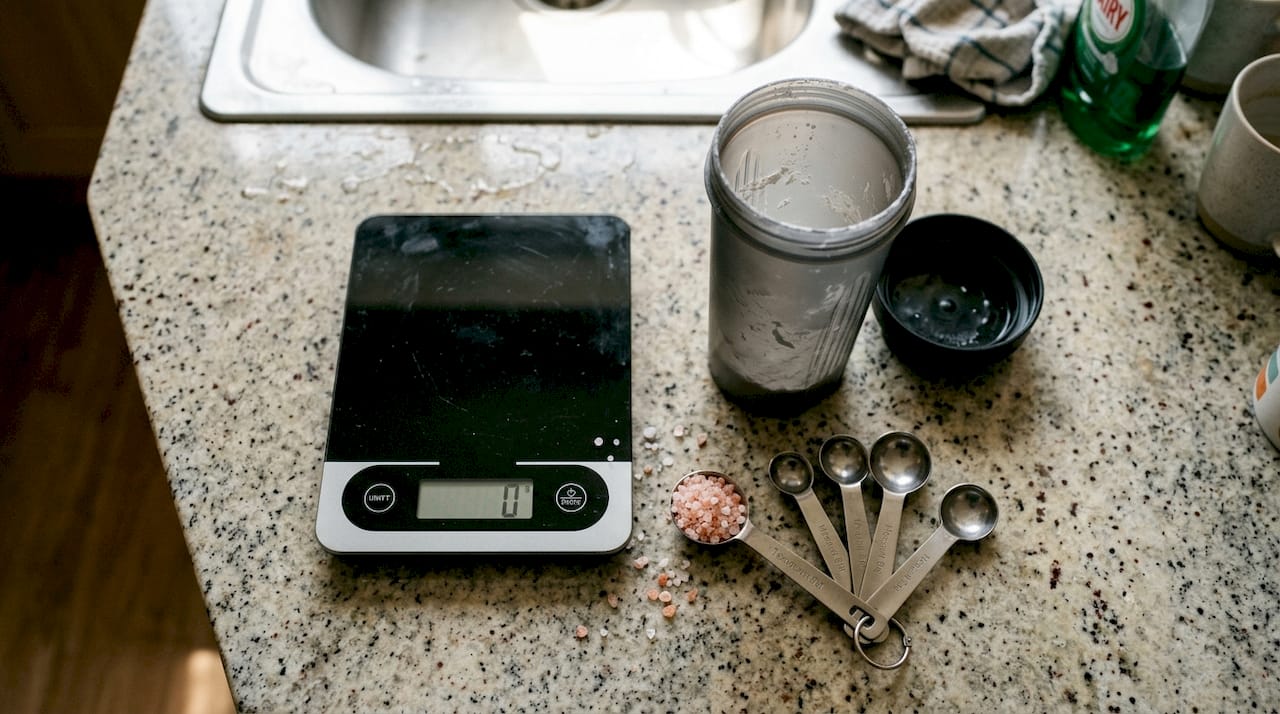
For equipment, you need a digital kitchen scale accurate to 0.1g, a shaker bottle with a tight seal, and measuring spoons. Do not rely on eyeballing quantities. A simple electrolyte drink recipe becomes far more effective when measured correctly.
| Factor | DIY mix | Pre-formulated mix |
|---|---|---|
| Accuracy | Moderate (user-dependent) | High (lab-tested) |
| Convenience | Low (prep time required) | High (ready to use) |
| Customisation | High | Moderate |
| Risk of error | Higher | Lower |
| Cost per serving | Lower | Moderate |
DIY mixing using 1/8 to 1/4 teaspoon of salt (roughly 300 to 600mg sodium), honey or juice for carbohydrates and potassium, and a magnesium supplement gives you flexibility. Pre-formulated mixes offer better precision and consistency, which matters when you are training at high intensity. Explore the best electrolytes sources to understand which natural ingredients deliver the most reliable results.
Pro Tip: Always use a digital scale rather than volume measurements for powders. Density varies between brands, and even a small error in sodium can affect how your body responds during training.
Step-by-step: How to mix your electrolytes for workouts
Follow these steps in order. The sequence matters because dissolving minerals before adding carbohydrates prevents clumping and ensures even distribution.
- Measure your water first. Add 16 to 24oz of cool water to your shaker bottle.
- Add sodium. Measure 400 to 1000mg of sodium (roughly 1/8 to 1/4 tsp of table salt) and add it to the water.
- Add potassium. Measure 80 to 200mg of potassium chloride and add it in.
- Add magnesium. Measure 20 to 80mg of magnesium and stir or shake briefly to begin dissolving.
- Add your carbohydrate source. For sessions over 60 minutes, add 20 to 40g of fast carbohydrates. One tablespoon of honey provides roughly 17g. Fruit juice adds both carbs and natural potassium.
- Seal and shake for 20 to 30 seconds. Ensure everything is fully dissolved before drinking.
- Taste and adjust. It should taste mildly salty, not overpowering. If it tastes intensely salty, dilute with more water.
For high-intensity workouts over 60 minutes, hitting the 400 to 1000mg sodium range alongside 20 to 40g of fast carbohydrates significantly improves endurance and delays fatigue. Check the electrolyte use for endurance guide for session-specific adjustments.
| Step | What you add | Purpose |
|---|---|---|
| 1 | Water (16-24oz) | Base for absorption |
| 2 | Sodium (400-1000mg) | Fluid balance, nerve function |
| 3 | Potassium (80-200mg) | Muscle contraction, cramp prevention |
| 4 | Magnesium (20-80mg) | Energy production, recovery |
| 5 | Carbohydrates (20-40g) | Fuel and improved mineral uptake |
Keep your mix in the isotonic zone. Hypertonic drinks above 300 mOsm/L impair absorption and can cause bloating or nausea. More is not more when it comes to concentration. A useful workflow for female athletes keeps this balance consistent across different training blocks.
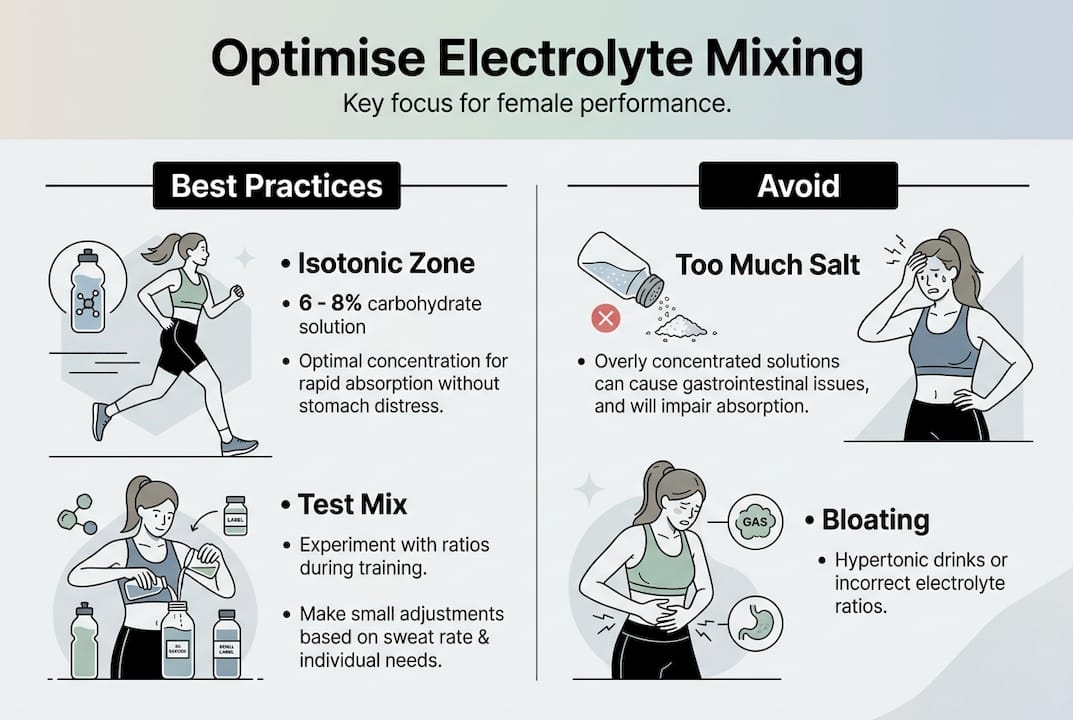
A 2% bodyweight loss from sweat during training measurably reduces performance. Staying ahead of that threshold is the entire point of getting your mix right.
Pro Tip: Test your mix during a standard training session before using it in a race or event. Your gut needs time to adapt to new formulations, and you do not want surprises on competition day.
Troubleshooting: Common mistakes and how to fix them
Even experienced athletes get this wrong. Here are the most frequent errors:
- Too little sodium: Leads to early fatigue, headaches, and poor fluid retention
- Too much sodium: Causes bloating, excessive thirst, and can impair absorption
- Clumping powders: Usually from adding minerals to warm water or not shaking enough
- Ignoring sweat loss variation: Sweat sodium varies 200-2000mg/L between individuals, so a one-size-fits-all approach rarely works
- Not adjusting for conditions: Hot weather, humidity, and longer sessions all increase your needs
| Mistake | Symptom | Quick fix |
|---|---|---|
| Too little sodium | Cramping, fatigue, headache | Increase Na by 100-200mg per serving |
| Too much sodium | Bloating, excessive thirst | Dilute with 4-6oz more water |
| Clumping | Gritty texture, uneven mix | Use cool water, shake for longer |
| Wrong concentration | Nausea, slow absorption | Reduce total solute, aim for isotonic |
| Ignoring cycle phase | Inconsistent results | Adjust volume and Na in luteal phase |
Hypertonic mixes actually worsen absorption and can hurt performance. If your drink tastes very salty or sweet, it is almost certainly too concentrated. Dilute it and reassess.
Keep a simple training log. Note your mix quantities, session duration, conditions, and how you felt. This data is invaluable for refining your formula over time. Understanding buffered electrolytes explained can also help if you experience digestive sensitivity with standard formulations. For a broader view, the natural electrolyte supplements comparison breaks down which ingredients perform best across different training scenarios.
Pro Tip: Track your symptoms across your menstrual cycle for at least four weeks. You will likely notice patterns that tell you exactly when to increase sodium or fluid volume.
How to know it’s working: Measuring success and adjusting your mix
Results do not lie. When your electrolyte mix is dialled in, you will notice clear physical signals within two to three weeks of consistent use.
Positive signs your mix is working:
- Fewer cramps during and after sessions
- Better endurance in the final third of your workout
- Faster recovery between training days
- Stable bodyweight before and after sessions (within 1% variance)
- Improved focus and reduced brain fog during high-intensity efforts
To monitor progress, weigh yourself before and after each session for one week. This tells you your sweat rate and whether you are replacing fluids adequately. Individual sweat sodium varies so widely that this personal data is far more useful than generic guidelines.
| Indicator | What to track | Adjustment trigger |
|---|---|---|
| Body weight change | Pre/post session weigh-in | Over 1% loss: increase fluid/Na |
| Cramping frequency | Log per session | Any cramps: review K and Mg levels |
| Recovery speed | Soreness rating 24h post | Slow recovery: check Mg intake |
| Energy levels | Self-rated 1-10 mid-session | Below 6: review carb and Na content |
Review your formula every four weeks, or whenever your training load, environment, or cycle phase shifts significantly. Comparing top electrolyte tablet options alongside your DIY mix can also help you benchmark your homemade formula against tested products.
Take your electrolyte routine further with Interval
Mixing your own electrolytes gives you control, but it also demands time, precision, and constant adjustment. If you want the benefits of a perfectly balanced formula without the guesswork, Interval has you covered.
At Interval, we formulate our electrolytes specifically for high-intensity female athletes using natural ingredients and evidence-based ratios. No artificial fillers, no excessive sodium, no compromise on quality. Our products are designed to slot seamlessly into your training routine, whether you are mid-session or recovering afterwards. The Interval Starter Bundle is the ideal starting point if you want a convenient, accurate, and effective alternative to DIY mixing. Try it for a full training block and feel the difference precision makes.
Frequently asked questions
How much sodium should I add to my homemade electrolyte drink?
For intense training sessions over 60 minutes, 400-1000mg sodium per serving in 16 to 24oz of water is the recommended range. Start at the lower end and increase based on sweat rate and symptom response.
Why is isotonic concentration important?
Isotonic drinks match the osmolality of your body fluids, which means minerals and fluid are absorbed quickly and efficiently. Hypertonic solutions impair absorption and can cause nausea or bloating, which is the last thing you need mid-session.
How do I adjust my electrolyte mix for sweat loss?
Start within the standard sodium range, then use pre and post-session weigh-ins to gauge fluid loss. Because sweat Na varies 200-2000mg/L between individuals, your personal data will guide adjustments far better than any generic formula.
Can I use natural ingredients for a homemade electrolyte mix?
Absolutely. Salt, juice, and honey provide sodium, potassium, and carbohydrates respectively. The key is measuring precisely rather than estimating, as small errors in concentration can affect both absorption and performance.
What are signs my electrolyte mix is not working?
Persistent cramping, sluggish recovery between sessions, or a bodyweight loss over 2% during training all signal that your current mix needs adjustment. Review your sodium and fluid volumes first, then assess potassium and magnesium levels.