


Adaptogen blends explained: benefits and how to use them
TL;DR:
- Adaptogen blends combine multiple herbs and fungi to support stress management and overall resilience through multiple biological pathways. They work by modulating the hypothalamic-pituitary-adrenal axis, with consistent daily use over four to eight weeks providing measurable reductions in cortisol and improvements in sleep and energy. Choosing products with transparent dosing, standardised extracts, and third-party testing ensures efficacy and safety, while proper dosing and timing are essential for optimal results.
Adaptogen blends are combinations of two or more adaptogenic herbs and fungi formulated to help the body manage stress, maintain energy balance, and support overall physiological resilience. Unlike single-ingredient supplements, these blends target multiple biological pathways simultaneously, which is why products combining ashwagandha, rhodiola, reishi, and lion’s mane have become a fixture in natural health circles. The core premise is straightforward: different adaptogens act on different stress mechanisms, so a well-designed blend can deliver broader support than any single herb alone. What separates a genuinely effective blend from a marketing exercise is the quality of ingredients, the transparency of dosing, and the science behind the formulation.
How do adaptogen blends work to support the body’s stress response?
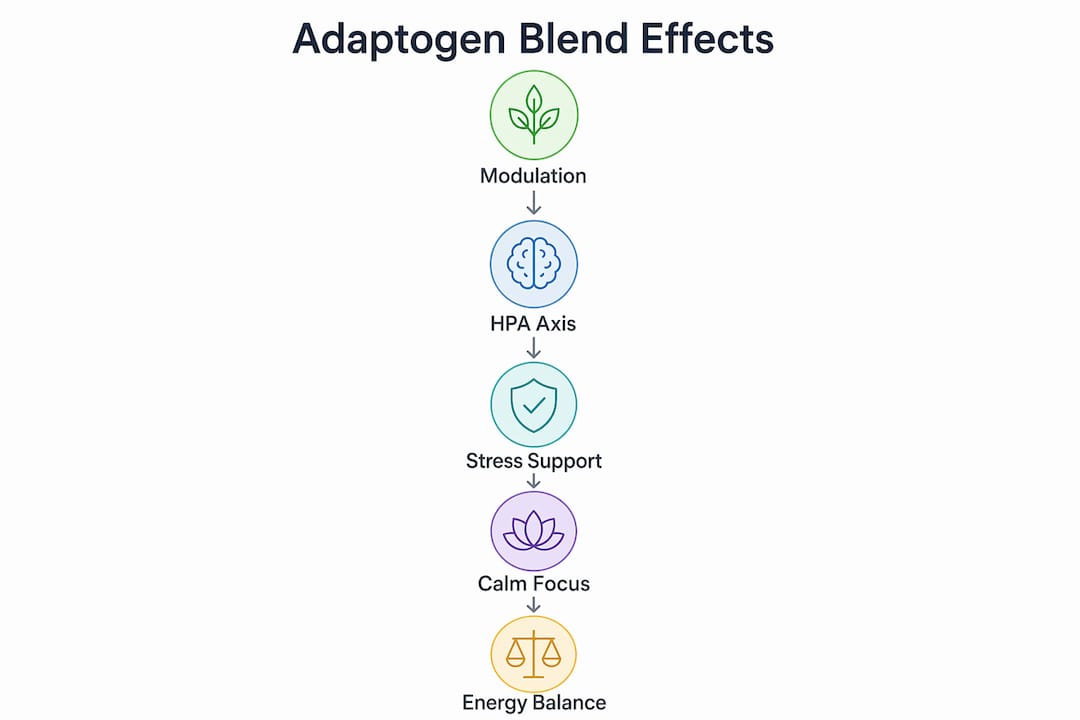
Adaptogen blends work by modulating the hypothalamic-pituitary-adrenal axis, the central control system governing your body’s cortisol output and stress hormone cascade. When you face chronic stress, the HPA axis becomes dysregulated, producing excess cortisol that disrupts sleep, immunity, and cognitive function. Adaptogens act as modulators rather than stimulants, nudging the system back towards balance rather than overriding it with a chemical jolt.
Consistent daily use of adaptogen supplements over 60 days significantly reduces cortisol by 14 to 30% and improves sleep quality, based on a clinical study of 186 participants and 2026 meta-analyses. That range matters: it reflects meaningful physiological change, not a marginal statistical blip.
The advantage of a blend over a single herb lies in synergistic targeting. Consider how this works in practice:
- Ashwagandha acts primarily on cortisol and the HPA axis, reducing the hormonal stress response at its source.
- Rhodiola rosea targets mental fatigue and cognitive performance under pressure, working through monoamine neurotransmitter pathways.
- Reishi supports immune regulation, which chronic stress consistently suppresses.
- Cordyceps addresses cellular energy production via ATP synthesis, supporting physical endurance.
“Adaptogens modulate the body’s response to stress subtly, unlike stimulants; they help resilience rather than providing immediate energy boosts.” Zoe Health
This distinction between modulation and stimulation is the most misunderstood aspect of adaptogen blends. You will not feel a caffeine-like surge. What you build, over weeks of consistent use, is a more stable baseline.
What are common adaptogen blend ingredients and how do they compare?
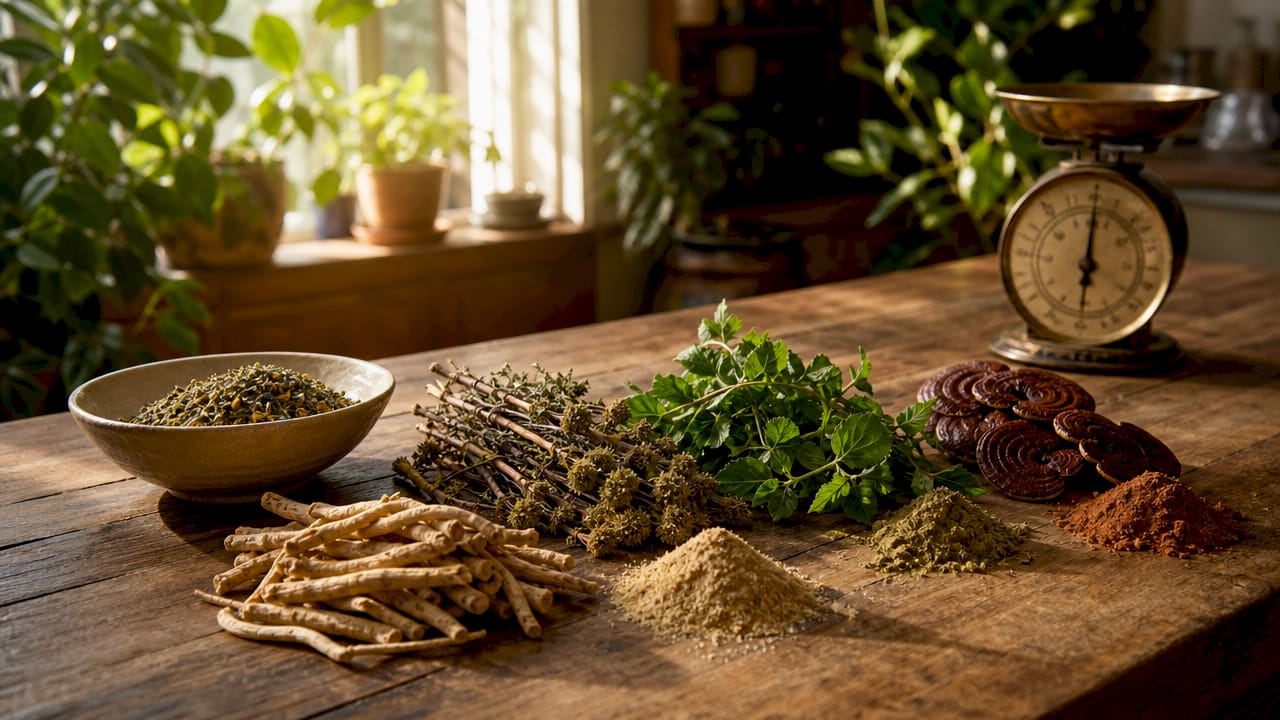
The benefits of adaptogen blends depend entirely on which ingredients are included and at what doses. The following table profiles the most clinically studied adaptogens, the compounds responsible for their effects, and the dose ranges used in trials.
| Adaptogen | Primary benefit | Active compounds | Clinical dose range | Traditional origin |
|---|---|---|---|---|
| Ashwagandha | Cortisol and stress reduction | Withanolides | 300 to 600mg daily | Ayurvedic medicine |
| Rhodiola rosea | Fatigue and cognitive performance | Rosavins, salidroside | 200 to 400mg daily | Siberian and Scandinavian folk medicine |
| Holy basil (tulsi) | Emotional balance, anxiety | Eugenol, ursolic acid | 300 to 600mg daily | Ayurvedic medicine |
| Lion’s mane | Cognitive support, nerve growth | Hericenones, erinacines | 500 to 1000mg daily | Traditional Chinese medicine |
| Reishi | Immune modulation, sleep quality | Beta-glucans, triterpenes | 1000 to 1500mg daily | Traditional Chinese medicine |
| Cordyceps | Energy and endurance | Cordycepin, adenosine | 1000 to 3000mg daily | Tibetan and Chinese medicine |
Standardised extracts are the benchmark to look for. A product listing “ashwagandha root powder” without specifying withanolide content gives you no guarantee of potency. The clinical trials that generated the efficacy data above used standardised extracts with verified marker compound concentrations, not raw powders.
Common blend formulations tend to cluster around two goals. Calm-focused blends typically combine ashwagandha, holy basil, and reishi, targeting cortisol reduction and sleep quality. Energy-focused blends pair rhodiola, cordyceps, and lion’s mane to support mental clarity and physical output without stimulants. Understanding adaptogens for athletes reveals how these energy-focused combinations translate directly into sports performance and recovery support.
Pro Tip: When reading a label, look for the extract ratio or the percentage of active compounds listed alongside the herb name. “Ashwagandha extract (5% withanolides)” tells you far more than “ashwagandha 500mg.”
How to use adaptogen blends: dosage, timing, and safety
Getting the dosing right is where most people go wrong with adaptogen blends. The evidence is clear on the effective range. Optimal adaptogen dosing sits around 1.0g daily per blend; under 500mg is often ineffective and above 2.0g offers no additional benefit. That ceiling matters because more is not better with adaptogens. Exceeding the effective range wastes money and increases the risk of side effects without improving outcomes.
Here is a practical framework for using adaptogen blends effectively:
- Start with a single blend targeting your primary concern, either stress and sleep or energy and focus. Do not combine multiple full-dose blends simultaneously at the outset.
- Commit to a minimum of four to eight weeks. Adaptogens require several weeks of consistent daily use before noticeable effects on energy and stress resilience appear. This is a loading period, not a slow product.
- Time your doses strategically. Ashwagandha and reishi are better taken in the evening due to their calming properties. Rhodiola and cordyceps are more suited to morning or pre-training use given their energising profile.
- Avoid proprietary blends. Proprietary blends often underdose individual adaptogens, hiding insufficient amounts behind a combined weight figure. You cannot verify efficacy without knowing the individual ingredient doses.
- Check for medication interactions. Some adaptogen blends can interfere with medications or cause side effects, particularly when combining herbs with stimulant or MAO-inhibitor properties. If you take any prescription medication, consult a pharmacist or GP before starting.
On stacking: personalised adaptogen stacks deliver better outcomes than single herbs by targeting individual stress profiles, but random mixing can produce competing metabolic effects. The principle is to identify your dominant stress pattern, whether it is physical fatigue, mental burnout, poor sleep, or immune suppression, and select adaptogens with complementary rather than overlapping mechanisms.
Pro Tip: If you train hard and want to avoid stimulant overload, look for blends specifically designed as stimulant-free pre-workout options. These pair adaptogens with performance ingredients without adding caffeine on top of an already stressed nervous system.
How to choose a quality adaptogen blend
The supplement market for adaptogens lacks consistent regulation, which creates significant variability in product quality. Choosing poorly means paying for a product that delivers none of the clinical benefits the research supports.
The non-negotiable criteria for a quality adaptogen blend are:
- Disclosed individual doses. Every ingredient must have its own milligram amount listed, not hidden inside a proprietary blend total.
- Standardised extracts. Look for the active compound percentage alongside the herb name.
- Third-party testing. Independent verification of potency and purity confirms the label matches the contents. Supplement testing is the clearest signal of a brand’s commitment to transparency.
- Clinically relevant doses. Cross-reference the amounts on the label with the dose ranges in the comparison table above. If ashwagandha is listed at 100mg, it is almost certainly underdosed.
Adaptogens are most appropriate for adults experiencing chronic stress lasting more than three months, and only after foundational health factors such as sleep, nutrition, and physical activity are already being addressed. They are supportive tools, not replacements for the basics.
Integrating adaptogen blends into a holistic routine means pairing them with consistent sleep of seven to nine hours, adequate protein intake, and regular physical training. The mental recovery dimension of stress management is equally relevant here. Adaptogens work best when the rest of your recovery architecture is already in place.
Pro Tip: Start with a two-ingredient blend before moving to more complex formulations. Ashwagandha and rhodiola is one of the most studied pairings and gives you a clean baseline to assess your individual response before adding further herbs.
Key takeaways
Adaptogen blends work through synergistic, multi-pathway modulation of the stress response, but their efficacy depends entirely on transparent dosing, standardised extracts, and consistent use over four to eight weeks.
| Point | Details |
|---|---|
| Blends outperform single herbs | Targeting multiple stress pathways simultaneously delivers broader physiological support. |
| Dose range is critical | Around 1.0g daily is optimal; under 500mg is ineffective and above 2.0g adds no benefit. |
| Consistency is required | Effects on cortisol and energy take four to eight weeks of daily use to become measurable. |
| Label transparency is non-negotiable | Proprietary blends that hide individual doses cannot be verified for efficacy or safety. |
| Adaptogens are supportive, not curative | They work best alongside good sleep, nutrition, and physical activity, not instead of them. |
Why most people get adaptogen blends wrong from the start
The biggest mistake I see is treating adaptogen blends like a fast-acting supplement. People take a blend for a week, feel nothing dramatic, and conclude it does not work. That is a misunderstanding of the mechanism, not a product failure. Adaptogens are not stimulants. They do not produce a perceptible shift on day one. What they do is gradually recalibrate your stress response over weeks, and that process is invisible until you notice you are sleeping better, recovering faster, or simply less reactive to pressure.
The second mistake is buying on price alone. The supplement market is full of products that list impressive adaptogen names on the front label while hiding 50mg doses inside a proprietary blend on the back. That is not an adaptogen blend. It is a marketing exercise. I have seen formulations where the total proprietary blend weight is less than the minimum effective dose of a single ingredient. The label looks credible; the product is inert.
My honest advice for anyone starting out: pick one well-formulated blend with fully disclosed doses, commit to eight weeks, and track your sleep and stress markers. Do not stack three different products simultaneously. You will not know what is working. Start simple, assess your response, and build from there. The evidence base for adaptogens is genuinely compelling when the products match the clinical formulations. Most do not.
— Tom
Start your adaptogen routine with Useinterval
Useinterval builds supplements for people who train hard and want natural ingredients they can actually trust. The Starter Bundle includes fully disclosed adaptogen blend formulations with standardised extracts, third-party tested for potency and purity. Every ingredient dose is listed clearly on the label, so you can cross-reference it against the clinical research yourself.
If you are serious about managing stress and supporting recovery without stimulants or hidden blends, Useinterval’s range is built to that standard. Explore the Starter Bundle and see exactly what goes into each product before you buy.
FAQ
What are adaptogen blends?
Adaptogen blends are formulations combining two or more adaptogenic herbs and fungi, such as ashwagandha, rhodiola, and reishi, designed to support the body’s stress response through multiple biological pathways simultaneously.
How long do adaptogen blends take to work?
Adaptogen blends require four to eight weeks of consistent daily use before measurable effects on stress resilience and energy appear. They are not fast-acting and should not be assessed after a few days.
What is the correct dose for an adaptogen blend?
The optimal daily dose sits around 1.0g per blend. Below 500mg is generally ineffective and exceeding 2.0g daily provides no additional benefit based on current clinical evidence.
Are adaptogen blends safe to take with medication?
Not always. Certain adaptogen combinations can interact with medications, particularly those with stimulant or MAO-inhibitor properties. Consult a GP or pharmacist before use if you take any prescription drugs.
What should I look for on an adaptogen blend label?
Look for individually disclosed ingredient doses in milligrams, standardised extract percentages for active compounds, and confirmation of third-party testing. Avoid any product that lists a combined “proprietary blend” weight without breaking down individual amounts.