


Anti-fatigue supplementation: a guide for female Hyrox athletes
TL;DR:
- Most female Hyrox athletes try supplements to combat fatigue but often misunderstand their true function. Anti-fatigue supplementation targets biological processes like energy metabolism and oxidative stress, rather than providing direct energy boosts. Proper use involves identifying personal fatigue mechanisms, correcting nutrient deficiencies, and timing targeted supplements for sustained performance.
Most female Hyrox athletes have tried at least one supplement promising to eliminate fatigue and sharpen performance. Many end up disappointed, not because supplementation doesn’t work, but because they’ve been sold the wrong idea of what it does. Understanding what is anti-fatigue supplementation, and more importantly what it isn’t, changes everything about how you approach your training stack. Anti-fatigue supplementation doesn’t hand you energy directly. It targets the biological processes that cause fatigue in the first place, and that distinction is where most athletes go wrong.
Table of Contents
- What is anti-fatigue supplementation and how does it work?
- Key natural supplements studied for reducing fatigue in female athletes
- When supplementation helps: targeting nutrient deficiencies for energy and fatigue
- How antioxidants and timing play a role in managing fatigue and recovery
- Choosing and integrating anti-fatigue supplements into your Hyrox training regimen
- Rethinking anti-fatigue supplementation: expert insights beyond the hype
- Support your anti-fatigue journey with Interval’s tailored supplements
- Frequently asked questions
Key Takeaways
| Point | Details |
|---|---|
| Anti-fatigue supplementation defined | It involves supplements that target energy metabolism, oxidative stress, and recovery to reduce exercise-related fatigue. |
| Deficiency-focused supplementation | Supplements best reduce fatigue when addressing specific nutrient deficiencies like iron or vitamin B12. |
| Proven botanicals for female athletes | Ashwagandha and rhodiola have evidence for improving recovery, sleep quality, endurance, and muscle protection in women. |
| Timing matters | Post-exercise intake of carbohydrates and protein enhances recovery and reduces fatigue effectively. |
| Tailored strategy essential | Effective fatigue management requires assessing personal fatigue causes and aligning supplements accordingly. |
What is anti-fatigue supplementation and how does it work?
Anti-fatigue supplementation means using dietary supplements to reduce exercise-related or perceived fatigue by acting on key biological mechanisms rather than simply stimulating your nervous system. Think of it less like fuel and more like maintenance on an engine that’s wearing down under load.
Anti-fatigue supplementation refers to targeting energy metabolism, oxidative stress, inflammation, and stress-response balance to reduce fatigue at its source. This is fundamentally different from caffeine, which masks fatigue by blocking adenosine receptors. These supplements work with your body’s own systems.
The main biological mechanisms involved include:
- Energy metabolism support: Certain compounds enhance mitochondrial function, the process by which your cells convert nutrients to usable energy, improving output during sustained efforts like Hyrox’s eight-station format.
- Oxidative stress reduction: Intense exercise generates free radicals that damage muscle tissue. Antioxidant compounds from natural sources like plant flavonoids and fermented foods help neutralise this damage.
- Inflammation modulation: Post-exercise inflammation is necessary for adaptation, but excessive inflammation delays recovery. Some natural compounds help calibrate this response.
- Neurotransmitter and stress-hormone balance: Central fatigue occurs in the brain, not just the muscles. Compounds that moderate cortisol and support neurotransmitter balance can directly reduce perceived effort and improve recovery between sessions.
The reason so many athletes find supplements for energy underwhelming is that they’re targeting a symptom rather than a cause. Anti-fatigue supplementation, done properly, requires identifying which of these mechanisms is your personal bottleneck first.
Key natural supplements studied for reducing fatigue in female athletes
With this biological background, let’s look at which natural supplements research supports for fatigue reduction specifically in female athletes like you.
Two botanicals stand out clearly in the current evidence base: ashwagandha and rhodiola rosea. They work through distinct pathways, which makes them genuinely complementary rather than interchangeable.
Ashwagandha is an adaptogen, meaning it helps your body manage physiological stress. A 28-day supplementation with 600mg of ashwagandha root extract significantly improved total quality recovery and sleep quality in female athletes. Better sleep quality alone has a measurable effect on next-session performance, especially relevant for athletes training multiple times per week.

Rhodiola rosea, specifically its active compound salidroside, targets metabolic endurance. Salidroside with eccentric training extended time-to-exhaustion by 45% and improved late-session strength in women, with lower muscle damage markers. For a Hyrox race where your eighth station needs to look like your first, this matters.
| Supplement | Primary mechanism | Key benefit for female Hyrox athletes | Studied dose |
|---|---|---|---|
| Ashwagandha | Cortisol modulation, sleep support | Improved recovery scores and sleep quality | 600mg/day for 28 days |
| Rhodiola rosea (salidroside) | Mitochondrial energy, lactate clearance | Extended endurance, reduced muscle damage | 150mg/day combined with training |
| Vitamin C | Antioxidant, immune support | Reduced post-exercise oxidative damage | Varies by study |
| Iron (only if deficient) | Oxygen delivery | Fatigue correction in iron-deficient athletes | Clinician-directed |
Key takeaways when considering these options:
- Ashwagandha is best suited to athletes whose fatigue is closely linked to stress, poor sleep, or heavy training load.
- Rhodiola is more relevant if your fatigue presents as an inability to sustain pace in the back half of efforts.
- These are not overnight fixes. Both require consistent use over several weeks before measurable adaptation occurs.
Pro Tip: If you’re new to adaptogens, introduce one at a time and track your recovery scores, perceived effort ratings, and sleep quality over four weeks before drawing conclusions. Stacking multiple new supplements simultaneously makes it impossible to know what’s working.
For a broader overview, recovery supplements for Hyrox athletes covers additional strategies worth layering in, and understanding micronutrients and female fatigue is equally important before you start.
When supplementation helps: targeting nutrient deficiencies for energy and fatigue
While certain botanicals can aid recovery, it’s crucial to first identify if fatigue stems from correctable nutrient deficiencies before supplementing.
This is the section most supplement marketing skips entirely, and it’s arguably the most important one for female athletes over thirty. Supplementation helps reduce fatigue mostly when correcting deficiencies such as iron or vitamin B12. Without an underlying deficiency, the same supplements may not increase energy at all and can cause harm.
The three most relevant deficiencies for menstruating female athletes are:
- Iron: Menstrual blood loss makes iron deficiency anaemia genuinely common in female athletes. It directly reduces oxygen delivery to working muscles, making fatigue feel disproportionately severe even at moderate intensities.
- Vitamin B12: Critical for red blood cell production and neurological function. Deficiency causes genuine fatigue, but supplementation won’t increase energy unless you are actually deficient.
- Vitamin D: Widespread in UK athletes due to limited sunlight exposure. Low vitamin D is associated with reduced muscle function, increased injury risk, and general fatigue.
The uncomfortable truth is that taking iron supplements without a confirmed deficiency isn’t just wasteful; it’s potentially dangerous. Iron overload can damage the liver and heart. The same caution applies to B12 megadoses marketed as energy boosters. If you’re training hard and still exhausted, a standard blood panel checking ferritin, B12, and vitamin D is a far more useful investment than a supplement stack.
Pro Tip: Ask your GP for a full blood count alongside ferritin, serum B12, and 25-OH vitamin D. Ferritin specifically is the most sensitive marker of iron stores in athletes and is often missed when only haemoglobin is tested.
Understanding nutrient deficiencies and fatigue as separate from general tiredness is the starting point for any effective anti-fatigue approach.
How antioxidants and timing play a role in managing fatigue and recovery
Beyond individual supplements and addressing deficiencies, managing oxidative stress and nutrient timing also critically affect fatigue and recovery outcomes.
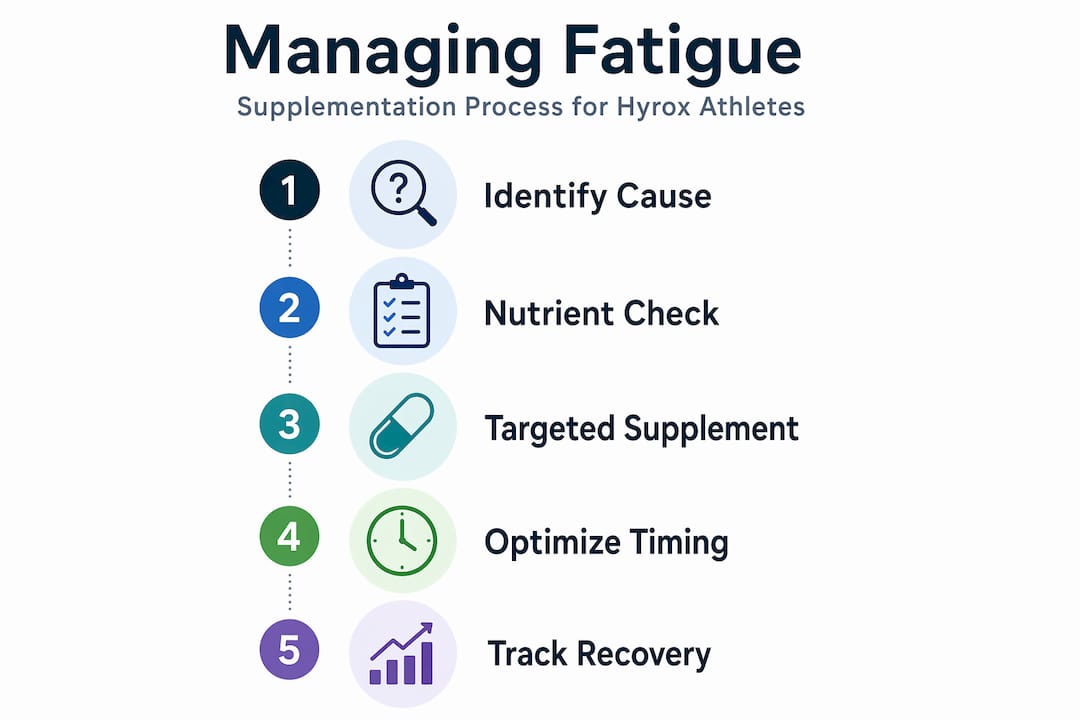
Antioxidant supplementation is widely used but frequently misunderstood. Antioxidant supplements significantly reduce post-exercise lactate and creatine kinase levels, markers associated with fatigue and muscle damage, but effects depend on timing and athlete characteristics. In practice, that means two athletes taking the same dose of vitamin C can see meaningfully different results based on their training volume, sex, and baseline status.
Here’s what the evidence actually supports for Hyrox athletes:
- Use antioxidants strategically, not habitually. Around competition or peak training blocks, targeted antioxidant support is warranted. During base-building phases, chronically high doses may blunt adaptation signals your muscles need to grow stronger.
- Prioritise post-exercise nutrition first. Immediate post-exercise carbohydrate and protein intake supports glycogen replenishment and muscle recovery, aiding fatigue relief. No antioxidant supplement compensates for skipping this window.
- Rhodiola serves double duty. It acts as both an antioxidant and a metabolic enhancer, making it particularly efficient for athletes managing multiple fatigue pathways simultaneously.
- Respect dose ceilings. Long-term high-dose vitamin E supplementation, for example, has been associated with blunted gains in aerobic capacity by interfering with cellular signalling related to mitochondrial biogenesis.
The most effective anti-fatigue strategy isn’t the longest ingredient list. It’s the right compound, at the right dose, at the right time, for the right reason.
Explore how antioxidant support for Hyrox recovery specifically fits into a race-prep cycle, and consider how timing supplement intake can sharpen the effects you’re already working towards.
Choosing and integrating anti-fatigue supplements into your Hyrox training regimen
Having examined various supplements and their biological effects, let’s explore how to smartly incorporate them into your training routine for optimal fatigue management.
Fatigue during a Hyrox-style race varies from central fatigue to muscle damage and energy depletion, requiring supplementation aligned with your dominant fatigue cause. There is no single stack that fixes all three simultaneously. Here is how to approach it practically:
- Assess your fatigue pattern. Do you fade early in sessions (energy depletion), feel disproportionately sore after training (muscle damage), or struggle to motivate and recover between sessions (central or stress-related fatigue)? Each points to a different intervention.
- Get baseline blood tests. Check ferritin, B12, and vitamin D before spending money on anything else. Correcting a deficiency will deliver more measurable improvement than any botanical.
- Select one targeted supplement to start. Iron if deficient, ashwagandha if your fatigue is stress and recovery-driven, rhodiola if your issue is metabolic endurance and late-session drop-off.
- Time your intake deliberately. Take adaptogens consistently at the same time daily for steady-state blood levels. Carbohydrates and protein should be consumed within thirty minutes post-session. Electrolytes belong intra-workout, not as an afterthought.
- Track outcomes, not feelings. Use recovery scores, heart rate variability, and session performance data over four to six weeks rather than day-to-day mood.
- Stay within safe dosage ranges. More is not better. 600mg of ashwagandha daily and 150mg of salidroside daily are the studied ranges; exceeding them doesn’t improve efficacy and may introduce side effects.
Pro Tip: A training diary that logs perceived effort, sleep quality, and mood alongside performance metrics gives you far better data for supplement decisions than any generic fatigue quiz.
Pair your supplementation strategy with a solid understanding of the post-workout recovery process and revisit natural energy supplements as your training cycle evolves.
Rethinking anti-fatigue supplementation: expert insights beyond the hype
The supplement industry’s loudest message is that more is better. More ingredients, higher doses, longer ingredient lists. For female Hyrox athletes, this thinking is not just unhelpful; it actively undermines performance.
Anti-fatigue effects are cause-specific, and supplementation without targeted assessment can be ineffective or harmful, especially in female athletes prone to iron deficiency. The athlete who piles five supplements onto a training stack without bloodwork is most likely wasting money and may be adding physiological noise that confuses her recovery signals.
There’s also a subtler problem with the antioxidant enthusiasm that’s common in endurance sport communities. Chronic high-dose antioxidants may blunt beneficial training adaptations, interfering with the precise cellular signalling pathways that drive endurance and strength development. In other words, the supplement you’re taking to recover faster could be suppressing the very adaptation you’re training for.
Female athletes over thirty face a specific hormonal context that changes how fatigue presents and how supplementation should respond. Progesterone and oestrogen fluctuations across the menstrual cycle affect perceived effort, sleep quality, and recovery speed. Menstrual blood loss means iron status needs monitoring regularly, not just once. These aren’t minor details; they’re central to interpreting fatigue and choosing interventions correctly.
The most effective approach we’ve seen is treating anti-fatigue supplementation the way a good coach treats programming: assess, intervene specifically, measure, and adjust. That means regular micronutrient testing, honest tracking of recovery markers, and the discipline to remove supplements that aren’t producing measurable results. Understanding micronutrient assessment as an ongoing practice rather than a one-off check transforms how you relate to your own fatigue.
Support your anti-fatigue journey with Interval’s tailored supplements
To help you apply these insights, Interval offers carefully designed supplement bundles to support your Hyrox performance and fatigue management needs in a practical way.
Choosing the right supplements can feel overwhelming when the research is this nuanced. Interval’s work cuts through that by formulating with natural, evidence-backed ingredients targeted at exactly the mechanisms we’ve discussed here: energy metabolism, recovery, oxidative stress management, and electrolyte balance for high-intensity work.
The Interval Starter Bundle is built for female athletes who train seriously and want supplementation that earns its place in their routine. It simplifies the selection process based on current research, includes guidance on optimal timing for absorption and effect, and is designed to support performance and long-term training sustainability without unnecessary ingredients. If you’re ready to apply a cause-based, evidence-driven approach to your fatigue management, this is where to start.
Frequently asked questions
What exactly is anti-fatigue supplementation?
Anti-fatigue supplementation involves using dietary supplements that target biological processes like energy metabolism and oxidative stress to reduce exercise-related fatigue at its source rather than simply stimulating the nervous system.
Do anti-fatigue supplements guarantee increased performance for every female Hyrox athlete?
No. While some supplements reduce fatigue markers, benefits vary widely depending on individual factors like deficiency status, training level, and which fatigue mechanism is most relevant for that athlete.
Can I take iron or vitamin B12 supplements to reduce fatigue if I am not deficient?
No. Taking these supplements without a diagnosed deficiency is ineffective and potentially harmful. Excess iron intake can cause organ damage, and B12 supplements produce no energy benefit without an underlying deficiency.
How important is supplement timing for managing fatigue?
Very important. Immediate post-exercise carbohydrate and protein strategies support glycogen replenishment and muscle recovery, meaningfully reducing both physical and perceived fatigue between sessions.
Are botanical supplements like ashwagandha and rhodiola effective for female athletes?
Yes, with caveats. Ashwagandha improved recovery and sleep quality in female athletes at 600mg daily, while rhodiola enhanced endurance and reduced muscle damage in recreationally active women. Both require consistent use over several weeks to show measurable effect.