


Top electrolyte replenishment tips for female athletes
You’re mid-session, your pace has dropped, and your legs feel like concrete. You’ve been drinking water consistently, so what’s gone wrong? For high-intensity female athletes aged 30 to 50, the answer is often electrolyte imbalance, not dehydration alone. Sodium, potassium, and magnesium losses during intense training can outpace your fluid intake, and the consequences hit fast: cramps, dizziness, and that frustrating inconsistency in performance that no training block seems to fix. Women also face additional physiological considerations, from menstrual cycle fluctuations to perimenopause, that make standard hydration advice fall short. This article gives you practical, research-backed strategies to replenish smarter.
Table of Contents
- How to evaluate your electrolyte needs
- Top natural sources of electrolytes
- Smart supplement strategies for athletes
- Comparing popular electrolyte options
- Situational recommendations for optimal performance
- Why ‘listen to your body’ is not enough for female athletes
- Upgrade your replenishment with proven solutions
- Frequently asked questions
Key Takeaways
| Point | Details |
|---|---|
| Personalise your intake | Individual electrolyte needs vary by body size, training, and hormonal status—use data as your starting point. |
| Prioritise food-first | Natural foods deliver electrolytes and extra nutrients, but supplements step in for sweat-heavy or longer sessions. |
| Adjust for life phase | Women in peri/menopause, or specific menstrual phases, have special needs and benefit from tailored strategies. |
| Compare options wisely | Understanding the role, quantity, and timing of natural and supplement sources helps maximise performance and recovery. |
| Plan, don’t react | Strategic, proactive electrolyte management is superior to waiting for thirst or fatigue cues. |
How to evaluate your electrolyte needs
Understanding your personal electrolyte requirements is the foundation of every replenishment strategy. There is no universal formula, but there are clear starting points based on body weight, sweat rate, training intensity, and hormonal status.
For a woman weighing approximately 59kg, daily baseline needs sit at 60 to 150mmol of sodium (1380 to 3450mg), 40 to 100mmol of potassium (1560 to 3900mg), and around 10mmol of magnesium (243mg). These figures rise significantly with high-intensity training, heat exposure, and longer sessions.
Women in perimenopause or menopause face a particular risk. Reduced sodium conservation during these phases means plain water can actually dilute blood sodium and compromise performance, a condition known as hyponatraemia. This is not a minor inconvenience; it can cause serious cognitive and physical impairment during training.
Here is a quick reference for daily baseline estimates:
| Electrolyte | Daily baseline (59kg woman) | High-intensity adjustment |
|---|---|---|
| Sodium | 1380 to 3450mg | Add 500 to 1000mg per hour of sweat |
| Potassium | 1560 to 3900mg | Increase with muscle-heavy sessions |
| Magnesium | 243mg | Prioritise post-session recovery |
Signs you may be under-replenishing include:
- Muscle cramps during or after training
- Light-headedness or dizziness mid-session
- Persistent fatigue despite adequate sleep
- Inconsistent performance across similar sessions
- Headaches after training in warm conditions
For guidance on optimising electrolyte intake based on your training load, it helps to track these symptoms alongside your session data. The electrolyte workflow for female athletes is a practical starting point for building your personal baseline.
Pro Tip: Adjust your intake based on climate, cycle phase, and session intensity. A hot, humid day in the luteal phase of your cycle is a very different physiological challenge than a cool morning recovery run.
Top natural sources of electrolytes
Once you know your needs, choosing natural food and drink sources is a powerful first line of defence. Whole foods offer electrolytes alongside fibre, antioxidants, and phytonutrients that supplements simply cannot replicate.
Coconut water is one of the most practical natural sources of potassium, providing around 600mg per 250ml serving. Coconut water, watermelon, cucumbers, and low-sodium V8 are all excellent for potassium and fluid replenishment, particularly on recovery days or as pre-session priming.
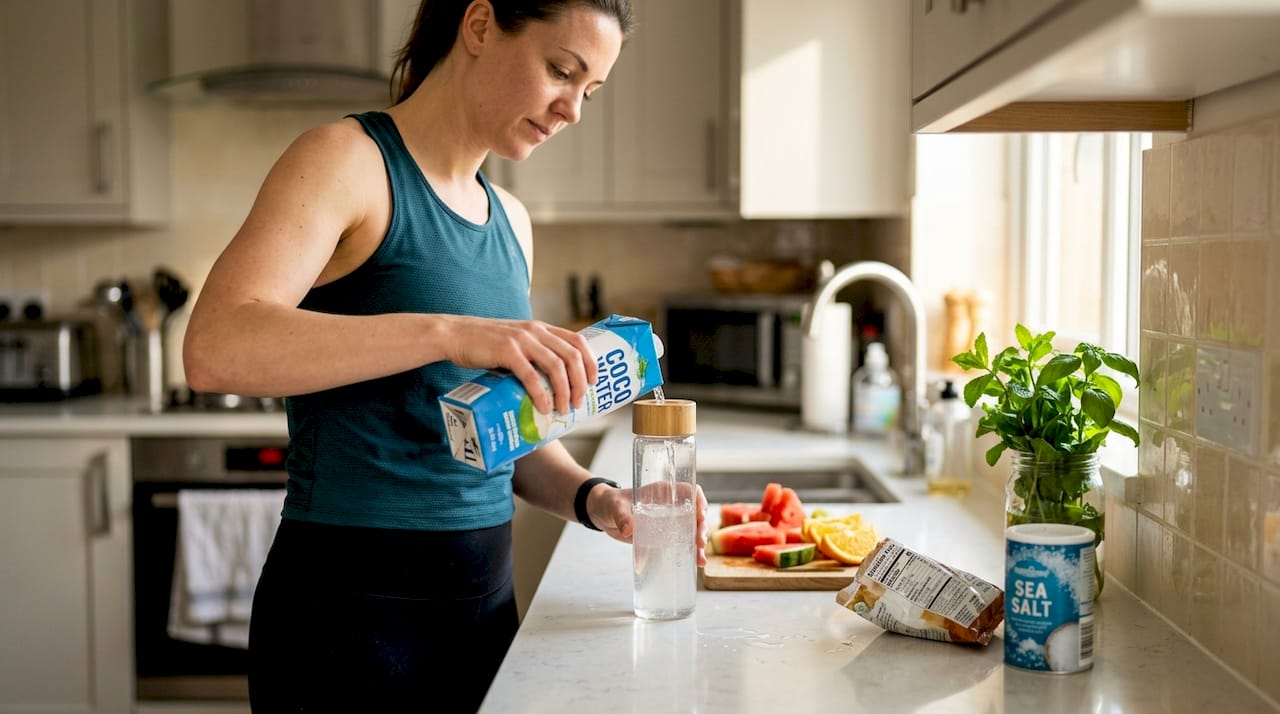
Watermelon deserves special attention. Two cups provide more fluid volume than a standard sports drink, along with natural sugars for quick energy and citrulline for muscle recovery. Cucumbers are low in kilojoules but surprisingly rich in potassium and silica, making them ideal for daily snacking around training.
For endurance athletes, natural juices for recovery offer targeted benefits beyond basic electrolytes. Beetroot juice enhances nitric oxide production for better oxygen delivery. Pomegranate and tart cherry juices reduce post-session soreness and support faster recovery.
| Source | Key electrolyte | Best use |
|---|---|---|
| Coconut water | Potassium (600mg/250ml) | Post-session, daily hydration |
| Watermelon | Potassium, magnesium | Pre or post-session |
| Beetroot juice | Nitrates, potassium | Pre-endurance sessions |
| Tart cherry juice | Antioxidants, potassium | Recovery days |
| Low-sodium V8 | Potassium, sodium | Daily top-up |
Whole food sources work best as your daily foundation. Think of them as your baseline, not your emergency strategy.
For a fuller breakdown, the best natural electrolyte sources guide covers quantities and timing in detail. If you are training for endurance events, the electrolyte use for endurance resource is worth bookmarking.
Smart supplement strategies for athletes
If whole foods are not enough, targeted supplements can fill the gap for high demands. This is especially true during long sessions, hot weather, high-sweat training blocks, or the luteal phase of your cycle.
When choosing a supplement, look for these markers of quality:
- Sodium content between 300mg and 1000mg per serving
- A balanced potassium to sodium ratio (roughly 2:1)
- Magnesium included for muscle function and sleep quality
- No artificial sweeteners or unnecessary fillers
- Transparent labelling with exact milligram amounts
For electrolyte mixing for women, timing matters as much as quantity. Here is a practical sequence for a high-intensity session:
- Two hours before: consume a sodium-rich meal or electrolyte drink (300 to 500mg sodium)
- Thirty minutes before: top up with a light electrolyte supplement if training exceeds 60 minutes
- During: aim for 300 to 600mg sodium per hour in heat or high-sweat conditions
- After: replenish with a full-spectrum electrolyte drink plus potassium-rich food
One important finding worth noting: sodium hyperhydration at 7.5g/L, consumed at 30ml per kg of fat-free mass two hours before exercise, improved female cycling performance, with the greatest benefit seen in the luteal phase. This is a targeted pre-race strategy, not a daily approach.
Avoid the trap of thinking more is always better. Excessive sodium intake can cause hypernatraemia, with symptoms including nausea, headache, and in severe cases, confusion. Match your intake to your actual output. The supplement needs in menopause resource offers further guidance for women navigating hormonal transitions.
Pro Tip: Track your supplement use alongside your cycle phase and weather conditions. Patterns emerge quickly, and you will be able to predict your needs rather than react to them.
Comparing popular electrolyte options
You have seen the options. Here is how they stack up and when to use each.
The key decision is not natural versus supplement. It is which option fits your training context right now. For daily training, food-first strategies cover most needs. For intense, long, or hot sessions, supplements become essential.
Beetroot juice boosts endurance via nitrates, while pomegranate and cherry juices reduce soreness and support recovery. These are not interchangeable. Each has a specific role, and rotating them based on your training phase is a smart approach.
| Option | Sodium | Potassium | Best for | Consideration |
|---|---|---|---|---|
| Coconut water | Low | High | Daily hydration | Low sodium for hard sessions |
| Electrolyte tabs | High | Moderate | Intra-workout | Check for artificial additives |
| Beetroot juice | Low | Moderate | Pre-endurance | Not for recovery focus |
| Electrolyte powder | Adjustable | Adjustable | All contexts | Choose natural formulas |
| Sports drinks | Moderate | Low | Short sessions | Often high in sugar |
For muscle performance electrolyte tips, the key is matching the product to the demand. Here is a quick guide:
- Daily training (under 60 minutes): food sources plus coconut water
- Endurance sessions (over 90 minutes): electrolyte powder or tabs with 500mg+ sodium
- High-sweat or heat training: hyperhydration protocol plus intra-session tabs
- Recovery days: tart cherry or pomegranate juice plus magnesium-rich foods
For a complete picture of how losses accumulate, the guide to electrolyte loss is a useful reference.
Situational recommendations for optimal performance
Now, let’s break down practical, scenario-based approaches for every athletic context.
Every training situation calls for a slightly different strategy. Here is how to adapt:
- Training in heat: Begin hyperhydrating two hours before. Use a sodium-forward electrolyte drink. Aim for 500 to 750mg sodium per hour during the session. Rehydrate with a full-spectrum product immediately after.
- High-sweat endurance (over 90 minutes): Combine a pre-session electrolyte drink with intra-session tabs every 45 minutes. Prioritise sodium and potassium. Follow up with a magnesium supplement post-session.
- Recovery days: Focus on food-first replenishment. Tart cherry juice, leafy greens, and a magnesium-rich evening meal support overnight recovery.
- Luteal phase or perimenopause: Increase sodium intake proactively. Sodium hyperhydration is especially critical in the luteal phase or hot climates. Do not rely on thirst as your guide.
For women in perimenopause or menopause, plain water during intense sessions is genuinely risky. Always pair fluid intake with electrolytes to avoid diluting blood sodium. This is not overcaution; it is physiology.
Do not wait for symptoms to adjust your strategy. By the time cramps or dizziness arrive, your performance has already been compromised.
Use the easy electrolyte workflow to build a repeatable system around your training schedule.
Pro Tip: Rotate your electrolyte sources across the week and keep a simple log of symptoms, session quality, and intake. Within two to three weeks, you will have a personalised replenishment map that no generic guide can match.
Why ‘listen to your body’ is not enough for female athletes
The advice to listen to your body is well-intentioned but dangerously incomplete for high-intensity female athletes. Thirst, fatigue, and energy dips all lag behind actual physiological need. By the time your body signals a problem, you are already behind.
This gap is wider for women. Hormonal fluctuations across the menstrual cycle and during perimenopause can blunt typical warning signs. You may not feel thirsty when you are sodium-depleted. You may attribute poor performance to a bad day when the real cause is a predictable, manageable electrolyte deficit.
The athletes who perform most consistently are not the ones with the best instincts. They are the ones with the best systems. A food-first baseline for daily needs, paired with targeted supplements for intensive sessions, is a far more reliable framework than reactive guessing.
Tracking your intake, your cycle, and your session quality over time gives you data that intuition simply cannot provide. Pre-emptive, evidence-based strategies beat reactive ones every time. The goal is to make your replenishment as structured as your training plan, because for women in this sport, it genuinely is that important. Explore the endurance in sports resource to see how this applies across different training formats.
Upgrade your replenishment with proven solutions
You now have the framework. The next step is putting it into practice with products built specifically for athletes like you.
Interval’s Starter Bundle is designed for exactly this: a clean, natural electrolyte formula that covers your baseline needs and scales with your training demands. No artificial fillers, no guesswork. Just the sodium, potassium, and magnesium ratios that high-intensity female athletes actually need. Whether you are managing cycle-phase fluctuations, training through summer heat, or pushing into longer endurance sessions, Interval has the tools and resources to support every stage of your performance.
Frequently asked questions
What are the signs of inadequate electrolyte replenishment?
Cramps, light-headedness, fatigue, and inconsistent performance are the most common indicators, and they can appear even when fluid intake seems adequate.
Should I adjust electrolyte intake during my menstrual cycle?
Yes. Sodium hyperhydration benefits performance most in the luteal phase, so increasing sodium intake during this window is a practical, evidence-backed adjustment.
Are natural foods enough or do I need supplements?
Food-first works for baseline needs, but high-sweat, long, or intense sessions typically require targeted supplements to meet the full demand.
Is it possible to overdo electrolyte supplementation?
Yes. Excess intake can lead to hypernatraemia and side effects, so always match your supplementation to your actual training output rather than assuming more is better.