


Electrolyte-rich diet steps for peak performance
TL;DR:
- Maintaining electrolyte balance through whole foods like potatoes, spinach, and sardines is essential for athletic performance and recovery. Timing electrolyte intake before, during, and after training optimizes hydration, especially during sessions over 60 minutes. Personalizing electrolyte routines based on sweat rate, climate, and training load prevents imbalances and enhances overall training outcomes.
An electrolyte-rich diet is the foundation of athletic performance, hydration, and recovery for anyone training at high intensity. Sodium, potassium, magnesium, and calcium are the four electrolytes that govern muscle contraction, nerve signalling, and fluid balance in the body. Without adequate levels of each, performance drops, cramps set in, and recovery slows. Following the right electrolyte-rich diet steps means knowing which foods to eat, when to eat them, and how to time your intake around training. This guide covers every practical step, from whole-food sources to workout-specific strategies.
What are the key electrolytes athletes need?
Electrolytes are minerals that carry an electrical charge and regulate critical physiological processes. For athletes, four stand above the rest.
Sodium controls fluid balance and is the primary electrolyte lost in sweat. It drives thirst, maintains blood pressure, and supports nerve transmission. Potassium works alongside sodium to regulate muscle contractions and prevent cramping. Magnesium supports over 300 enzymatic reactions, including energy production and protein synthesis. Calcium is not just for bones. It triggers the muscle fibre contractions that power every sprint, lift, and jump you perform.
When any of these fall out of balance, the consequences are immediate and measurable. Muscle cramps, fatigue, impaired coordination, and slower reaction times are all direct symptoms of electrolyte imbalance. For high-intensity athletes, this is not a theoretical risk. It is a training-session reality. Excessive supplementation may cause headaches, gastrointestinal distress, and disrupted heart rhythm, which means more is not always better.
- Sodium: 1,500 to 2,300 mg daily baseline, higher for heavy sweaters
- Potassium: 3,500 to 4,700 mg daily for active adults
- Magnesium: 310 to 420 mg daily depending on sex and training load
- Calcium: 1,000 mg daily for most adults
Pro Tip: If you experience regular cramping despite adequate hydration, check your magnesium intake before reaching for a sports drink. Magnesium deficiency is frequently overlooked and rarely addressed by standard electrolyte products.
Which foods are highest in electrolytes?
The most effective way to maintain electrolyte levels is through whole foods. Natural sources deliver vitamins, antioxidants, and fibre alongside minerals, which isolated supplements cannot replicate. Bananas, spinach, and avocado each deliver multiple nutrients with a built-in safety margin that synthetic products lack.

Here is how the top natural sources compare across the four key electrolytes:
| Food | Electrolyte | Approximate content per serving |
|---|---|---|
| Baked potato with skin | Potassium | 926 mg per medium potato |
| Avocado | Potassium | 700 mg per half fruit |
| Banana | Potassium | 422 mg per medium banana |
| Spinach (cooked) | Magnesium | 157 mg per cup |
| Almonds | Magnesium | 80 mg per 28 g serving |
| Milk (whole) | Calcium | 300 mg per 240 ml |
| Sardines (canned) | Calcium | 350 mg per 85 g serving |
| Pickles / olives | Sodium | 500 to 900 mg per serving |
A baked potato with skin outperforms bananas for potassium by more than double. That single fact should reshape how you think about post-workout snacking. Many athletes default to bananas when a jacket potato or half an avocado would deliver far more.
Commercial sports drinks typically contain only around 110 mg sodium and 30 mg potassium per serving. For a 90-minute high-intensity session, that falls well short of what most athletes lose through sweat. Whole foods are not just cheaper. They are more nutritionally complete.
Practical ways to build electrolyte-rich meals throughout the day:
- Breakfast: Greek yoghurt with a banana and a small handful of almonds
- Lunch: Spinach salad with sardines, avocado, and a light sea salt dressing
- Pre-workout snack: Baked potato with cottage cheese
- Post-workout: Chocolate milk or a banana with a pinch of sea salt
- Dinner: Grilled salmon with steamed broccoli and a side of lentils
The post-workout electrolyte window matters. Whole-food based replenishment at this stage supports better recovery outcomes than isolated supplements because the intestine self-regulates absorption from food, providing a natural safety margin.
How to balance electrolytes with hydration around workouts
Timing your electrolyte intake around training is where most athletes leave performance on the table. The rules differ significantly depending on session length.
For workouts under 60 minutes, plain water with a balanced diet is sufficient for most healthy athletes. Electrolyte replacement becomes necessary for sessions lasting longer than 60 to 90 minutes, particularly at high intensity or in warm conditions. This is not a suggestion. It is the physiological threshold at which sweat losses begin to meaningfully affect performance.
Thirst is a lagging indicator. By the time you feel thirsty during a long effort, performance has already dropped due to early dehydration. Scheduled intake is the solution, not reactive drinking.
Here is a practical timing framework:
- Two hours before training: Eat a potassium and magnesium-rich meal. A baked potato, a serving of spinach, or a bowl of oats with almonds all work well.
- 30 minutes before training: Drink 400 to 600 ml of water. If the session will exceed 90 minutes, add a pinch of sea salt or use a targeted electrolyte product.
- During training (sessions over 60 minutes): Aim for 16 to 20 ounces of electrolyte-balanced fluid per hour. A homemade mix of water, a pinch of non-iodized salt, a squeeze of lemon, and a small amount of honey works effectively.
- Within 30 minutes post-workout: Consume sodium and potassium together. Chocolate milk with its 3:1 carbohydrate-to-protein ratio combined with sodium and potassium frequently outperforms commercial sports drinks for recovery.
- Evening meal: Prioritise calcium and magnesium to support overnight muscle repair and sleep quality.
Hyponatremia, or dangerously low blood sodium, is a real risk for athletes who drink excessive plain water without replacing sodium during prolonged efforts. Balancing electrolyte intake with hydration is the direct prevention strategy, particularly in heat or during events lasting several hours.
Pro Tip: Make a simple homemade electrolyte drink by combining 500 ml of water, a quarter teaspoon of sea salt, the juice of half a lemon, and a teaspoon of honey. It costs pennies, contains no artificial additives, and covers sodium, potassium, and fast carbohydrates in one go.
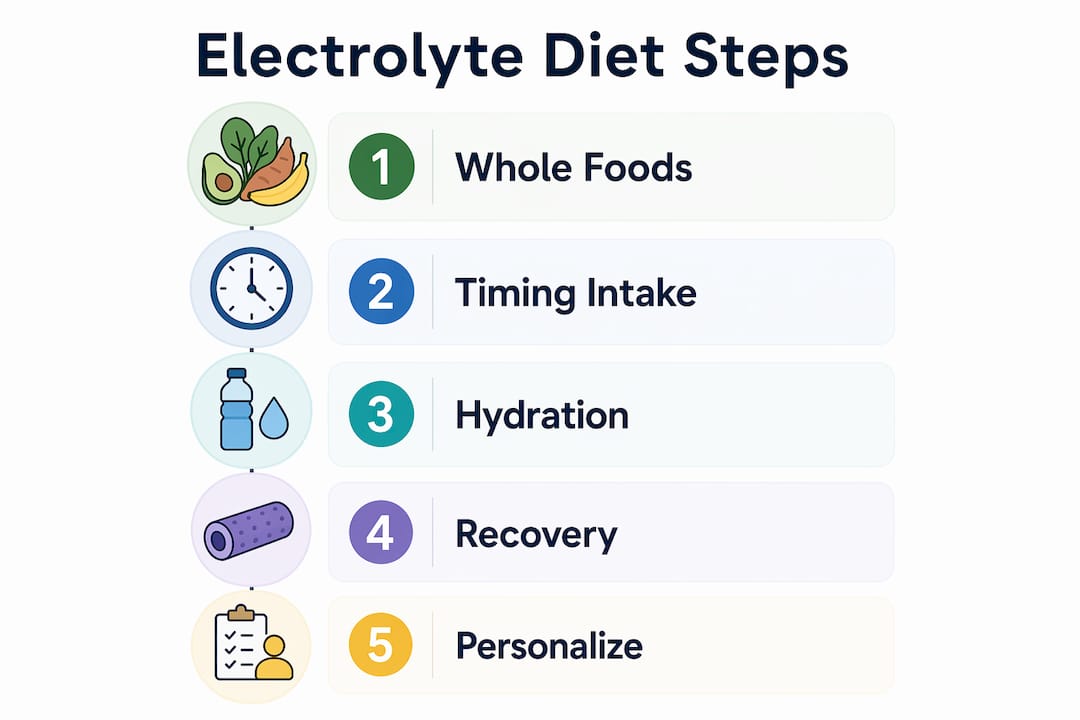
Step-by-step routine for an electrolyte-rich diet
Building a consistent electrolyte-rich diet does not require a nutritionist or an expensive supplement stack. It requires a repeatable daily structure.
- Plan your meals around electrolyte anchors. Choose one high-potassium food, one magnesium source, and one calcium source per day as non-negotiables. Everything else builds around them.
- Salt your food strategically. Non-iodized salt added to meals or water during heavy sweating sessions aids sodium replenishment quickly. Use sea salt where possible for trace mineral content.
- Track your sweat rate on long sessions. Weigh yourself before and after a long training session. Each kilogram lost represents approximately one litre of fluid. Tracking sweat sodium losses and timing intake accordingly improves performance in endurance sports.
- Use supplements to fill gaps, not as a primary source. Your kidneys filter 180 litres of blood daily to regulate electrolyte balance. A food-first approach works with this system. Supplements are best reserved for acute losses from heat or intense training blocks.
- Adjust for climate and training load. Hot weather and high-intensity blocks increase sweat rate significantly. Add an extra pinch of salt to meals and increase potassium-rich foods during these periods.
Common mistakes to avoid:
- Relying solely on sports drinks without assessing their actual mineral content
- Ignoring magnesium, which is frequently deficient in athletes who focus only on sodium and potassium
- Drinking excessive plain water during long events without sodium replacement
- Assuming a single supplement covers all four key electrolytes at therapeutic doses
- Skipping the post-workout food window and relying on the next day’s meals to recover
For athletes doing Hyrox, CrossFit, or endurance events, a structured electrolyte workflow built around whole foods is more sustainable and effective than ad hoc supplementation.
What are common mistakes in electrolyte balance?
Electrolyte imbalance presents differently depending on which mineral is affected. Recognising the signs early prevents a bad training session from becoming a health issue.
- Low sodium: Nausea, headache, confusion, and in severe cases, seizures. Most common in endurance athletes who over-hydrate with plain water.
- Low potassium: Muscle weakness, cramps, and irregular heartbeat. Often seen in athletes with poor dietary variety.
- Low magnesium: Persistent muscle cramps, poor sleep, anxiety, and fatigue that does not resolve with rest.
- Low calcium: Muscle spasms, numbness in extremities, and long-term bone stress fractures.
Electrolyte imbalance is not always dramatic. Subtle signs like persistent fatigue, poor sleep quality, or recurring cramps during training are often the first indicators that your diet needs adjustment.
Athletes should personalise electrolyte intake rather than follow a one-size-fits-all approach. Kidney function and sweat rate vary widely between individuals, which means the same training session can produce very different electrolyte losses in two athletes of similar size and fitness.
If symptoms persist despite dietary adjustments, seek advice from a sports dietitian or GP. Blood panels measuring serum sodium, potassium, magnesium, and calcium provide a clear baseline and remove the guesswork entirely.
Key takeaways
An electrolyte-rich diet built around whole foods, timed strategically around training, is the most effective and sustainable method for maintaining athletic performance and recovery.
| Point | Details |
|---|---|
| Prioritise whole foods | Baked potato, avocado, spinach, and sardines outperform most commercial sports drinks on mineral content. |
| Time intake around training | Consume electrolytes before, during (for sessions over 60 minutes), and within 30 minutes post-workout. |
| Avoid over-hydrating | Drinking excessive plain water without sodium replacement causes hyponatremia in prolonged efforts. |
| Track sweat losses | Weigh yourself before and after long sessions to estimate fluid and electrolyte loss accurately. |
| Use supplements selectively | Reserve electrolyte supplements for acute losses during heat or high-intensity training blocks, not as daily replacements. |
What I have learned from years of training nutrition
The most common mistake I see athletes make is treating electrolytes as a crisis management tool rather than a daily dietary habit. They reach for a sports drink when cramps hit mid-session, rather than building a food routine that prevents the deficit from occurring in the first place.
What actually works is boring in the best possible way. A baked potato at lunch. Spinach in the evening meal. A pinch of sea salt in your pre-session water. These are not glamorous interventions, but they consistently outperform expensive supplement stacks for athletes who train four to six times per week.
The second thing I have noticed is that climate is chronically underestimated. A training block in summer, or a competition in a warm venue, changes your sodium and potassium needs dramatically. Athletes who do not adjust their intake for heat often hit a wall in the third week of a summer training block and blame fitness when the real issue is mineral depletion.
Personalisation matters more than any generic protocol. If you are a heavy sweater, your sodium needs are higher than the standard guidelines suggest. If you train twice a day, your magnesium requirements are elevated. The natural electrolyte supplements comparison space has improved significantly, but no product replaces the self-knowledge that comes from tracking your own responses over time.
Start with food. Adjust for your training load and climate. Use targeted supplementation where genuine gaps exist. That sequence, in that order, is what actually works.
— Tom
Start your electrolyte routine with Useinterval
If you are ready to move from reactive electrolyte management to a structured daily routine, Useinterval’s Starter Bundle is designed specifically for athletes doing high-intensity training. It combines natural-ingredient electrolytes with pre-workout support, giving you a practical starting point that complements the whole-food approach outlined in this article. The formulation is built around the electrolyte profiles that matter most for performance and recovery, without the artificial additives found in most commercial sports drinks. It is the logical next step after getting your food foundations right.
FAQ
What are the most important electrolytes for athletes?
Sodium, potassium, magnesium, and calcium are the four electrolytes most critical for athletic performance. Each governs a distinct physiological function, from fluid balance to muscle contraction and nerve signalling.
Do I need electrolytes for every workout?
For sessions under 60 minutes, plain water and a balanced diet are sufficient. Electrolyte replacement becomes necessary for workouts lasting longer than 60 to 90 minutes, particularly at high intensity or in warm conditions.
Which foods are highest in electrolytes?
A baked potato with skin provides 926 mg of potassium, avocado provides 700 mg, and cooked spinach delivers 157 mg of magnesium per cup. These whole foods consistently outperform commercial sports drinks on mineral density.
How do I know if my electrolytes are low?
Persistent muscle cramps, fatigue that does not resolve with rest, poor sleep, and headaches are common signs of electrolyte imbalance. A blood panel measuring serum sodium, potassium, magnesium, and calcium provides a definitive baseline.
Can I get enough electrolytes from food alone?
For most athletes training at moderate intensity, a varied whole-food diet covers electrolyte needs. Supplements are most useful during heavy training blocks, hot weather, or prolonged events where sweat losses significantly exceed what food alone can replace in real time.