


Hydration Packs: Enhancing Performance for Hyrox Athletes
Every HYROX athlete knows the challenge of keeping hydrated while powering through relentless running and demanding obstacles. Missing those crucial sips can quickly drain your stamina, sap your strength, and compromise your recovery. Finding a solution that maintains hydration without breaking your rhythm is essential, especially when you want every ingredient supporting your performance to be natural. This guide highlights how the right hydration pack, combined with natural fluids, offers a seamless way to stay energised through even the most intense British training sessions.
Table of Contents
- Hydration Packs Defined For Hyrox Training
- Types Of Hydration Packs And Key Differences
- How Hydration Packs Support Intense Workouts
- Choosing Packs: Fit, Safety And Natural Solutions
- Mistakes To Avoid And Best Practices
Key Takeaways
| Point | Details |
|---|---|
| Hydration Packs Enhance Performance | Utilising hydration packs during Hyrox ensures hands-free fluid access, crucial for maintaining performance across running and obstacles. |
| Proper Selection is Key | Choosing the right type of hydration pack—be it a backpack, hip pack, or vest—affects comfort, stability, and fluid availability during the event. |
| Avoid Common Hydration Errors | Key mistakes, such as underhydrating or relying solely on water, can impair performance; athletes should balance fluid intake with electrolytes. |
| Consistent Hydration Strategy | Establishing a regular drinking schedule during training aids in performance consistency and prevents dehydration during competition. |
Hydration Packs Defined for Hyrox Training
A hydration pack is a wearable system designed to deliver fluids and nutrients directly to your body during intense physical activity. For Hyrox athletes, it’s essentially a portable solution that keeps you fuelled and hydrated throughout the entire event without slowing you down.
Unlike traditional water bottles you’d carry in your hand, hydration packs sit snugly on your back with a tube running over your shoulder. You sip from the tube whenever you need fluids, hands-free and without breaking stride. This matters because Hyrox demands constant movement between running segments and obstacle stations.
Why Hydration Packs Matter for Hyrox
HYROX competition alternates running with functional fitness exercises, which places extreme demands on both your aerobic and anaerobic systems. Your body loses fluids rapidly during these transitions, and maintaining hydration directly impacts your performance.
Hydration packs solve a specific problem: carrying drinks while completing 50+ obstacles. Consider what happens when you’re climbing walls, pushing sleds, or navigating rope stations. Your hands need to be free. A hydration pack eliminates the awkward choice between letting go of your drink or compromising your grip.
Key Components You Need to Know
Every hydration pack contains these essential elements:
- Reservoir bladder: The container holding your drink (typically 1.5–3 litres)
- Drinking tube: Flexible tubing with a bite valve for easy access
- Backpack structure: Padded frame distributing weight evenly across your shoulders
- Compartments: Storage for gels, electrolytes, and personal items
- Insulation options: Quality packs keep your drink at optimal temperature for hours
For Hyrox athletes, the lightweight design matters more than capacity. You’re already carrying your bodyweight through obstacles; every extra kilogramme counts against your time.
How Hydration Packs Work During Hyrox
During the event, proper hydration sustains stamina, muscle power, and recovery to meet the mixed demands of competition. Your hydration pack delivers fluids on demand without stopping.
You’ll sip every 10–15 minutes during running sections and refill between obstacles where water stations exist. This consistent intake prevents dehydration, maintains cognitive function, and supports your electrolyte balance when using drinks containing natural mineral salts.
The hands-free design means you focus entirely on the obstacle or run ahead, not juggling bottles. This is the performance advantage most athletes overlook until they experience it.
What Makes a Pack Suitable for Hyrox
Not all hydration packs work equally for Hyrox. You need specific features:
- Stays secure during high-intensity movement and obstacle contact
- Weighs under 500 grammes when empty
- Holds 1.5–2 litres for most athletes (longer routes may need 2–2.5 litres)
- Allows quick refilling at stations without removing the entire pack
- Drains completely so residual weight doesn’t slow your final kilometres
The pack should feel like an extension of your body, not an external load. If you notice it bouncing or shifting during fast running, it’s wrong for Hyrox.
Pro tip: Test your hydration pack during long training sessions at least four weeks before race day, practising sips at different intensities so you discover optimal timing and avoid stomach discomfort during competition.
Types of Hydration Packs and Key Differences
Not every hydration pack suits Hyrox. The type you choose directly affects your comfort, speed, and ability to access fluids during the event. Understanding the main categories helps you select the right solution for your body and running style.
There are three primary types dominating the market. Each offers distinct advantages depending on your training intensity, distance, and personal preferences. The key is matching the pack type to how you move through obstacles and run.
Backpack-Style Hydration Packs
Traditional backpacks with integrated reservoirs remain the most popular choice for endurance athletes. They distribute weight across your shoulders and back, which feels natural for longer events where you’re carrying additional gear like fuel or recovery items.
These packs typically hold 2–3 litres and include multiple compartments. The weight distribution works well during steady running, but they can bounce slightly during high-intensity movements or when navigating tight obstacle spaces.
Backpack packs suit athletes who value storage capacity and don’t mind carrying gear. If you’re planning to carry gels, electrolyte tablets, or a small emergency kit, this type gives you flexibility.
Hip Pack and Waist-Belt Options
Lightweight vests or hip packs distribute weight efficiently for activities like running, making them ideal for Hyrox. These smaller packs sit at your waist or hips and hold 0.5–1.5 litres, enough for most athletes during a standard race.
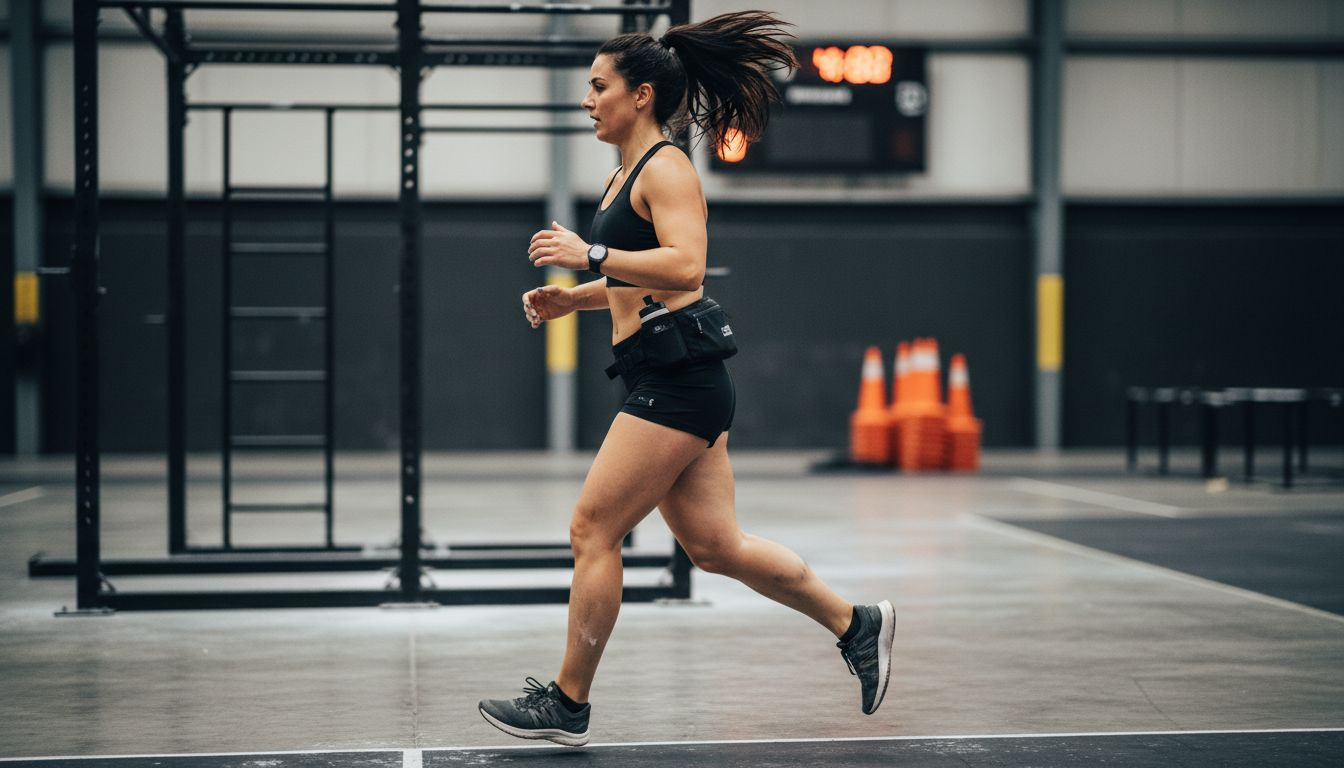
Hip packs stay incredibly stable during rapid movements and obstacle transitions. Your hands remain completely free, and you won’t feel the pack bouncing on your back during explosive movements like jumping or climbing.
The trade-off is reduced storage. You can carry a small amount of fuel or supplements, but not much else. Most Hyrox athletes using hip packs rely on pre-race fuelling and on-course water station refills.
Lightweight Running Vests
Running-specific hydration vests differ significantly from backpacks. These hug your torso closely and hold smaller volumes (0.5–1 litre). The tight fit prevents movement and keeps weight centred on your body.
Vests shine during pure running sections. However, they can feel restrictive when you’re climbing obstacles or moving through tight spaces. Some athletes find them uncomfortable when fully loaded.
Vests work best for sprint-distance Hyrox events or athletes with minimal gear requirements. You’ll be prioritising absolute lightness and comfort during running over storage capacity.
Comparison at a Glance
Each type serves different athlete profiles:
- Backpack: Best for long distances, extra gear, steady pace athletes
- Hip pack: Best for speed-focused athletes, Hyrox competition, minimal storage needs
- Vest: Best for pure running focus, sprint distances, extreme lightness priority
For most Hyrox competitors aged 30–50, hip packs offer the best balance. They’re light enough to maintain pace, stable enough for obstacles, and hold sufficient fluids for the event duration.
Here’s a helpful table summarising the suitability of hydration pack types for Hyrox athletes:
| Pack Type | Ideal User Profile | Strengths | Main Limitation |
|---|---|---|---|
| Backpack | Endurance athletes, long event | High storage, stable at steady pace | Can bounce on obstacles |
| Hip Pack | Speed-focussed, 30–50 years | Maximum stability, lightweight | Limited storage capacity |
| Running Vest | Pure runners, sprint distances | Ultra-light, hugs body closely | Restrictive on obstacles |
Choose your pack type based on your obstacle performance, not just running comfort. What feels smooth on a treadmill might shift during wall climbs or rope work.
Pro tip: During training, test each pack type across multiple obstacles to experience how weight distribution affects your balance and speed, then commit to the design that feels most secure during your weakest movements.
How Hydration Packs Support Intense Workouts
Hydration packs transform how your body performs during Hyrox training and competition. By delivering fluids consistently throughout intense efforts, they address one of the biggest performance limiters athletes face: dehydration.
When you’re alternating between hard running and demanding obstacles, your body struggles to maintain optimal function without reliable fluid access. A hydration pack solves this by making hydration effortless and continuous.
The Physiological Impact of Consistent Hydration
Proper hydration maintains blood volume, optimises cardiovascular function, and supports muscle performance during intense training. When you sip regularly from your pack, you’re actively preserving these critical systems.

Your heart works harder during Hyrox. Without adequate fluids, blood becomes thicker, forcing your cardiovascular system to pump harder and faster. This reduces efficiency and accelerates fatigue. A hydration pack prevents this by keeping you topped up throughout the event.
Thermoregulation and Body Temperature Control
Hydration supports intense workouts by regulating body temperature and enabling efficient blood flow to working muscles. During Hyrox, your internal temperature spikes rapidly from running and obstacle exertion.
Your body cools itself through sweat, but this only works if you have enough fluid in your system. A hydration pack ensures you’re replacing lost fluids in real-time, allowing your thermoregulation to function properly.
Without consistent hydration, your core temperature climbs faster, forcing your body to work harder to cool down. This diverts energy from performance.
Preserving Cognitive and Muscular Function
Dehydration affects your brain as much as your muscles. Even 2% fluid loss impairs decision-making, focus, and reaction time. During Hyrox, mental sharpness keeps you safe on obstacles.
A hydration pack maintains your cognitive function when fatigue sets in. You’ll make better decisions navigating difficult obstacles during the final kilometres when most athletes are struggling.
Muscle function depends on proper fluid status. Your muscles perform at full strength only when adequately hydrated. Dehydrated muscles fatigue faster and recover slower.
Key Benefits During Training Sessions
Hydration packs deliver multiple performance advantages:
- Sustain endurance capacity across all eight obstacles and running segments
- Maintain consistent power output during strength-based movements
- Reduce perceived effort, making intense work feel more manageable
- Enable faster recovery between high-intensity intervals
- Protect against heat-related illness during warm-weather training
- Support electrolyte balance when using drinks with natural minerals
Most importantly, a hydration pack keeps you in control. You decide when to drink based on your effort level, not based on whether you remembered to bring a bottle.
Consistent fluid intake during training creates adaptations that boost your performance ceiling. Athletes who hydrate strategically train harder and recover faster than those who hydrate sporadically.
Pro tip: During training, establish a drinking schedule—sip every 12–15 minutes regardless of thirst—so your body adapts to consistent fluid intake, then maintain this rhythm during race day when dehydration risk is highest.
Choosing Packs: Fit, Safety and Natural Solutions
Selecting the right hydration pack involves more than picking the cheapest option. Your choice directly impacts comfort, safety, and whether you can maintain performance throughout Hyrox. Three factors matter most: fit, safety features, and the materials touching your body.
Getting this right before race day prevents painful surprises during competition. A poorly fitting pack ruins even the best training.
Achieving Proper Fit and Comfort
Choosing a hydration pack requires attention to fit, capacity, and comfort to prevent discomfort and chafing during exercise. A pack that bounces or shifts wastes energy and creates friction injuries.
Proper fit means the pack sits snugly against your torso without excessive pressure. Your shoulder straps should distribute weight evenly without digging into your collarbone. The waist belt, if included, should sit at your natural waist and stay secure during fast running and jumping.
Capacity matters for fit. A pack that’s too large for your body type won’t sit properly. A pack that’s too small forces uncomfortable compression. Most Hyrox athletes aged 30–50 find 1.5–2 litre packs offer the sweet spot between capacity and wearability.
Safety Considerations During Competition
Safe packs fit snugly, minimise bounce, and allow natural movement without restricting your range of motion. During obstacles, you need full shoulder and arm mobility.
Look for packs with adjustable straps allowing micro-adjustments. Your body changes during intense effort—sweat, breathing patterns, and posture shift. A pack with fixed straps can’t adapt.
Overheating risk increases with poorly designed packs. Choose designs with breathable back panels and ventilated straps. Excess heat retention slows you down and increases heat illness risk during warm-weather races.
Natural Materials and Sustainable Choices
The materials touching your skin matter for both health and environmental responsibility. BPA-free plastics prevent hormone-disrupting chemicals from leaching into your drinks during hot conditions.
Ergonomic designs reduce injury risk by distributing forces naturally across your body. Lightweight, durable materials last years rather than months, reducing waste.
When selecting drinks for your pack, choose all-natural pre-workout options made with plant-based ingredients and minimal artificial additives. Your pack is only as good as the fluids you put in it.
Key Selection Checklist
Before buying, verify your pack meets these criteria:
- Fits snugly with zero bounce during fast running
- Stays secure during obstacle movements (climbing, crawling, jumping)
- Allows full arm and shoulder mobility
- Uses BPA-free, durable materials
- Has breathable back panel for heat dissipation
- Holds your preferred capacity without excess weight
- Allows quick refilling at water stations
- Drains completely so no residual weight remains
Test the pack during a training session with obstacles. If it moves or causes discomfort then, it will be worse during race-day intensity.
A pack that fits poorly on training day becomes unbearable during 90 minutes of Hyrox competition. Comfort during training predicts race-day comfort.
Pro tip: Wear your hydration pack during four separate training sessions at varying intensities before race day, noting any rubbing, bouncing, or pressure points, then make adjustments using different shirt materials or strap positions to eliminate issues before competition.
Mistakes to Avoid and Best Practices
Most Hyrox athletes make hydration errors that cost them minutes and comfort. These mistakes range from simple oversights to fundamental misunderstandings about how your body processes fluids during intense exercise.
The good news: once you know what to avoid, implementing best practices becomes straightforward. Small adjustments transform your hydration strategy from average to exceptional.
Common Hydration Mistakes
Common hydration mistakes include underhydrating, overhydrating without electrolytes, and ignoring individual sweat rates. These errors compound during long competitions.
Underhydration happens when athletes skip drinks early, thinking they’ll catch up later. By the time you feel thirsty, you’re already dehydrated. During Hyrox, early dehydration reduces power output on obstacles and slows your running pace.
Overhydrating plain water causes a different problem. Drinking excessive water without electrolytes dilutes your blood sodium levels, causing hyponatremia. Your muscles cramp, cognitive function declines, and performance crashes.
Ignoring your individual sweat rate is another costly mistake. Some athletes sweat heavily; others conservatively. Using a generic hydration plan wastes fluids or leaves you short.
Electrolyte Balance Errors
Mistakes to avoid include overconsumption of plain water and neglecting electrolyte replacement. Your body needs sodium to retain fluids and maintain cellular function.
Drinking only water during Hyrox is a setup for failure. Without electrolytes, your cells can’t absorb the water you consume. It passes through and leaves you dehydrated despite drinking regularly.
Natural mineral-based drinks with sodium and potassium solve this. These electrolytes enable your cells to absorb fluids effectively and maintain performance during the full event duration.
Timing and Volume Mistakes
Drinking heavily just before race start causes stomach discomfort and sloshing during running. Athletes often report feeling bloated or experiencing side stitches from late hydration.
Start your Hyrox race already well hydrated from pre-event preparation. Begin drinking small amounts (100–150ml) every 12–15 minutes once the race starts.
Taking large gulps infrequently overloads your stomach and can cause nausea. Small, consistent sips allow your body to absorb fluids smoothly.
The following table highlights common hydration mistakes in Hyrox and their effects on performance:
| Mistake | How It Happens | Impact on Performance |
|---|---|---|
| Underhydrating | Delaying fluid intake early on | Reduced power and slower pace |
| Overhydrating with water | Excess water, no electrolytes | Muscle cramps, risk of hyponatremia |
| Ignoring sweat rate | Not tailoring fluid volume | Unbalanced hydration, fatigue |
| Large infrequent gulps | Drinking too much at once | Stomach discomfort, nausea |
Best Practices for Peak Performance
Implement these strategies to maximise hydration benefits:
- Begin Hyrox well hydrated, not dehydrated
- Drink before thirst signals develop
- Consume 100–150ml every 12–15 minutes consistently
- Use electrolyte-enhanced fluids, never plain water alone
- Tailor volume to your sweat rate and exercise intensity
- Match hydration to event duration and environmental conditions
- Practise your hydration plan during training sessions
Your hydration pack enables these best practices. It removes the guesswork and keeps you sipping consistently without effort.
The athletes who hydrate strategically don’t just feel better during races—they perform 5–10% faster than those who hydrate haphazardly. Consistency compounds performance gains.
Pro tip: Calculate your individual sweat rate by weighing yourself before and after a 60-minute hard training session in warm conditions, then adjust your drink volume during Hyrox to match this rate, knowing that you’ll lose roughly 1kg of bodyweight per litre of sweat produced.
Unlock Your Hyrox Potential with Targeted Hydration and Natural Performance Support
Mastering hydration is critical for Hyrox athletes facing intense obstacles and running segments. The article highlights key challenges such as maintaining electrolyte balance, preventing dehydration, and ensuring hands-free fluid access during the race. To complement your hydration pack strategy, optimising your pre-workout nutrition and electrolyte intake with natural ingredients is essential to sustain endurance, power, and cognitive focus throughout competition.
Boost your race-day performance by exploring our carefully crafted Pre-workout – Interval formulas and complete your hydration routine with essential electrolytes found in our Staples – Interval collection. Incorporating these natural solutions alongside your hydration pack ensures you stay energised and well-hydrated from start to finish.
Ready to experience the perfect synergy of hydration and natural supplementation for your Hyrox training and competition? Discover tailored bundles and expert-crafted products now at https://useinterval.co.uk and take control of your endurance performance.
Frequently Asked Questions
What is a hydration pack and how does it work for Hyrox athletes?
A hydration pack is a wearable system that delivers fluids hands-free while participating in intense physical activities, like Hyrox. It features a reservoir bladder and a drinking tube, allowing athletes to sip water or electrolytes without breaking their stride.
Why are hydration packs important during Hyrox training?
Hydration packs are crucial for Hyrox athletes as they enable consistent fluid intake throughout the competition, preventing dehydration. This is essential for maintaining stamina, muscle power, and cognitive function during the event’s intensive obstacle and running segments.
How do I choose the right hydration pack for Hyrox?
When selecting a hydration pack for Hyrox, consider factors such as weight (aim for under 500 grammes), capacity (1.5–2.5 litres), refill ease, and how secure it feels during movement. The pack should allow full range of motion and feel like an extension of your body while running and navigating obstacles.
What mistakes should I avoid when using a hydration pack for Hyrox?
Common mistakes include underhydrating early on, overhydrating with plain water, ignoring individual sweat rates, and improper timing of fluid intake. Instead, focus on consistent sipping throughout the event to maintain optimal hydration and performance.