


Natural sports nutrition steps for female athletes
Between juggling training sessions, work, and life, you’re facing a nutritional puzzle that many female athletes aged 30 to 50 encounter: how to fuel high intensity workouts whilst managing hormonal shifts that affect muscle preservation and recovery. The good news? Natural, whole food nutrition strategies can transform your performance without complicated supplements or restrictive eating. This guide walks you through evidence based steps to optimise your nutrition, enhance recovery, and maintain the energy your body needs for demanding training.
Table of Contents
- Key takeaways
- Understanding your unique nutritional needs
- Preparing your natural sports nutrition plan
- Executing your nutrition steps for performance and recovery
- Monitoring and adjusting your nutrition for long term success
- Discover Interval’s starter bundle for natural sports nutrition
- Frequently asked questions about natural sports nutrition for female athletes
Key Takeaways
| Point | Details |
|---|---|
| Elevated protein needs | Daily protein needs rise to about 1.4 to 2.2 g per kilogram of body weight for perimenopausal athletes to counteract muscle loss from hormonal changes. |
| Periodised carbohydrate intake | Carbohydrate intake should be periodised to match training intensity and volume, with higher amounts on intense days and lower on recovery days. |
| Post workout timing | Consuming protein and carbohydrates within 30 to 60 minutes after exercise significantly enhances recovery and supports glycogen replenishment and muscle repair. |
| Whole foods focus | Natural nutrient dense whole foods provide the best foundation for performance, outperforming supplements or restrictive fasting. |
| Monitor energy balance | Maintaining adequate energy availability helps prevent RED-S and supports hormonal health, bone density, immune function and performance. |
Understanding your unique nutritional needs
Your body’s nutritional requirements shift significantly between ages 30 and 50, particularly if you’re engaged in high intensity sports. Oestrogen decline during perimenopause and menopause directly impacts your ability to preserve muscle mass, making adequate protein intake absolutely critical. Research shows that daily protein needs increase to 1.4-2.2 g/kg body weight for perimenopausal female athletes to counteract muscle loss amid hormonal changes.
Carbohydrate metabolism also changes during this life stage. Your body may become less efficient at using carbs for fuel, which means you need to be more strategic about when and how much you consume. The luteal phase of your menstrual cycle particularly affects amino acid needs, requiring slightly higher protein intake during the two weeks before menstruation. Understanding sports nutrition for high intensity training becomes essential as these physiological shifts compound.
Low energy availability poses a serious risk for active women in this demographic. Relative Energy Deficiency in Sport (RED-S) can develop when you consistently consume fewer calories than your body needs for both daily functions and training demands. This isn’t just about weight; it’s about providing enough fuel for hormonal health, bone density, immune function, and performance.
Key nutritional considerations for female athletes aged 30 to 50 include:
- Increased protein requirements due to reduced muscle protein synthesis efficiency
- Periodised carbohydrate intake matching training intensity and volume
- Awareness of menstrual cycle phase impacts on nutrient metabolism
- Minimum energy availability of 45 kcal/kg fat free mass daily
- Strategic timing of nutrients around training sessions
- Prioritisation of nutrient dense whole foods over processed options
Preparing your natural sports nutrition plan
Building a sustainable nutrition plan starts with understanding carbohydrate periodisation. Your daily carb needs range from 5 to 10 g/kg body weight, with higher amounts on intense training days and lower amounts during recovery or lighter sessions. This flexible approach prevents both underfuelling and unnecessary energy surplus whilst supporting your training adaptations.
Natural whole foods provide the foundation for optimal performance. Pre workout meals should combine easily digestible carbs with moderate protein, whilst post workout nutrition focuses on rapid glycogen replenishment and muscle repair. Greek yoghurt with berries and granola, oatmeal with banana and nut butter, or a turkey and avocado wrap on wholegrain bread all deliver the nutrients your body needs without artificial additives.
Timing matters as much as food choice. Consuming protein and carbohydrates immediately after exercise significantly enhances recovery compared to delayed intake. Your muscles are most receptive to nutrients within the first 30 to 60 minutes post training, making this window crucial for replenishing glycogen stores and initiating muscle protein synthesis.
| Meal timing | Ideal natural foods | Macronutrient focus |
|---|---|---|
| Pre workout (1-2 hours before) | Oatmeal with banana, Greek yoghurt with berries, rice cakes with nut butter | Moderate carbs, low fat, moderate protein |
| Post workout (within 30 minutes) | Chocolate milk, protein smoothie with fruit, turkey wrap, salmon with sweet potato | High carbs, high protein, moderate fat |
Periodised nutrition strategies help you match carbohydrate intake to training load, preventing the energy imbalance that leads to fatigue, poor recovery, or RED-S. During high volume training weeks, increase your carb intake towards the upper range. During recovery or lighter weeks, reduce carbs slightly whilst maintaining protein to support muscle preservation.
Pro Tip: Track your training intensity weekly and adjust your carbohydrate portions accordingly. If you’re doing three high intensity sessions, aim for 7 to 8 g/kg carbs daily. During recovery weeks with only two moderate sessions, drop to 5 to 6 g/kg to maintain energy balance without excess.
Executing your nutrition steps for performance and recovery
Implementing your nutrition plan requires a systematic approach around your training schedule. Follow these sequential steps to naturally support muscle recovery and energy replenishment:
- Calculate your baseline protein target (multiply your body weight in kg by 1.6 for a moderate starting point)
- Plan your pre workout meal 1 to 2 hours before training with easily digestible carbs and moderate protein
- Prepare your post workout nutrition in advance so it’s ready within 30 minutes of finishing
- Consume 1.2 g/kg body weight of carbohydrates immediately post exercise for optimal glycogen replenishment
- Include 20 to 30 g of high quality protein post workout to maximise muscle protein synthesis
- Space remaining meals evenly throughout the day to maintain steady amino acid availability
- Adjust portions based on training intensity that day, increasing carbs for harder sessions
Research demonstrates that immediate post exercise protein and carb intake significantly enhances muscle recovery and glycogen replenishment whilst reducing fatigue compared to delayed consumption. This meta analysis confirms what many athletes experience: timing truly matters for maximising training adaptations.

| Training phase | Carbohydrate target | Protein target | Timing priority |
|---|---|---|---|
| Pre workout | 1-2 g/kg body weight | 0.3-0.4 g/kg | 1-2 hours before |
| During workout (>90 min) | 30-60 g per hour | Not applicable | Every 20 minutes |
| Post workout | 1.2 g/kg body weight | 0.3-0.5 g/kg | Within 30 minutes |
Practical meal portioning doesn’t require precise weighing for every meal. Use your hand as a guide: a palm sized portion of protein, a cupped handful of carbs, and a thumb of healthy fats at each main meal. Post workout, double your carb portion and maintain your protein serving. This intuitive approach keeps nutrition sustainable without obsessive tracking.
Hydration supports nutrient delivery and recovery. Drink 500 ml of water 2 hours before training, sip 150 to 250 ml every 15 minutes during exercise, and replace 150% of fluid lost through sweat post workout. Adding a pinch of sea salt to your water or choosing natural electrolyte options helps maintain sodium balance during longer sessions.
Pro Tip: Batch prepare three to four post workout meals on Sunday evening. Store them in individual containers so you can grab one immediately after training. This removes the barrier of preparation fatigue when you most need proper nutrition.
Monitoring and adjusting your nutrition for long term success
Tracking your energy intake versus expenditure prevents the insidious development of low energy availability. The International Society of Sports Nutrition recommends maintaining 45 kcal/kg fat free mass daily as a minimum threshold, with underfuelling particularly prevalent in female athletes and carrying serious performance and health consequences.
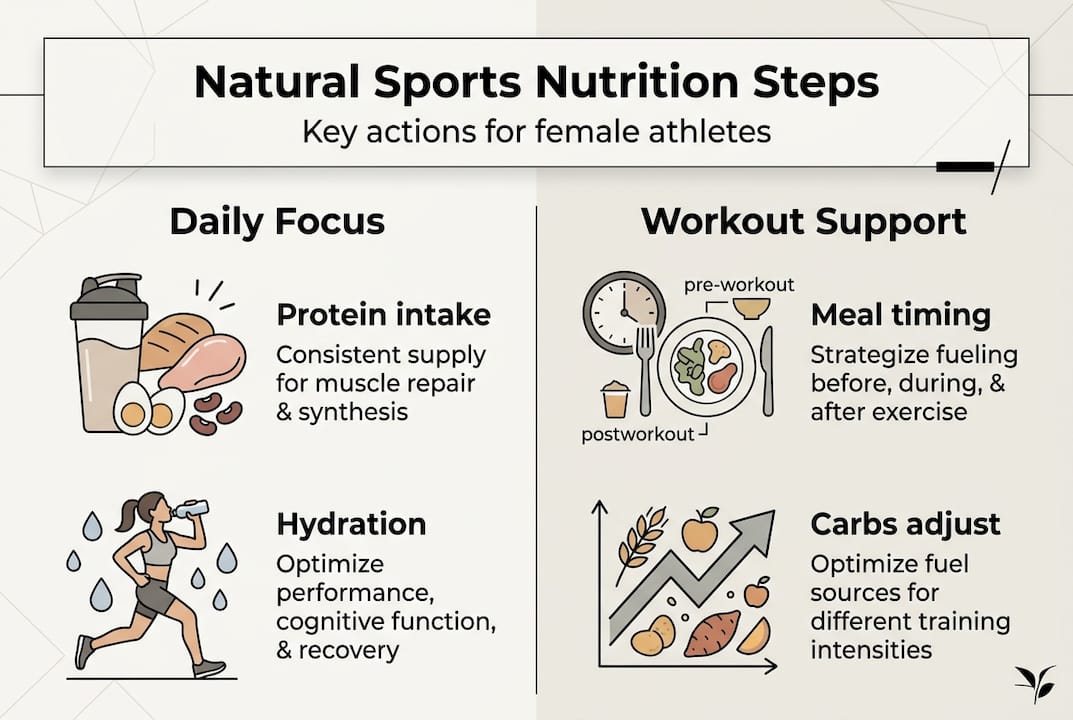
Calculate your fat free mass by subtracting your body fat percentage from total weight. A 70 kg woman at 25% body fat has 52.5 kg fat free mass, requiring a minimum of 2,363 kcal daily before adding exercise expenditure. This baseline ensures your body has enough energy for basic physiological functions, hormonal production, and immune health before accounting for training demands.
Recognising signs of low energy availability helps you intervene before serious issues develop. Watch for persistent fatigue despite adequate sleep, declining performance in training, increased injury frequency, menstrual irregularities, poor recovery between sessions, frequent illness, and mood disturbances. These symptoms often appear gradually, making them easy to dismiss as normal training stress.
Your menstrual cycle significantly impacts nutrient needs and recovery capacity. During the follicular phase (days 1 to 14), oestrogen levels rise and your body handles carbohydrates efficiently. The luteal phase (days 15 to 28) brings higher progesterone, increased metabolic rate, and greater protein requirements. Adjusting your nutrition to these natural fluctuations optimises both performance and wellbeing.
Adjustment strategies for sustainable nutrition include:
- Increase total daily calories by 200 to 300 if experiencing persistent fatigue or menstrual changes
- Add an extra protein serving during the luteal phase to meet increased amino acid needs
- Reduce training volume temporarily if signs of RED-S appear, whilst maintaining nutrition
- Periodise carbohydrate intake weekly based on planned training intensity
- Include regular diet breaks every 8 to 12 weeks to support metabolic health
- Consider transitioning to natural supplements only after optimising whole food intake
Regular check ins with your body’s signals matter more than rigid meal plans. If your performance plateaus despite consistent training, if you’re constantly thinking about food, or if recovery takes longer than usual, these are clear indicators to increase energy intake. Your body communicates its needs through these subtle messages.
Discover Interval’s starter bundle for natural sports nutrition
Navigating natural sports nutrition becomes simpler when you have trusted products supporting your whole food foundation. Interval’s Starter Bundle offers a practical solution designed specifically for female athletes pursuing high intensity training with natural ingredients. The bundle combines pre workout support and electrolyte replenishment without artificial additives, aligning perfectly with the whole food principles discussed throughout this guide.
Exploring Interval’s Starter Bundle gives you convenient natural nutrition support for demanding training sessions. The products complement your whole food meals rather than replacing them, fitting seamlessly into the periodised nutrition approach outlined above. For deeper guidance on optimising your nutrition strategy, visit our comprehensive sports nutrition guide for high intensity training or learn more about making the transition to natural supplements effectively.
Frequently asked questions about natural sports nutrition for female athletes
What are the best natural protein sources for female athletes?
Greek yoghurt, eggs, wild caught salmon, organic chicken, lentils, and quinoa provide complete protein profiles with additional nutrients supporting hormonal health. Aim for variety across the week to ensure you’re getting diverse amino acid profiles and micronutrients that support recovery and performance.
How soon after exercise should I eat protein and carbs?
Consume protein and carbohydrates within 30 minutes of finishing your workout for optimal recovery. This timing window maximises muscle protein synthesis and glycogen replenishment, with research showing significantly better outcomes compared to waiting 2 hours or more post exercise.
Can I periodise carbs during lighter training weeks?
Absolutely, and you should. Reduce carbohydrate intake to 5 to 6 g/kg body weight during recovery or lighter training weeks whilst maintaining protein at 1.6 to 2.0 g/kg. This approach prevents unnecessary energy surplus whilst still supporting muscle preservation and basic metabolic needs.
How does the menstrual cycle affect my nutrition needs?
The luteal phase increases your metabolic rate by 5 to 10% and raises protein requirements due to progesterone’s effects on muscle protein breakdown. Add an extra 100 to 200 kcal daily and increase protein portions slightly during the two weeks before menstruation to support these physiological changes.
What signs indicate I’m underfuelled and how to fix it?
Persistent fatigue, declining performance, menstrual irregularities, frequent injuries, and poor recovery signal inadequate energy availability. Immediately increase daily calories by 300 to 500, prioritising carbohydrates and protein around training, and consider temporarily reducing training volume whilst you restore energy balance. Consult a sports dietitian if symptoms persist beyond two weeks of increased intake.