


Pre-workout myths debunked: guide for female athletes
TL;DR:
- Multi-ingredient pre-workouts can modestly improve women’s strength and endurance, depending on formula and hormonal status.
- Taking high-stimulant pre-workout close to bedtime can disrupt sleep, especially during the luteal phase.
- Always choose certified, third-party tested pre-workouts and tailor usage based on your hormonal cycle and training needs.
If you train hard and want your pre-workout to work harder, you deserve more than recycled advice written for men. The pre-workout market is flooded with bold claims, but the science tells a more nuanced story. Multi-ingredient pre-workouts can improve anaerobic power and endurance in women, yet the effect is modest and depends heavily on the formula, your hormonal status, and your training type. Sorting fact from fiction is not just useful; it is essential if you want to make decisions that actually move the needle on your performance.
Table of Contents
- Myth 1: All pre-workouts are equally effective for women
- Myth 2: Taking pre-workout late won’t impact your performance or sleep
- Myth 3: Pre-workouts are always safe if bought over the counter
- Myth 4: One-size-fits-all formulas work for all female athletes
- Comparison: Pre-workout options for female athletes
- Our perspective: What most guides miss about pre-workout for women
- Optimise your pre-workout routine with Interval
- Frequently asked questions
Key Takeaways
| Point | Details |
|---|---|
| Ingredient matters | Pre-workout formulas vary widely; choose based on individual goals and tolerance. |
| Timing affects sleep | Avoid caffeine-based pre-workouts within 12 hours of bedtime to protect recovery. |
| Quality beats quantity | Certified supplements are safer and more reliable than generic over-the-counter options. |
| Customise for cycles | Adapt pre-workout strategy to hormonal changes for peak performance and minimal side effects. |
| Comparison helps | Reviewing supplement types side-by-side clarifies the best fit for your sport and lifestyle. |
Myth 1: All pre-workouts are equally effective for women
This is one of the most persistent workout supplement myths in the industry. The reality is that pre-workout formulas differ enormously in their ingredient profiles, and those differences matter significantly for female athletes.
Three ingredients appear most consistently in research: caffeine, beta-alanine, and citrulline malate. Caffeine drives alertness and power output. Beta-alanine buffers lactic acid, delaying muscle fatigue. Citrulline improves blood flow and reduces perceived effort. Together, these form the backbone of most multi-ingredient pre-workout supplements (MIPS). But not every product contains clinically relevant doses of all three, and many use proprietary blends that obscure exactly how much of each you are actually getting.
The numbers from research are telling. Women using MIPS with this combination saw a 10.7% greater anaerobic power and a 4.4% improvement in time to exhaustion compared to placebo. That is meaningful for competitive athletes, but it is not universal. Your response will be shaped by your hormonal cycle, your age, and the specific demands of your sport.
Key ingredient differences to look for:
- Caffeine dose: 150mg to 400mg per serving is common; higher is not always better
- Beta-alanine: Effective dose is 3.2g to 6.4g daily; low-dose products may underdeliver
- Citrulline malate: Look for at least 6g per serving for meaningful effect
- Filler ingredients: Artificial sweeteners, excessive dyes, and vague blends are red flags
Here is a quick comparison of how key ingredients differ across common product types:
| Ingredient | High-stimulant MIPS | Budget product | Natural MIPS |
|---|---|---|---|
| Caffeine | 250mg+ | Varies | 100mg to 150mg |
| Beta-alanine | 3.2g+ | Often underdosed | 2g to 3.2g |
| Citrulline | 6g+ | Often absent | 4g to 6g |
| Third-party tested | Sometimes | Rarely | Often |
If you want to explore how pre-workout nootropics can further support focus and mental performance, that is another dimension worth understanding.
Pro Tip: Always check for NSF or USP certification on the label. These third-party marks confirm that what is on the label is actually in the product.
With the importance of ingredient choice clear, let’s examine another myth centred on timing and sleep quality.
Myth 2: Taking pre-workout late won’t impact your performance or sleep
This myth can genuinely undermine your progress. Many female athletes grab a full-stimulant pre-workout for a 7pm session without thinking twice. The problem is that caffeine has a half-life of roughly five to six hours, meaning half of that dose is still active in your bloodstream well into the night.
For women, this is particularly relevant. Hormonal fluctuations across the menstrual cycle affect how quickly your body metabolises caffeine. During the luteal phase, caffeine clearance slows, which means the same pre-workout you tolerated fine last week could keep you awake for hours this week. This is not speculation; it is physiology.
‘Avoid caffeine at least 12 hours before bed for optimal sleep quality.’
Poor sleep compounds quickly. One disrupted night raises cortisol, reduces glycogen replenishment, and blunts protein synthesis. For athletes in heavy training blocks, this becomes a meaningful recovery deficit. High-caffeine pre-workouts can cause genuine sleep disturbance when taken within 12 to 14 hours of bedtime.
Signs your pre-workout is affecting your sleep:
- Difficulty falling asleep despite physical tiredness after training
- Waking frequently in the night or early morning
- Elevated resting heart rate the following morning
- Reduced sleep quality scores if you track via a wearable device
For evening sessions, it is worth reviewing the pre-workout safety tips that specifically address stimulant management for high-intensity athletes.
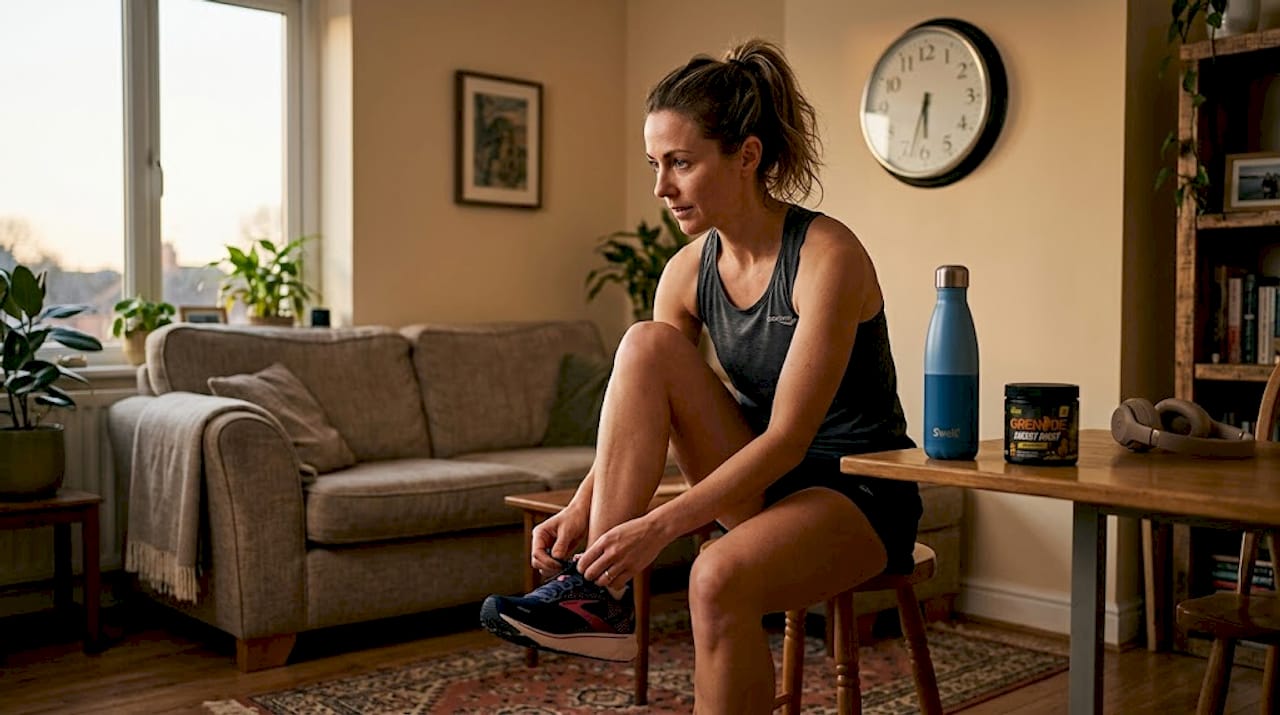
Pro Tip: For any training session after 5pm, switch to a low-stimulant or stimulant-free formula. You can still support endurance and focus without the caffeine hit that costs you your recovery.
Building smarter effective pre-workout rituals around your training schedule is one of the most underrated performance levers available to you.
Now that we have addressed timing, let’s tackle another assumption regarding safety and regulation.
Myth 3: Pre-workouts are always safe if bought over the counter
Being sold in a well-lit pharmacy or sports retailer does not make a supplement safe. The supplement industry operates under far looser regulation than pharmaceuticals. In the UK and internationally, manufacturers are not required to prove efficacy or even safety before a product hits shelves.
That matters enormously when you are an athlete subject to anti-doping rules, or when you have a history of elevated blood pressure or heart arrhythmia. Some pre-workout supplements carry real risks if they contain undeclared stimulants, heavy metals, or contaminated batches.
Steps to take before purchasing any pre-workout:
- Check for an NSF Certified for Sport or USP Verified seal on the packaging
- Search the product on Informed Sport’s verified database
- Look up the ingredient list independently to check for anything flagged by WADA
- Avoid any product using proprietary blends without declared quantities
- Consult a sports dietitian if you have cardiovascular concerns
| Certification | What it checks | Relevant for competitors? |
|---|---|---|
| NSF Certified for Sport | Banned substances, label accuracy | Yes |
| USP Verified | Label accuracy, contamination | Partially |
| Informed Sport | Banned substances | Yes |
| No certification | Nothing independently verified | No |
If you are curious about gentler alternatives, herbal pre-workouts offer a lower-risk profile with natural ingredient lists. For a thorough breakdown of what to look for in a product built specifically for you, the female-centric pre-workouts guide is a strong starting point.
Pro Tip: Before any sanctioned competition, run your pre-workout through the Informed Sport database. One contaminated batch can trigger a positive test, regardless of your intentions.
After addressing safety and regulation, it is crucial to clarify the myth around one-size-fits-all formulas for female athletes.
Myth 4: One-size-fits-all formulas work for all female athletes
A 32-year-old sprint cyclist in the follicular phase of her cycle has very different pre-workout needs from a 48-year-old CrossFit athlete navigating perimenopause. Using the same formula for both is not evidence-based; it is guesswork with a label on it.
As oestrogen and progesterone levels shift across a monthly cycle and decline through perimenopause, several things change. Stimulant tolerance drops. Recovery speed slows. Sensitivity to beta-alanine’s tingling effect (known as paraesthesia) can increase. What worked brilliantly in your early thirties may cause jitteriness, nausea, or poor sleep in your mid-forties.
Women sensitive to stimulants or those with elevated blood pressure should avoid high-stimulant products, but this does not mean abandoning pre-workout support altogether. Low-stimulant and stimulant-free pre-workouts exist precisely for this reason.
Key adjustments to consider by life stage:
- Follicular phase: Higher energy and stimulant tolerance; standard MIPS doses often well tolerated
- Luteal phase: Caffeine metabolism slows; consider reducing dose or switching to low-stim
- Perimenopause: Prioritise recovery-focused ingredients; avoid high-stim formulas late in the day
- Post-menopause: Focus on citrulline and beta-alanine without relying heavily on stimulants
The female pre-workout checklist breaks this down in practical terms, giving you a clear framework for adjusting your regimen to where you actually are, not where a generic protocol assumes you are.
Pro Tip: Keep a training log that tracks your pre-workout, dose, time taken, session quality, and sleep rating. Patterns will emerge within two to three weeks that no generic guide can predict for you.
We have debunked the major myths; let’s now compare the key pre-workout options in a side-by-side format.
Comparison: Pre-workout options for female athletes
Understanding the myth landscape is only half the job. You still need to decide what to actually use. Here is how the main categories compare for female athletes doing high-intensity sport.
| Type | Key benefits | Potential drawbacks | Best suited for |
|---|---|---|---|
| High-stimulant MIPS | Strong power and focus boost | Jitteriness, sleep disruption | Morning sessions, experienced users |
| Low-stimulant MIPS | Improved endurance with less risk | Smaller acute performance spike | Afternoon sessions, hormonal sensitivity |
| Herbal pre-workout | Natural ingredients, gentle effect | Less evidence for acute power gains | Those avoiding synthetics |
| Stimulant-free MIPS | Safe for evening, no crash | No caffeine benefit | Evening training, high-sensitivity users |
MIPS enhance power and endurance for women with modest but real gains, especially when chosen to match your hormonal context and training demands.
The most important variables for matching a formula to your needs:
- Training time: Morning versus evening dictates how much caffeine is appropriate
- Hormonal phase: Adjust stimulant dose based on cycle stage or menopausal status
- Sport type: Power-based sports benefit from creatine and caffeine; endurance benefits more from citrulline
- Competition calendar: Use certified products in the lead-up to sanctioned events
You can use the female pre-workout checklist 2026 to audit your current approach, and if you want to build a smarter female pre-workout routine, that guide walks through structuring your supplement timing week by week.
Pro Tip: Match your supplement to your training, not to a trending product. What works brilliantly for a friend doing the same sport might still be the wrong fit for your physiology.
Our perspective: What most guides miss about pre-workout for women
Most pre-workout guides treat women as a footnote. They repurpose male-centric research, add a pink label, and call it female-specific. We think that is not good enough, and the science backs us up.
Empirical data confirms MIPS help, but the gains are modest, and individual tolerance is the critical variable, particularly for women navigating hormonal shifts. No single formula should be positioned as universally optimal.
Our honest view: tracking your own response is more valuable than any expert recommendation. Your hormonal cycle, your sleep, your stress load, your recovery rate. These are real-time inputs that no study can fully account for. Explore pre-workout focus options when energy is strong, and scale back during phases when your body needs support rather than stimulation.
‘Your body’s response is the number one guide.’
Chase data, not trends. Adjust with intention. That is where the real performance edge lives.
Optimise your pre-workout routine with Interval
If this article has made one thing clear, it is that personalisation is everything. At Interval, we build supplements for female athletes who take their training seriously and want products that reflect the science, not just the marketing.
Our formulas use certified, natural ingredients with transparent dosing. No proprietary blends, no unnecessary stimulants, no guesswork. Whether you are looking for a structured starting point or ready to build a full pre-workout stack, our starter bundle gives you a science-backed foundation designed specifically for high-intensity training. Explore our guides, match the right formula to your training phase, and start making pre-workout decisions that are genuinely yours.
Frequently asked questions
Does taking pre-workout supplements benefit female athletes?
Multi-ingredient pre-workouts modestly boost anaerobic power and endurance for women, but they are not essential for everyone and work best when matched to your specific training demands.
Will taking pre-workout late affect my sleep?
Yes, high-caffeine pre-workouts can disrupt sleep if taken within 12 hours of bedtime, and women in the luteal phase may be even more affected due to slower caffeine clearance.
How can I choose a safe pre-workout supplement?
Look for products independently certified by NSF or USP and avoid any product that relies on proprietary blends or lacks third-party testing documentation.
Can pre-workout formulas be tailored to my hormonal cycle?
Yes, adjusting your dose and formula type across your cycle is a practical strategy; individual tolerance during hormonal shifts is one of the most important factors in optimising both performance and side-effect risk.