


Step-by-step workout fuel guide for women: boost performance
TL;DR:
- Women aged 30–50 engaging in high-intensity workouts need tailored nutrition to sustain energy and promote recovery.
- Proper pre-, intra-, and post-workout fueling with natural foods enhances performance, muscle repair, and stamina.
- Strategic eating, rather than restriction, supports better results, energy levels, and body composition.
Feeling drained halfway through your HIIT session or hitting a wall mid-WOD? You’re not imagining it. Women aged 30–50 training at high intensity have specific fuelling needs that most generic nutrition advice completely ignores. Hormonal shifts, muscle preservation demands, and the sheer energy cost of CrossFit, lifting, or Hyrox mean that what you eat (and when) can make or break your performance. This guide gives you a clear, practical roadmap covering pre-workout, intra-workout, and post-workout nutrition using real food and natural strategies so you can train harder, recover faster, and feel genuinely strong.
Table of Contents
- Understanding your body’s fuel needs for high-intensity workouts
- Step 1: Pre-workout fuelling to power your session
- Step 2: Intra-workout hydration and fuelling essentials
- Step 3: Post-workout recovery – re-fuel, rebuild, reset
- Why most women under-fuel — and how to reframe your approach
- Take your natural fuelling further with Interval
- Frequently asked questions
Key Takeaways
| Point | Details |
|---|---|
| Carbs fuel high intensity | Choose easily digestible carbs before workouts to maximise energy and performance. |
| Protein supports recovery | Aim for 20–30g of protein plus carbs in the 30–60 min post-workout window. |
| Hydration is essential | Stay hydrated before, during, and after exercise, adding easy-to-make electrolyte drinks for long or hot sessions. |
| Balance throughout the day | Distribute your protein and carbs evenly across meals for optimal muscle repair and energy. |
Understanding your body’s fuel needs for high-intensity workouts
Before you can optimise your nutrition, you need to understand what your body is actually asking for. High-intensity training burns through glycogen (your stored carbohydrate energy) rapidly, stresses muscle tissue, and demands consistent protein turnover to rebuild and grow. Get the basics wrong and no amount of training will deliver the results you’re after.
The three macronutrients each play a distinct role. Carbohydrates are your primary fuel source during intense efforts. Protein repairs and builds muscle tissue. Fats provide sustained energy and support hormone production, which matters enormously for women in this age group. As you move through your 30s and into your 50s, oestrogen and progesterone fluctuations affect how your body uses fuel, stores fat, and preserves lean muscle. This is why nutrition for intense sports looks different for you than it does for a 22-year-old male gym-goer.
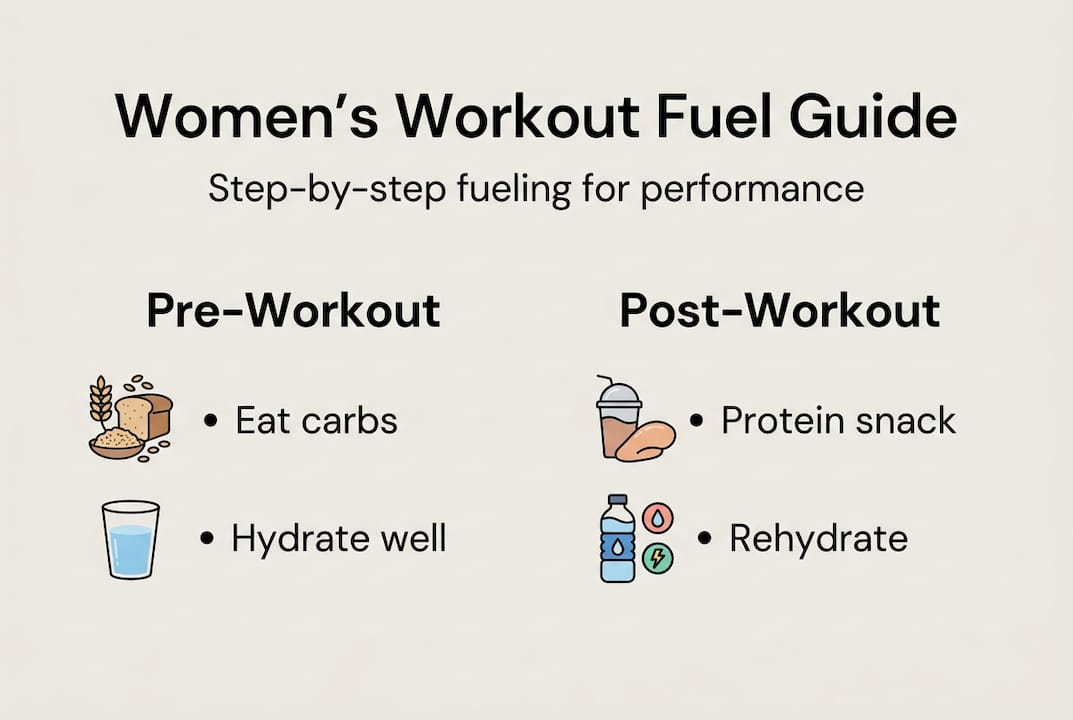
According to the International Society of Sports Nutrition, women aged 30–50 need 1.4–1.6g/kg/day protein, rising to 2.2g/kg during heavy training blocks or calorie restriction, alongside 5–8g/kg/day of carbohydrates. Spread protein evenly every 3–4 hours throughout the day for best results.
| Nutrient | Standard training | Heavy training/calorie deficit |
|---|---|---|
| Protein | 1.4–1.6g per kg bodyweight | Up to 2.2g per kg bodyweight |
| Carbohydrates | 5–6g per kg bodyweight | 6–8g per kg bodyweight |
Sample calculation: A 68kg woman doing CrossFit four times per week needs roughly 95–109g protein and 340–544g carbohydrates daily.
High-intensity sports that particularly demand smart fuelling include:
- HIIT and CrossFit: Short, explosive efforts drain glycogen fast
- Hyrox and functional fitness: Sustained power output over 60–90 minutes
- Olympic lifting and powerlifting: Neuromuscular demand plus recovery load
- Spin and indoor cycling classes: Cardiovascular intensity with significant sweat loss
Pro Tip: Rather than obsessing over tracking every gram, use a simple meal template. Build each main meal around a palm-sized protein source, a fist of carbs, and a thumb of healthy fat. Adjust portions based on training days versus rest days.
Step 1: Pre-workout fuelling to power your session
With your daily targets in mind, the next question is what to eat before you train. Pre-workout nutrition is arguably where most women get it wrong, either training fasted and running on empty or eating too heavily and suffering for it mid-session.
Here is a straightforward step-by-step approach:
- Eat 1–3 hours before training. This gives your body time to digest and convert food into usable energy without leaving you bloated.
- Prioritise easily digestible carbohydrates. Think oats, banana, rice cakes, or white toast rather than high-fibre vegetables or legumes.
- Keep protein moderate (around 10g or less). Pre-workout meals for HIIT or CrossFit should focus on carbs with minimal protein and fat to avoid GI distress mid-session.
- Hydrate alongside your meal. Aim for 400–600ml of water in the 1–2 hours before you start.
- Test and adjust. Everyone’s gut responds differently. What works brilliantly for your training partner may not suit you.
Three practical natural pre-workout options:
- 90 minutes before: Porridge with a sliced banana and a drizzle of honey (approx. 55g carbs, 8g protein)
- 60 minutes before: Two oatcakes with a thin spread of almond butter and half a banana (approx. 30g carbs, 5g protein)
- 30 minutes before: A small fruit smoothie made with banana, oat milk, and a handful of berries (approx. 35g carbs, 4g protein)
For more ideas, explore pre-workout snack ideas tailored to athletes, and if you train first thing, check out our guide to morning workout fuelling for strategies that work even with limited time.
Keep it light. GI distress kills your session faster than any training error. If you feel sluggish, nauseous, or crampy mid-workout, your pre-training meal is likely too heavy, too fatty, or eaten too close to your start time. Simplify before you experiment.
Understanding the pre-workout carbohydrate benefits in detail will help you make smarter choices based on session length and intensity.
Pro Tip: Prep your pre-workout snack the night before. A small pot of overnight oats with banana and honey takes two minutes to assemble and removes all morning decision fatigue.
Step 2: Intra-workout hydration and fuelling essentials
Pre-workout sorted. Now let’s talk about what happens during your session, because for many women training at high intensity, this is the most overlooked piece of the puzzle.
The honest truth is that most sessions under 60 minutes do not require food mid-workout. Water is sufficient. But once you push past that threshold, or if you’re training in the heat or doing back-to-back sessions, carbohydrate and fluid intake during prolonged exercise meaningfully improves performance and reduces perceived fatigue. That’s not marketing speak. That’s physiology.
Signs you may need intra-workout fuel:
- Your session runs 60 minutes or longer
- You’re training twice in one day
- The environment is hot or humid
- You feel your power drop significantly after the 40-minute mark
- You’re doing a multi-event format like Hyrox
Natural options to keep you going:
- Water: Always first. Sip 150–200ml every 15–20 minutes during intense sessions.
- Natural electrolyte drink: Coconut water diluted 50/50 with water provides sodium, potassium, and magnesium without artificial sweeteners.
- Medjool dates: Two dates offer around 35g of fast-acting carbohydrates and are easy to carry.
- Banana halves: Portable, gentle on the stomach, and effective for sustained energy.
- Oat-based energy bites: Homemade balls of oats, nut butter, and honey work well for longer endurance-style sessions.
For a full breakdown, our intra-workout nutrition essentials guide covers timing and quantities in detail, and our workout hydration routine article will help you build a consistent hydration habit.
Pro Tip: Make your own electrolyte drink by mixing 500ml of water with a pinch of sea salt, a squeeze of lemon juice, and a teaspoon of honey. It costs pennies, contains no artificial additives, and works brilliantly for sessions over an hour.
Step 3: Post-workout recovery – re-fuel, rebuild, reset
You’ve trained hard. Now the real work begins. The 30–60 minute window after your session is when your muscles are primed to absorb nutrients, replenish glycogen stores, and begin the repair process. Miss this window and you’re leaving gains on the table.
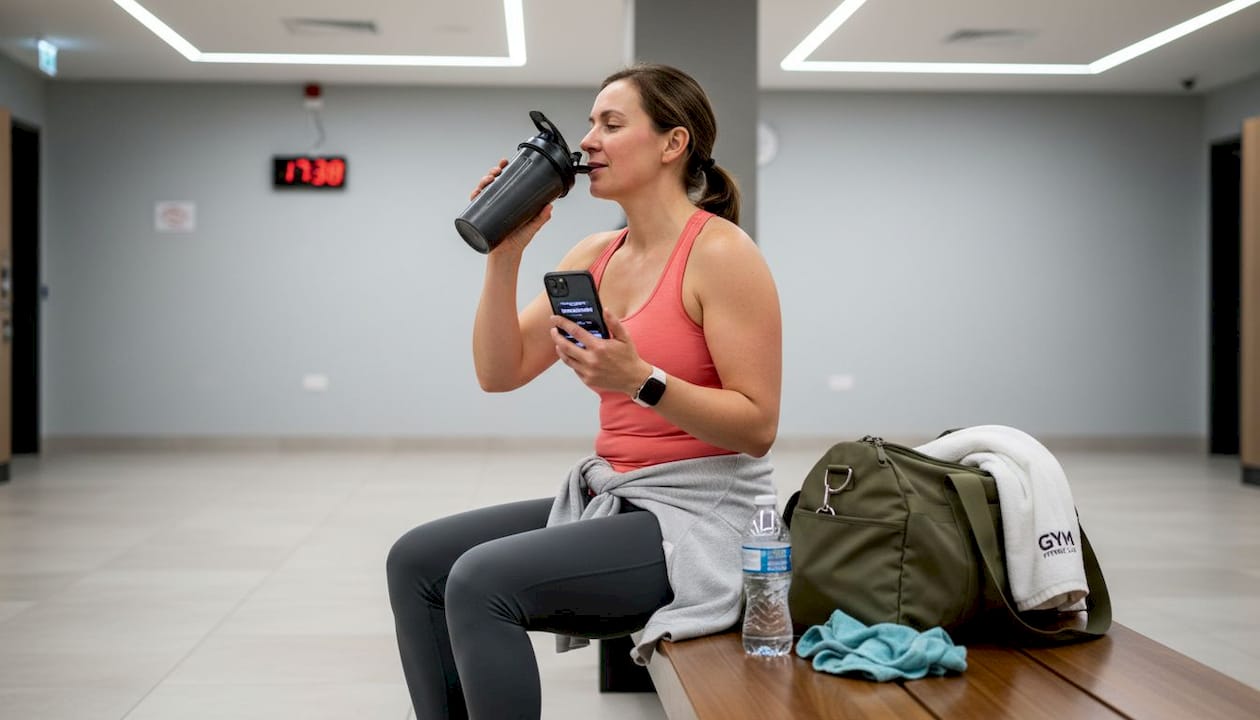
Aim for 20–30g of protein combined with carbohydrates within that first hour. Research from UCLA Health confirms that pairing protein with carbs post-workout optimises both glycogen resynthesis and muscle protein synthesis (MPS), the two processes that determine how well you recover and adapt.
Here’s a simple comparison table to mix and match based on your dietary preference:
| Diet type | Protein source | Carbohydrate source | Example meal |
|---|---|---|---|
| Omnivore | Chicken breast (30g protein) | Sweet potato | Chicken, sweet potato, and greens |
| Vegetarian | Greek yoghurt (20g protein) | Fruit and granola | Yoghurt bowl with banana and oats |
| Vegan | Tempeh or edamame (20g protein) | Brown rice or quinoa | Tempeh stir-fry with rice |
How to build your post-workout meal from what you have:
- Choose your protein first. Eggs, cottage cheese, tinned tuna, Greek yoghurt, or a plant-based protein source.
- Add a carbohydrate. Fruit, rice, oats, bread, or a smoothie base.
- Include colour. A handful of spinach, berries, or roasted veg adds micronutrients that support recovery.
- Don’t overthink it. A banana and a pot of Greek yoghurt is genuinely effective and takes 90 seconds to prepare.
For more detailed ideas, our post-workout nutrition guide includes practical meal examples, and the recovery process guide explains exactly what’s happening in your body during those crucial hours after training.
Why most women under-fuel — and how to reframe your approach
Here’s something we see constantly: women who train incredibly hard but eat far too little, particularly around their sessions. The fear of carbs is real. The habit of skipping post-workout meals because you’re “not that hungry” is real. And the result is always the same: fatigue, stalled progress, and frustration.
The uncomfortable truth is that strategic eating, meaning more food at the right times, often produces leaner, stronger results than restriction. When you fuel properly, your body stops holding onto fat as a survival mechanism and starts using food as a performance tool. We’ve seen women add a proper pre and post-workout meal to their routine and report better energy, improved mood, and noticeable body composition changes within weeks.
Food is not the enemy of your goals. It is the vehicle. Reframe your relationship with balancing nutrition for sports and treat fuelling as part of your training, not separate from it. The athletes who perform consistently well are the ones who eat with intention, not the ones who eat the least.
Take your natural fuelling further with Interval
You now have a solid, science-backed framework for fuelling every phase of your training. The next step is making it consistent and simple.
At Interval, we create natural pre-workout and electrolyte supplements designed specifically for women doing high-intensity sports. No artificial sweeteners, no unnecessary fillers, just clean ingredients that support your performance goals. Our Interval starter bundle is the easiest way to add natural performance support to your existing routine. Explore the full range of natural performance nutrition on our website and find the right fit for your training life.
Frequently asked questions
What are three natural pre-workout snack ideas for high-intensity sports?
Banana with almond butter, oatcakes with honey, or a small fruit smoothie provide quick, effective fuel before training without upsetting your stomach.
How soon after a workout should I eat for the best recovery?
Aim to refuel within 30–60 minutes after training to maximise muscle repair and glycogen replenishment with a combination of protein and carbohydrates.
Do I need to eat during exercise if my workout is under one hour?
Most women only need water for sessions under 60 minutes; prolonged high-intensity exercise lasting longer or done in heat may benefit from simple carbs and electrolytes mid-session.
How much daily protein and carbs should active women consume?
Most women training at high intensity need 1.4–1.6g protein and 5–8g carbohydrate per kilogram of bodyweight daily, adjusted for training intensity and goals.