


The role of ashwagandha in fitness: 2026 guide
TL;DR:
- Ashwagandha enhances athletic performance by reducing cortisol, oxidative stress, and modulating hormones, especially when taken consistently for 6 to 8 weeks. Proper extract standardisation at doses of 300 to 600 mg daily ensures effective results without overstimulation. Its adaptogenic effects support faster recovery, improved strength, and endurance, making it a valuable supplement for trained athletes.
Ashwagandha is defined as an adaptogenic herb that directly supports physical performance, recovery, and stress modulation in trained athletes. The root extract of Withania somnifera has moved well beyond traditional Ayurvedic medicine into mainstream sports supplementation, and for good reason. Clinical trials now confirm improvements in VO2max, muscle strength, and fatigue markers across a range of doses and training modalities. If you train hard and want a natural edge that is grounded in evidence rather than marketing, understanding how this herb works is worth your time.
What is the role of ashwagandha in fitness?
Ashwagandha’s fitness benefits are primarily driven by its adaptogenic effect on stress pathways rather than any direct stimulation of performance, which is what separates it from stimulant-based supplements. When you train at high intensity, cortisol rises, oxidative stress accumulates, and recovery slows. Ashwagandha reduces cortisol and oxidative stress markers, which means your body spends less time in a catabolic state and more time rebuilding.
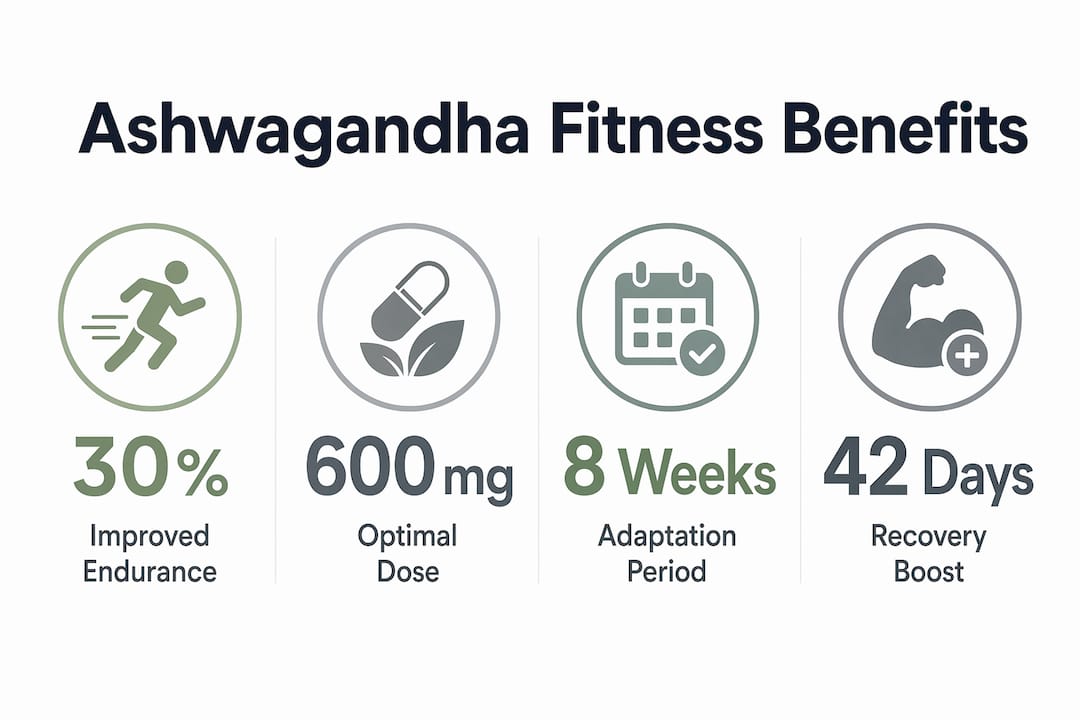
The antioxidant mechanism is particularly relevant for endurance athletes. Ashwagandha activates Nrf2 pathways, which enhance mitochondrial function critical for sustained aerobic output. More efficient mitochondria means better energy production per training session, not just a marginal improvement in how you feel the next morning.
Hormonal modulation is the third pillar. Supplementation at 600 mg per day during resistance training increases testosterone and reduces body fat while lowering exercise-induced muscle damage markers. These hormonal shifts remain within physiological ranges, which is an important distinction. Ashwagandha is not a hormone replacement; it nudges your body towards a more anabolic environment without overriding normal regulation.
The practical result across all three mechanisms is better neuromuscular coordination, faster muscle regeneration, and a reduced perception of effort during hard sessions. For anyone doing high-intensity sport, that combination is genuinely useful.
Key physiological effects at a glance:
- Cortisol reduction, limiting training-induced catabolism
- Nrf2-mediated antioxidant activity, protecting muscle tissue from oxidative damage
- Testosterone modulation within normal physiological ranges
- Improved neuromuscular coordination and reduced perceived exertion
- Lower creatine kinase levels, indicating less muscle fibre damage post-session
Pro Tip: If you are already using a natural pre-workout, check the label for adaptogenic ingredients. Ashwagandha stacks well with electrolytes and does not interfere with caffeine-based formulations.
How does ashwagandha improve endurance and strength?
The clinical evidence for ashwagandha supplementation and exercise performance is now substantial enough to draw clear conclusions. The most striking finding is that benefits appear even at low doses. A randomised, double-blind, placebo-controlled study found that 30 mg per day over 8 weeks improved cardiorespiratory fitness and reduced lactic acid and creatine phosphokinase levels without adverse effects. This matters because it shows the mechanism is not simply dose-dependent; extract quality and standardisation drive the outcome.
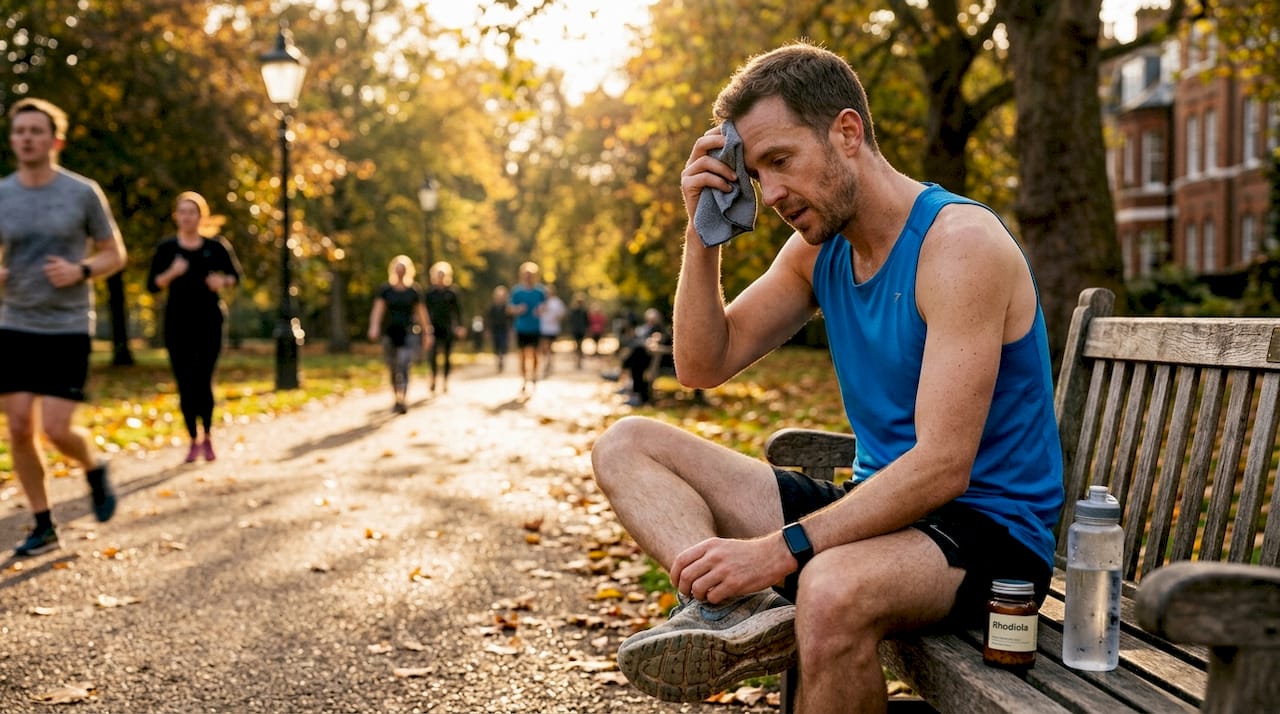
At the more commonly studied dose of 600 mg per day, the evidence for strength athletes is compelling. Multiple 8-week trials using 300 mg twice daily show consistent gains in muscle mass and strength alongside reductions in body fat. These are not marginal changes. They represent the kind of adaptation that would otherwise require several additional weeks of progressive overload.
Sex-specific responses are worth noting. A randomised controlled trial found that 600 mg per day for 42 days improved recovery perception in female athletes and lower-body power in males, while cortisol remained stable in both groups. The fact that cortisol did not drop sharply is actually a positive finding. It means ashwagandha supports recovery without blunting the training stimulus that drives adaptation.
| Outcome | Dose studied | Duration | Population |
|---|---|---|---|
| VO2max and reduced lactic acid | 30 mg/day | 8 weeks | Recreational exercisers |
| Muscle mass, strength, reduced body fat | 600 mg/day | 8 weeks | Resistance-trained adults |
| Recovery perception (female), lower-body power (male) | 600 mg/day | 42 days | Team sport athletes |
| Aerobic capacity and hormonal stability | 600 mg/day | 6 weeks | Male and female athletes |
A controlled trial in team sports athletes found that ashwagandha improved aerobic capacity and recovery perceptions during high-intensity pre-season training. Pre-season is exactly when athletes are most vulnerable to overreaching, making this finding particularly relevant for anyone doing structured blocks of hard training.
Pro Tip: Pair ashwagandha with a consistent sleep schedule during your supplementation period. The herb’s cortisol-modulating effects are amplified when sleep quality is high, since both mechanisms work through the same HPA axis pathway.
What are the best practices for ashwagandha supplementation?
Choosing the right ashwagandha product is where most people go wrong. The total milligrams on the label are almost meaningless without knowing the withanolide content. Supplement quality varies widely, and consumers should prioritise extracts standardised for withanolide content that match the doses studied in clinical trials. A product listing 500 mg of whole root powder is not equivalent to 300 mg of a standardised extract with 5% withanolides.
The natural supplement intake guide for female athletes from Useinterval covers extract standardisation in detail, and it is worth reading before you purchase. The key principle is clinical-dose equivalency: your supplement should deliver the same active compound concentration that produced results in the trials you are basing your decision on.
Practical checklist for selecting an ashwagandha supplement:
- Look for “standardised root extract” on the label, not just “ashwagandha root powder”
- Confirm withanolide content of at least 5%, which matches most trial formulations
- Choose products that specify the part of the plant used. Root extract has the strongest evidence base
- Match the dose to your goal: 30 mg of a high-quality extract for endurance, 600 mg per day for strength and body composition
- Commit to at least 6 to 8 weeks before assessing results. Adaptogenic effects accumulate over time
On duration, the evidence consistently points to 6 to 8 weeks as the minimum window for meaningful adaptation. Taking ashwagandha for two weeks and concluding it does not work is one of the most common mistakes. The advantages of natural supplements for athletes are rarely immediate; they compound with consistent use.
Sex differences in response also affect how you should approach dosing. Female athletes appear to gain more from ashwagandha’s recovery-enhancing properties, while male athletes show stronger power output gains. This does not mean the herb works better for one sex. It means the primary benefit differs, and you should track the metric most relevant to your training.
What safety considerations should fitness enthusiasts know?
Ashwagandha has a well-established safety profile across clinical populations. A systematic review of 23 clinical trials confirmed that standardised root extract is generally well tolerated, with most hormonal changes remaining within normal physiological ranges. Adverse events in trials are typically mild and infrequent, including gastrointestinal discomfort and drowsiness, both of which resolve without intervention.
That said, “generally safe” does not mean risk-free. Rare idiosyncratic reactions have been reported, and pharmacovigilance remains important. Anyone with thyroid conditions, autoimmune disorders, or who is pregnant should consult a healthcare professional before starting supplementation. Ashwagandha modulates immune and hormonal pathways, which means it can interact with conditions and medications affecting those same systems.
Safety considerations to keep in mind:
- Stick to standardised root extracts. Leaf-based products face regulatory scrutiny in several markets, including India, where a 2026 ruling restricted certain leaf formulations
- Do not exceed studied doses without medical guidance. More is not better with adaptogens
- Monitor for gastrointestinal symptoms in the first two weeks, particularly if taken on an empty stomach
- If you are on immunosuppressants, thyroid medication, or sedatives, seek professional advice before use
- Cycle use if taking long-term. Most trials run 6 to 12 weeks; evidence beyond this window is limited
The regulatory point is worth expanding. The legal status of ashwagandha leaf extract has been contested in India, with the Karnataka High Court issuing a stay on an FSSAI advisory restricting its use. This is a reminder that regulatory landscapes affect which plant parts appear in supplements, and product formulations can change. Always verify that the product you buy uses root extract and complies with current regulations in your market.
Key takeaways
Ashwagandha improves fitness performance through cortisol reduction, antioxidant activity, and hormonal modulation, with benefits confirmed at doses as low as 30 mg per day when the extract is properly standardised.
| Point | Details |
|---|---|
| Adaptogenic mechanism | Ashwagandha works via stress pathway modulation, not direct stimulation, making it safe to stack with pre-workout. |
| Dose and extract quality | Withanolide-standardised root extract at 300 to 600 mg per day matches the doses used in clinical trials. |
| Sex-specific benefits | Female athletes gain more in recovery perception; male athletes show stronger lower-body power gains. |
| Minimum supplementation window | Six to eight weeks is required before meaningful adaptation occurs; short trials produce misleading results. |
| Safety profile | Generally well tolerated across 23 clinical trials, but rare reactions occur and professional advice is warranted for specific populations. |
Why I think most athletes are using ashwagandha wrong
Most people I see supplementing with ashwagandha are treating it like a pre-workout. They take it before a session, feel nothing acute, and conclude it is not working. That is a fundamental misunderstanding of how adaptogens function. Ashwagandha does not give you a hit. It shifts your baseline over weeks, and that shift is only visible when you look back at your training log and notice you recovered faster, pushed harder in week six than week two, and slept better throughout.
The second mistake is buying the cheapest product available. I have seen athletes spend serious money on training kit and nutrition, then buy an unverified ashwagandha powder because it was on offer. Extract standardisation is not a marketing detail. It is the difference between a clinically relevant dose and an expensive placebo.
My honest recommendation is to treat ashwagandha as an adjunct to a solid training and nutrition base, not a shortcut. The post-workout recovery process matters more than any single supplement. Ashwagandha works best when sleep, nutrition, and training load are already dialled in. Add it to a well-structured programme and you will notice the difference. Add it to a chaotic routine and you will not.
Individual response also varies more than the trial averages suggest. Some athletes notice significant improvements in sleep quality and recovery within two weeks. Others need the full eight weeks. Consistency is the only variable you fully control.
— Tom
Start your natural supplement stack with Useinterval
If the evidence in this article has convinced you that ashwagandha belongs in your supplement routine, the next step is choosing a product that actually matches the doses and extract standards discussed here. Useinterval’s starter bundle is built around natural, evidence-based ingredients designed for high-intensity athletes. Every formulation is selected to match clinically studied doses, so you are not guessing at equivalency. The bundle pairs well with the kind of structured training blocks where ashwagandha’s adaptogenic effects compound most effectively. If you are serious about performance and recovery, this is where to start.
FAQ
Is ashwagandha good for fitness performance?
Yes. Clinical trials confirm that ashwagandha supplementation improves VO2max, muscle strength, and recovery markers in both endurance and resistance-trained athletes. Benefits appear at doses as low as 30 mg per day when the extract is properly standardised.
How long does ashwagandha take to work for athletes?
Most clinical trials run for 6 to 8 weeks, which is the minimum period required for meaningful adaptation. Taking ashwagandha for less than four weeks is unlikely to produce measurable performance improvements.
What is the best dose of ashwagandha for exercise?
The most studied dose is 600 mg per day of standardised root extract, split into two 300 mg doses. Low-dose protocols using 30 mg per day of a high-potency extract have also shown endurance benefits, confirming that extract quality matters more than total milligrams.
Are there specific ashwagandha benefits for women in fitness?
Female athletes show stronger improvements in recovery perception compared to males, based on a 42-day randomised controlled trial. This makes ashwagandha particularly relevant for women managing high training loads or competing in team sports with congested schedules.
Can ashwagandha be taken alongside pre-workout supplements?
Yes. Ashwagandha does not contain stimulants and does not interfere with caffeine-based pre-workout formulations. Its adaptogenic mechanism operates through stress pathway modulation rather than the central nervous system stimulation that pre-workouts target.