


Prepare for intense training: guide for women 30-50
TL;DR:
- Women over 40 should assess readiness, including medical clearance, sleep, and movement quality, before intense training.
- Effective routines combine progressive overload with HIIT, strength, mobility work, and scheduled deloads.
- Nutrition with higher protein, complex carbs, and targeted supplements like creatine and vitamin D supports recovery and results.
Juggling work, family, and a serious training schedule in your 30s, 40s, or early 50s is no small feat. You push hard, but recovery takes longer, progress stalls, and energy dips at the worst moments. What most guides miss is that female athletes in this age group face a unique combination of hormonal shifts, higher protein demands, and a narrower margin for error when it comes to overtraining. This guide cuts through the noise to give you evidence-based steps across training, nutrition, and natural supplementation, so you can build real, sustainable strength without burning out.
Table of Contents
- Assessing your readiness for intense training
- Building an effective training routine
- Optimising nutrition for energy and recovery
- Natural supplements for performance and recovery
- A smarter path to sustainable gains
- Level up your results with Interval
- Frequently asked questions
Key Takeaways
| Point | Details |
|---|---|
| Start with solid foundation | Assess your readiness and health before beginning high-intensity training for safe progress. |
| Balance routine and recovery | Build a programme combining HIIT, strength, mobility, and rest to prevent injury and maximise gains. |
| Prioritise nutrition timing | Use appropriate carbs and protein pre- and post-training, with higher protein especially after menopause. |
| Choose natural supplements | Supplement with creatine, omega-3, vitamin D, and collagen for energy, recovery, and joint support. |
| Adopt food-first strategies | Let nutrition be your base, with supplements filling gaps to keep results sustainable. |
Assessing your readiness for intense training
Before you commit to a high-intensity programme, a clear-eyed assessment of where you are right now is essential. Too many women jump straight into hard training cycles without addressing the foundations, and that is where injuries and plateaus come from.
Start with these prerequisites:
- Medical clearance: A basic health screen is non-negotiable, especially if you are perimenopausal or managing any chronic condition. Get blood work done, including vitamin D, iron, and thyroid function.
- Baseline fitness: Can you sustain 20 minutes of moderate cardio without excessive breathlessness? If not, build aerobic base first.
- Sleep quality: You need at least seven hours of consistent sleep for training adaptations to actually stick.
- Stress levels: Chronically elevated cortisol from life stress competes with your training adaptations. Honest self-assessment matters here.
- Movement quality: Address any mobility restrictions or old injuries before loading them under intensity.
| Prerequisite | Why it matters | Optional enhancement |
|---|---|---|
| Medical clearance | Identifies contraindications | Hormone panel for 40+ |
| Aerobic base | Supports HIIT recovery | VO2 max testing |
| Sleep quality | Drives muscle repair | Sleep tracking device |
| Movement screening | Prevents injury | Physiotherapist assessment |
| Nutrition baseline | Fuels adaptation | Dietitian consultation |
Women 30-50 benefit most from progressive overload combined with two to three HIIT sessions weekly and balanced programming to prevent injury. Understanding HIIT safety for women is a smart first step before increasing intensity.
Pro Tip: If you are new to intense training, start with just two HIIT sessions per week and monitor how your body responds across a full two-week block before adding more. Protecting against overtraining from day one makes the difference between long-term progress and repeated setbacks. Even HIIT guidelines over 50 recommend starting conservatively.
Building an effective training routine
Once readiness is established, the next step is creating a solid workout plan tailored for high intensity. Structure matters more than motivation when life gets busy.
Here is how to build your weekly programme step by step:
- Establish your training days: Choose four to five days and identify your highest-energy windows for HIIT slots.
- Map session types: Alternate HIIT, strength, and mobility work across the week to allow targeted recovery.
- Apply progressive overload: Increase load, reps, or density by roughly five percent every one to two weeks rather than making large jumps.
- Schedule a deload: Every 10-12 weeks, deload to prevent injury and boost adaptation. Reduce volume by thirty to forty percent for one full week.
- Reassess and adjust: After each training block, review performance metrics and adjust based on recovery quality.
| Session type | Frequency per week | Key goal |
|---|---|---|
| HIIT | 2-3 sessions | Cardiovascular capacity, fat metabolism |
| Strength training | 2-3 sessions | Muscle retention, bone density |
| Mobility/yoga | 1-2 sessions | Injury prevention, flexibility |
| Low-intensity cardio | 1 session | Active recovery, aerobic base |
| Rest | 1-2 days | Full systemic recovery |
Explore high intensity routines designed specifically for women to find formats that suit your schedule. Research on effective HIIT for 40+ consistently shows that combining strength and intervals produces superior results for fat loss and lean mass retention compared to either approach alone.
Important: Skipping warm-ups and pushing through fatigue without planned deloads is the fastest route to overtraining syndrome. Your overtraining prevention strategy should be built into the plan from the start, not treated as an afterthought.
Pro Tip: Always spend eight to ten minutes warming up with dynamic movements before HIIT. It raises core temperature, primes your nervous system, and meaningfully reduces injury risk.
Optimising nutrition for energy and recovery
Training alone will not deliver results without nutrition working hand in hand. For women over 40, the nutritional requirements shift considerably, and ignoring this is one of the most common reasons performance stalls.
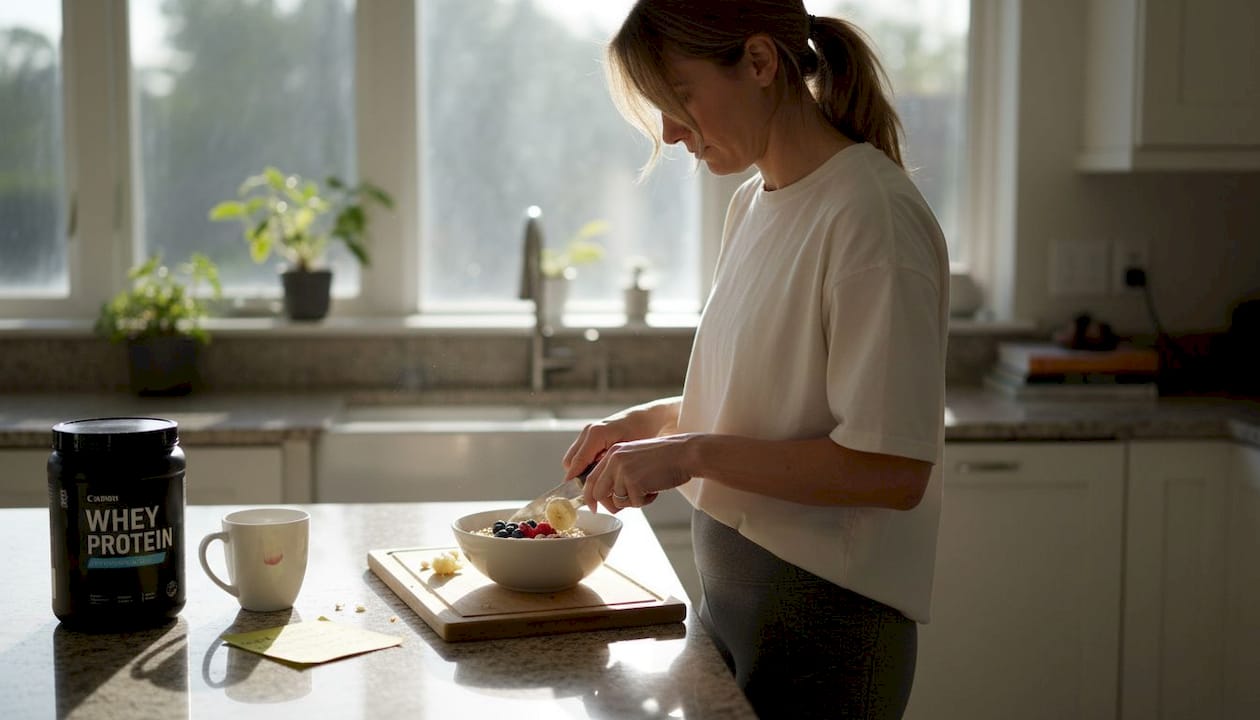
Pre-workout: Aim to eat one to two hours before training. A combination of complex carbohydrates and moderate protein works best. Think oats with Greek yoghurt, or wholegrain toast with eggs. This gives your muscles accessible fuel without causing digestive discomfort mid-session.
Post-workout: This is where recovery is made or lost. Perimenopausal women need higher protein in the range of 1.4 to 2.2g per kilogram of bodyweight. After strength sessions, target 40g of protein. After HIIT, pair that 40g protein with 40g of carbohydrates to replenish glycogen effectively.
Practical food options to prioritise:
- Protein sources: Salmon, chicken, Greek yoghurt, cottage cheese, eggs, or a quality whey or plant-based protein supplement
- Complex carbohydrates: Sweet potato, brown rice, oats, quinoa
- Anti-inflammatory foods: Berries, leafy greens, turmeric, and oily fish
- Hydration: Electrolyte-rich fluids before, during, and after intense sessions
Research on fat-free mass improvements confirms that multi-ingredient nutritional support combined with training consistently outperforms training alone for women in this age group. Your workout fuel guide can help you map exact timings and portions to your specific sessions. Understanding post-workout nutrition in detail is equally valuable.
For women looking to fine-tune muscle repair, essential amino acids play a particularly important role during peri and post-menopause when muscle protein synthesis naturally declines.
Pro Tip: Avoid fasted HIIT, particularly if you are perimenopausal. Training on empty significantly increases cortisol response and can actually hinder rather than help fat loss at this life stage.
Natural supplements for performance and recovery
Nutrition covers the basics. Next, let’s supplement smartly to plug gaps and supercharge your results. The goal is not a cabinet full of products but a small, targeted stack with genuine evidence behind it.
Evidence-backed supplements for female athletes:
- Creatine monohydrate: Supports strength, power output, and cognitive function. Creatine stores are 70-80% lower in women compared to men, making supplementation especially impactful.
- Collagen peptides: Supports connective tissue, joints, and skin integrity, which all become increasingly important post-40.
- Omega-3 fatty acids: Reduces systemic inflammation and supports cardiovascular health during intense training cycles.
- Vitamin D: Crucial for bone health, immune function, and muscle performance, especially in the UK where sunlight exposure is limited much of the year.
How to dose and time them effectively:
- Creatine: Take 5g daily, at any consistent time. No loading phase is required for women.
- Collagen peptides: 10-15g with vitamin C around thirty minutes before training supports collagen synthesis in joints.
- Omega-3: 1.6g daily with a meal containing fat for optimal absorption.
- Vitamin D: 2000 to 5000 IU daily, ideally with your largest meal.
A food-first supplement strategy is always the right starting point. Supplements fill genuine deficiencies and enhance what whole foods already provide, not replace them. One important caveat: while antioxidants support recovery, taking them in excessive doses around training may actually blunt the adaptive signals that make training productive.
Pro Tip: Monitor your vitamin D and protein intake quarterly, particularly during perimenopause. These two nutrients have the highest deficiency rates in active women over 40 and the most direct impact on training outcomes.
For a full breakdown of what to take and when, the intake guide for supplements and natural sports nutrition resources are well worth exploring.
A smarter path to sustainable gains
Here is something the fitness industry rarely admits: more complexity rarely produces better results. The women we see making consistent, long-term progress are not doing the most extreme programmes or taking the longest list of supplements. They are doing the fundamentals exceptionally well, consistently.
Fasted training, five-day HIIT splits, and aggressive calorie deficits might feel productive in the short term. But for women aged 30 to 50, they often accelerate hormonal imbalance, suppress recovery, and lead to the very burnout you were trying to avoid. Food-first nutrition combined with progressive overload and tailored supplementation consistently delivers the best outcomes for women in this age bracket.
Sustainability beats intensity every single time. A routine you can execute for two years will always outperform one you burn out of in six weeks.
Trust repeatable routines over exciting new protocols. If a session fits your life, fuels your recovery, and makes you feel strong the next day, that is your signal it is working. Look at your pre-workout routines for women as an anchor, not an afterthought. Build the habit before chasing the outcome.
Pro Tip: Review your programme every four weeks with a simple question: am I recovering well, sleeping well, and feeling stronger? If yes, stay the course. If no, reduce volume before you increase it.
Level up your results with Interval
If you are ready to put these strategies into action, here is where Interval fits in.
At Interval, we formulate natural pre-workouts and electrolytes specifically for athletes training at high intensity. No artificial fillers, no unnecessary complexity. Just clean, effective ingredients that support the kind of training you have just read about. Our Interval Starter Bundle is the ideal starting point for women who want to fuel smarter without overhauling everything at once. It pairs pre-workout energy support with electrolyte replenishment, covering two of the most common gaps female athletes face. Give your training the natural foundation it deserves.
Frequently asked questions
Should I do fasted HIIT as a woman over 40?
No. Fasted HIIT inhibits fat burning in women and can increase cortisol output, which is counterproductive for hormonal balance and recovery in this age group.
How much creatine should I take for training benefits?
A daily dose of 5g is recommended, as creatine stores are lower in women by 70-80% compared to men, making even modest daily supplementation highly effective.
Do menopausal women need extra protein after workouts?
Yes. Post-workout, aim for 40g protein after strength sessions, or 40g protein paired with 40g carbohydrates after HIIT, to maximise muscle protein synthesis.
What are natural supplements I should prioritise?
Creatine, collagen peptides, omega-3, and vitamin D are the four most evidence-backed options for energy, joint health, and recovery in female athletes over 40.
How often should I deload when training intensively?
Deloading every 10-12 weeks is recommended to prevent injury, allow full recovery, and prime your body for the next training block.
Recommended
- Step-by-step workout fuel guide for women: boost performance – Interval
- Effective Pre-Workout Routine for Women: Boost Your Performance – Interval
- Optimise nutrition for HIIT: female guide to peak performance – Interval
- Pre-Workout Checklist for Women: Peak Performance Guide – Interval
- Step-by-step fitness program design: boost results | TrainingPro