


Carb Loading: Enhancing Endurance for Female Athletes
Every dedicated Hyrox competitor knows that fatigue can sneak up just when you need power and focus most. For female athletes in the United Kingdom preparing for high-intensity endurance events, understanding carb loading is far more than last-minute pasta dinners. Getting your nutrition right means learning to balance complex carbohydrates, time intake properly, and sort fact from myth to maximise your glycogen stores and sustain performance through every challenging stage.
Table of Contents
- Carb Loading Defined And Common Myths
- How Carb Loading Maximises Performance
- Methods And Timing: Female Athlete Focus
- Food Choices And Hydration Strategies
- Risks, Misconceptions, And Pitfalls To Avoid
Key Takeaways
| Point | Details |
|---|---|
| Carb Loading Strategy | Effective carb loading involves gradually increasing carbohydrate intake over several days to optimise muscle glycogen stores for endurance events. |
| Nutritional Misconceptions | Female athletes must avoid common myths about carbohydrates, such as believing they are inherently fattening or that one large meal suffices for loading. |
| Individualised Approach | A personalised carbohydrate loading plan is essential, taking into account individual metabolic responses and digestive tolerances. |
| Importance of Hydration | Proper hydration, including electrolyte balance, is crucial for maximising performance during high-intensity events like Hyrox competitions. |
Carb Loading Defined and Common Myths
Carb loading represents a strategic nutritional approach designed to maximise muscle glycogen stores for female athletes preparing for endurance events. Glycogen storage strategies are critically important for Hyrox athletes seeking peak performance during high-intensity competitions.
Understanding carb loading goes beyond simply consuming massive quantities of pasta the night before an event. The process involves systematically increasing carbohydrate intake over several days to optimise energy reserves. Key aspects include:
- Targeting events lasting longer than 90 minutes
- Gradually increasing carbohydrate consumption
- Balancing macronutrient intake to prevent digestive discomfort
- Choosing high-quality complex carbohydrates
Common myths surrounding carbohydrate consumption can significantly impact an athlete’s nutritional strategy. Carbohydrate misconceptions often lead female athletes to make suboptimal dietary choices. Let’s debunk some prevalent misunderstandings:
- Myth: Carbohydrates are inherently fattening
- Reality: Carbs provide essential energy and nutrients when consumed strategically
- Myth: One massive carbohydrate meal before an event is sufficient
- Reality: Gradual glycogen loading over days produces superior results
For Hyrox athletes, carb loading requires precision. The goal is not just consuming more carbohydrates, but consuming the right types of carbohydrates at strategic intervals. High-fibre starchy carbohydrates from sources like whole grains, sweet potatoes, and quinoa offer sustained energy release compared to simple sugars.
Pro tip: Begin your carbohydrate loading protocol 3-4 days before your Hyrox competition, incrementally increasing carbohydrate intake while reducing training intensity to maximise glycogen storage and prevent fatigue.
How Carb Loading Maximises Performance
Carbohydrate intake plays a pivotal role in endurance performance for female athletes, with strategic carbohydrate fuelling techniques becoming increasingly crucial for Hyrox competitions. Understanding how muscle glycogen stores impact athletic performance can transform an athlete’s approach to nutrition and energy management.
At intensities above 60% VO2 max, carbohydrates become the primary fuel source, making glycogen storage critically important. Key performance maximisation strategies include:
- Targeting muscle glycogen saturation
- Consuming complex carbohydrates strategically
- Timing nutrient intake around training and competition
- Preventing premature fatigue through consistent energy supply
The physiological benefits of proper carb loading extend beyond simple energy provision. Glycogen supercompensation occurs when athletes systematically increase carbohydrate intake while reducing training volume, allowing muscles to store substantially more glycogen than typical baseline levels. This process directly translates to enhanced endurance and delayed onset of fatigue during high-intensity events.
Effective carb loading can increase muscle glycogen stores by up to 90%, providing a significant performance advantage for endurance athletes.
For female Hyrox athletes, carbohydrate loading requires a nuanced approach that considers individual metabolic responses and gastrointestinal tolerance. Personalized strategies that account for body composition, training intensity, and metabolic efficiency can yield superior results compared to generic nutritional protocols.

Pro tip: Conduct a personalised carbohydrate loading trial during training weeks, monitoring energy levels, digestive comfort, and performance metrics to develop your optimal nutrition strategy.
Methods and Timing: Female Athlete Focus
Successful carbohydrate loading for female Hyrox athletes requires precision and strategic endurance nutrition planning. Understanding the nuanced approach to nutrient timing and individual metabolic responses is crucial for optimising performance and preventing gastrointestinal complications.
The carbohydrate loading protocol for female athletes typically spans three to four days before competition, with specific considerations unique to female physiology:
- Gradual carbohydrate intake increase
- Reduced training volume during loading phase
- Monitoring individual digestive tolerance
- Balancing macronutrient ratios
- Hydration management alongside carbohydrate intake
Metabolic adaptation plays a critical role in carbohydrate loading effectiveness. Female athletes often experience different hormonal fluctuations that can impact glycogen storage and energy metabolism, making personalised strategies essential. This requires careful tracking of individual responses and potential adjustments based on menstrual cycle phases and overall hormonal balance.
Female athletes require a more nuanced carbohydrate loading approach that accounts for individual metabolic variations and hormonal influences.
Gastrointestinal considerations are particularly important for female endurance athletes. Gut training techniques can help minimise exercise-induced digestive discomfort, allowing for more efficient nutrient absorption and reduced mid-competition digestive stress. This involves gradually introducing higher carbohydrate loads during training sessions to build digestive resilience.
Pro tip: Create a personalised carbohydrate loading journal to track your body’s specific responses, noting energy levels, digestive comfort, and performance metrics across different nutritional strategies.
Food Choices and Hydration Strategies
Female Hyrox athletes require a strategic approach to nutrition and hydration planning that goes beyond simple calorie consumption. Understanding how to select the right foods and maintain optimal hydration can dramatically improve endurance performance and prevent mid-competition energy crashes.
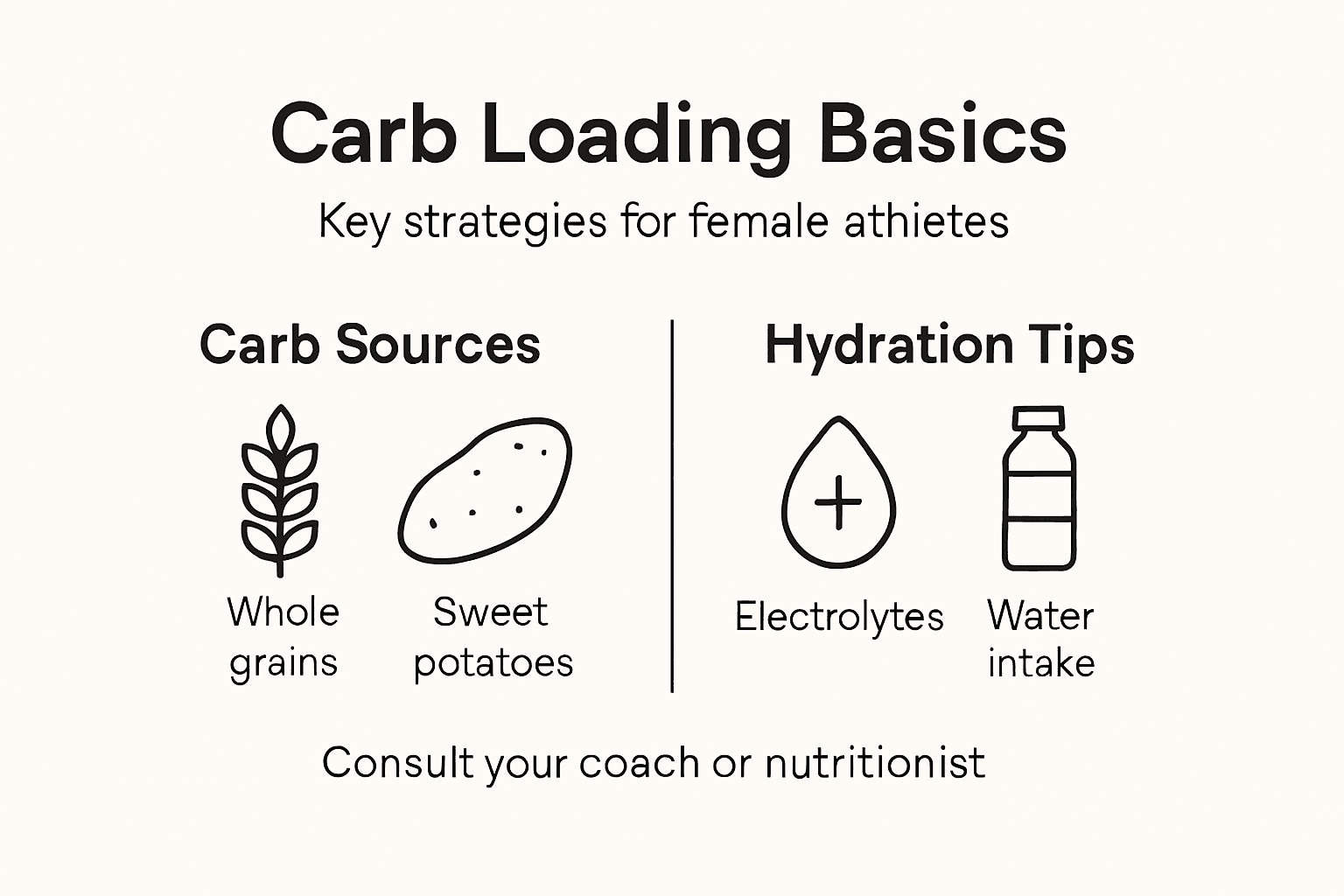
Optimal carbohydrate sources for female athletes include:
Here’s a comparison of carbohydrate sources often used for female Hyrox athletes:
| Carbohydrate Source | Energy Release Type | Digestive Tolerance | Typical Preparation |
|---|---|---|---|
| Wholegrain pasta | Sustained | Generally easy | Boiled |
| Sweet potatoes | Steady and prolonged | High | Roasted or mashed |
| Quinoa | Moderate and gradual | Very high | Steamed |
| Oats | Slow and lasting | Excellent | Porridge |
| Dried fruits | Quick | Variable | Raw or mixed |
- Wholegrain breads and pasta
- Sweet potatoes and root vegetables
- Oats and quinoa
- Fresh and dried fruits
- Low-glycemic complex carbohydrates
Glycogen replenishment requires more than just consuming carbohydrates; it demands strategic selection of nutrient-dense foods that provide sustained energy. Female athletes metabolise nutrients differently compared to male counterparts, necessitating a tailored nutritional approach that considers hormonal variations and individual digestive tolerances.
Proper hydration is as crucial as carbohydrate intake, with even 2% dehydration potentially reducing athletic performance by up to 20%.
Hydration strategies extend beyond water consumption. Electrolyte balance plays a critical role in maintaining performance, particularly during high-intensity Hyrox competitions. Incorporating natural electrolyte sources like coconut water, bananas, and leafy greens can support fluid retention and muscle function.
Below is an overview of hydration and electrolyte strategies for endurance athletes:
| Strategy | Key Benefit | Common Sources | Timing Advice |
|---|---|---|---|
| Water intake | Maintains fluid balance | Bottled or filtered water | Throughout the day |
| Electrolyte drinks | Prevents muscle cramps | Sports drinks, coconut water | Pre- and post-training |
| Natural electrolytes | Enhances absorption | Bananas, leafy greens | Included in meals |
Pro tip: Experiment with different carbohydrate and hydration combinations during training to develop a personalised nutrition strategy that works specifically for your body’s unique metabolic needs.
Risks, Misconceptions, and Pitfalls to Avoid
Carbohydrate loading for female Hyrox athletes is fraught with potential nutritional misconceptions that can significantly undermine performance and health. Understanding these risks is crucial for developing an effective and safe nutrition strategy.
Common misconceptions that female athletes must avoid include:
- Believing all carbohydrates are inherently fattening
- Assuming one massive carbohydrate meal equals proper loading
- Ignoring individual metabolic variations
- Neglecting balanced macronutrient intake
- Overlooking hydration’s critical role in carbohydrate metabolism
Glycogen loading requires precision and careful planning. Many athletes mistakenly believe that consuming large quantities of simple carbohydrates the night before an event will optimise performance. In reality, this approach can lead to digestive discomfort, bloating, and potential energy crashes during competition.
Poorly executed carbohydrate loading can reduce performance more dramatically than inadequate preparation.
Gastrointestinal risks are particularly pronounced for female athletes. Hormonal fluctuations and individual digestive sensitivities mean that blanket nutritional strategies rarely work universally. Some athletes may experience significant bloating, reduced nutrient absorption, or energy fluctuations when implementing generic carbohydrate loading protocols.
Pro tip: Consult a sports nutritionist to develop a personalised carbohydrate loading plan that accounts for your unique physiological responses and Hyrox competition demands.
Boost Your Endurance with Targeted Nutrition and Natural Supplements
Carbohydrate loading is essential for female athletes aiming to maximise glycogen stores and delay fatigue during high-intensity Hyrox events. Yet, balancing precise carbohydrate intake with hydration and digestive comfort remains a challenge. If you want to power through your training with sustained energy and avoid common pitfalls like energy crashes or digestive discomfort a tailored supplementation approach is key.
Discover how natural pre-workout formulas enriched with carefully selected ingredients can support your personalised carbohydrate loading strategy. Our supplements not only boost energy but also help maintain electrolyte balance to enhance hydration — crucial for optimal performance and recovery. Don’t let improper fuelling hold you back. Act now to experience smarter endurance nutrition designed specifically for athletes who demand more. Explore our range today at UseInterval and elevate your performance with science-backed support.
Frequently Asked Questions
What is carb loading and why is it important for female athletes?
Carb loading is a nutritional strategy used to maximise muscle glycogen stores, particularly important for female athletes participating in endurance events. It involves gradually increasing carbohydrate intake over several days to optimise energy reserves, enhancing performance during competitions.
How should female athletes approach carb loading before a competition?
Female athletes should begin their carbohydrate loading protocol 3-4 days before competition, gradually increasing carbohydrate intake while reducing training intensity. This helps maximise glycogen storage without causing digestive discomfort.
What types of carbohydrates are best for loading?
High-quality complex carbohydrates are ideal for carb loading. Sources include whole grains, sweet potatoes, quinoa, and oats. These options provide sustained energy and prevent energy crashes during competition compared to simple sugars.
Can carb loading lead to digestive issues for female athletes?
Yes, carb loading can cause digestive issues, particularly if not personalised. It’s important to monitor individual digestive tolerance and consider hydration management to minimise discomfort and ensure optimal performance.
Recommended
- 7 Key Pre-Workout Nutrients for UK Female Athletes – Interval
- Sports Nutrition: Enhancing High-Intensity Results – Interval
- Role of Carbohydrates in Pre‑Workout: Boosting UK High‑Intensity Perfo – Interval
- Effective Pre-Workout Routine for Women: Boost Your Performance – Interval
- How to Build Climbing Endurance: A Step-by-Step Guide - Gripnatic