


Why controlling sugar in pre-workout boosts performance
TL;DR:
- Consuming high-sugar pre-workout foods causes blood sugar spikes and energy crashes.
- Women aged 30 to 50 have increased sensitivity due to hormonal fluctuations affecting glucose regulation.
- Pair low-GI carbs with protein for steady energy and improved athletic performance.
You reach for a cereal bar before training, feel a rush of energy, then hit a wall twenty minutes into your session. Sound familiar? For many women aged 30 to 50 doing Hyrox and high-intensity training, this cycle repeats itself week after week. The problem is not effort or fitness level. It is the sugar. Specifically, it is the misguided belief that a quick sugar hit equals sustained energy. What actually happens is a sharp glucose spike followed by an equally sharp crash, right when your body needs to perform. This article breaks down why sugar management matters, how your body responds differently to glucose as a woman in this age group, and exactly what to eat instead.
Table of Contents
- Understanding sugar metabolism in women and high-intensity athletes
- The risks of high sugar pre-workout meals
- How to optimise pre-workout energy: Low-sugar, high-performance options
- Practical strategies for sustained energy and performance
- A new perspective: Why ‘natural energy’ is misunderstood in women’s fitness
- How Interval can support your pre-workout nutrition
- Frequently asked questions
Key Takeaways
| Point | Details |
|---|---|
| Blood sugar balance | Stable pre-workout blood sugar supports consistent energy and peak performance. |
| Low-GI foods benefit | Choosing oats, banana, and protein-rich snacks prevents mid-session crashes. |
| Simple swaps work | Replacing high-sugar foods with balanced options rapidly increases workout stamina. |
| Real-world strategies | Customising your routine and supplement choices minimises sugar spikes effortlessly. |
Understanding sugar metabolism in women and high-intensity athletes
With plenty of confusion around sugar’s effects, let us clarify what actually happens when you eat sugar before training.
When you consume sugar, your body absorbs it rapidly into the bloodstream, triggering a spike in blood glucose. Insulin rushes in to manage that spike, and the result is a fast but short-lived energy surge. For a Hyrox athlete who needs sustained output across multiple stations, that surge is almost useless. You peak too early and fade when it counts.
Women aged 30 to 50 face an added layer of complexity. Hormonal shifts during perimenopause and the mid-life phase alter how efficiently the body regulates glucose. Oestrogen plays a role in insulin sensitivity, so as levels fluctuate, so does your body’s ability to maintain stable blood sugar. This means that the same sugary snack that barely affects a 25-year-old male athlete can send a 42-year-old female athlete into a performance-sapping dip within the hour.
“Low-GI carbs like oats and banana stabilise blood sugar levels better than high-sugar options, particularly for women aged 30 to 50, especially when paired with protein for a steadier energy release.”
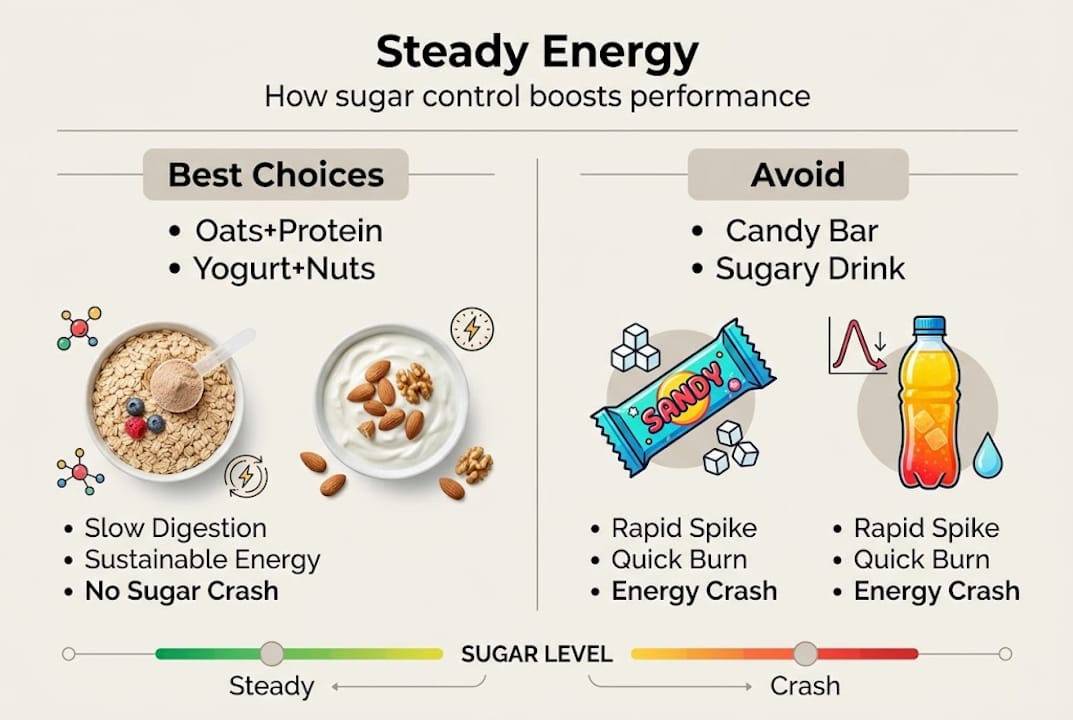
The glycaemic index (GI) is a useful tool here. It ranks carbohydrates by how quickly they raise blood glucose. High-GI foods like white bread, sports drinks, and sugary snack bars cause rapid spikes. Low-GI foods like oats, lentils, and bananas release glucose more gradually, giving your muscles a steadier fuel supply throughout your session.
Protein plays a critical supporting role. When you pair a low-GI carbohydrate with a protein source, you slow digestion further and blunt any glucose spike. This is not just theory. Understanding the role of carbohydrates in pre-workout nutrition shows how the combination of carb type and protein pairing directly influences energy output and endurance.
| Food type | GI rating | Energy effect |
|---|---|---|
| White bread / sports drink | High (70+) | Fast spike, rapid crash |
| Banana with Greek yoghurt | Medium-Low | Steady release, sustained output |
| Oats with nut butter | Low (55 or below) | Slow release, prolonged energy |
| Energy gel / sugary bar | High (70+) | Quick burst, mid-session dip |
For Hyrox athletes and active women in this age group, the goal is not to avoid carbohydrates entirely. It is to choose the right ones and pair them intelligently.
The risks of high sugar pre-workout meals
Once you know how your body handles sugar, it is easier to see why the wrong choices can backfire.
The short-term effects of a high-sugar pre-workout meal are well documented. You get a rapid energy spike, your body floods with insulin, and then blood glucose drops sharply. This is called reactive hypoglycaemia, and it is one of the main reasons athletes feel sluggish, foggy, or weak mid-session. High sugar pre-workout meals can trigger exactly this kind of blood sugar crash, undermining the very performance you were trying to support.
Here are the most common short-term effects to watch out for:
- Rapid energy spike followed by a crash within 30 to 45 minutes of eating
- Difficulty sustaining intensity across longer sessions or multi-station events
- Mood swings and irritability linked to blood glucose instability
- Brain fog that affects coordination and decision-making during training
- Nausea or bloating from high-sugar foods consumed too close to exercise
Long-term, the picture is equally concerning. Repeated blood sugar spikes impair the body’s ability to efficiently burn fat for fuel, a process known as fat oxidation. For women in the 30 to 50 age range who are also managing body composition, this matters enormously. Consistently high-sugar pre-workout habits can also blunt muscle protein synthesis, meaning your hard work in the gym delivers less return.

Pro Tip: Keep a simple training diary for two weeks. Note what you ate before each session and how your energy felt at the 20, 40, and 60-minute marks. Patterns will emerge quickly, and you will spot your personal sugar tolerance threshold without needing a lab.
Most athletes underestimate how much a ‘quick sugar fix’ costs them. A handful of jelly sweets or a sugary protein bar feels harmless, but the downstream effect on your session quality is real. Building a smarter pre-workout routine for women starts with recognising these patterns and replacing reactive choices with intentional ones. A solid step-by-step workout fuel guide can help you make that shift systematically rather than guessing each time.
How to optimise pre-workout energy: Low-sugar, high-performance options
To avoid those risks, choosing your pre-workout fuel carefully makes all the difference.
The principle is straightforward. Low-GI carbs paired with protein keep blood glucose stable and prevent the mid-session crashes that derail performance. The practical application just takes a bit of planning.
| High-sugar option | Balanced alternative | Why it works better |
|---|---|---|
| Sugary cereal bar | Oats with nut butter | Low GI, protein slows absorption |
| Sports drink | Banana with Greek yoghurt | Natural sugars, protein buffer |
| White toast with jam | Wholegrain toast with eggs | Fibre and protein stabilise glucose |
| Energy gel pre-session | Rice cakes with almond butter | Slower release, no spike |
Here is a simple process for building your ideal low-sugar pre-workout meal:
- Choose a low-GI carbohydrate as your base. Oats, wholegrain bread, sweet potato, or a ripe banana all work well.
- Add a protein source to slow digestion and support muscle readiness. Greek yoghurt, eggs, cottage cheese, or a clean protein supplement are solid choices.
- Include a small amount of healthy fat if your session is more than 90 minutes away. Nut butter or avocado extends the energy window further.
- Time your meal correctly. Aim to eat 60 to 90 minutes before training. Eating too close to your session can cause digestive discomfort, especially during high-intensity work.
- Hydrate alongside your meal. Dehydration amplifies blood sugar instability, so start your session already well hydrated.
Pro Tip: Try oats with a tablespoon of almond butter and half a banana three mornings in a row before training. Compare that to your usual pre-workout snack and notice the difference in energy consistency. Most athletes report a marked improvement in sustained output within the first week.
For a deeper look at what your body actually needs before intense sessions, the guide to key pre-workout nutrients for female athletes is worth reading alongside this. If you are also exploring low-carb pre-workout approaches, understanding how to balance macronutrients becomes even more important.
Practical strategies for sustained energy and performance
Armed with the science and example meals, here is how to put it all into practice.
The biggest barrier most athletes face is not knowledge. It is logistics. Early morning sessions, lunchtime training slots, and race days all require different fuelling approaches. Here is how to adapt:
- Early morning sessions (before 7am): Keep it light. A small banana with a tablespoon of nut butter or a few rice cakes with cottage cheese gives enough fuel without overloading digestion. Avoid skipping food entirely as training fasted without preparation can amplify glucose instability.
- Lunchtime training: Eat a balanced breakfast with protein, low-GI carbs, and some fat around 7 to 8am. Have a small snack like Greek yoghurt or a boiled egg about 45 minutes before your session.
- Race days and Hyrox events: Stick to what you have practised in training. Race day is not the time to experiment. Prioritise familiar low-GI meals the evening before and a light, protein-paired breakfast on the morning.
- Supplement smartly: Natural pre-workout supplements that avoid artificial sweeteners and excessive sugars can complement your meal strategy without triggering spikes. Look for formulations with clean ingredients and no hidden glucose syrups.
“Pairing protein with low-GI carbs provides the steady, sustained energy output that high-intensity athletes need, without the blood sugar rollercoaster that undermines performance.”
Using a pre-workout checklist for Hyrox athletes can help you lock in these habits before competition season. Building consistent pre-workout rituals for women around stable nutrition removes the guesswork and lets you focus on the session itself.
A new perspective: Why ‘natural energy’ is misunderstood in women’s fitness
Here is something the fitness industry rarely admits: the obsession with ‘natural energy boosts’ has led many women straight into the sugar trap. Dates, honey, fruit juice, coconut sugar. They are marketed as wholesome, but for women aged 30 to 50 with heightened glucose sensitivity, they can trigger the same crash as a bag of sweets.
The real misunderstanding is that natural automatically means better for performance. It does not. What matters is the rate at which a food raises blood glucose and whether it is paired with something that slows that process. A medjool date on its own is still a high-GI food. A date with a handful of almonds is a different story.
Consistency and simplicity outperform every trendy pre-workout snack on the market. The athletes who perform most reliably are not the ones chasing the latest superfood. They are the ones who have found three or four meals that work for their body and repeat them with discipline. Exploring pre-workout nootropics for focus alongside stable nutrition can sharpen mental output without adding sugar to the equation. Trust the routine. Trust the evidence. Ignore the fads.
How Interval can support your pre-workout nutrition
If you are ready to put these strategies into action, here is how Interval can help.
At Interval, we formulate our pre-workout and electrolyte products specifically for athletes doing high-intensity work. No artificial sweeteners. No hidden sugars. Just clean, natural ingredients that complement the low-GI, protein-paired approach this article outlines.
If you are starting out or want to simplify your supplement stack, the Interval Starter Bundle is designed to give you everything you need without the guesswork. For a broader look at how our products fit into a complete nutrition strategy, visit Interval’s full range and find the solution that matches your training goals. Steady energy, clean fuel, real performance.
Frequently asked questions
What are the best low-sugar pre-workout foods for women?
Oats, bananas, and Greek yoghurt are ideal choices because they offer steady energy release and avoid sugar crashes, particularly when combined with a protein source.
Why do women 30 to 50 experience more blood sugar sensitivity?
Hormonal changes in this age group, particularly fluctuating oestrogen, heighten blood sugar swings and make glucose management more challenging than in younger women or men.
Is fruit sugar better than processed sugar before a workout?
Whole fruit sugar is absorbed more slowly and contains fibre, making it a better option, but it still works best when paired with protein rather than eaten alone before training.
Can I still use natural supplements before a workout and avoid sugar spikes?
Yes. Many natural supplements are specifically formulated without added sugars or artificial sweeteners, making them an effective complement to a balanced, low-GI pre-workout meal.