


Understand natural flavours for peak Hyrox performance 2026
You’ve seen ‘natural flavours’ listed on your pre-workout tub and assumed it meant purely natural ingredients. Actually, UK law allows up to 5% non-natural substances in natural flavour blends. This guide clarifies what natural flavours truly mean under regulation, how they’re made, and why understanding them helps you choose safer, more effective supplements for your Hyrox training.
Table of Contents
- Introduction To Natural Flavours In Sports Supplements
- Regulatory Definitions And Labelling Of Natural Flavours In The UK
- Composition And Production Methods Of Natural Flavours
- Common Misconceptions About Natural Flavours
- Safety And Regulatory Framework For Natural Flavours In Supplements
- Practical Implications For Hyrox Athletes Choosing Natural Flavours
- Summary And Recommendations
- Enhance Your Performance With Interval’s Natural Supplements
Key takeaways
| Point | Details |
|---|---|
| Natural flavours must be 95% naturally derived | UK and EU law strictly defines natural flavours as predominantly sourced from plant or animal materials. |
| All natural flavours undergo mandatory safety assessments | The FSA authorises every flavouring after comprehensive toxicological review. |
| Small non-natural additions are legal | Up to 5% synthetic substances can adjust flavour profiles without losing natural classification. |
| Label reading prevents misleading claims | Understanding regulatory terms helps athletes distinguish truly natural products from vague marketing. |
| Natural flavours support performance goals | Selecting verified natural sources reduces digestive discomfort and aligns with clean supplement choices. |
Introduction to natural flavours in sports supplements
Natural flavours are defined strictly by UK and EU regulation to originate from natural animal or vegetable sources. They cannot include artificial or synthetic substances as primary components. For female Hyrox athletes aged 30 to 50, this distinction matters because flavours directly affect supplement palatability, which influences how consistently you take your pre-workout or electrolytes.
Natural flavours typically consist of complex mixtures. These include extracts obtained through pressing, essential oils distilled from plants, and oleoresins that capture both flavour and colour compounds. Understanding these components helps you evaluate whether a supplement label genuinely reflects quality or merely uses marketing buzzwords.
When you choose supplements with verified natural flavours, you’re selecting products that align with supplement purity standards designed for athlete safety. Natural flavours enhance taste without compromising ingredient integrity. This becomes especially important during high-intensity training sessions where digestive comfort can make or break your performance.
Key characteristics of natural flavours in sports supplements include:
- Derived exclusively from plant or animal materials through physical, enzymatic, or microbiological processes
- Processed using traditional food preparation methods such as distillation, extraction, or fermentation
- Composed of complex flavouring substances including aldehydes, esters, and terpenes naturally present in source materials
- Required to meet compositional criteria before manufacturers can label them as natural
Regulatory definitions and labelling of natural flavours in the UK
The UK operates under Regulation (EC) No 1334/2008 which sets strict criteria for using the term ‘natural’ on flavouring labels. At least 95% of flavouring preparations must derive from natural sources to qualify for natural flavour claims. This percentage rule prevents manufacturers from adding predominantly synthetic ingredients whilst still marketing products as natural.
Traditional food processes define how natural flavours can be obtained. These include heating, roasting, fermentation, enzymatic treatment, and extraction using natural solvents. Chemical synthesis is explicitly excluded. If a manufacturer uses synthetic chemistry to create a flavouring compound, they cannot label it as natural, regardless of whether the starting materials were natural.
Label claims must never mislead you about synthetic additions. When a supplement lists ‘natural strawberry flavouring’, the strawberry component must come predominantly from real strawberries or botanically related sources. Generic ‘natural flavours’ without specifying the source offer less compositional transparency. The Flavourings in Food Regulations 1992 enforces these labelling standards to protect consumer choice.
Authorisation procedures ensure every flavouring meets both composition and safety standards before reaching your supplement bottle. The FSA maintains a UK Register of Flavourings listing approved substances. Only registered flavourings can legally appear in supplements sold to UK consumers.
Key regulatory requirements for natural flavour labelling include:
- ‘Natural flavouring substance’ must be 100% obtained from identified natural source material
- ‘Natural flavouring preparation’ allows carrier solvents and processing aids
- ‘Natural X flavouring’ means at least 95% of flavour components derive from source X
- Generic ‘natural flavours’ indicates natural origin but unspecified sources
Pro tip: Always check if labels specify ‘Natural X flavouring’ instead of generic ‘natural flavours’ for stricter compositional criteria and source transparency.
Choosing clean label supplements means prioritising products that meet these regulatory standards without exploiting loopholes.
Composition and production methods of natural flavours
Natural flavouring substances originate from plant materials like fruits, herbs, and spices, or animal sources such as dairy products and meat. Production processes include physical methods like pressing and distillation, enzymatic breakdown using food-grade enzymes, and microbiological fermentation. These traditional techniques preserve the natural character of source materials whilst concentrating flavour compounds.
Common natural preparations vary in complexity. Essential oils capture volatile aromatic compounds through steam distillation. Extracts use solvents like ethanol or water to dissolve flavour molecules from plant matter. Oleoresins combine both volatile oils and non-volatile components, creating richer flavour profiles. Each preparation type suits different supplement formulations based on stability and taste requirements.

Natural solvents play a crucial role in extraction. Water, ethanol, and carbon dioxide are commonly approved solvents that leave no harmful residues. Synthetic solvents are prohibited in natural flavour production. The legal allowance for non-natural additives reaches 5%, typically consisting of carriers or preservatives needed to stabilise flavour compounds during storage.
| Preparation Type | Production Method | Typical Use in Supplements | Natural Content |
|---|---|---|---|
| Essential oils | Steam distillation | Concentrated flavour delivery | 100% natural |
| Solvent extracts | Ethanol or water extraction | Balanced flavour profiles | 95%+ natural |
| Oleoresins | Solvent extraction with residue | Rich, full-bodied taste | 95%+ natural |
| Juice concentrates | Evaporation of water content | Fruit-flavoured products | 100% natural |
| Fermentation products | Microbial transformation | Savoury or umami notes | 100% natural |
Pro tip: Supplements listing specific preparation types like ‘natural lemon oil’ or ‘raspberry extract’ typically offer higher transparency than generic ‘natural flavours’ claims.
Understanding production methods helps you appreciate why natural supplements often cost more. Traditional extraction and distillation require more time and source material than synthetic flavour creation. However, the resulting flavours better match whole food tastes and reduce exposure to synthetic chemicals.
Common misconceptions about natural flavours
Many athletes believe natural flavours contain zero synthetic additives. In reality, up to 5% non-natural substances can legally appear in natural flavour blends under UK and EU regulations. These small additions typically serve as carriers, preservatives, or pH adjusters. Whilst this allowance surprises some consumers, it doesn’t fundamentally compromise the natural character of the flavouring.
Another widespread confusion treats natural and artificial flavours as interchangeable marketing terms. They’re legally distinct categories. Natural flavours must originate from natural sources through traditional processes. Artificial flavours are synthesised in laboratories, often identical in chemical structure to natural compounds but created differently. The production method, not the final molecule, determines the classification.
Some athletes assume natural flavours skip safety evaluations because they’re perceived as inherently safe. All flavourings undergo mandatory safety assessments before authorisation, regardless of natural or artificial classification. The FSA reviews toxicological data, exposure levels, and potential allergenicity for every flavouring substance. Natural origin doesn’t exempt a substance from rigorous safety scrutiny.
“The Food Standards Agency requires comprehensive safety evaluations for all flavourings, including those derived from natural sources, to protect consumer health and ensure authorised use in food products.”
These misconceptions can lead athletes to make supplement choices based on incomplete information. Understanding the actual regulatory framework empowers you to evaluate products more accurately. Natural flavours offer benefits like reduced synthetic chemical exposure, but they’re not unregulated or 100% pure natural substances in every case.
Key misconceptions versus reality:
- Myth: Natural flavours are 100% natural without any additives. Reality: Up to 5% non-natural substances are legally permitted.
- Myth: Natural and artificial flavours are just marketing terms. Reality: Legal definitions require natural flavours to originate from natural sources.
- Myth: Natural flavours don’t need safety testing. Reality: Mandatory safety evaluations apply to all flavourings before authorisation.
- Myth: Natural flavours are always healthier than artificial ones. Reality: Both must meet safety standards; natural may reduce synthetic exposure.
Educating yourself about sports supplementation for natural Hyrox athletes includes understanding these regulatory nuances.
Safety and regulatory framework for natural flavours in supplements
The FSA mandates that all flavourings undergo safety evaluations before manufacturers can use them in supplements. This evaluation examines toxicological data, intake estimates based on typical consumption patterns, and potential interactions with other ingredients. No flavouring, regardless of natural origin, reaches the market without this thorough review.
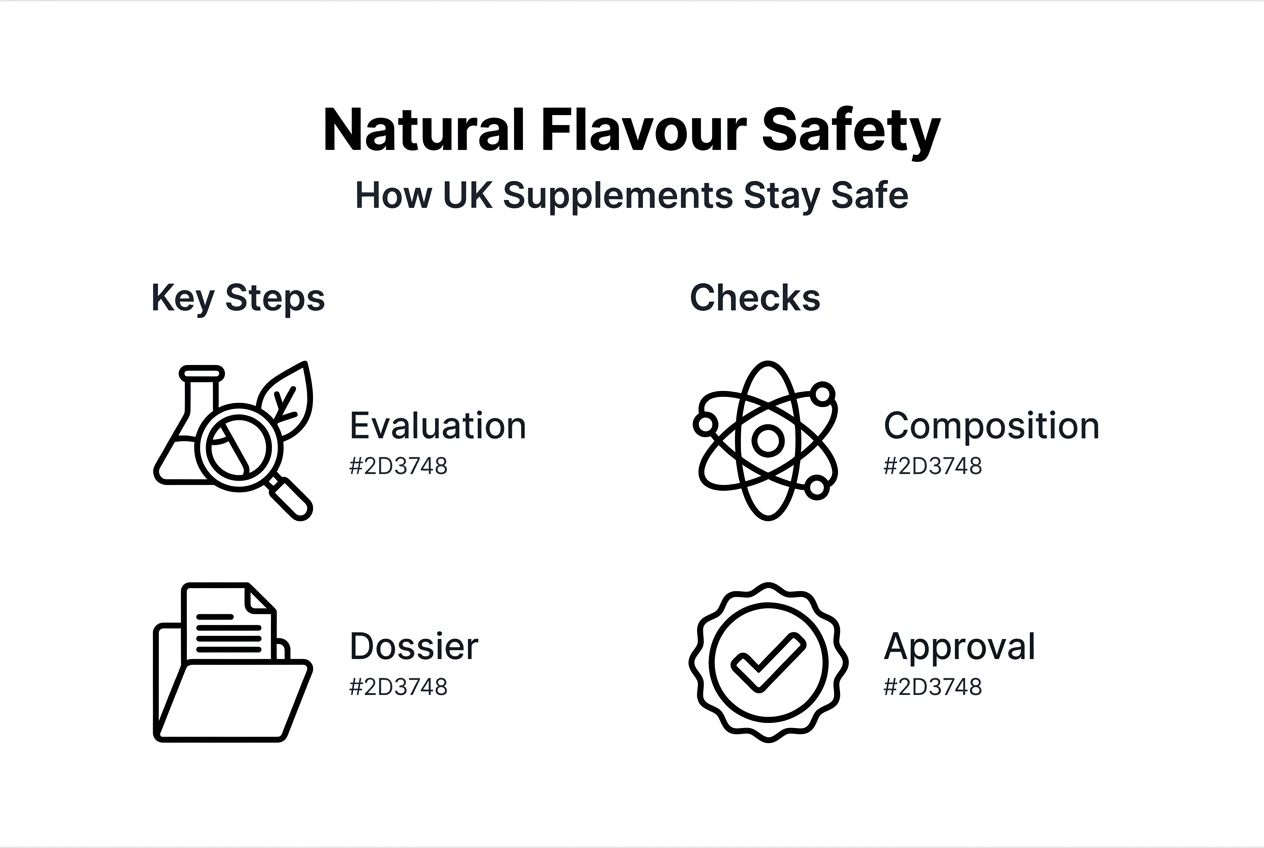
Authorisation involves multiple assessment stages. Manufacturers submit detailed dossiers including chemical composition, production methods, and intended use levels. Independent scientific committees review this data against established safety criteria. Only flavourings meeting strict safety margins receive approval and listing in the UK Register of Flavourings.
Enforcement under the UK Food Safety Act protects you from misleading claims. Trading Standards officers can prosecute manufacturers who mislabel artificial flavours as natural or use unauthorised flavouring substances. This legal framework ensures the natural flavour claims on your pre-workout label reflect actual compliance with composition rules.
Steps in the flavour authorisation process:
- Manufacturer submits application with chemical and toxicological data to FSA
- Scientific committee evaluates safety based on exposure levels and toxicity studies
- Public consultation period allows stakeholder input on proposed authorisation
- FSA decision grants or denies authorisation based on safety assessment outcomes
- Approved flavourings receive registration in UK Flavourings Register for legal use
- Post-market monitoring tracks adverse reactions and updates safety evaluations as needed
This systematic approach means every natural flavour in your supplement has passed regulatory scrutiny. The process doesn’t distinguish between natural and artificial for safety evaluation purposes. Both categories face identical safety standards, though compositional requirements differ.
Key regulatory protections include:
- Mandatory toxicological assessment before any flavouring can be marketed
- Continuous post-market surveillance for adverse effects or safety concerns
- Legal penalties for mislabelling or using unauthorised flavouring substances
- Public access to UK Register of Flavourings for verifying authorised substances
Athletes prioritising supplement purity benefit from this comprehensive regulatory oversight ensuring safety and accurate labelling.
Practical implications for Hyrox athletes choosing natural flavours
Choosing supplements with natural flavour claims compliant with UK regulations ensures you’re getting products that meet strict compositional standards. These standards require authentic natural sourcing rather than marketing language alone. For high-intensity Hyrox training, this authenticity matters because natural flavours typically align with cleaner ingredient profiles that support digestive comfort during demanding workouts.
Look for detailed ingredient transparency beyond basic ‘natural flavours’ listings. Supplements specifying exact sources like ‘natural raspberry extract’ or ‘lemon essential oil’ demonstrate higher transparency. Third-party verification marks from organisations like Informed Sport or NSF Certified for Sport add another layer of quality assurance. These certifications test for banned substances and verify label accuracy.
Natural flavours may reduce digestive discomfort compared to some artificial variants. Whilst both natural and artificial flavours are safe when authorised, natural options often exclude certain synthetic compounds that can trigger sensitivities in some athletes. During intense Hyrox competitions where every physical advantage counts, minimising potential gastrointestinal irritation becomes crucial.
Selecting verified natural flavours supports sustained performance throughout your training cycle. When supplements taste pleasant through natural flavouring, you’re more likely to maintain consistent intake. This consistency ensures you receive intended benefits from active ingredients like caffeine, electrolytes, or amino acids. Palatability directly influences adherence, which ultimately drives results.
Practical tips for selecting natural flavour supplements:
- Prioritise products listing specific natural flavour sources rather than generic terms
- Check for third-party testing certifications verifying ingredient accuracy and purity
- Review manufacturer transparency about sourcing and production methods
- Consider personal tolerance and taste preferences when trying new natural flavours
- Compare ingredient lists across brands to identify cleaner formulations
Pro tip: Prioritise products with clear labelling and authorised ingredients listed in the UK Register of Flavourings to avoid synthetic or misleading additives.
Exploring options like natural performance boosters and clean label supplements helps you build a supplement regimen aligned with natural flavour standards. These choices support both your health goals and athletic performance needs whilst maintaining supplement purity you can trust.
Integrating natural flavour awareness into your sports nutrition for high-intensity training strategy ensures every supplement choice advances your Hyrox goals. When you’re ready to switch, transitioning to natural supplements becomes smoother with clear understanding of what natural flavours truly mean.
Summary and recommendations
Natural flavours in UK supplements are strictly defined and regulated, requiring at least 95% natural origin from plant or animal sources. This legal framework ensures that ‘natural flavour’ claims reflect genuine compositional standards rather than marketing language alone. Understanding these definitions helps you distinguish between truly natural products and those exploiting vague labelling.
All natural flavours must undergo safety evaluations and receive authorisation from the FSA before appearing in supplements. This mandatory process applies regardless of natural origin, protecting you from potentially harmful substances. The UK Register of Flavourings lists every approved flavouring, providing transparency about which substances can legally appear in your pre-workout or electrolyte products.
Understanding label terms empowers you to distinguish between natural and artificial claims. Specific source declarations like ‘natural lime oil’ indicate higher transparency than generic ‘natural flavours’. This knowledge helps you select supplements that align with your preferences for natural ingredients whilst avoiding misleading marketing.
Prioritising supplements with transparent, verified natural flavour sources supports both health and performance benefits. Natural flavours typically reduce exposure to synthetic chemicals and may minimise digestive discomfort during intense training. These advantages become especially valuable during Hyrox competitions where gastrointestinal comfort directly affects performance.
Key recommendations for natural flavour supplement selection:
- Verify that products explicitly state ‘natural flavours’ with UK regulatory compliance
- Look for specific source declarations rather than generic natural flavour claims
- Choose supplements with third-party testing certifications for added quality assurance
- Check the UK Register of Flavourings to confirm authorisation of listed flavouring substances
- Consider your personal tolerance and taste preferences when selecting natural flavour options
Apply these insights when you prepare pre-workout drinks naturally to ensure every ingredient supports your Hyrox training goals effectively.
Enhance your performance with Interval’s natural supplements
Now that you understand what natural flavours truly mean under UK regulation, you can make informed choices about your supplement regimen. Interval offers pre-workout and electrolyte products with verified natural flavours that meet strict compositional standards. Every ingredient is selected for both safety and effectiveness, supporting your Hyrox performance goals without compromising on taste.

Our formulations prioritise clean labels and ingredient transparency, giving you confidence in what you’re putting into your body. Whether you’re looking for a pre-workout without side effects or a complete supplement solution, Interval’s range is designed specifically for female athletes doing high-intensity sports. Explore our starter bundle to experience how natural flavours can enhance both palatability and performance in your training routine.
FAQ
What does ‘natural flavour’ legally mean in UK supplement labelling?
It means the flavouring is mostly 95% or more derived from natural animal or plant sources using traditional food processes, complying with UK and EU laws. Synthetic or artificial substances are limited to a small percentage by law, typically up to 5% for carriers or stabilisers.
How can I identify truly natural flavours on supplement labels?
Look for terms like ‘Natural X flavouring’ indicating higher natural content from a specific source. Check for ingredient transparency and verify the flavouring appears in the UK Register of Flavourings. Beware of vague or generic ‘natural flavours’ claims without source specification.
Are natural flavours safer than artificial ones for high-intensity athletes?
Both natural and artificial flavours undergo mandatory safety evaluations by the FSA before authorisation. Natural flavours may reduce digestive irritation risks and allergen exposure for some athletes. However, safety fundamentally depends on authorisation status and overall product quality, not just natural versus artificial classification.
Can ‘natural flavours’ contain synthetic ingredients?
Yes, up to 5% of non-natural substances may be legally included to adjust flavour profile, stability, or delivery under UK and EU law. This small allowance typically covers carriers, preservatives, or solvents. It does not compromise the regulatory classification of ‘natural flavour’ as predominantly natural.
Why is understanding natural flavours important for supplement choices in Hyrox training?
It helps you select safe, effective supplements that support endurance whilst reducing gastrointestinal distress during intense workouts. Understanding natural flavour regulations ensures you avoid misleading claims and choose products aligned with your performance and health goals. This knowledge empowers smarter supplement decisions for consistent training results.