


What is active recovery fueling? your 2026 guide
TL;DR:
- Active recovery fueling combines low-intensity movement with structured nutrition to speed recovery and enhance performance. It involves short, gentle exercises paired with a precise 4Rs framework: rehydrate, refuel, repair, and recuperate. Proper timing and discipline in nutrition are especially vital for athletes with multiple daily sessions or competitions within 24 hours.
Active recovery fueling is defined as the practice of pairing low-intensity movement with targeted post-exercise nutrition to restore energy, repair muscle tissue, and prepare your body for the next hard session. This is not simply eating after a workout or going for a gentle walk. It is a structured approach that combines two recovery strategies into one deliberate process. The 4Rs framework (Rehydration, Refuel, Repair, Recuperate) sits at the heart of this approach, giving you a clear nutritional blueprint to follow alongside your movement. Get both right, and you recover faster, feel less sore, and perform better next time.
What is active recovery and why does it work?
Active recovery is low-intensity movement performed after or between hard training sessions. Examples include walking, light cycling, yoga, gentle mobility work, and foam rolling. The goal is to keep blood moving without adding meaningful training stress to your body.
The physiological case for it is straightforward. Low-to-moderate intensity movement accelerates blood lactate removal more effectively than passive rest. Studies on football players confirmed that active recovery produced faster and greater lactate clearance compared to simply sitting still. That matters because residual lactate contributes to the heavy, stiff feeling you get after a hard session.
Active recovery also improves circulation to fatigued muscles, which helps deliver nutrients and clear metabolic waste. The result is reduced muscle stiffness and a quicker return to baseline readiness. Think of it as keeping the engine ticking over rather than switching it off completely.
“Keeping things moving at a low intensity raises circulation without causing fatigue, supporting recovery effectively.” — Cleveland Clinic
Intensity is the critical variable here. Push too hard and you create additional fuel demand rather than reducing it. Recovery intensity must match your recovery goal, not your training ego.
Pro Tip: A systematic review of 26 studies identified 6–10 minutes as the sweet spot for active recovery duration. Keep sessions short, light, and purposeful.
- Walking at a conversational pace
- Light cycling at 50–60% of maximum heart rate
- Yoga or gentle stretching
- Foam rolling major muscle groups
- Slow swimming
How does nutrition integrate with active recovery?
Active recovery fueling means combining those low-intensity movements with a structured nutritional strategy. The 4Rs framework provides the clearest model for doing this correctly.
The four rs explained
-
Rehydrate. Replace at least 150% of body mass lost through sweat with fluid and sodium. If you lost 1 kg during training, drink 1.5 litres before your next session. Sodium accelerates fluid absorption and retention, which is why electrolytes matter more than plain water alone.
-
Refuel. Consume approximately 1.2 g of carbohydrate per kg of body mass per hour for up to four hours post-exercise to restore muscle glycogen. For an 80 kg athlete, that is 96 g of carbohydrate per hour. Rice, oats, fruit, and sweet potato are practical sources.
-
Repair. Protein drives muscle anabolism and tissue repair. Aim for 20–40 g of high-quality protein in your post-workout window. Whey, eggs, Greek yoghurt, and lean meat all deliver the leucine content needed to trigger muscle protein synthesis. Useinterval’s guide on post-workout protein intake covers the evidence behind these targets in detail.
-
Recuperate. Pre-sleep protein (around 40 g of casein) supports overnight muscle repair. This fourth R is often ignored but becomes particularly relevant when training volume is high.
| Nutritional Target | Recommendation | Practical Example |
|---|---|---|
| Carbohydrate | 1.2 g/kg/hour for up to 4 hours | 96 g/hour for an 80 kg athlete |
| Protein | 20–40 g post-exercise | 2 eggs plus 200 g Greek yoghurt |
| Fluid | 150% of mass lost | 1.5 litres per 1 kg lost |
| Sodium | Include with fluid | Electrolyte drink or salted food |
| Pre-sleep protein | ~40 g casein | Cottage cheese or casein shake |
Timing matters significantly when you have multiple sessions in a short window. Post-exercise nutrition is especially critical when another bout follows within 2–24 hours. In that context, every hour you delay your refuel is an hour of glycogen restoration you forfeit.
Pro Tip: Do not treat active recovery days as low-calorie days. Athletes who under-eat on recovery days limit adaptation and performance gains, even when movement intensity is low.
Does active recovery fueling actually improve performance?
The honest answer is nuanced. Active recovery alone produces modest benefits for soreness and performance. Nutrition is the primary driver of meaningful recovery gains. The two strategies together, however, are more effective than either in isolation.
The evidence from 26 studies shows that active recovery’s biggest contribution is lactate clearance and subjective wellbeing. It makes you feel better and moves waste products out faster. But if you follow a perfect active recovery session with inadequate nutrition, your glycogen remains depleted and your muscles lack the amino acids needed for repair.
Where active recovery fueling delivers the clearest performance benefit is in multi-bout settings. Tournament athletes, CrossFit competitors, and triathletes who train or compete twice in one day gain the most from combining movement with structured nutrition. Nutrition and active recovery timing is particularly critical when restoring homeostasis before a subsequent bout within 2–24 hours.
| Scenario | Active Recovery Fueling Benefit |
|---|---|
| Two sessions in one day | High. Glycogen and lactate restoration are time-critical. |
| Tournament with daily competition | High. Cumulative fatigue makes nutrition non-negotiable. |
| Single hard session, next day off | Moderate. Fueling still matters; movement is optional. |
| Light training day | Low. Standard nutrition and rest are sufficient. |
The key takeaway is this: do not expect a 20-minute walk to undo a poor diet. Active recovery is a multiplier, not a substitute for proper nutrition.
How to do active recovery fueling: a practical plan
Putting this into practice does not require a complicated system. The following approach works for most fitness enthusiasts training at high intensity three to five times per week.
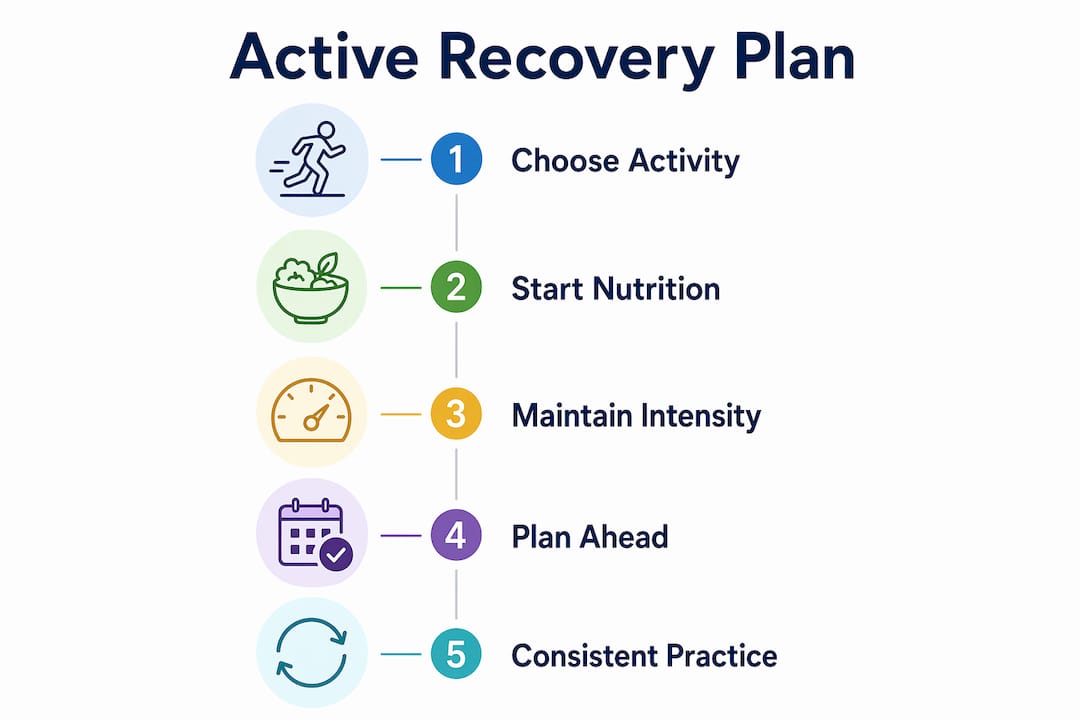
Choose the right activity. Select movement that keeps your heart rate below 60% of maximum. Walking, light cycling, and yoga are reliable choices. Avoid anything that leaves you breathless or creates significant muscle fatigue.

Start your nutrition immediately. Begin your refuel within 30 minutes of finishing your main session. A carbohydrate and protein combination in this window takes advantage of elevated insulin sensitivity and accelerated glycogen synthesis.
Prioritise electrolytes alongside fluid. Plain water is not enough after a hard session. Sodium drives faster rehydration by retaining fluid in the body. Useinterval’s athletic rehydration guide explains how to calculate your sweat rate and match your electrolyte intake accordingly.
Structure your recovery day around the 4Rs. Use the framework as a checklist rather than a vague intention. Tick off rehydration, refuelling, and protein repair before you consider the session complete.
- Begin active recovery movement within 10–15 minutes of finishing your session
- Consume a carbohydrate and protein snack within 30 minutes
- Drink electrolyte fluid throughout the recovery period
- Eat a full recovery meal within 2 hours
- Include pre-sleep protein if training resumes the next morning
Avoid the intensity trap. The most common mistake is turning an active recovery session into a moderate workout. The moment your breathing becomes laboured, you have crossed the line. You are now adding fatigue, not reducing it.
Pro Tip: Plan your active recovery nutrition the night before. Preparing a recovery snack in advance removes the decision-making barrier that leads to skipped nutrition after a hard session.
For a broader look at how the full post-workout recovery process fits together, Useinterval’s guide covers each phase in detail.
Key takeaways
Active recovery fueling works because combining low-intensity movement with the 4Rs nutritional framework restores glycogen, clears lactate, and repairs muscle tissue more effectively than either strategy alone.
| Point | Details |
|---|---|
| Define your recovery correctly | Active recovery fueling pairs light movement with structured nutrition, not just a walk or a protein shake in isolation. |
| Follow the 4Rs framework | Rehydrate, Refuel, Repair, and Recuperate form the evidence-based nutritional blueprint for post-exercise recovery. |
| Keep movement intensity low | Sessions of 6–10 minutes at low intensity clear lactate without adding training stress or extra fuel demand. |
| Fuel even on recovery days | Under-eating on active recovery days limits adaptation and performance gains regardless of how well you move. |
| Timing is critical in multi-bout settings | When two sessions fall within 2–24 hours, nutrition timing becomes the single biggest lever for readiness. |
Why most people get active recovery completely wrong
I have worked with enough high-intensity athletes to spot the pattern immediately. They nail the training, they understand periodisation, and then they treat the recovery day as an afterthought. A gentle jog and a protein bar, and they consider the job done.
The science does not support that approach. What I have seen consistently is that the athletes who recover fastest are not the ones doing the most elaborate recovery protocols. They are the ones who treat nutrition with the same discipline they apply to their training sessions. The 4Rs framework is not complicated, but it requires intention. You have to actually weigh your food, track your fluid loss, and eat when you are not particularly hungry.
The other misconception I encounter regularly is the idea that eating less on a recovery day is somehow virtuous. It is not. Treating recovery days as under-eating days overlooks glycogen replenishment, protein-driven repair, and sodium-led rehydration. All three are critical to adaptation. Skipping them does not make you leaner. It makes you slower next session.
My honest recommendation is to start with the 4Rs checklist and treat it as non-negotiable for at least four weeks. Most people notice a meaningful difference in how they feel going into their third or fourth session of the week. That is the compounding effect of consistent recovery fueling. It is not glamorous, but it works.
— Tom
Fuel your recovery with Useinterval
Active recovery fueling is only as effective as the nutrition you pair with it. Useinterval’s Starter Bundle is built specifically for high-intensity athletes who want to cover the 4Rs without guesswork. It combines natural-ingredient electrolytes for rapid rehydration with convenient post-workout nutrition designed to fit straight into your recovery window.
Whether you train twice a day or push hard three times a week, the Starter Bundle gives you the tools to refuel, repair, and rehydrate consistently. Recovery is where performance is built. Useinterval makes sure you have what you need to do it properly. Explore the Starter Bundle and take the guesswork out of your recovery nutrition today.
FAQ
What is active recovery fueling in simple terms?
Active recovery fueling is the combination of low-intensity movement and targeted post-exercise nutrition (carbohydrates, protein, fluids, and electrolytes) to restore energy and repair muscle after hard training. It is more effective than either strategy used alone.
What should i eat on an active recovery day?
Follow the 4Rs framework: consume around 1.2 g of carbohydrate per kg of body mass per hour, 20–40 g of protein, and replace at least 150% of fluid lost with an electrolyte-containing drink. Do not reduce calories significantly just because training intensity is lower.
How long should an active recovery session last?
Research from a systematic review of 26 studies identifies 6–10 minutes as the optimal duration for active recovery. Short, light sessions clear lactate and improve circulation without adding fatigue.
Is active recovery better than complete rest?
Active recovery produces faster blood lactate removal than passive rest, particularly at low-to-moderate intensity. However, nutrition remains the primary driver of recovery quality. Active recovery without adequate fueling delivers limited benefit.
When does active recovery fueling matter most?
Active recovery fueling is most critical when you have two training sessions or competitions within 2–24 hours. In that window, restoring glycogen and rehydrating with sodium directly determines your readiness for the next bout.