


What is exercise-induced dehydration?
TL;DR:
- Exercise-induced dehydration occurs when fluid loss during activity exceeds intake, impairing performance and cognition at 1-3% body water loss. To prevent this, athletes should hydrate thoroughly beforehand, drink to thirst during sessions, and monitor body mass changes, especially in heat or intense workouts. Overhydration poses risks like hyponatremia; therefore, prudent, thirst-based drinking and personalized tracking are essential for optimal performance.
Exercise-induced dehydration is defined as the state where fluid loss during physical activity exceeds fluid intake, producing a body water deficit known as hypohydration. This distinction matters: dehydration describes the process of losing fluid, while hypohydration describes the resulting state. For anyone training at high intensity, understanding this isn’t academic. A 1–3% body mass loss is enough to measurably impair muscle power, endurance, and cognitive function. Whether you’re running intervals, competing in Hyrox, or lifting heavy, the fluid balance you carry into and through a session directly shapes what you get out of it.
What is exercise-induced dehydration and how does it develop?
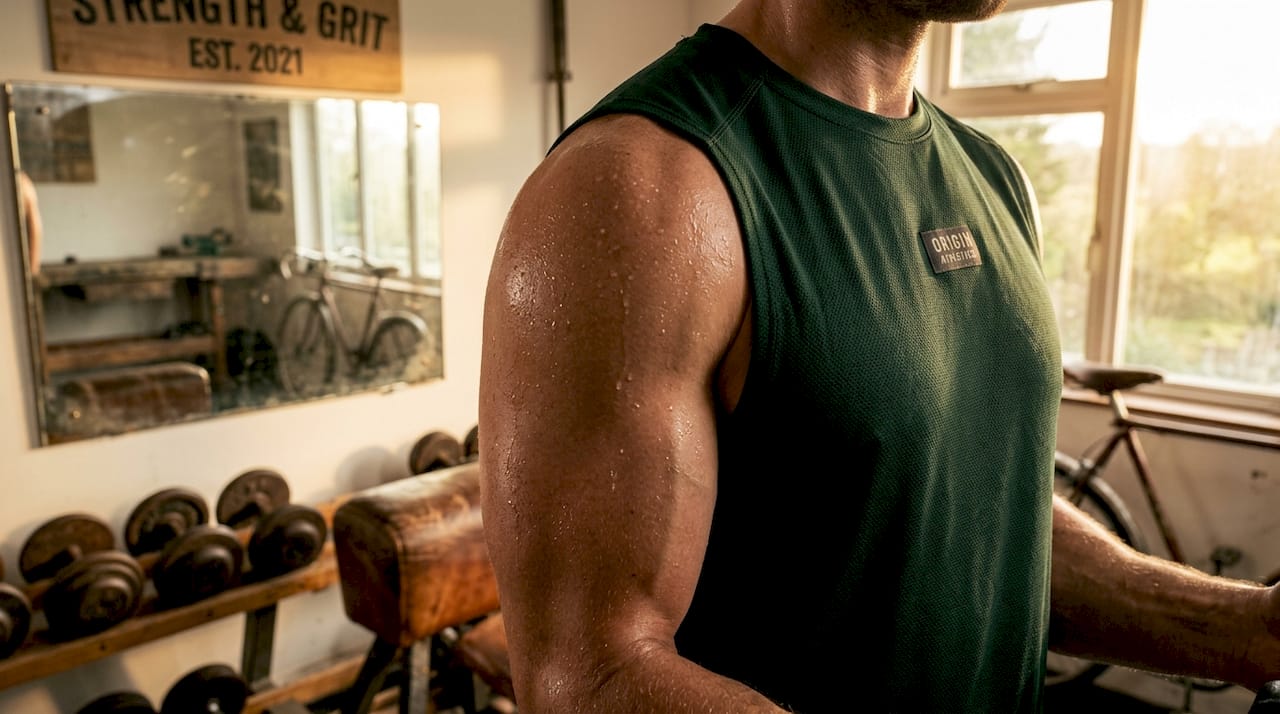
The primary driver of fluid loss during exercise is sweating. Your body uses sweat to regulate core temperature, and the harder or hotter the session, the faster that fluid leaves your body. Sweat losses range from 0.5 to 1.7 litres per hour depending on exercise intensity and heat stress. That figure represents a wide range, and it means a 90-minute session in a warm gym could strip more than two litres from your body before you’ve noticed any significant thirst.
Respiratory losses add a smaller but real contribution. Every exhaled breath carries water vapour, and this becomes more significant during sustained aerobic work. Combined with sweat, these losses accumulate quickly when fluid replacement doesn’t keep pace.
Several factors push dehydration risk higher:
- High exercise intensity accelerates sweat rate and core temperature rise
- Hot or humid conditions reduce the cooling efficiency of sweat, increasing total fluid output
- Long session duration compounds losses even at moderate sweat rates
- Poor pre-exercise hydration means you start the session already in deficit
- High body mass increases the absolute volume of fluid needed to maintain balance
It’s worth separating two terms that sports science uses precisely. Dehydration refers to the process of fluid loss. Hypohydration refers to the state of having a water deficit. Research distinguishes these carefully because the physiological consequences depend on how much deficit has accumulated, not just that fluid is being lost. A 0.5% loss during a warm-up is not the same as a 2.5% loss at the end of a hard race.
Pro Tip: Weigh yourself before and after training. Each kilogram of body mass lost represents roughly one litre of fluid. This gives you a precise, personalised baseline for your sweat rate across different conditions.
What are the symptoms of exercise dehydration?
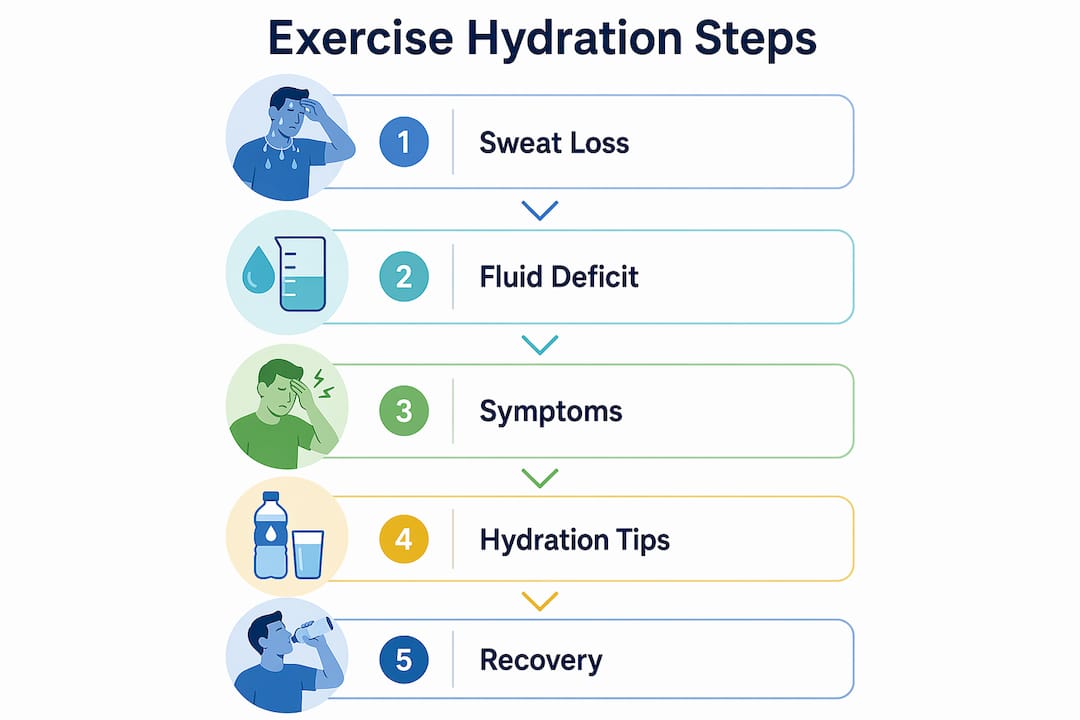
Symptoms of exercise dehydration follow a predictable progression tied to the severity of fluid loss. Mild hypohydration produces thirst, reduced urine output, and a slight increase in heart rate. As the deficit grows, fatigue, dizziness, muscle cramps, and headache appear. At higher levels, concentration drops, reaction time slows, and coordination suffers.
The performance consequences are well-documented. Mild to moderate hypohydration impairs muscle power, endurance, and neuromuscular function, with effects amplified under heat stress or at higher exercise intensities. This means the athlete who feels “fine” at 1.5% body mass loss in a cool gym may experience a sharper decline at the same deficit during a summer track session.
Cognitive effects are often underestimated. Hypohydration disrupts cerebral blood flow, which affects focus, decision-making, and reaction speed. For sports requiring tactical awareness or precise technique, this matters as much as physical fatigue. A boxer losing sharpness in round four, or a CrossFit athlete miscounting reps, may be experiencing the cognitive cost of fluid deficit rather than simple tiredness.
Symptom variation is real and worth acknowledging. Trained athletes often tolerate mild hypohydration better than untrained individuals, and acclimatised athletes show blunted thirst responses. Neither adaptation eliminates the performance cost. They simply shift the threshold at which you notice it.
How to prevent dehydration in workouts
Prevention starts before you arrive at the gym. Starting exercise well hydrated reduces the rate at which you enter a meaningful deficit. Drinking consistently throughout the day before a hard session, rather than loading fluid in the final hour, gives your body time to absorb and distribute it properly.
A practical prevention framework looks like this:
- Hydrate the day before hard sessions by drinking consistently with meals and monitoring urine colour. Pale yellow indicates adequate hydration.
- Drink 400–600 ml of fluid in the two hours before training, particularly before long or high-intensity sessions.
- Drink to thirst during exercise rather than following a rigid schedule. For sessions under 60–90 minutes in normal conditions, meaningful dehydration is rarely reached without deliberate neglect.
- Target no more than 2% body mass loss during exercise. The ACSM frames this as the practical safety threshold. For a 75 kg athlete, that’s 1.5 kg of fluid loss before performance is meaningfully compromised.
- Include electrolytes in your hydration plan for sessions exceeding 60 minutes, particularly in heat. Sodium supports fluid retention and drives thirst, making it the most important electrolyte for pre-exercise and during-exercise hydration. Useinterval’s electrolyte ratios guide breaks this down specifically for high-intensity formats.
- Rehydrate after training by replacing 125–150% of estimated fluid loss over the following two hours.
Pro Tip: Pre-exercise sodium intake, whether from food or an electrolyte supplement, stimulates thirst and helps retain the fluid you drink before training. This is particularly useful for early morning sessions when you haven’t had time to hydrate gradually.
For a structured approach to building your workout hydration routine, the principles above translate directly into session-by-session habits.
What are the risks of overhydration during exercise?
Drinking too much fluid during exercise carries its own serious risk. Exercise-associated hyponatremia (EAH) occurs when excess fluid intake dilutes blood sodium concentration, producing a condition that ranges from nausea and headache to seizures and, in severe cases, death. Overdrinking beyond thirst causes EAH through plasma dilution combined with altered hormonal water clearance, not from sweating out too much sodium.
This is a critical point that contradicts a common assumption. Many athletes believe that drinking more fluid always protects against dehydration problems. The evidence says otherwise. EAH results primarily from overhydration, not from sodium loss through sweat. The athletes most at risk are those who drink on a fixed schedule regardless of thirst, particularly in endurance events where slower pace means lower sweat rates but longer exposure time.
Symptoms of EAH to recognise include:
- Nausea and bloating during or after exercise
- Headache that worsens rather than improves with fluid intake
- Confusion or disorientation
- Swelling in hands, feet, or face
- Seizures in severe cases
The safest hydration strategy during exercise is to drink according to thirst. This single principle prevents both dehydration and exercise-associated hyponatremia in the vast majority of training scenarios.
Female athletes face a higher statistical risk of EAH due to differences in body composition and hormonal factors affecting fluid regulation. Useinterval’s article on hyponatremia in female athletes covers this in detail.
How can you monitor your hydration status?
Tracking hydration doesn’t require laboratory equipment. Several practical methods give you reliable data across different training contexts.
| Method | What it measures | Accuracy | Practical use |
|---|---|---|---|
| Urine colour | Hydration state | Moderate | Daily check before training |
| Pre/post body mass | Fluid loss volume | High | Session-by-session sweat rate |
| Thirst rating | Real-time deficit signal | Low to moderate | During exercise guidance |
| Oral mucosal moisture | Small fluid loss percentages | High | Emerging field tool |
Body mass measurement is the most accessible high-accuracy method. Pre- and post-exercise weighing estimates fluid loss directly, and repeated measurements across different conditions build a personalised sweat rate profile. This is how elite athletes calibrate their hydration plans, and it costs nothing beyond a set of scales.
Urine colour works well as a morning baseline check. Dark yellow or amber urine before training signals you’re starting the session in deficit. Pale straw colour indicates adequate hydration. Thirst is a useful real-time signal during exercise, but it lags behind actual fluid loss, particularly in trained athletes who have adapted to mild hypohydration. Relying on thirst alone without any other monitoring is adequate for most sessions but insufficient for long events in heat.
Oral mucosal moisture measurement is an emerging non-invasive method that discriminates small fluid loss percentages with good accuracy. It’s not yet standard practice outside research settings, but it represents the direction sports hydration monitoring is heading.
Key takeaways
Exercise-induced dehydration impairs performance and cognition from as little as 1% body mass loss, making pre-session hydration, thirst-guided drinking, and electrolyte intake the three non-negotiable pillars of any serious training plan.
| Point | Details |
|---|---|
| Define the deficit | Hypohydration begins at 1% body mass loss and measurably impairs performance by 2–3%. |
| Sweat rate varies widely | Losses of 0.5–1.7 litres per hour mean session length and heat matter as much as intensity. |
| Drink to thirst | This single strategy prevents both dehydration and exercise-associated hyponatremia. |
| Monitor with body mass | Pre/post weighing gives a precise, free measure of fluid loss across different conditions. |
| Electrolytes are not optional | Sodium supports fluid retention and drives appropriate thirst, especially in sessions over 60 minutes. |
Why most athletes are thinking about hydration backwards
I’ve worked with a lot of people training at high intensity, and the most common hydration mistake isn’t drinking too little. It’s drinking without any reference point. Athletes carry a water bottle because they’re supposed to, sip when they remember, and assume they’re covered. They’re not building a habit. They’re performing one.
The shift that actually changes outcomes is treating hydration as a measurable variable, not a background behaviour. Weigh yourself before and after a few sessions. Note the conditions. Build a picture of your personal sweat rate. Once you have that data, you stop guessing and start managing. That’s when hydration stops being a vague concern and becomes a genuine performance lever.
The other thing I’d push back on is the assumption that more is always safer. The research on exercise-associated hyponatremia is clear: overdrinking is a real risk, and it’s more common than most fitness communities acknowledge. Drinking to thirst is not a lazy default. It’s the evidence-based recommendation from sports medicine consensus in 2025 and 2026. Trust the signal your body sends, calibrate it with body mass data, and adjust for conditions.
— Tom
Support your training with Useinterval’s starter bundle
Hydration isn’t just about water. Electrolytes determine how well your body absorbs and retains fluid during high-intensity training, and getting that balance right is where most athletes leave performance on the table. Useinterval’s Starter Bundle is built specifically for this. It combines natural-ingredient electrolytes and pre-workout support designed for the demands of high-intensity sport. Whether you’re preparing for a Hyrox event, pushing hard in the gym, or managing back-to-back training days, the bundle gives you the tools to stay on the right side of the fluid balance equation. Start with the fundamentals and build from there.
FAQ
What is exercise-induced dehydration?
Exercise-induced dehydration is the process of losing more fluid during physical activity than you consume, resulting in hypohydration. A body mass loss of 1–3% is enough to impair muscle power, endurance, and cognitive function.
How much fluid do you lose during exercise?
Sweat losses during exercise range from 0.5 to 1.7 litres per hour depending on intensity and environmental conditions. A 90-minute session in heat can produce a deficit exceeding two litres without adequate fluid replacement.
Can dehydration affect athletic performance?
Dehydration affects athletic performance from as little as 1% body mass loss, reducing muscle power, endurance, and neuromuscular coordination. Cognitive effects including impaired focus and slower reaction time compound the physical decline.
What is the safest way to hydrate during exercise?
Drinking according to thirst is the safest hydration strategy during exercise. This approach prevents both dehydration and exercise-associated hyponatremia, which is caused by overdrinking rather than by sweat-related sodium loss.
How do you rehydrate after exercise?
Effective rehydration strategies after exercise involve replacing 125–150% of estimated fluid loss over the two hours following training. Including sodium in post-exercise drinks or food accelerates fluid absorption and retention.