


Dietary electrolytes: boost female Hyrox performance
TL;DR:
- Electrolyte balance is crucial for optimal performance during high-intensity Hyrox events.
- Women aged 30 to 50 should adjust electrolyte intake based on menstrual cycle phases and individual sweat rates.
- Personalized, consistent hydration and electrolytes, rather than quick fixes, improve endurance and reduce cramping.
You can train harder than anyone in your gym, nail your sled pushes, and still fall apart in the final stations of a Hyrox event. The culprit is rarely your fitness. More often, it’s a handful of minerals you’ve been ignoring. Dietary electrolytes, primarily sodium, potassium, magnesium, and calcium, maintain fluid balance, muscle contraction, and nerve function during high-intensity exercise. For women aged 30 to 50, the stakes are even higher because hormonal shifts across the menstrual cycle change how your body handles these minerals. This guide gives you clear, evidence-based answers without the fluff.
Table of Contents
- What are dietary electrolytes and why do they matter for Hyrox athletes?
- Key electrolyte requirements for female Hyrox athletes aged 30-50
- Getting the balance right: How to avoid common mistakes
- Cycle syncing: Optimising electrolyte intake throughout the female menstrual cycle
- Practical electrolyte strategies for real Hyrox training and competition scenarios
- Our perspective: Why personalisation and consistency trump quick-fix solutions
- How Interval supports female Hyrox athletes’ electrolyte needs
- Frequently asked questions
Key Takeaways
| Point | Details |
|---|---|
| Electrolyte needs are individual | Your exact requirements depend on your training load, age, and where you are in your menstrual cycle. |
| Menstrual cycle shifts matter | Cycle-related hormonal changes require thoughtful sodium and magnesium adjustments, especially in the luteal phase. |
| Balance beats excess | Both too little and too much sodium can decrease Hyrox performance and raises health risks. |
| Natural first, supplement smart | Whole foods provide most electrolytes but supplements help during heavy sweating, heat, or the demanding Hyrox season. |
| Personal tracking is key | Noticing how your own body responds to adjustments helps tailor optimal strategies beyond any generic plan. |
What are dietary electrolytes and why do they matter for Hyrox athletes?
Electrolytes are minerals that carry an electrical charge when dissolved in fluid. Your body uses them constantly, but during a Hyrox event, demand spikes sharply. Understanding what electrolytes are and what each one does is the first step to using them strategically.
Here is what the four main dietary electrolytes do:
- Sodium regulates fluid volume inside and outside your cells, supports nerve signalling, and is the primary electrolyte lost in sweat.
- Potassium works alongside sodium to control muscle contractions and keeps your heart rhythm stable under load.
- Magnesium supports over 300 enzymatic reactions, including energy production and muscle relaxation after contraction.
- Calcium triggers muscle fibres to contract and plays a role in bone density, which matters more as you move through your thirties and forties.
During a Hyrox event, you are working at high intensity for 60 to 90 minutes across eight functional stations. Sweat losses accumulate fast. When electrolyte levels drop, the first signs are subtle: a slight mental fog, a twitch in your calf, a drop in power output. Left unchecked, those signs escalate into cramps, impaired coordination, and a finish time that does not reflect your training.
“Electrolyte imbalance during high-intensity exercise is not just a comfort issue. It directly impairs the physiological systems that power your performance.”
Pro Tip: Keep a small notebook or use a phone app to log how you feel at the 30-minute and 60-minute mark of long training sessions. Patterns in fatigue or cramping often point directly to electrolyte gaps.
The good news is that dietary electrolytes in athletic performance are well studied, and the strategies to get them right are straightforward once you know where to look.
Key electrolyte requirements for female Hyrox athletes aged 30-50
General electrolyte advice is written for a 75kg male. That is not you. Women aged 30 to 50 have distinct needs shaped by hormonal fluctuations, body composition, and age-related changes in absorption. Smart replenishment tips for women account for all of these variables.
| Electrolyte | Pre-exercise | During exercise | Post-exercise |
|---|---|---|---|
| Sodium | 300-500mg with fluid | 200-400mg per hour | Match sweat loss |
| Potassium | 200-400mg from food | Small amounts via drink | 300-500mg from food |
| Magnesium | 200-300mg daily | Not typically needed | 100-200mg if cramping |
| Calcium | 500-600mg from diet | Not typically needed | 400-500mg from diet |
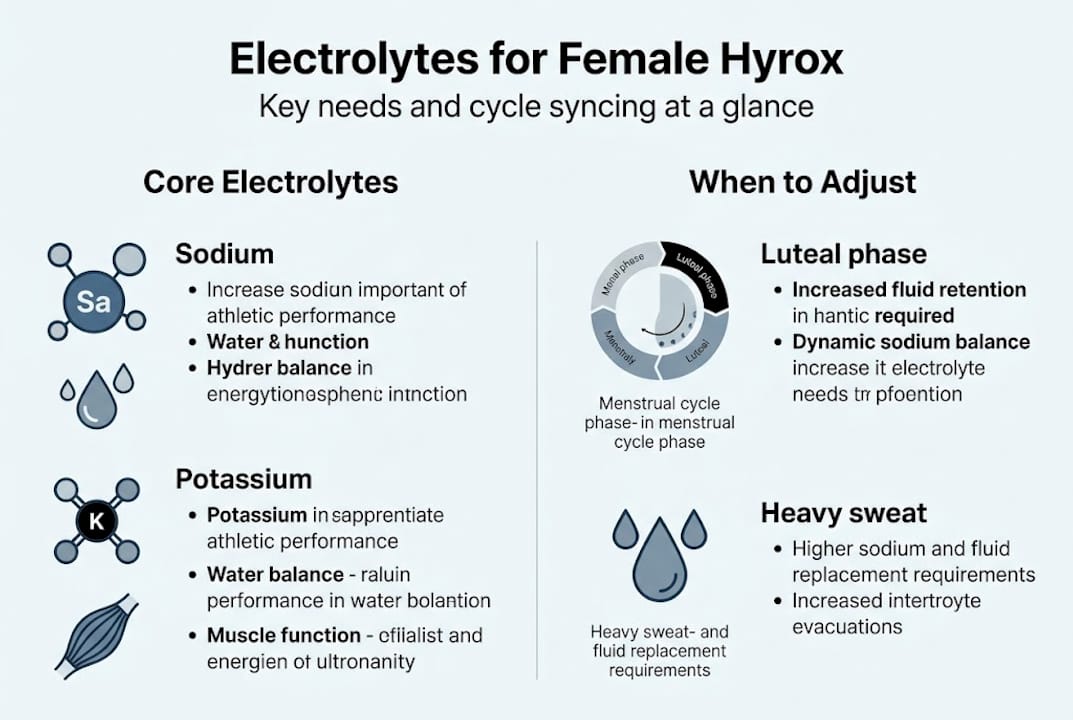
The menstrual cycle adds another layer. Electrolyte needs across menstrual phases show that female athletes aged 30 to 50 may need adjusted intake because progesterone in the luteal phase affects thermoregulation and increases sodium loss through sweat. You may find you feel hotter, sweat more, and recover more slowly in the week before your period. That is not in your head.
Key adjustments to consider:
- Follicular phase (days 1 to 14): Oestrogen is higher, thermoregulation is more efficient, and sodium retention is better. Standard intake often suffices.
- Luteal phase (days 15 to 28): Progesterone rises, core temperature increases, and sweat sodium losses climb. Bump sodium and magnesium intake slightly.
- Age-related factors: Absorption of magnesium and calcium can decline after 35. Prioritise food sources and consider a targeted supplement if blood work suggests deficiency.
“Ignoring cycle phase when planning electrolyte intake is like ignoring weather conditions when packing for a race. The environment has changed, but your kit hasn’t.”
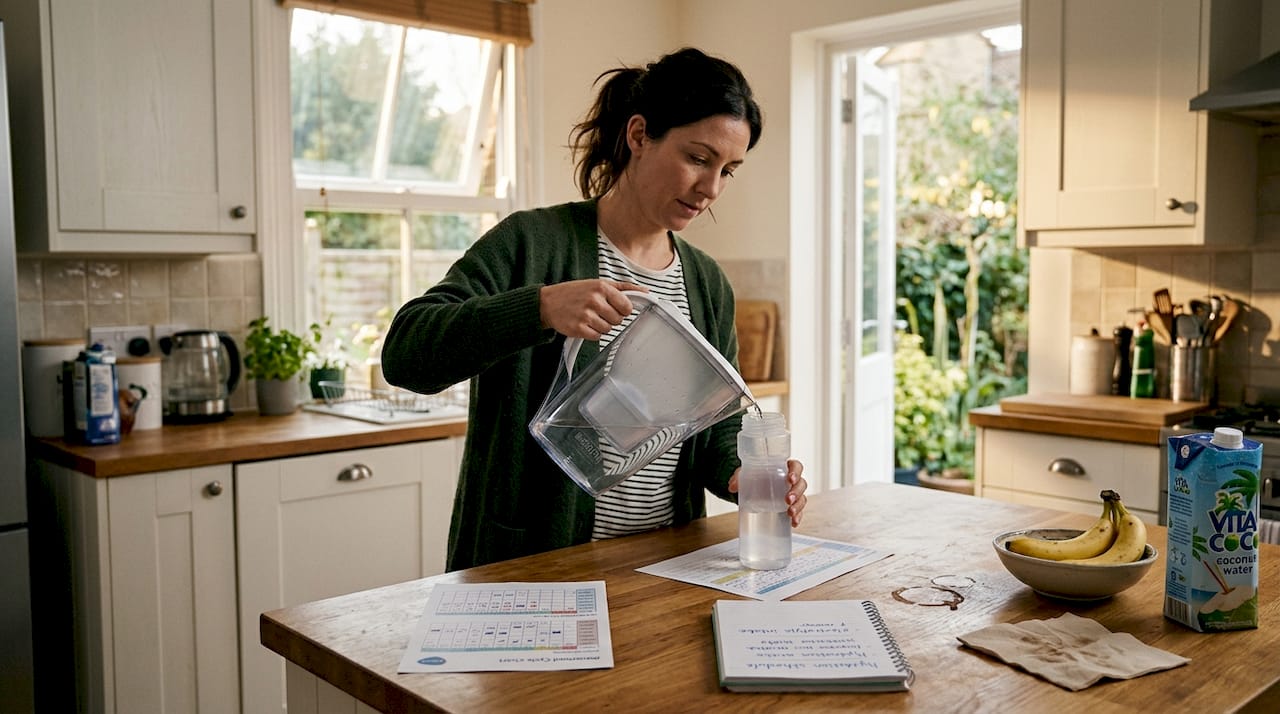
A simple Hyrox electrolyte workflow built around your cycle removes the guesswork and turns these adjustments into habits rather than last-minute scrambles.
Getting the balance right: How to avoid common mistakes
Knowing your targets is one thing. Hitting them consistently without tipping into excess is where most athletes go wrong. Too little sodium causes cramps and fatigue. Too much, especially without matching fluid intake, creates gastrointestinal distress or, in serious cases, hyponatremia (dangerously low blood sodium caused by excess water relative to sodium).
| State | Symptoms | Risk |
|---|---|---|
| Sodium deficiency | Cramps, fatigue, brain fog | Impaired performance, injury risk |
| Optimal sodium balance | Clear focus, sustained power | Best performance window |
| Sodium excess | Bloating, nausea, GI distress | Hyponatremia if over-hydrated |
Balanced sodium intake in athletes shows no evidence that athletes need higher daily sodium than the general population. The focus should be on sodium-water balance, not simply loading more salt. Understanding hyponatremia risks is particularly important for endurance-style events like Hyrox where drinking habits vary widely.
Here is a practical approach to staying balanced:
- Estimate your sweat rate by weighing yourself before and after a 60-minute session. Every 1kg lost equals roughly 1 litre of sweat.
- Match sodium to fluid, not just to time. If you lose 1 litre, aim to replace 700-900mg of sodium alongside it.
- Avoid fad high-salt protocols that recommend loading sodium without accounting for individual sweat rates.
- Track GI symptoms after training. Bloating or nausea during sessions often signals sodium excess or poor timing.
- Test in training, never on race day. Adjust your protocol during long training blocks so you arrive at competition with a tested system.
Pro Tip: After a sweaty session, check your skin or clothing for white salt residue. Heavy salt deposits suggest you are a high-sodium sweater and may need to increase replacement beyond standard guidelines.
Cycle syncing: Optimising electrolyte intake throughout the female menstrual cycle
Cycle syncing is not a wellness trend. It is applied physiology. The hormonal environment of your luteal phase genuinely changes how your kidneys handle sodium, how much you sweat, and how efficiently you regulate body temperature. Ignoring this means leaving performance on the table every single month.
Cycle phase electrolyte adjustments show that sodium hyperhydration at 7.5g per litre, taken at 30ml per kg body weight two hours before a time trial, improves performance particularly in the luteal phase. That is a specific, actionable protocol worth testing.
Practical tips for cycle-aware electrolyte management:
- In the luteal phase, add an extra 200-300mg sodium to your pre-training meal and consider a magnesium supplement in the evening to reduce PMS-related muscle tension.
- In the follicular phase, standard intake is usually sufficient. Use this phase to establish your baseline and test new protocols.
- Monitor for PMS-related symptoms like water retention and bloating. These can mask dehydration, making it easy to under-drink while actually being sodium-depleted.
- Track energy levels, cramp frequency, and mood across your cycle for two to three months. The patterns will guide your adjustments far better than any generic chart.
Pro Tip: Pair cycle-specific mixing strategies with a magnesium supplement in your luteal phase. Magnesium glycinate is well absorbed and less likely to cause digestive upset than magnesium oxide.
Practical electrolyte strategies for real Hyrox training and competition scenarios
Theory is only useful when it translates into what you actually do on a Monday morning before a training session. Here is a practical framework built around optimising electrolyte intake for the demands of Hyrox.
Morning of a training session or race day:
- Eat a sodium-containing breakfast two to three hours before. Eggs on sourdough with a pinch of sea salt works well.
- Drink 400-600ml of fluid with 300-500mg sodium in the 90 minutes before your session. Pre-exercise sodium intake at this level enhances fluid retention and endurance capacity.
- Include a potassium-rich food like a banana or avocado to prime muscle function.
During the event:
- Sip 150-200ml of an electrolyte drink every 15 to 20 minutes. Avoid plain water alone for sessions over 60 minutes.
- If competing in heat, increase sodium to the upper end of your tested range. Check our electrolytes in heat guide for specific adjustments.
Post-event recovery:
- Prioritise a high sodium and potassium drink within 30 minutes. High Na+K drinks improve rehydration and fluid balance post-exercise more effectively than water alone.
For a deeper look at timing and food sources, the endurance guide covers everything from coconut water to targeted supplementation.
Pro Tip: If you sweat heavily or train in warm conditions, weigh yourself pre and post session for three consecutive weeks. Average the loss. That number becomes your personal hydration target, far more accurate than any generic recommendation.
Our perspective: Why personalisation and consistency trump quick-fix solutions
We have seen athletes arrive at a Hyrox event clutching a generic electrolyte sachet they grabbed at the expo, hoping it will fix everything. It will not. The science is clear, but the application has to be yours.
The biggest myth in female sports nutrition is that more is always better. More sodium, more supplements, more complexity. In reality, the athletes who perform most consistently are the ones who track their own data, understand their cycle, and make small, repeatable adjustments. They are not following the loudest protocol online.
Electrolyte needs for muscle performance in women are genuinely individual. Your sweat rate, your cycle phase, your training load, and your food choices all interact. A protocol that works brilliantly for your training partner may do nothing for you. That is not a flaw. It is biology.
Consistency over six to eight weeks of tracking will teach you more than any single study. Start small. Adjust one variable at a time. Trust the process over the trend.
How Interval supports female Hyrox athletes’ electrolyte needs
Moving from theory to practice is much easier when you have a starting point built specifically for women training at high intensity.
At Interval, we have designed our formulas around natural ingredients and the specific demands of female Hyrox athletes. Our Starter Bundle takes the guesswork out of timing and composition, giving you a tested protocol you can personalise from day one. Whether you are in your follicular phase and training hard, or in your luteal phase and managing higher sweat losses, our tools and natural solutions help you stay consistent. Browse the range and start building a routine that actually fits your body and your training.
Frequently asked questions
Do I need an electrolyte supplement or is natural food enough if I train for Hyrox?
Most female Hyrox athletes can meet their needs with smart meal planning, but sodium-water balance during intense or prolonged sessions often benefits from a targeted supplement to ensure precise timing and dosage.
How does my menstrual cycle affect what electrolytes I need?
During the luteal phase, progesterone affects thermoregulation and increases sweat sodium loss, meaning you may need more sodium and magnesium compared to your follicular phase.
What is the risk if I overdo sodium after training?
Excess sodium without adequate fluid can cause GI distress or contribute to hyponatremia or GI issues, so always pair sodium intake with appropriate hydration and monitor how your body responds.
Does using salt tablets or sports drinks guarantee no cramps during Hyrox?
No single product prevents cramps. Heavy sweaters need 1000mg+ sodium per session, but personalising your intake based on sweat rate and cycle phase is far more effective than relying on any off-the-shelf product.