


Optimise muscle performance: electrolyte needs for women
TL;DR:
- Electrolytes impact muscle contraction, nerve firing, and fluid balance, all crucial for female athletes.
- Muscle cramps are more often caused by muscle damage and neuromuscular fatigue than dehydration.
- Hormonal cycles influence electrolyte needs, requiring phase-specific strategies for optimal performance.
If you’ve ever been told that your mid-training cramp means you haven’t drunk enough water, you’ve been given half the story at best. For female athletes aged 30 to 50 pushing through high-intensity sessions, the relationship between electrolytes and muscle performance is far more layered than mainstream advice suggests. Hormonal cycles, sweat rate variability, and even muscle damage all play roles that generic hydration guides simply ignore. New research is reshaping what we know, and it’s time your electrolyte strategy caught up.
Table of Contents
- Why electrolytes matter in muscle performance
- Muscle cramps, fatigue and the truth about dehydration
- How hormone cycles and training phases shift electrolyte needs
- Practical strategies: testing, tracking and applying electrolyte needs
- What most electrolyte guides miss for women over 30
- How to get your muscle electrolytes dialled in with Interval
- Frequently asked questions
Key Takeaways
| Point | Details |
|---|---|
| Individual needs matter | Electrolyte requirements change with age, training intensity and hormone phase for women. |
| Cramp causes vary | Muscle cramps may be more linked to muscle damage than classic dehydration or electrolyte loss alone. |
| Track and adapt | Sweat rate testing and cycle tracking provide the best foundation for a personalised approach. |
| Magnesium is key | Maintaining adequate magnesium is especially important for female athletes to support energy and prevent cramps. |
| Practical application | Combining evidence, cycle timing and real-world testing creates meaningful performance gains. |
Why electrolytes matter in muscle performance
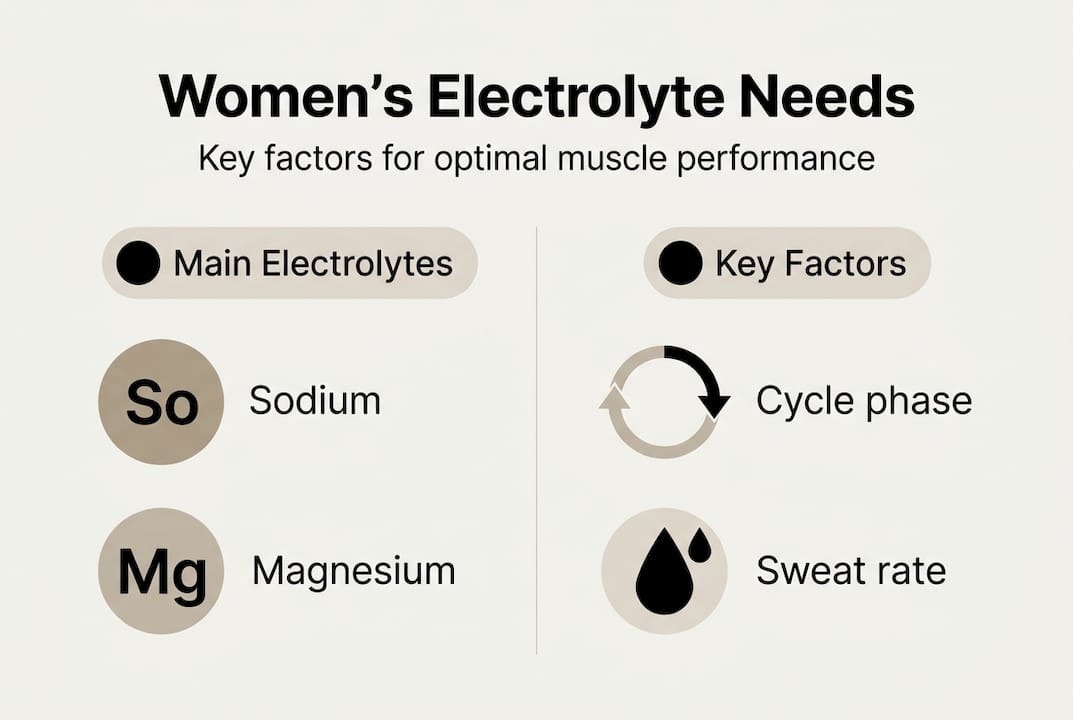
Electrolytes are electrically charged minerals that govern how your muscles contract, how your nerves fire, and how your cells maintain fluid balance. Understanding what are electrolytes is the first step towards making smarter choices in training. The four you need to know inside out are sodium, potassium, magnesium, and calcium.
Each plays a distinct role:
- Sodium regulates fluid volume inside and outside your cells, and drives the electrical gradients that trigger muscle contractions.
- Potassium works in opposition to sodium, helping muscles relax after contraction and preventing excessive firing.
- Calcium is the direct trigger for muscle fibre activation. Without adequate calcium, your muscles simply cannot contract efficiently.
- Magnesium acts as the counterbalance to calcium, enabling muscle relaxation and supporting energy production at a cellular level.
When you train hard, you sweat out sodium and potassium at significant rates, disrupting these gradients. The result is not just cramps. You get premature fatigue, slower recovery, and reduced power output. For women in their 30s and 40s, hormonal shifts amplify this further, meaning your requirements are not static across the month or across the years.
Magnesium deserves particular attention. Magnesium needs are elevated in athletes to 300 to 400 mg per day at baseline, rising further with intense training, and deficiency is directly linked to cramps, poor recovery, and impaired energy production across more than 300 biochemical reactions. Yet most women are not hitting even the baseline.
“Magnesium is the electrolyte most commonly under-consumed by female athletes, yet it underpins virtually every energy and recovery process in the body.”
Signs of electrolyte imbalance go well beyond cramps. Watch for persistent muscle twitching, unusual fatigue during warm-up, disrupted sleep, and difficulty sustaining power in the final third of a session. These are functional signals, not just discomfort. Understanding why you should optimise electrolyte intake is not optional at this level of training. It is foundational.
Pro Tip: If your performance drops noticeably in the second half of sessions but your aerobic fitness feels solid, magnesium deficiency is one of the first things worth investigating.
Muscle cramps, fatigue and the truth about dehydration
For decades, the standard advice has been simple: cramp means you’re dehydrated or low on electrolytes. Drink more, add salt, carry on. It’s a tidy narrative, but the evidence is increasingly uncomfortable for those who’ve built training plans around it.
A landmark study on marathon muscle cramps found that cramps were not linked to dehydration or electrolyte depletion. Instead, athletes who cramped showed significantly higher creatine kinase levels (1166 U/L versus 464 U/L in non-cramping athletes), pointing to muscle damage as the real culprit. This directly contradicts the traditional view.
“Assuming every cramp is a hydration problem means you may be flooding your system with fluids while the actual cause goes unaddressed.”
Creatine kinase (CK) is an enzyme released when muscle fibres are damaged. Elevated CK is a reliable marker of muscle breakdown, and in this context, it tells us that cramps in endurance events are often a neuromuscular response to tissue stress, not a simple mineral deficit.
For female athletes, this distinction matters enormously. Here’s how to start separating the causes:
- Assess timing. Cramps that appear early in a session, before significant sweating, are unlikely to be electrolyte-driven.
- Check intensity. Cramps that coincide with a sudden increase in pace or load often reflect neuromuscular fatigue.
- Review recovery. If cramps appear the day after a hard session, muscle damage is a more likely driver than acute electrolyte loss.
- Track fluid intake. If you’re already drinking consistently and still cramping, over-hydration and diluted sodium may actually be contributing.
| Cramp trigger | Key indicator | Likely cause |
|---|---|---|
| Early session | Minimal sweat loss | Neuromuscular fatigue |
| Late session | Heavy sweating | Sodium or potassium loss |
| Post-session | Soreness, stiffness | Muscle damage (elevated CK) |
| Consistent pattern | Cycle-phase linked | Hormonal electrolyte shift |
Using electrolyte guidance for endurance alongside this kind of root-cause thinking gives you a far more precise tool than simply drinking more. For female-specific nuance, electrolyte replenishment for female athletes adds another layer of practical clarity.
How hormone cycles and training phases shift electrolyte needs
Your hormones do not just affect your mood or energy. They actively regulate how your kidneys handle sodium, how your body retains fluid, and how efficiently magnesium is absorbed and used. Ignoring this means you are working with an incomplete picture of your own physiology.
During the follicular phase (roughly days 1 to 14), oestrogen is rising. This phase tends to favour better fluid regulation and slightly lower sodium requirements. Many women find performance feels more consistent and recovery faster here.
During the luteal phase (roughly days 15 to 28), progesterone rises and oestrogen fluctuates. Progesterone has a mild diuretic effect, increasing sodium and fluid losses. Magnesium demand also rises as progesterone competes for absorption pathways. This is when electrolyte strategy needs to be most deliberate.
For women approaching or in peri-menopause, the picture shifts again. Oestrogen decline disrupts fluid balance more chronically, and sodium hyperhydration improves performance in heat conditions, making pre-event sodium loading a genuinely useful strategy rather than a gimmick.
| Cycle phase | Key electrolyte needs | Practical strategy |
|---|---|---|
| Follicular | Moderate sodium, standard magnesium | Maintain baseline intake |
| Luteal | Higher sodium, increased magnesium | Add 200 to 400 mg extra magnesium |
| Peri-menopause | Elevated sodium and magnesium | Consider pre-session sodium loading |
Practical signs that your electrolyte needs have shifted include increased thirst without obvious cause, bloating despite normal fluid intake, unusual fatigue in the second half of sessions, and disrupted sleep in the days before your period.
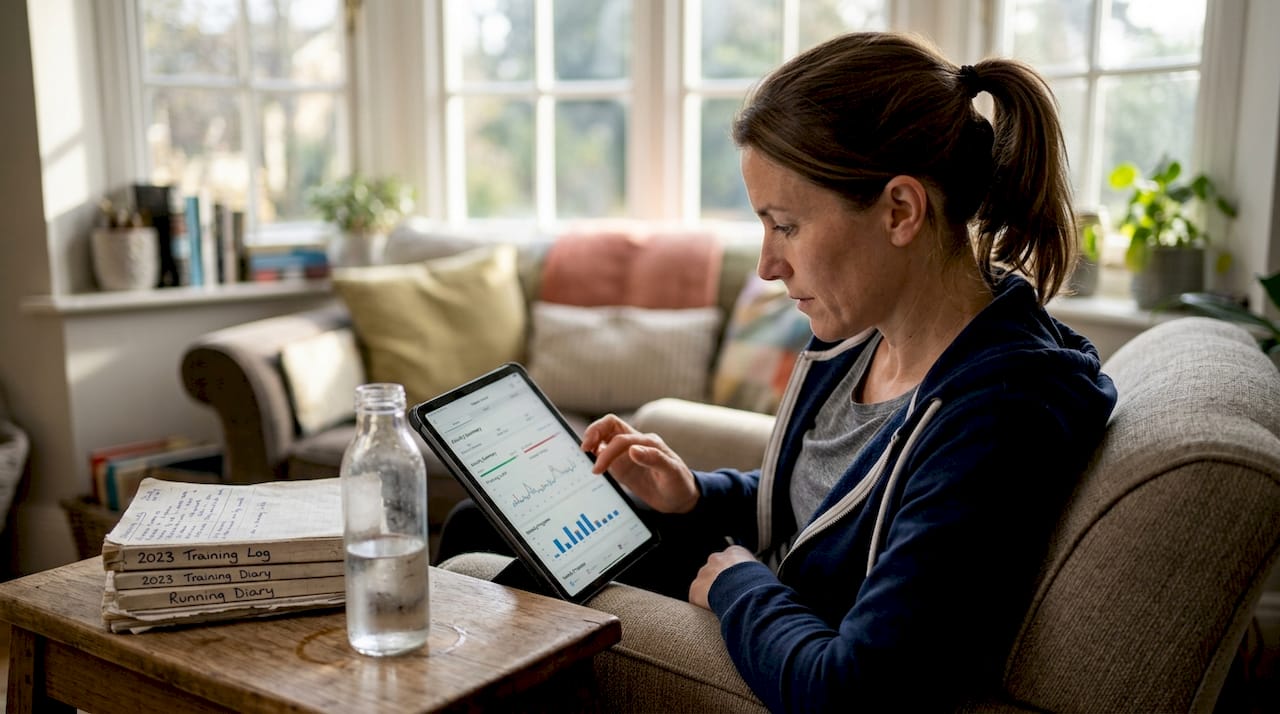
- Track your cycle alongside your training log, not separately from it.
- Increase magnesium-rich foods or supplementation in the week before your period.
- Consider a slightly higher sodium intake on high-sweat training days during the luteal phase.
Pro Tip: Pairing your training data with cycle tracking for just four weeks often reveals patterns that explain performance dips you’ve been attributing to fitness or effort.
For a deeper look at optimising electrolyte mixing for female performance, and to understand the specific risk of hyponatremia in female athletes, both are worth reading before you adjust your sodium intake significantly.
Practical strategies: testing, tracking and applying electrolyte needs
Knowing the theory is only useful if you can translate it into your actual sessions. Here is a structured approach to building a personalised electrolyte strategy that moves with your body.
Step 1: Measure your sweat rate
Weigh yourself without clothing immediately before and after a one-hour training session at moderate intensity. Every kilogram lost represents approximately one litre of sweat. This gives you a baseline sweat rate that you can then adjust for heat, humidity, and session intensity.
Step 2: Calculate sodium loss
Sweat sodium concentration varies widely between individuals, typically between 400 and 1800 mg per litre. If you notice white residue on your skin or kit after sessions, you are likely a high-sodium sweater and need to replace more aggressively.
Step 3: Combine sodium and potassium deliberately
Combining high sodium and potassium leads to optimal rehydration outcomes compared to either alone. This is why single-electrolyte products often underperform. Aim for a ratio that reflects your sweat profile, not a generic formula.
- Test your sweat rate in at least three different conditions: cool, warm, and high-intensity.
- Log symptoms alongside each session: energy, cramps, recovery quality, and sleep.
- Adjust sodium intake upward during luteal phase training and in hot conditions.
- Add magnesium supplementation in the evening, separate from training, for better absorption.
- Re-test every four to six weeks as fitness and hormonal context shift.
Key checkpoints to confirm your strategy is working:
- Urine colour remains pale yellow, not clear (over-hydration) or dark (under-hydration).
- Cramp frequency reduces over two to three weeks of adjusted intake.
- Recovery between sessions feels noticeably faster.
- Power output in the final third of sessions holds more consistently.
For a streamlined approach, the easy electrolyte workflow for Hyrox athletes translates these principles into a practical daily system. And if you want to build your intake from food first, the seven best electrolyte sources for female athletes is a solid starting point.
What most electrolyte guides miss for women over 30
Here is the uncomfortable truth: most electrolyte advice was built on research conducted in male athletes. The studies, the reference ranges, the hydration guidelines. They were not designed with your hormonal reality in mind, and applying them wholesale is one of the most common reasons female athletes plateau or struggle with unexplained fatigue and cramping.
The three mistakes we see most often are: ignoring cycle phase entirely when planning intake, relying on thirst as the primary signal (which hormonal fluctuations make unreliable), and skipping sweat rate testing in favour of guessing. Each one compounds the others.
The breakthroughs we have seen come from athletes who commit to personalised tracking, phase-based adjustments, and honest performance data over at least a full training cycle. It is not glamorous, but it works. A complete understanding of electrolyte loss is the foundation every serious female athlete needs before layering on any supplementation strategy. Generic advice is not a shortcut. It is a detour.
How to get your muscle electrolytes dialled in with Interval
If the evidence has convinced you that a personalised, phase-aware electrolyte strategy is worth investing in, the next question is where to start without the overwhelm.
Interval has formulated its electrolyte products specifically for athletes doing high-intensity training, using natural ingredients that work with your physiology rather than around it. The Starter Bundle is the most practical entry point: it lets you trial a structured electrolyte approach across different training phases and conditions without committing to a single product. It is designed to help you gather real data about your own response, so your strategy becomes yours, not borrowed from someone else’s training plan.
Frequently asked questions
How do I know if I need more electrolytes during high-intensity training?
If you notice excessive fatigue, frequent cramps, or sluggish recovery, it is worth reviewing your intake using sweat rate testing and phase-specific adjustments. Electrolyte deficiency in athletes is directly linked to cramps, fatigue, and impaired recovery.
Can muscle cramps be caused by something other than electrolyte depletion?
Yes. Marathon cramp research shows that muscle damage, reflected in CK levels of 1166 U/L versus 464 U/L, is often a stronger trigger than dehydration or electrolyte loss alone.
How does my menstrual cycle affect my electrolyte needs?
Sodium and magnesium requirements tend to rise during the luteal phase and peri-menopause. Cycle-phase tracking alongside sweat rate testing gives you the most accurate picture of when to adjust.
What is the best way to test if my electrolyte strategy is working?
Weigh yourself before and after training, track symptoms and session performance, and adjust based on sweat rate and cycle phase. Combining sodium and potassium using pre and post weigh-ins as your guide delivers the most reliable rehydration outcomes.
Recommended
- Optimise electrolyte mixing for female athletic performance – Interval
- Top electrolyte replenishment tips for female athletes – Interval
- Role of Trace Electrolytes: Boosting UK Female Athletic Performance – Interval
- Easy Electrolyte Workflow for Female Hyrox Athletes – Interval
- What are electrolytes? Essential guide for athletes 2026