


Essential amino acids: why they matter for female athletes
Most female athletes know protein is essential for building muscle and recovering from intense training. However, many don’t realise that not all proteins are equal when it comes to fuelling performance and repair. The secret lies in understanding essential amino acids, the building blocks your body cannot produce on its own. For women aged 30 to 50 engaged in high-intensity sports, getting the right balance of these nine critical nutrients can mean the difference between plateauing and reaching new performance peaks. This guide breaks down what essential amino acids are, why they’re particularly important for your age group, and how to optimise your intake for better recovery and strength gains.
Table of Contents
- What Are Essential Amino Acids And Their Role In Muscle Health
- Protein And Essential Amino Acid Needs For Female Athletes Aged 30-50
- Why Full Essential Amino Acids Outperform BCAAs Alone For Muscle Recovery And Performance
- Dietary Sources And Supplementation Strategies For Essential Amino Acids
- Enhance Your Training With Tailored Essential Amino Acid Support
- Frequently Asked Questions About Essential Amino Acids For Female Athletes
Key takeaways
| Point | Details |
|---|---|
| Nine essential amino acids | Your body cannot synthesise histidine, isoleucine, leucine, lysine, methionine, phenylalanine, threonine, tryptophan, and valine, so you must obtain them through diet or supplements. |
| Protein needs increase with age | Female athletes aged 30 to 50 require 1.4 to 2.2 grams of protein per kilogram of body weight daily, with higher amounts needed during perimenopause and postmenopause due to anabolic resistance. |
| Full EAAs beat BCAAs alone | Complete essential amino acid blends maximise muscle protein synthesis far more effectively than branched-chain amino acids on their own. |
| Timing matters for recovery | Distributing protein intake evenly every three to four hours and consuming EAAs around workouts optimises muscle repair and performance gains. |
| Whole food supplements work best | Natural, multi-ingredient protein sources combined with exercise increase fat-free mass and strength more effectively than isolated powders. |
What are essential amino acids and their role in muscle health
Amino acids are organic compounds that combine to form proteins, the fundamental building blocks of muscle tissue, enzymes, and hormones. Your body uses 20 different amino acids to construct these vital proteins, but nine essential amino acids cannot be synthesised internally and must come from external sources. For female athletes pushing their bodies through high-intensity training, understanding these nine becomes critical for optimising recovery and performance.
The nine essential amino acids each serve distinct functions in your body:
- Histidine supports immune function and helps produce histamine for inflammatory responses
- Isoleucine regulates blood sugar and aids energy production during intense exercise
- Leucine triggers muscle protein synthesis and helps preserve lean muscle mass
- Lysine supports calcium absorption, collagen formation, and immune function
- Methionine assists metabolism and detoxification processes
- Phenylalanine produces neurotransmitters that regulate mood and cognitive function
- Threonine supports connective tissue and fat metabolism
- Tryptophan serves as a precursor to serotonin, affecting sleep and mood
- Valine stimulates muscle growth and provides energy during physical activity
These amino acids work together to drive muscle protein synthesis, the biological process where your body repairs and builds new muscle tissue after training. When you complete a challenging workout, your muscle fibres experience microscopic damage. Essential amino acids provide the raw materials your body needs to repair this damage and adapt by building stronger, more resilient tissue. Without adequate EAAs, this post-workout recovery process stalls, limiting your ability to progress and potentially leading to overtraining symptoms.
Pro Tip: Your body cannot store excess amino acids like it stores fat or carbohydrates, so consistent daily intake matters more than occasional large doses.
The challenge for athletes lies in ensuring complete essential amino acid availability throughout the day. Unlike non-essential amino acids that your body manufactures from other compounds, these nine must be present simultaneously for optimal muscle protein synthesis. Missing even one essential amino acid creates a bottleneck that limits how effectively your body can repair and build muscle tissue, regardless of how much total protein you consume.
Protein and essential amino acid needs for female athletes aged 30-50
Your protein requirements differ significantly from both male athletes and younger women due to hormonal changes that affect how your body processes and utilises amino acids. Research shows female athletes require 1.4 to 2.2 grams per kilogram of body weight daily, with the higher end necessary during heavy training blocks or when restricting calories. For a 70-kilogram woman, this translates to 98 to 154 grams of protein daily, substantially more than the basic recommended dietary allowance.
Hormonal shifts during perimenopause and postmenopause create what scientists call anabolic resistance, where your muscles become less responsive to protein intake. Studies demonstrate women require 1.6 to 2.2 grams per kilogram during these life stages to prevent muscle loss and maintain strength. This increased requirement stems from declining oestrogen levels, which normally help preserve lean muscle mass and enhance protein synthesis. Without adequate protein and essential amino acids, you’re fighting an uphill battle against natural muscle loss that accelerates after age 40.
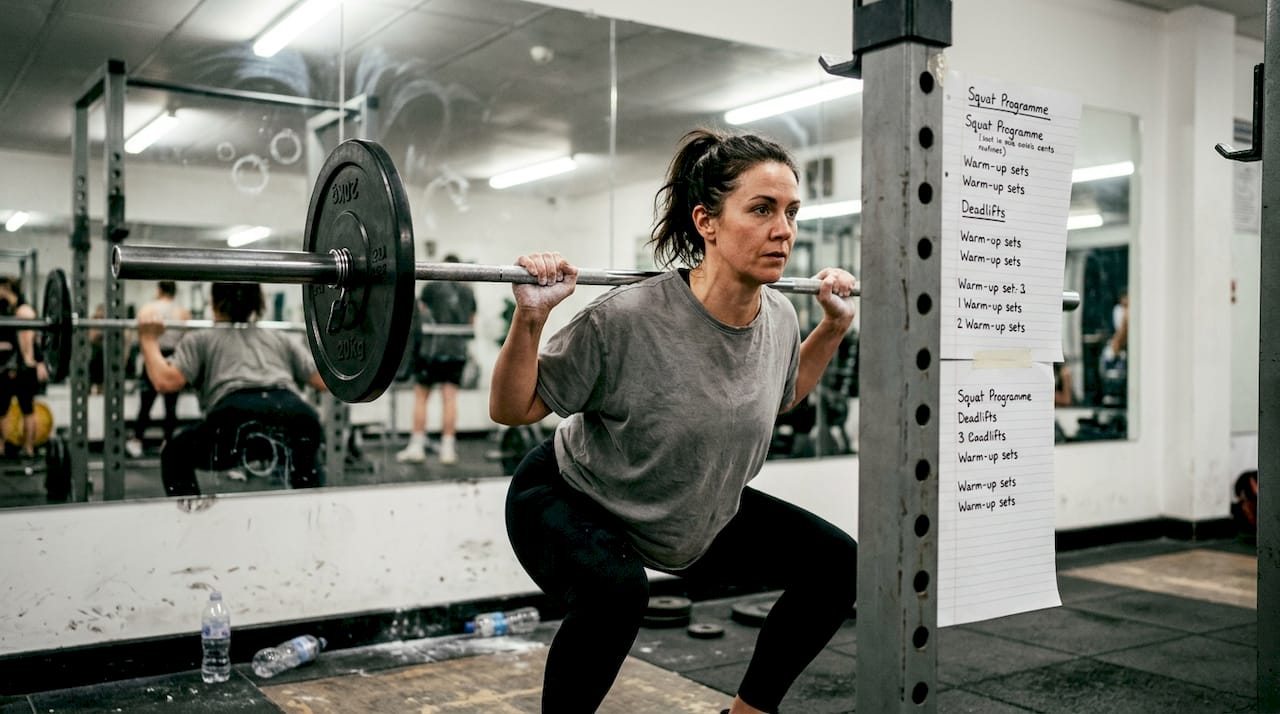
Distribution matters as much as total intake. Your body can only process a finite amount of protein per meal for muscle building purposes, typically around 25 to 40 grams depending on your size and training status. Spreading your protein intake across four to six meals or snacks every three to four hours maintains a steady supply of essential amino acids for muscle repair throughout the day. This approach proves far more effective than consuming most of your protein in one or two large meals.
During periods of intense training or calorie restriction, push towards the higher end of protein recommendations. When you’re running a calorie deficit whilst training hard, your body becomes more likely to break down muscle tissue for energy. Elevated protein intake provides a protective buffer, ensuring adequate essential amino acids remain available for muscle preservation even when overall energy is limited. This strategy becomes particularly crucial for female athletes balancing body composition goals with performance demands.
Pro Tip: Consume 20 to 40 grams of protein containing all nine essential amino acids within two hours after training to maximise muscle protein synthesis when your muscles are most receptive.
Practical implementation requires planning but doesn’t need to be complicated. Structure your day around four to six protein-rich meals or snacks, each containing 20 to 35 grams of high-quality protein. Prioritise complete protein sources at breakfast to break the overnight fast and kickstart muscle protein synthesis. Time your largest protein serving around your training session, either immediately before or after, to capitalise on enhanced amino acid uptake during the sports nutrition high intensity window when your muscles are primed for recovery.
Why full essential amino acids outperform BCAAs alone for muscle recovery and performance
Branched-chain amino acids have dominated sports nutrition conversations for years, marketed as the key to muscle growth and recovery. BCAAs consist of three essential amino acids: leucine, isoleucine, and valine. Leucine particularly stands out for its ability to trigger the cellular machinery responsible for muscle protein synthesis. Research confirms BCAAs reduce muscle soreness and may enhance early rate of force development, making them seem like an attractive option for athletes seeking quick recovery.
However, focusing solely on BCAAs misses a crucial piece of the muscle-building puzzle. Muscle protein synthesis requires all nine essential amino acids present simultaneously, not just three. Think of building muscle like constructing a house: leucine acts as the foreman signalling work to begin, but you still need all the other materials to actually build the structure. Without the remaining six essential amino acids, your body cannot complete the muscle repair process regardless of how much leucine you consume.
Studies directly comparing BCAA-only supplements to complete essential amino acid blends reveal striking differences in outcomes. Full EAA supplementation drives significantly greater increases in muscle protein synthesis compared to BCAAs alone. Athletes using complete EAA formulations report better recovery markers, reduced muscle damage, and improved performance in subsequent training sessions. The presence of all nine essential amino acids enables your body to fully capitalise on the anabolic signal that leucine provides.
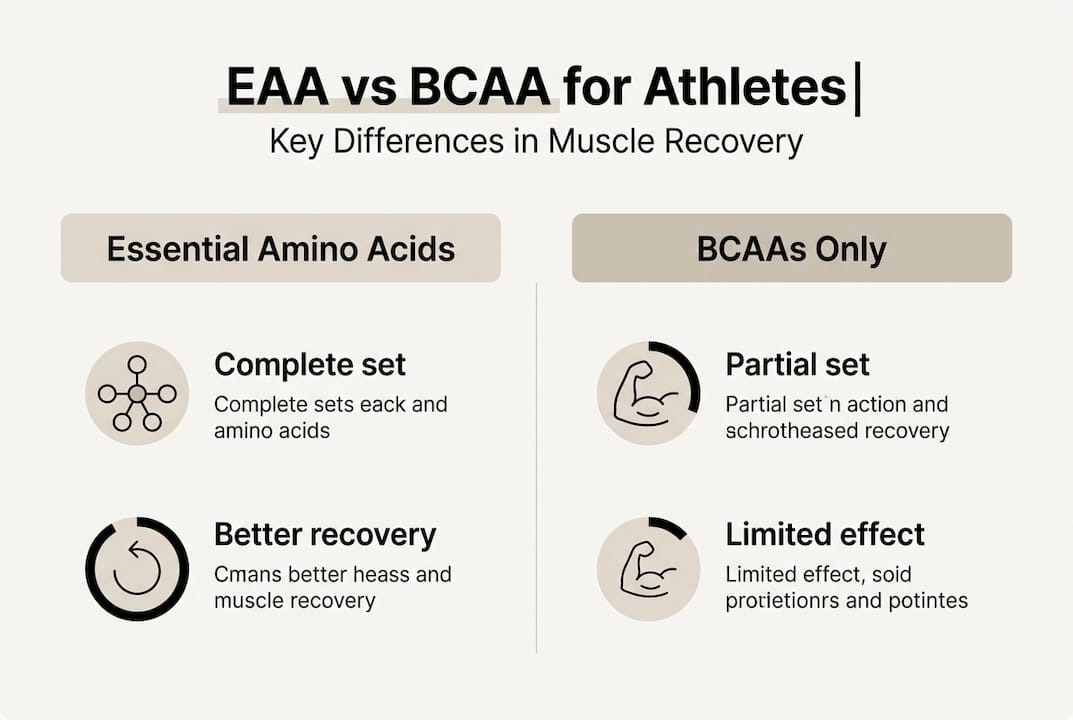
| Aspect | BCAAs Only | Full EAAs | | — | — | | Muscle protein synthesis | Limited by missing amino acids | Maximised with complete profile | | Recovery time | Moderate improvement | Substantial improvement | | Muscle soreness | Reduced | Significantly reduced | | Strength gains | Minimal direct effect | Enhanced when combined with training | | Cost effectiveness | Lower per serving | Better results per pound spent |
For female athletes, this distinction becomes even more important given the anabolic resistance that develops with age. Your muscles already respond less efficiently to protein intake, so providing incomplete amino acid profiles further handicaps your recovery capacity. Complete essential amino acid supplementation ensures you’re giving your body everything it needs to overcome age-related challenges and maintain the muscle mass critical for protein importance female athletes competing in demanding sports.
Pro Tip: Choose supplements listing all nine essential amino acids on the label rather than products highlighting only BCAAs, even if they cost slightly more, as the superior results justify the investment.
The amino acid supplements muscle building market has evolved to recognise these findings, with more companies now offering complete EAA formulations. When selecting supplements, verify the product contains meaningful amounts of all nine essential amino acids, not just token quantities added to a BCAA base. Your body requires adequate levels of each amino acid to support optimal muscle protein synthesis and recovery.
Dietary sources and supplementation strategies for essential amino acids
Obtaining adequate essential amino acids starts with choosing high-quality protein sources that naturally contain complete amino acid profiles. Animal-based proteins consistently deliver all nine essential amino acids in optimal ratios:
- Chicken breast provides approximately 31 grams of protein per 100 grams with excellent EAA content
- Salmon offers 25 grams of protein per 100 grams plus beneficial omega-3 fatty acids
- Eggs contain 13 grams of protein per 100 grams with the highest biological value of any whole food
- Greek yoghurt delivers 10 grams of protein per 100 grams along with gut-friendly probiotics
- Lean beef supplies 26 grams of protein per 100 grams with high bioavailability
Plant-based athletes can achieve complete essential amino acid intake by combining complementary protein sources. Quinoa stands out as one of the few plant foods containing all nine essential amino acids, whilst combinations like rice and beans or hummus and wholegrain bread create complete profiles. However, plant proteins generally require larger serving sizes to match the essential amino acid content of animal sources.
Supplementation offers a practical solution for busy athletes struggling to meet elevated protein needs through whole foods alone. Research demonstrates protein supplementation increases fat-free mass, muscle hypertrophy, and strength in women when combined with resistance training. The key lies in choosing supplements that mirror whole food nutrition rather than isolated amino acids.
| Source | Protein per 100g | Complete EAA Profile | Leucine Content | Convenience |
|---|---|---|---|---|
| Chicken breast | 31g | Yes | 2.5g | Requires cooking |
| Whey protein | 80g | Yes | 10g | Mix and drink |
| EAA supplement | 90g | Yes | 12g | Mix and drink |
| Quinoa | 14g | Yes | 0.8g | Requires cooking |
| Lentils | 9g | No | 0.7g | Requires cooking |
Whole-food supplements athletes can rely on combine the convenience of powders with the nutritional complexity of real food ingredients. These products typically include not just isolated amino acids but also naturally occurring vitamins, minerals, and phytonutrients that support overall health and performance. Look for supplements using minimally processed ingredients rather than synthetic amino acids manufactured in laboratories.
Timing your essential amino acid intake strategically amplifies their benefits. Consume 20 to 40 grams of complete protein or a serving of EAA supplement within two hours after training when muscle protein synthesis rates peak. Many athletes also benefit from a smaller serving of 10 to 15 grams of EAAs immediately before training to ensure amino acids are circulating in your bloodstream during exercise, ready for immediate uptake once you finish.
For post-workout nutrition examples that maximise recovery, pair your essential amino acid source with easily digestible carbohydrates. This combination replenishes glycogen stores whilst providing the building blocks for muscle repair. A smoothie containing whey protein, banana, and berries or a chicken and sweet potato bowl both deliver this winning combination of nutrients your body needs most after intense training.
Enhance your training with tailored essential amino acid support
Understanding essential amino acids is one thing, but consistently meeting your elevated requirements as a female athlete requires convenient, reliable solutions. Interval’s Starter Bundle was designed specifically for women like you who refuse to compromise on training intensity or nutritional quality. Our products combine complete essential amino acid profiles with natural ingredients that support both immediate performance and long-term health.
The formulations in our Starter Bundle address the unique challenges female athletes face, from hormonal fluctuations affecting protein metabolism to the demanding recovery needs of high-intensity training. Each serving delivers optimal ratios of all nine essential amino acids, ensuring your muscles have everything needed to repair, adapt, and grow stronger. Unlike isolated BCAA products, our complete approach mirrors the amino acid profiles found in whole foods whilst offering unmatched convenience for your busy schedule.
Explore our starter bundle essential amino acids to discover how targeted nutrition can transform your training outcomes. Our blog features additional evidence-based guidance on sports nutrition, helping you make informed decisions that align with your performance goals and lifestyle demands.
Frequently asked questions about essential amino acids for female athletes
Are essential amino acid supplements safe and do they cause side effects?
Essential amino acid supplements are generally safe when used as directed, as they simply provide the same compounds found in protein-rich foods. Most women experience no adverse effects, though consuming extremely high doses on an empty stomach may cause mild digestive discomfort. Start with recommended serving sizes and take with food if you notice any stomach upset.
When should I take essential amino acids for best recovery results?
The most effective timing is within two hours after training when muscle protein synthesis rates peak and your muscles are most receptive to amino acids. Many athletes also benefit from consuming 10 to 15 grams immediately before training to ensure amino acids are available in your bloodstream during exercise. Distributing intake across multiple meals throughout the day maintains steady amino acid availability.
How does menopause affect my essential amino acid requirements?
Menopause increases your protein and essential amino acid needs due to declining oestrogen levels that create anabolic resistance, where muscles become less responsive to protein intake. You’ll likely need 1.6 to 2.2 grams of protein per kilogram of body weight daily, towards the higher end of recommendations for younger athletes. Prioritising complete essential amino acid sources becomes even more critical for preserving muscle mass and strength during this transition.
Can I rely solely on essential amino acid supplements without eating whole protein foods?
Whilst EAA supplements effectively support muscle protein synthesis, whole protein foods provide additional nutrients like vitamins, minerals, and beneficial compounds that supplements cannot fully replicate. A balanced approach combining high-quality whole food proteins with strategic supplementation delivers the best results for overall health and performance. Use supplements to fill gaps rather than replace nutritious meals.
Should I combine essential amino acids with my pre-workout nutrition?
Pairing essential amino acids with your pre-workout rituals women athletes can enhance performance and recovery. Consuming 10 to 15 grams of EAAs 30 to 60 minutes before training ensures amino acids circulate in your bloodstream during exercise, ready for immediate muscle uptake. Combine with easily digestible carbohydrates for sustained energy throughout your session.
How long does it take to notice performance improvements from optimising essential amino acid intake?
Most female athletes report noticeable improvements in recovery within one to two weeks of consistently meeting their essential amino acid requirements. Reduced muscle soreness, better energy levels, and improved training capacity typically appear first. Measurable strength gains and body composition changes generally become evident after four to eight weeks of combining adequate EAA intake with progressive training.