


Fast-acting electrolytes: boost performance and recovery naturally
TL;DR:
- Fast-acting electrolytes optimize absorption through the SGLT1 pathway, delivering minerals within minutes.
- Tailoring hydration strategies to individual cycles and needs enhances athletic performance and recovery.
- Combining natural foods and specialized mixes ensures effective, personalized rehydration for high-intensity training.
Sports drinks are not always the fastest route to rehydration. Many popular bottles are loaded with sugar and artificial additives that actually slow absorption, leaving you under-fuelled mid-session. Fast-acting electrolyte formulations work through a specific physiological mechanism that plain water and typical sports drinks simply cannot match. If you train hard and want to perform at your best, understanding how rapid electrolyte uptake works gives you a genuine edge over athletes still guessing at hydration. This article covers the science, the practical benefits, and exactly how to apply it.
Table of Contents
- What are fast-acting electrolytes?
- Why speed matters: performance, recovery, and the female athlete
- Natural vs. synthetic: what works best for fast action?
- Timing, quantity, and personalisation: getting it right
- Why most athletes get fast-acting electrolytes wrong, and how to fix it
- Take your hydration further with Interval
- Frequently asked questions
Key Takeaways
| Point | Details |
|---|---|
| Rapid rehydration mechanism | Combining sodium and glucose enables your body to absorb water and electrolytes much faster than water or most sports drinks. |
| Female-specific needs | Menstrual cycle phases influence optimal electrolyte strategies—timing and dosing matter. |
| Natural solutions outperform | Natural sources like coconut water and fruit mixes, paired with sea salt, deliver fast, effective support with additional health benefits. |
| Personalisation is key | Self-testing and tweaking your electrolyte intake based on sweat loss and training boost both safety and performance. |
| Avoid common mistakes | Steer clear of sugar-heavy or slow drinks and prioritise solutions that match your activity’s demands. |
What are fast-acting electrolytes?
Electrolytes are minerals that carry an electrical charge in your body. Sodium, potassium, magnesium, and chloride are the big players. They regulate fluid balance, trigger muscle contractions, and keep your nervous system firing correctly. Without them, performance drops fast.
Not all electrolyte products work at the same speed. Standard products dissolve in water and are absorbed through the gut, but the rate varies enormously depending on the formula. Fast-acting electrolytes are specifically designed to exploit the body’s most efficient absorption pathway, getting minerals and water into your bloodstream in minutes rather than half an hour.
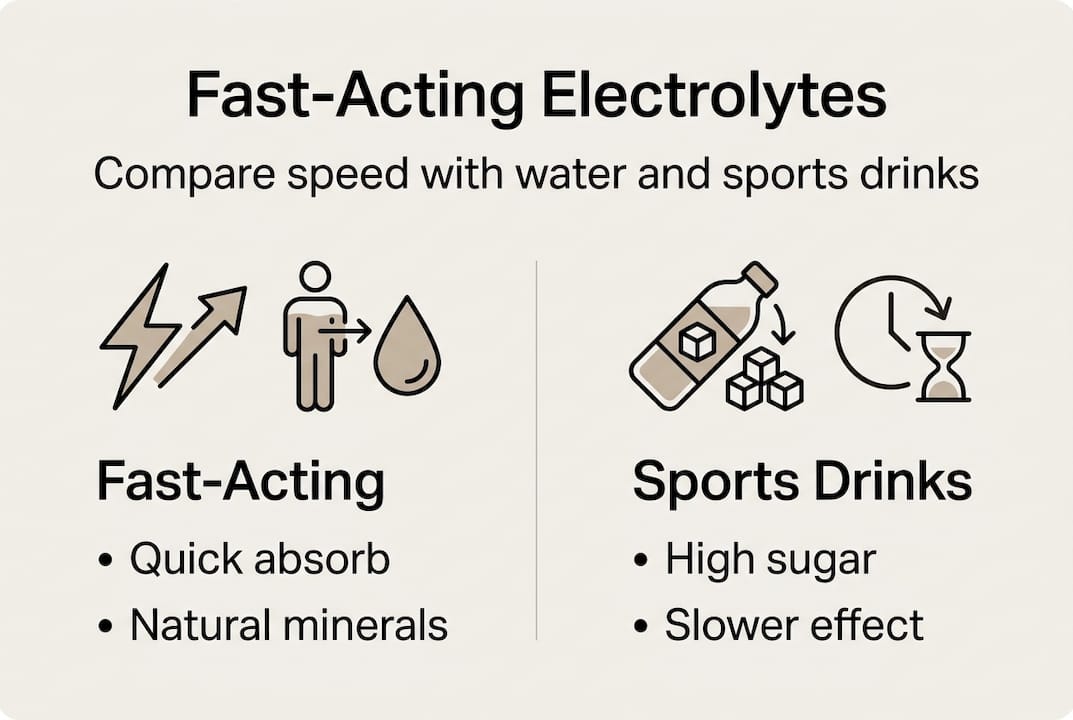
The key mechanism is the SGLT1 cotransporter. When sodium and glucose are present together in the right ratio, this transporter pumps them across the gut wall, pulling water along with them via osmosis. The result is rehydration that outpaces plain water significantly. This is the science behind Oral Rehydration Solutions (ORS), and it is the same principle that well-formulated electrolyte mixes use.
For optimising electrolyte intake, understanding this distinction matters. Plain water dilutes sodium in your blood, which can actually impair fluid retention. High-sugar sports drinks oversaturate the gut, slowing absorption. A fast-acting formula threads the needle between both.
What qualifies an electrolyte product as fast-acting:
- Contains sodium and glucose in an optimal ratio to activate SGLT1
- Low osmolality (closer to blood plasma concentration)
- Minimal fillers, artificial sweeteners, or excess sugar
- Dissolves rapidly and is easy on the gut
- Delivers measurable rehydration within 15 to 20 minutes
| Feature | Fast-acting electrolytes | Plain water | High-carb sports drinks |
|---|---|---|---|
| Absorption speed | Very fast (minutes) | Slow | Moderate |
| SGLT1 activation | Yes | No | Partial |
| GI distress risk | Low | Very low | Moderate to high |
| Sustained energy | Moderate | None | High (but often too much) |
| Suitable for intensity | High | Low to moderate | Moderate |
If you want a deeper look at applying this in training, the guide on using electrolytes for endurance is worth reading.
Why speed matters: performance, recovery, and the female athlete
Understanding the science is one thing, but what impact does speed of electrolyte uptake have for real athletes, especially women?
When you are working at high intensity, you can lose between 1 and 2.5 litres of sweat per hour. Even mild dehydration of 2% body mass impairs both physical output and cognitive sharpness. In sports that demand split-second decisions alongside physical endurance, that mental dip can be the difference between a personal best and a poor session.
Rapid rehydration matters because it closes that gap quickly. Getting electrolytes back into your bloodstream fast means:
- Muscle cramping risk drops because sodium and potassium levels stabilise
- Cardiovascular strain reduces as blood volume is maintained
- Core temperature regulation improves, which is critical in heat
- Mental focus holds up through the final stages of a session
- Recovery starts sooner, with glycogen replenishment and muscle repair kicking in earlier
For female athletes specifically, there is an additional layer. Sodium retention in women varies across the menstrual cycle, with greater retention at rest during the mid-luteal phase. This means your electrolyte needs are not static. What works in week one may not be enough in week three.
“Sodium hyperhydration enhances fluid retention and reduces body mass loss during heat exercise for female athletes, with greater benefits during certain menstrual phases.”
This is why generic hydration advice frequently falls short for women. Most protocols are built on male physiology data. Understanding sodium dosing and hyperhydration in the context of your own cycle is a meaningful performance lever.
Pro Tip: Track your perceived thirst, urine colour, and energy levels across your cycle for two to three months. You will start to see clear patterns in your hydration needs that no generic guide can give you.
The common mistake is reaching for a high-carb sports drink out of habit. These are often too concentrated to absorb quickly, and the sugar load can cause GI distress precisely when you need your gut to be calm.
Natural vs. synthetic: what works best for fast action?
Armed with the knowledge of why speed matters, let us see how different sources stack up for rapid electrolyte replenishment.
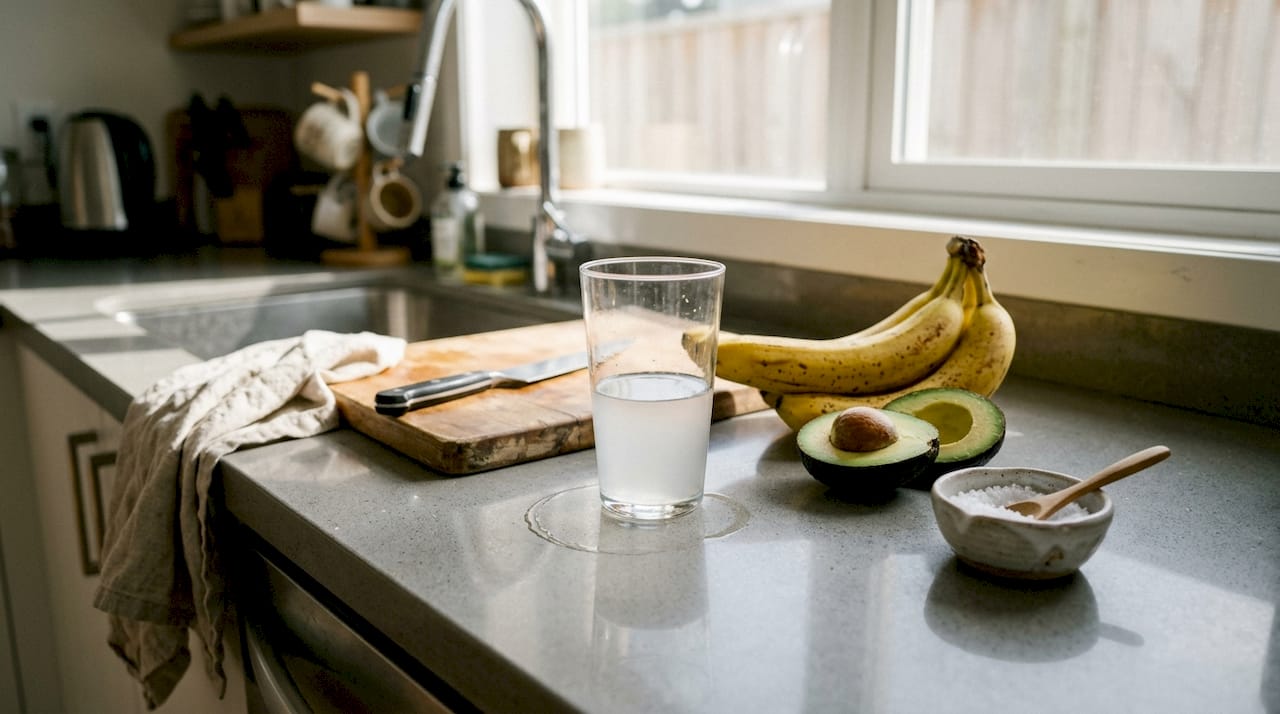
Natural fast-acting sources include coconut water, bananas, avocados, and sea salt. These provide bioavailable minerals alongside antioxidants and fibre that support overall recovery. The trade-off is timing: whole foods typically take 15 to 30 minutes to begin delivering their electrolytes to your bloodstream, making them better suited to pre-session loading or post-session recovery.
Commercial fast-acting mixes, when properly formulated, can begin working in under 15 minutes because the minerals are already in dissolved, readily absorbed form. For mid-session use or when you need rapid replenishment after intense heat exposure, this speed advantage is real.
| Source | Speed of action | Bioavailability | GI distress risk | Additional benefits |
|---|---|---|---|---|
| Coconut water | 15 to 25 min | High | Very low | Antioxidants, natural sugars |
| Banana with sea salt | 20 to 30 min | Moderate to high | Very low | Potassium, magnesium, fibre |
| ORS or quality electrolyte mix | Under 15 min | Very high | Low | Rapid SGLT1 activation |
| High-carb sports drink | 20 to 40 min | Moderate | Moderate | Energy, but often excess sugar |
For best natural electrolyte sources that suit high-intensity training, whole foods win on gut comfort and sustained release. They are ideal for:
- Pre-session meals two to three hours before training
- Post-session recovery within 30 minutes of finishing
- Low to moderate intensity days when speed is less critical
- Travel or situations where supplements are not accessible
Fast-acting mixes earn their place during sessions longer than 60 minutes, in hot or humid conditions, and in competition when you cannot afford a slow gut. The smart approach, covered in more detail in electrolyte replenishment tips, is to use both strategically rather than choosing one over the other.
Timing, quantity, and personalisation: getting it right
Having compared sources, let us move to practical guidance on how female athletes can implement a smart electrolyte strategy for real results.
Personalisation is not a buzzword here. It is genuinely necessary. Your sweat rate, the sport you play, the climate you train in, and where you are in your menstrual cycle all shift your electrolyte requirements. A one-size approach means you are either under-replacing or over-replacing, and both cause problems.
A solid starting framework:
- Before training: Eat a whole food source of electrolytes two to three hours out. Avocado on sourdough with sea salt is a practical and effective option.
- During sessions over 60 minutes: Aim for 300 to 600mg of sodium per hour using a fast-acting mix. Sip every 15 to 20 minutes rather than gulping large amounts.
- In heat or humidity: Increase sodium intake toward the upper end of that range and start hydrating earlier than you think you need to.
- Post-session: Combine a fast-acting mix immediately after finishing with a whole food meal within 60 minutes to support glycogen replenishment and muscle repair.
- Across your cycle: Reduce sodium supplementation slightly in the mid-luteal phase when retention is naturally higher, and increase it in the follicular phase when needs tend to rise.
For a step-by-step approach, the practical workflow for electrolytes guide simplifies this into a daily routine. If you want to refine your formula further, mixing for optimal results covers the detail.
Research on sports drinks during exercise supports the value of timed intake over ad hoc drinking, particularly for sessions exceeding an hour.
Pro Tip: To reduce GI distress, avoid taking electrolytes on an empty stomach mid-session. Pair your mix with a small amount of food or take it alongside a light snack in the 30 minutes before you start.
Why most athletes get fast-acting electrolytes wrong, and how to fix it
Most athletes copy what they see others doing. A teammate uses a particular sports drink, so they use it too. A coach recommends a generic protocol, and everyone follows it regardless of individual differences. The problem is that female athletes have physiological variables that make copying a poor strategy.
The cycle alone changes your hydration picture every week. Add in differences in sweat rate, gut sensitivity, and training intensity, and the gap between a generic plan and a personalised one becomes significant.
What we have found is that the athletes who perform best are not necessarily using the most expensive products. They are the ones who have spent time understanding their own patterns, testing different timings, and building a baseline with whole foods before layering in fast-acting mixes for high-intensity spikes. That combination, consistent whole food electrolyte intake plus targeted fast-acting supplementation when it counts, is more effective than relying on either alone.
The overlooked insight is that electrolytes for muscle performance are not just a race-day consideration. Building consistent daily habits around electrolyte intake means you arrive at hard sessions already well-stocked, reducing how much catch-up work your body needs to do mid-effort.
Take your hydration further with Interval
Putting this science into practice is easier when you have the right products and resources behind you. Interval is built specifically for athletes doing high-intensity sport, using natural ingredients that work with your physiology rather than against it.
The Interval Starter Bundle gives you a practical entry point to fast-acting, naturally formulated electrolytes designed for sessions like yours. Whether you are training for Hyrox, competing in team sport, or pushing your limits in the gym, the bundle covers your pre-session and mid-session needs without artificial fillers. Head to useinterval.co.uk to discover your ideal mix and find more performance guides built around female athletes.
Frequently asked questions
What makes an electrolyte fast-acting?
Fast-acting electrolytes use sodium and glucose together in an optimal ratio to activate the SGLT1 pathway, pulling water into the bloodstream far more quickly than plain water or standard sports drinks.
Which foods or drinks naturally act quickly for rehydration?
Coconut water and banana with a pinch of sea salt provide natural, bioavailable electrolytes without artificial additives, though they work best as pre or post-session options rather than mid-session rapid fixes.
How does the menstrual cycle affect electrolyte needs?
Sodium retention varies across the cycle, with the mid-luteal phase showing greater retention at rest, meaning intake should be adjusted week by week rather than kept static.
Is there a risk of taking too many electrolytes?
Yes. Excess sodium or potassium can cause imbalances and GI distress, so personalise your intake based on sweat rate, session intensity, and cycle phase rather than defaulting to maximum doses.
Recommended
- Easy Electrolyte Workflow for Female Hyrox Athletes – Interval
- Master Electrolyte Use for Endurance in Sports – Interval
- Role of Trace Electrolytes: Boosting UK Female Athletic Performance – Interval
- Top electrolyte replenishment tips for female athletes – Interval
- Coffee & performance – Autoryzowany dystrybutor i serwis Jura Wrocław