


How botanicals boost performance for female Hyrox athletes
TL;DR:
- Botanicals like ashwagandha, rhodiola, and beetroot support endurance, recovery, and resilience for female Hyrox athletes. Proper selection, dosing, and timing are essential to maximize benefits and avoid interactions or tolerance. Personalization and sticking to evidence-based, standardized supplements enhance performance without over-relying on shortcuts.
Walk into any sports supplement shop and you will find shelves stacked with synthetic pre-workouts, artificial stimulants, and products making bold promises. For female Hyrox athletes in their 30s and 40s, the confusion is real. Which products actually work for your body, your hormones, and the specific demands of Hyrox? The answer, increasingly backed by research, points to botanicals. Plant-derived ingredients like ashwagandha, rhodiola, and beetroot are showing genuine, measurable benefits for endurance, recovery, and resilience. This guide cuts through the noise, giving you the evidence and practical tools to use botanicals with confidence.
Table of Contents
- What botanicals are and why they matter for Hyrox athletes
- The science-backed benefits of top botanicals
- How to choose and dose botanicals safely
- Integrating botanicals into your Hyrox training and recovery
- Current research gaps and real-world limitations
- Our perspective: what actually works with botanicals for female Hyrox athletes
- Looking to harness botanicals for your Hyrox journey?
- Frequently asked questions
Key Takeaways
| Point | Details |
|---|---|
| Natural botanicals work | Ashwagandha, rhodiola, beetroot, and tart cherry can boost endurance and recovery for female Hyrox athletes. |
| Choose wisely and dose safely | Opt for bioavailable botanical supplements with evidence-based dosages and avoid chronic high-dose use. |
| Personalise your protocol | Integrate botanicals alongside training and nutrition, tracking individual response for best results. |
| Stay evidence-led | Prefer botanicals backed by robust data and be wary of overstated claims, especially for women 30–50. |
What botanicals are and why they matter for Hyrox athletes
Botanicals are ingredients sourced directly from plants, including roots, berries, leaves, and fungi. Unlike synthetic compounds, they work with your body’s natural pathways rather than overriding them. In sports nutrition, botanicals have moved from the fringes into mainstream research, with a growing body of evidence showing they can meaningfully support athletic performance.
For Hyrox athletes specifically, the demands are unique. You need sustained aerobic capacity across eight functional stations, rapid recovery between sessions, and the mental and physical resilience to peak on race day. These are not qualities that a single stimulant can deliver. Recent evidence on botanicals confirms that botanicals such as ashwagandha, rhodiola rosea, curcumin, tart cherry, beetroot, and ginseng support performance through mechanisms like Nrf2 activation, NF-κB inhibition, and adaptogenic stress modulation, all of which directly address the physiological demands of high-intensity functional fitness.
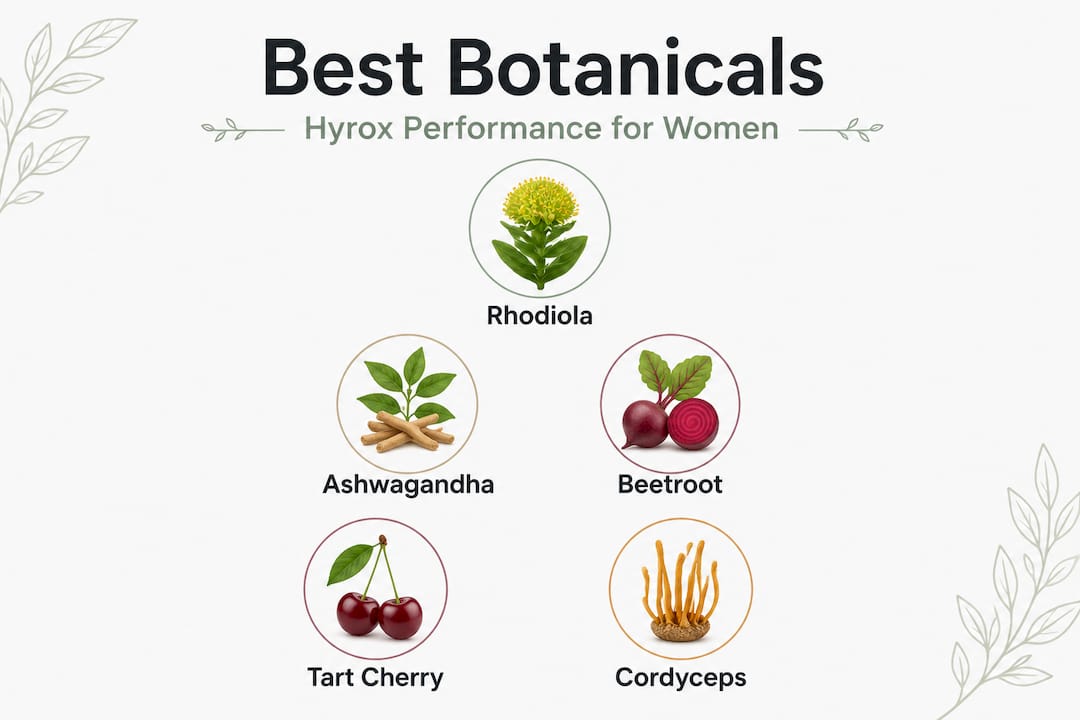
The most commonly studied botanicals in sports science include:
- Ashwagandha: An adaptogen that lowers cortisol, supports strength, and aids sleep quality
- Rhodiola rosea: Reduces fatigue and enhances endurance, particularly in aerobic efforts
- Beetroot: Delivers dietary nitrates that boost muscular efficiency
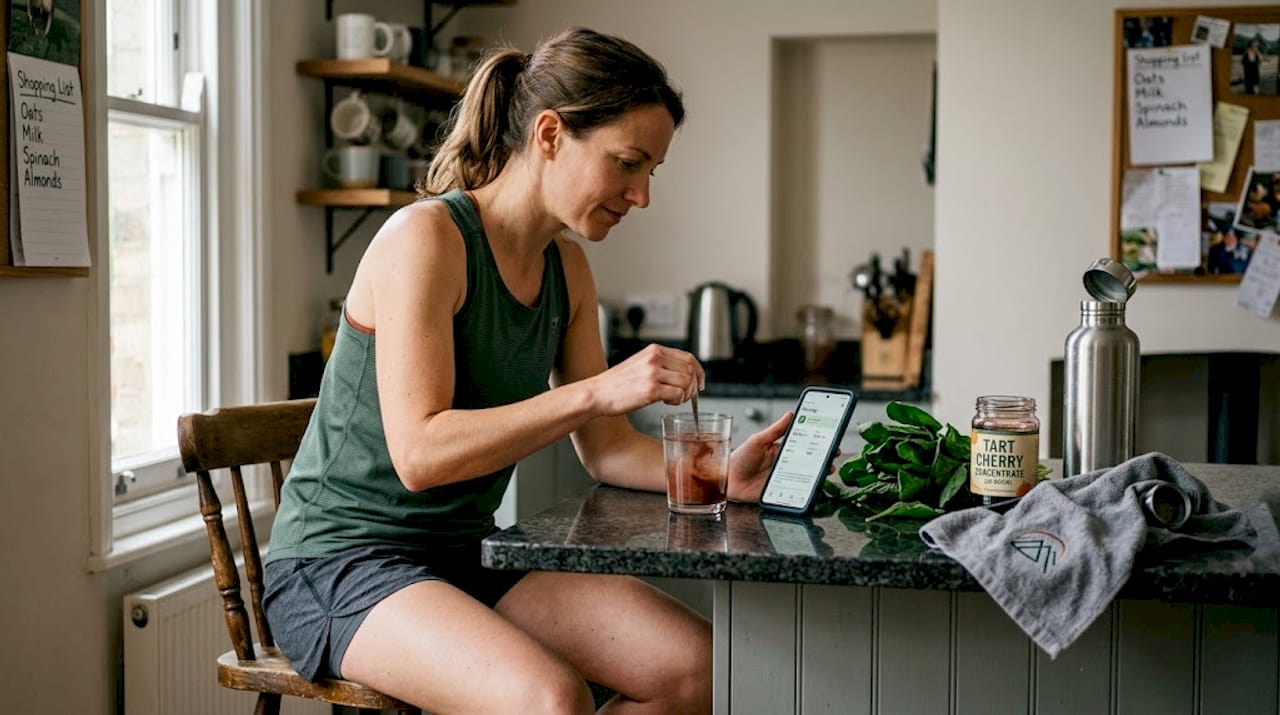
- Tart cherry: Rich in anthocyanins that reduce post-exercise soreness
- Curcumin: A potent anti-inflammatory from turmeric
- Ginseng and cordyceps: Adaptogens with links to improved stamina and fatigue resistance
“The shift towards plant-based performance support is not a wellness trend. It reflects a genuine evidence base for how natural compounds interact with human physiology under training stress.”
This matters more for female athletes because many synthetic stimulants interact poorly with hormonal fluctuations across the training month. Understanding adaptogens explained is a useful starting point, and the framework for botanical intake for female athletes helps translate that knowledge into a practical approach.
With this context, it is essential to understand how specific botanicals deliver their benefits at a practical level.
The science-backed benefits of top botanicals
The evidence for individual botanicals varies in quality and specificity, but several have strong support for high-intensity female athletes. Here is how the leading botanicals stack up:
| Botanical | Primary benefit | Evidence strength | Typical dose |
|---|---|---|---|
| Rhodiola rosea | Endurance, fatigue reduction | Strong (women-specific data) | 200–600 mg/day |
| Ashwagandha | Strength, cortisol reduction | Strong | 300–600 mg/day |
| Beetroot juice | Muscular endurance, efficiency | Strong | 500 ml or 400 mg extract |
| Tart cherry | Recovery, soreness reduction | Moderate to strong | 480 ml juice or 480 mg extract |
| Curcumin | Inflammation, muscle repair | Moderate | 400–1500 mg/day |
| Ginseng/Cordyceps | Stamina, fatigue resistance | Moderate | 400–1000 mg/day |
Rhodiola stands out particularly for women in the Hyrox demographic. Research shows rhodiola boosts TTE 45% in women undergoing eccentric training, alongside improvements in reactive strength index of 8 to 33 percent in the late stages of sessions and meaningful reductions in creatine kinase, a marker of muscle damage. Those numbers are not trivial. For an athlete pushing through a Hyrox race, the ability to maintain power output in the final stations is exactly where rhodiola shows its value.
Beetroot works through a different but equally relevant mechanism. Nitrate-rich beetroot juice improves exercise efficiency and muscular endurance in high-intensity efforts, meaning your muscles produce the same force with less oxygen demand. This is the endurance edge that matters across a full Hyrox workout.
Ginseng, ginger, and cordyceps have also earned their place. Adaptogens like cordyceps increase endurance capacity, muscle strength, and fatigue resistance, making them useful across both training blocks and race preparation phases. For women managing busy lives alongside serious training, the fatigue-modulating effects are particularly relevant.
Pro Tip: Always look for standardised extracts on the label. Rhodiola should specify rosavin and salidroside content. Curcumin should be paired with piperine or in a phospholipid complex for proper absorption. Without these markers, you are often paying for a weak, poorly absorbed product.
Explore beetroot for performance and consider how it fits into your pre-workout strategies to get the most from each training session.
How to choose and dose botanicals safely
Selecting the right botanical supplement is as important as choosing the right botanical. The market is crowded with products that list impressive ingredients but deliver them in forms your body cannot effectively absorb. Here is how to approach selection with a critical eye:
- Look for standardised extracts. Ashwagandha should be KSM-66 or Sensoril. Rhodiola should specify the percentage of rosavins and salidrosides. These markers indicate the active compound has been concentrated and verified.
- Check the dose against research. A product listing 50 mg of ashwagandha is unlikely to produce the effects seen in trials using 300 to 600 mg per day. Match your chosen product to the clinically studied range.
- Consider bioavailability first. Botanical bioavailability varies enormously. Curcumin, quercetin, and resveratrol are notoriously poorly absorbed in standard forms. Without enhanced delivery systems, their benefits remain theoretical for many users.
- Cycle your use. Adaptogens in particular are best used in cycles of six to eight weeks on, followed by two to four weeks off. This prevents tolerance and maintains the sensitivity of the stress-response pathways they modulate.
- Audit your medication list. Some botanicals interact with commonly used medications. Rhodiola can influence blood pressure. Curcumin affects platelet function. Ginseng interacts with anticoagulants. This is not a reason to avoid them, but it is a reason to discuss with a healthcare professional if you are on any regular prescription.
| Supplement | Risk to watch | Interaction type |
|---|---|---|
| Curcumin | Blood thinners | Platelet function |
| Rhodiola | Antidepressants | Serotonergic activity |
| Ginseng | Warfarin, stimulants | Metabolism and clotting |
| Tart cherry | Generally low risk | Minimal |
A key caution worth taking seriously: high-dose chronic antioxidants can blunt training adaptations. When you flood the body with antioxidants at doses exceeding 15 mg/kg/day over long periods, you can interfere with the very oxidative signals that drive strength and endurance gains. The goal is not to eliminate oxidative stress entirely but to manage it intelligently.
Understanding the risks with botanical dosing is an important step before adding any new supplement to your routine.
Pro Tip: Food comes first. Dark cherries, turmeric, spinach, and beetroot are all real foods that deliver botanical compounds in naturally balanced forms. Use supplements to fill gaps that food cannot easily address, not to replace a solid nutrition foundation.
Integrating botanicals into your Hyrox training and recovery
Timing and context determine how much you benefit from botanical supplementation. Taking the right botanical at the wrong time, or in isolation from other recovery practices, will give you a fraction of the potential result.
Here is a practical framework for integrating botanicals across a Hyrox training week:
- Pre-training (30 to 60 minutes before): Rhodiola is best taken on an empty stomach before longer aerobic sessions or interval work. Beetroot extract or juice is most effective 90 minutes before high-intensity efforts.
- Post-training: Tart cherry concentrate taken immediately after hard sessions and again before bed significantly reduces next-day soreness. Curcumin is most effective when taken with a meal containing fat.
- Daily base use: Ashwagandha is best taken consistently, ideally at night, to support cortisol regulation and sleep quality over time.
- Pre-race week: Maintain beetroot intake across the five days before your Hyrox event. Avoid introducing any new botanical within two weeks of race day.
- Recovery weeks: Use tart cherry and curcumin more actively. Pull back on stimulating botanicals like ginseng during planned deload periods.
Research confirms that botanicals support Hyrox-specific demands across endurance and recovery, and their application is most effective when matched to the event structure. Combining them with tools like infrared therapy for recovery can create a compounding recovery effect that keeps you training consistently without accumulating excessive fatigue.
Stack strategically with functional botanicals for training and read up on evidence-based recovery strategies for women to build a protocol that actually moves the needle.
Pro Tip: Keep a simple training log that includes your botanical use, sleep quality, perceived effort, and recovery scores. After four weeks you will have enough personal data to see what is working and what needs adjusting. Individual response varies considerably, and your data is more valuable than any generic protocol.
Current research gaps and real-world limitations
Honest engagement with the science means acknowledging where the evidence is still developing. Several important gaps remain, and Hyrox athletes deserve to know them before making purchasing decisions.
“Promising results for acute recovery and performance are clear for several botanicals, but inconsistency persists for others, and large-scale, long-term trials in women aged 30 to 50 are still needed.”
The most significant limitation is representation. Women aged 30 to 50 are underrepresented in many supplement randomised controlled trials. Most studies use young male subjects, which means extrapolating results to your demographic requires caution. Botanical evidence gaps remain for quercetin in particular, where results are inconsistent across populations and performance outcomes.
Key limitations to keep in mind:
- Most botanical trials run for four to twelve weeks. Long-term effects (beyond six months) are largely unknown
- Quercetin shows inconsistent results across endurance, strength, and recovery metrics
- Proprietary blends on supplement labels hide individual ingredient doses, making it impossible to verify clinical relevance
- Marketing claims often extrapolate from male-dominated trials without female-specific validation
- Food-first remains the preferred approach; supplements should address specific, identified gaps
This does not mean botanicals are ineffective. It means you should apply the same critical thinking you would to any performance tool. Check the recent research updates regularly to stay current as the evidence base grows and evolves.
Our perspective: what actually works with botanicals for female Hyrox athletes
We have seen enough athletes cycle through expensive supplement stacks to know where the real problems lie. It is rarely about finding a secret botanical. It is almost always about misuse, poor product quality, and unrealistic expectations.
The athletes who benefit most from botanicals are those who treat them as precision tools rather than shortcuts. They are training consistently, sleeping well, and fuelling with whole foods. Botanicals fill specific gaps in their recovery or endurance capacity. They track their response, adjust dosing when needed, and do not chase every new ingredient that gets a positive headline.
What we consistently observe is that rhodiola and ashwagandha deliver the most reliable returns for women in the Hyrox demographic when taken in standardised, bioavailable forms. Beetroot delivers a genuine pre-competition edge. Tart cherry is underused and underrated for next-day recovery. Curcumin works quietly in the background when taken daily with appropriate formulation.
The biggest mistake we see is treating botanicals as compensatory. When sleep is poor, stress is unmanaged, and training load exceeds recovery capacity, no botanical fixes that. It might take the edge off, but it will not substitute for the fundamentals.
Personalisation is non-negotiable. What works for one athlete at a given training phase may not work for another. Use the female supplement guide as your starting framework, then build from your own feedback. That is where the real performance gains come from.
Looking to harness botanicals for your Hyrox journey?
If this article has given you clarity on where to start, the next step is choosing products you can actually trust. The supplement market is full of under-dosed, poorly formulated products that list the right botanicals but deliver them in forms your body cannot use.
At Interval, we formulate specifically for female athletes in high-intensity sports. Every ingredient is included at a clinically relevant dose, in a bioavailable form, with transparent labelling so you always know exactly what you are taking and why. Our Starter Bundle is built around the botanical and electrolyte stack most relevant to Hyrox performance and recovery. It is a straightforward, science-backed way to begin integrating botanicals properly into your training. No guesswork, no proprietary blends. Just effective ingredients, clearly dosed, ready to support your race preparation from day one.
Frequently asked questions
Which botanical is best for female Hyrox recovery?
Tart cherry and curcumin are well-studied for recovery, with tart cherry reducing soreness via anthocyanins and curcumin at 400 mg per day lowering creatine kinase levels after intense efforts.
Is beetroot supplementation worth it for Hyrox athletes?
Yes. Beetroot’s nitrate content directly improves exercise efficiency and muscular endurance in high-intensity events, making it one of the most practically relevant botanicals for Hyrox-style demands.
Are there risks to high-dose botanical supplements?
There are genuine risks. High-dose polyphenols above 15 mg/kg/day chronically may blunt training adaptations, and several botanicals interact with medications, which is why moderation and professional guidance matter.
Do botanicals help women over 40 more than younger athletes?
Emerging data suggests particular relevance for women in the 30 to 50 range, with ashwagandha and rhodiola showing strong female-specific results, though larger long-term trials are still in progress.
Recommended
- Top supplements for female Hyrox athletes: boost performance – Interval
- Dietary electrolytes: boost female Hyrox performance – Interval
- Pre-event hydration guide: boost Hyrox performance – Interval
- Role of Nutrition in Hyrox – Boosting Female Performance – Interval
- Performance naturelle : guide pratique et scientifique 2026 – Vitalcup