


Top endurance supplements for female athletes in 2026
TL;DR:
- Women’s endurance supplement choices should prioritize evidence-backed options and personalized testing.
- Beta-alanine and caffeine are well-supported for high-intensity efforts and endurance performance.
- Addressing deficiencies like iron is crucial before supplementing to prevent performance impairments.
Choosing endurance supplements when you’re a woman training hard in your 30s and 40s is genuinely complicated. The market floods you with promises, yet most clinical trials still recruit predominantly male subjects, leaving you to extrapolate from data that may not reflect your physiology, hormonal fluctuations, or recovery patterns. This article cuts through the noise and lays out the most evidence-backed, natural supplement options available, giving you a practical framework to make smarter, safer decisions for your performance.
Table of Contents
- How to evaluate endurance supplements
- Beta-alanine: Delaying muscle fatigue
- Caffeine: Backed by broad endurance data
- Dietary nitrates and beetroot: Natural blood-flow boosters
- Iron: Essential and unique for female endurance
- Menthol and taurine: Hidden tools for heat-stress endurance
- Supplements with limited evidence: Know what’s uncertain
- Summary table: Comparing endurance supplement options for women
- Our expert perspective: The real-world approach for female endurance athletes
- Looking to enhance your endurance naturally?
- Frequently asked questions
Key Takeaways
| Point | Details |
|---|---|
| Choose supplements with evidence | Prioritise supplement options proven in peer-reviewed studies for endurance effectiveness and safety. |
| Test iron before boosting | Iron deficiency is common and crucial for women’s endurance—test status before adding supplements. |
| Dose and timing matter | Follow researched dosing strategies for each supplement to get optimal benefits and minimise side effects. |
| Personalise to your needs | Select supplements based on your event, physiology, and experience, especially given limited female-specific data. |
| Nutrition always comes first | Supplements should support—not replace—balanced nutrition, recovery, and strong training fundamentals. |
How to evaluate endurance supplements
With the landscape defined, let’s establish a framework to sort the hype from the truly effective.
Before you reach for anything, it helps to understand how supplements actually work. Different compounds act through entirely different mechanisms: some buffer acid in working muscles, some improve oxygen delivery, some reduce your perception of effort in the brain, and some improve blood flow to working tissue. Knowing the mechanism tells you whether a supplement is even relevant to your event or training phase.
The research picture is also uneven. Efficacy varies by supplement, dosing, timing, sport context, and individual characteristics, and female underrepresentation in trials increases uncertainty substantially for women aged 30 to 50. That’s not a reason to avoid supplements entirely, but it is a reason to approach them as experiments on yourself rather than guaranteed outcomes.
A sensible hierarchy looks like this:
- Check your fundamentals first. A well-balanced diet is foundational and no supplement replaces essential nutrition. Sort foundational endurance nutrition before layering on extras.
- Get blood work done. Iron, vitamin D, and B12 deficiencies are common in active women and will limit your progress far more than any missing pre-workout ingredient.
- Add evidence-backed tools strategically. Only introduce supplements with a clear mechanism and meaningful research behind them.
- Track your response. Keep a training log noting energy, performance, and any side effects across at least four weeks before drawing conclusions.
Our supplement guide for female athletes covers this hierarchy in detail, but the principle is simple: personalisation matters enormously.
Pro Tip: Before spending money on a new supplement, rule out common deficiencies with a simple blood panel. Fixing a ferritin problem will do more for your interval times than any proprietary blend.
Beta-alanine: Delaying muscle fatigue
Armed with evaluation criteria, see how the most-recommended options stack up, starting with a proven fatigue-fighting supplement.
When you push hard through a two-minute interval or a brutal CrossFit workout, hydrogen ions accumulate and acidity rises sharply in your muscles. That burning sensation is your body telling you to slow down. Beta-alanine directly addresses this by increasing carnosine levels in muscle tissue, which acts as a chemical buffer against that acidity.
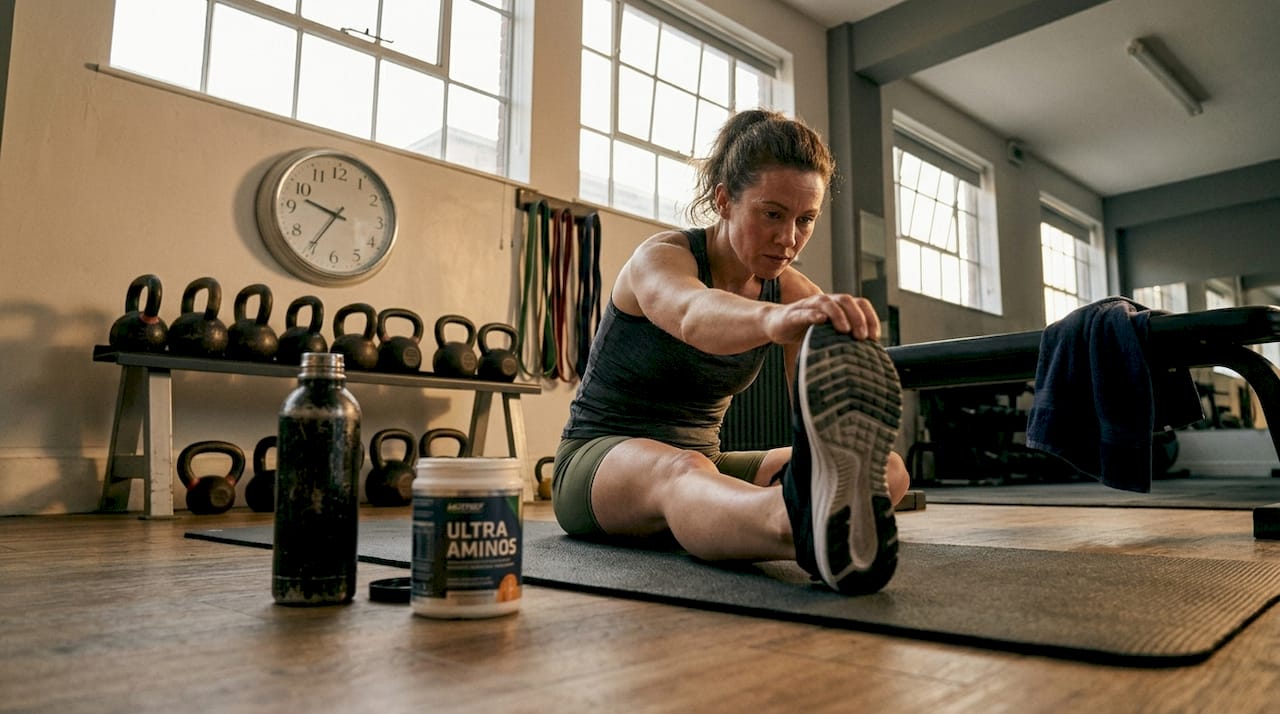
Beta-alanine builds intramuscular carnosine to buffer acidity and delay fatigue specifically in high-intensity efforts lasting 1 to 10 minutes, with a standard loading protocol of 4 to 6 g per day over a 2 to 4 week period. This isn’t a supplement you take once and feel immediately. It builds in your muscles over time, which actually makes it ideal for consistent training blocks.
The most common side effect is paraesthesia, a harmless tingling sensation, usually felt in the face, neck, and hands shortly after taking a dose. It fades within an hour and isn’t dangerous.
Best use cases for female athletes:
- Interval training sessions with repeated hard efforts (30 seconds to 4 minutes)
- CrossFit workouts with mixed cardio and lifting
- Time trial efforts in cycling, rowing, or running
- Tournament sport with repeated high-intensity bouts across a day
“If your sport involves repeated efforts above your lactate threshold, beta-alanine is one of the few supplements with genuine, replicated evidence behind it.” This isn’t a soft claim. Multiple meta-analyses support this for high-intensity work.
Pro Tip: Split your daily beta-alanine dose across three or four smaller servings to reduce tingling without compromising the loading effect. Many women find 1.5 g four times daily far more comfortable than a single 6 g dose.
For a full breakdown of how beta-alanine compares to other ingredients, our pre-workout powder comparisons run through the data in detail.
Caffeine: Backed by broad endurance data
Beyond muscle-level buffering, explore a supplement that affects both the brain and the body.
Caffeine works differently from beta-alanine. Rather than changing what’s happening chemically in your muscle fibres, it acts centrally, blocking adenosine receptors in the brain that would otherwise signal fatigue. The result is lower perceived exertion, reduced pain perception, and a genuine improvement in sustainable output.
Caffeine consistently improves endurance performance, with effective dosing of 200 to 400 mg, or 3 to 6 mg per kg of body weight, taken 30 to 60 minutes before exercise. For a 65 kg woman, that puts your sweet spot at roughly 195 to 390 mg. Starting at the lower end is sensible if you’re not a regular coffee drinker.
Practical scenarios where caffeine genuinely helps:
- Race day, particularly when nerves blunt your natural alertness
- Long training sessions (90 minutes or more) where motivation dips mid-session
- Multi-event tournaments or back-to-back training days
- Early morning sessions when you’re still fighting sleep inertia
Who should cycle or avoid caffeine:
- Women experiencing significant anxiety or sleep disruption around hard training blocks
- Those sensitive to hormonal fluctuations that already affect mood and focus
- Anyone who relies on caffeine daily and has lost sensitivity to its effects
Caffeine tolerance builds quickly. Cycling off for 10 to 14 days every six to eight weeks restores sensitivity and keeps your race-day dose effective. Our top pre-workout supplement picks include options with calibrated caffeine doses designed for endurance athletes.
Dietary nitrates and beetroot: Natural blood-flow boosters
Having covered staple options, let’s assess one of the most popular plant-based supplements.
Nitrates, found abundantly in beetroot, leafy greens, and certain other vegetables, are converted in the body to nitric oxide, which causes blood vessels to relax and widen. The theory is compelling: better blood flow means more oxygen delivered to working muscles, which means better endurance. And in some populations, the theory holds up.
Dietary nitrates show mixed endurance evidence, with practical dosing of 300 to 600 mg of nitrates taken two to three hours before activity. The catch is that effects are notably less certain among elite athletes and female cohorts specifically.
| Factor | Beetroot/nitrate supplement | Practical note |
|---|---|---|
| Mechanism | Nitric oxide, vasodilation | Works via blood-flow |
| Timing | 2 to 3 hours pre-exercise | Plan ahead |
| Evidence strength | Moderate, mixed in women | Worth trialling |
| Best for | Sub-elite, recreational endurance | Less benefit at elite level |
| Food source | Beetroot juice, spinach, rocket | Whole-food options viable |
Who is most likely to benefit:
- Recreational and sub-elite female endurance athletes
- Those training at altitude or in low-oxygen environments
- Athletes earlier in their development whose blood-flow efficiency has room to improve
To understand the mechanism in detail, our guide on how nitrates boost performance is worth reading alongside our overview of beetroot supplement research.
Iron: Essential and unique for female endurance
Alongside performance aids, one real make-or-break for women’s endurance is a basic nutrient, not a booster.
Iron sits in a different category from every other supplement in this article. It’s not a performance enhancer in the traditional sense. It’s a nutrient that female endurance athletes routinely deplete, and when levels drop, no amount of beta-alanine or beetroot juice will save your race.
Iron deficiency directly impairs endurance in female athletes, and correcting deficiency with approximately 100 mg per day can meaningfully improve performance in iron-deficient women. This isn’t marginal. Iron is central to haemoglobin production and oxygen transport, so running low is essentially like training at altitude without the altitude adaptations.
Red-flag symptoms to watch for:
- Persistent fatigue that sleep doesn’t fix
- Declining performance despite consistent training
- Heavy menstrual cycles (a major driver of iron loss)
- Breathlessness at effort levels that previously felt manageable
- Poor concentration and low motivation during sessions
“Low ferritin is one of the most commonly missed causes of underperformance in female athletes, and it can sit just within ‘normal’ ranges on a standard blood panel while still impairing your endurance.”
Ask your GP for a full iron panel including ferritin, not just haemoglobin, for a complete picture. And note that supplementing iron without confirmed deficiency carries its own risks. Our supplement guidance for women covers how to interpret your results and when supplementation is warranted.
Menthol and taurine: Hidden tools for heat-stress endurance
For those facing tough environmental extremes, some lesser-known but evidence-supported choices emerge.
Summer races, indoor tracks, or hot-weather training blocks create a different physiological challenge. Your body is simultaneously trying to exercise hard and manage core temperature, and the cognitive load of heat stress can cause you to slow down well before your muscles actually give out.
Menthol and taurine show statistically significant endurance benefits in heat-stress conditions, impacting both thermal comfort and endurance performance. Menthol works by activating cold receptors on the skin and in the mouth, creating a cooling sensation that reduces perceived effort even when core temperature hasn’t changed. Taurine appears to support cardiovascular function and reduce cellular stress under heat load.
| Supplement | Primary effect | Best context | Notes |
|---|---|---|---|
| Menthol (mouth rinse or gel) | Cooling sensation, reduced effort perception | Hot weather racing, indoor HIIT | Rinse, don’t swallow for best results |
| Taurine | Cardiovascular support, reduced heat stress | Prolonged heat-stress events | Stack with electrolytes |
| Beta-alanine | Acid buffering | High-intensity intervals | Heat independent |
| Caffeine | Central fatigue reduction | Any high-intensity event | Taper tolerance before key races |
Who should consider menthol and taurine:
- Athletes competing in summer events or hot indoor environments
- Anyone completing events longer than 45 minutes in temperatures above 22 degrees Celsius
- Those who notice their pace drops disproportionately in warm conditions
Test both options in training before race day. For a full breakdown of managing endurance in heat conditions, including electrolyte strategy, we have a detailed resource. External strategies for tips for hot-weather performance are also worth reviewing in preparation.
Supplements with limited evidence: Know what’s uncertain
But not every supplement tested makes the cut, and transparency around weaker options is vital.
The supplement industry is built on optimism, and sometimes genuine curiosity about a compound outpaces the actual evidence. L-citrulline is a clear example. Often marketed alongside nitrates for blood-flow enhancement, L-citrulline showed no significant endurance benefit in at least one well-controlled crossover study, and female-specific trends were not statistically significant.
This doesn’t mean L-citrulline is useless for all populations in all contexts. But it does mean female endurance athletes in their 30s and 40s shouldn’t prioritise spending on it ahead of better-evidenced options. Female underrepresentation in elite research adds further uncertainty, making it difficult to draw firm conclusions about many compounds that haven’t been specifically trialled in women.
Common supplements with uncertain evidence for female endurance athletes:
- L-citrulline (modest pump effects, limited endurance benefit shown)
- BCAAs (useful for recovery, overrated for endurance performance mid-session)
- HMB (some muscle-preservation data, limited endurance benefit)
- Collagen peptides (joint benefit possible, minimal endurance effect)
If you’re considering moving away from synthetic blends towards evidence-led natural options, our guide on transitioning to natural supplements offers a structured approach. For context on building endurance naturally without relying on unproven compounds, that external resource is also relevant.
Summary table: Comparing endurance supplement options for women
To wrap up, see how these options stand head-to-head and which may best match your performance needs.
| Supplement | Mechanism | Evidence strength | Best use case | Female-specific note |
|---|---|---|---|---|
| Beta-alanine | Acid buffering via carnosine | Strong | Intervals, CrossFit, time trials | Tingling; split doses |
| Caffeine | Central fatigue reduction | Very strong | Races, long training | Cycle to maintain sensitivity |
| Dietary nitrates | Vasodilation, blood flow | Moderate, mixed | Sub-elite endurance | Less certain in elite women |
| Iron | Oxygen transport | Critical if deficient | All endurance | Test first; don’t supplement blindly |
| Menthol | Cooling perception | Growing evidence | Hot-weather events | Rinse form preferred |
| Taurine | Heat stress, cardiovascular | Growing evidence | Prolonged heat events | Stack with electrolytes |
| L-citrulline | Blood flow | Weak for endurance | Unclear | Not recommended as priority |
Our expert perspective: The real-world approach for female endurance athletes
Even with the evidence as a guide, a practical strategy needs to balance science with lived experience, and that’s where we find most resources fall short.
The honest truth is that a lot of supplement marketing is built for male physiology and marketed at women with minor rebranding. The mechanisms may be the same, but the dosing thresholds, hormonal interactions, and practical tolerance often aren’t. We’ve seen female athletes spend serious money on trendy pre-workout blends while quietly running on depleted ferritin levels that are quietly sabotaging every session.
Our view: fix deficiencies first, always. Iron, vitamin D, and magnesium should be verified before you even consider adding a performance booster. Once your nutritional baseline is solid, beta-alanine and caffeine are the two options with the most consistent real-world backing for high-intensity sport. Layer them purposefully, not simultaneously at first.
What’s genuinely missing in the research is long-term female-specific data. Most trials run 4 to 8 weeks with male subjects. Nobody has systematically tracked how beta-alanine loading interacts with the luteal phase, how caffeine sensitivity shifts perimenstrually, or how nitrate absorption varies with hormonal fluctuations. These are real questions that matter to you, and they deserve real answers.
Until that research matures, our recommendation is to track your own data rigorously. Note where you are in your cycle, what you took, and how training felt. Over three to four months, patterns emerge that no study could prescribe for you. For broader guidance on energy supplement advice tailored to active women, that resource gives practical starting points.
Regular medical checks, honest performance tracking, and a willingness to adapt are more valuable than any single supplement.
Looking to enhance your endurance naturally?
If you’ve worked through this article and you’re ready to act on it, Interval makes that straightforward. We’ve built our range specifically around natural, evidence-backed ingredients for athletes doing serious work, not casual gym-goers looking for a shortcut.
Our Starter Bundle for optimal endurance brings together the key ingredients covered here in calibrated doses, designed for women who train hard and want clean, purposeful supplementation. Every formula is built around transparency and real-world efficacy. Browse the full Interval natural supplement shop to find the combination that fits your sport, your schedule, and your goals.
Frequently asked questions
Is beta-alanine safe for women?
Beta-alanine is generally safe at recommended doses of 4 to 6 g per day; the main side effect is tingling, which can be managed by splitting doses across the day into smaller servings.
How do I know if I need iron?
Persistent fatigue, heavy periods, or unexplained performance decline are key warning signs; ask your GP for a ferritin test, since correcting iron deficiency with ~100 mg/day can meaningfully restore endurance capacity in deficient women.
Do natural supplements actually work better than synthetic ones?
Both can be effective if evidence-backed; what matters most is quality, purity, and your individual response, since efficacy varies by dosing, timing, and individual traits regardless of whether the source is natural or synthetic.
Is beetroot extract more effective than caffeine for endurance?
Caffeine has stronger and more consistent evidence for endurance performance than beetroot; caffeine at 3 to 6 mg/kg reliably reduces perceived exertion, while dietary nitrates show mixed results especially in female and elite cohorts.
Should all female athletes supplement taurine and menthol for heat?
Only athletes training or competing in genuinely hot conditions are likely to benefit; both compounds show significant endurance benefits in heat-stress conditions but should always be tested in training before being used on race day.
Recommended
- Natural supplement intake guide for female athletes 2026 – Interval
- Supplement testing: enhance performance and safety in 2026 – Interval
- Enhance athletic performance with real food supplements – Interval
- Top supplements for female Hyrox athletes: boost performance – Interval
- Sustainable gift ideas for athletes: eco picks that perform - Gripnatic