


Why cycle hydration formulas matter for performance
TL;DR:
- Cycle hydration formulas are specially designed drinks containing electrolytes and carbohydrates to replenish fluids lost during intense cycling. They help maintain endurance, power, and safety by preventing dehydration and electrolyte imbalances during rides over 60 minutes. Proper hydration strategies include measuring sweat loss, pre-hydrating, and using tailored formulas based on ride duration and conditions.
Cycle hydration formulas are specialised drinks designed to replenish fluids and electrolytes lost during intense cycling, directly protecting your endurance, power output, and recovery. Plain water cannot replace what sweat strips from your body during hard efforts. The science is clear: losing just 2% of body weight through dehydration cuts cycling endurance by 10–20% and power output by up to 11%. Understanding why cycle hydration formulas exist, and how to use them correctly, is the difference between a strong ride and a blown-up one.
Why does dehydration hit cyclists so hard?
Dehydration does not just make you thirsty. It changes your physiology in ways that directly reduce your ability to ride hard and stay safe.
A 1% fluid loss produces a 5.8% slower ascent and measurably higher perceived effort in studied cyclists. That is a significant cost for what feels like a minor sweat. At 4% body weight loss, performance drops by approximately 30%. For a 75kg rider, that is just 3 litres of fluid.
“Dehydration causes thicker blood, a higher core temperature, reduced concentration, and slower reaction times. On a road, that is a safety issue, not just a performance one.”
The physiological chain is straightforward. Thicker blood forces your heart to work harder to deliver oxygen to working muscles. Core temperature rises because your body cannot cool itself efficiently. Your brain receives less oxygen, which slows decision-making and reaction speed. The result is a rider who is weaker, slower, and less alert.
Electrolyte loss compounds every one of these effects. Sodium is the primary electrolyte lost in sweat, and it governs fluid balance across your cells. Without adequate sodium, your muscles cramp, your fluid retention drops, and you become vulnerable to hyponatremia, a dangerous condition caused by drinking excessive plain water without replacing sodium. Understanding electrolyte use for endurance is not optional for cyclists training at high intensity.

Water vs. hydration formulas: which should you use?
The answer depends on ride duration, intensity, and conditions. Not every session demands a hydration formula.
Rides under 60 minutes in mild weather typically require plain water only. Your glycogen stores are sufficient, sweat losses are manageable, and electrolyte depletion is minimal. Reaching for a formula for a short, easy spin is unnecessary.
The calculation changes sharply once you cross the 60–90 minute threshold, ride in heat, train indoors, or push high intensity efforts. At that point, plain water becomes a liability rather than an asset.
| Factor | Plain Water | Hydration Formula |
|---|---|---|
| Ride under 60 min, mild weather | Sufficient | Not required |
| Ride over 90 min or in heat | Insufficient | Recommended |
| Indoor training (high sweat rate) | Insufficient | Recommended |
| Post-ride rehydration | Partial | Preferred |
| Risk of hyponatremia | Higher with excess intake | Lower with sodium present |
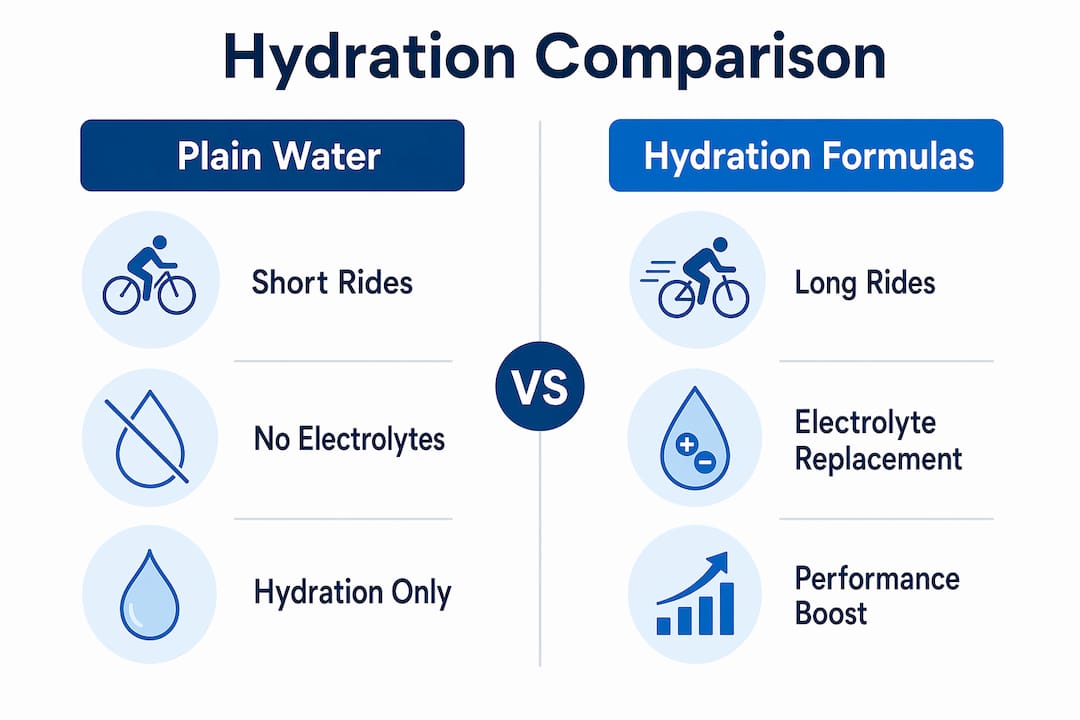
Sodium facilitates intestinal co-transport of water and carbohydrates, and it stimulates thirst. This means electrolyte drinks do not just replace what you lose. They actively improve how well your body absorbs and retains the fluid you drink. Plain water, consumed in large volumes without sodium, dilutes blood sodium levels and can trigger hyponatremia. You can read more about hyponatremia risks in sport and why electrolyte balance matters beyond simple thirst.
Pro Tip: If you are training indoors on a turbo trainer, your sweat rate is typically 20–30% higher than outdoors due to reduced airflow. Start using a hydration formula from the first 30 minutes of any indoor session.
What is actually inside a modern hydration formula?
Modern cycle hydration formulas are not simply salt and sugar dissolved in water. The best ones are built around a specific physiological purpose.
The core electrolytes are sodium, potassium, and magnesium. Sodium governs fluid balance and muscle contraction. Potassium supports nerve signalling and prevents cramping. Magnesium is involved in over 300 enzymatic reactions, including energy production and muscle relaxation. Together, they replicate the electrolyte profile of sweat more accurately than any single-ingredient product.
Carbohydrates are the second major component. A well-formulated hydration drink uses a blend of glucose and fructose, which use different intestinal transporters and allow higher absorption rates than glucose alone. This matters on rides over two hours, where glycogen depletion becomes a real threat to performance.
Modern hydration formulas are evolving to integrate prebiotic fibres and branched-chain amino acids (BCAAs) alongside electrolytes. Prebiotic fibres support gut health during prolonged efforts, when gastrointestinal distress is a common performance limiter. BCAAs reduce muscle protein breakdown during long rides and support recovery after them. These multi-functional formulas represent a meaningful step beyond single electrolyte replacements.
Pro Tip: Match your formula to your sweat composition, not just a brand name. Choosing a hydration drink that reflects your actual sweat losses is more effective than selecting the most marketed product.
Selecting the right formula also depends on ride type. For a two-hour road ride in moderate heat, a sodium-forward electrolyte formula with moderate carbohydrates is appropriate. For a four-hour sportive, you need a formula with higher carbohydrate content and BCAAs to protect muscle tissue. For a 45-minute threshold session, a lighter electrolyte mix without heavy carbohydrates is sufficient.
How to build a hydration plan that actually works
Effective hydration strategies for cycling are built on measurement, not guesswork. Here is a practical framework.
-
Establish your sweat rate. Weigh yourself without clothing immediately before and after a one-hour ride at race intensity. Every kilogram lost equals approximately one litre of fluid deficit. Do this in different conditions, as sweat rate varies significantly between summer and winter riding.
-
Pre-hydrate correctly. Drink 500–750ml of water two to three hours before your ride. This gives your kidneys time to process excess fluid and stabilises your starting hydration status.
-
Drink 500–750ml per hour during the ride. In heat or at high intensity, increase this to one litre per hour. Do not wait until you feel thirsty. Thirst is a late signal that dehydration has already begun.
-
Replace 125–150% of fluid lost after the ride. If you lost one litre during your session, drink 1.25–1.5 litres in the two hours following. This accounts for continued urinary losses during recovery. Your post-ride rehydration approach is as important as what you drink during the effort.
-
Adopt a dual-bottle strategy on longer rides. Elite cyclists separate electrolyte and carbohydrate mixes into different bottles to avoid gastrointestinal distress caused by highly concentrated fuel mixes. One bottle carries your electrolyte formula. The other carries your carbohydrate fuel. This is a tactic any serious recreational cyclist can adopt.
| Ride Duration | Conditions | Fluid Target | Formula Needed? |
|---|---|---|---|
| Under 60 min | Mild | 500ml water | No |
| 60–90 min | Moderate | 500–750ml | Electrolytes recommended |
| 90–180 min | Warm or intense | 750ml–1L/hr | Electrolytes and carbs |
| Over 180 min | Any | 750ml–1L/hr | Full formula with BCAAs |
One common mistake is attempting to replace 100% of sweat losses during the ride itself. Bodies cannot absorb fluid at the rate they lose it through sweat. Replacing around 75% of sweat loss during exercise is a practical and evidence-based target. The remainder is addressed in post-ride recovery.
Dr Impey confirms that electrolyte supplementation is warranted during heavy exercise and sweating, but is not necessary daily for sedentary individuals or those eating a balanced diet. This matters because it means you should time your formula use around your hard sessions, not treat it as a daily drink regardless of activity.
Key takeaways
Hydration formulas protect cycling performance by replacing electrolytes and fluid that plain water cannot adequately restore during efforts exceeding 60 minutes.
| Point | Details |
|---|---|
| Dehydration costs are steep | A 2% body weight loss cuts endurance by 10–20% and power by up to 11%. |
| Water alone has limits | Plain water without sodium risks hyponatremia on rides over 60–90 minutes. |
| Electrolytes improve absorption | Sodium drives intestinal co-transport of water and carbs, improving fluid retention. |
| Match formula to ride length | Short rides need water; rides over 90 minutes need electrolytes and carbohydrates. |
| Post-ride rehydration is non-negotiable | Replace 125–150% of fluid lost within two hours of finishing your session. |
The mistake most cyclists are still making
Most cyclists I speak to are either under-hydrating on hard sessions or drinking plain water in volumes that create their own problems. Neither approach is neutral. Both cost you performance.
The most common error I see is treating hydration as an afterthought. Riders will spend hours researching frame geometry or tyre pressure, then grab whatever is in the fridge before a three-hour ride. That disconnect is costing them more than any equipment choice ever could.
The second error is trusting thirst alone. Thirst is a useful signal for daily life. During intense cycling, it lags behind actual fluid deficit by enough to let performance decline before you notice. By the time you feel thirsty on a hard climb, you are already working against yourself.
What I find genuinely interesting is how much individual variation exists in sweat rate and sodium concentration. Two riders doing the same session in the same heat can have wildly different fluid and electrolyte needs. This is why the sweat rate test matters more than any generic recommendation. Build your plan around your own physiology, not an average.
The market for hydration formulas is also evolving fast. Products that combine electrolytes with prebiotic fibres and BCAAs are no longer niche. They reflect a real shift in how sports nutrition thinks about the gut-performance connection. For cyclists doing back-to-back training days, that recovery dimension is worth taking seriously. Check the athlete recovery checklist if you want a structured approach to managing cumulative training load.
Ignore the marketing noise around exotic ingredients. Sodium, potassium, magnesium, and a sensible carbohydrate blend will outperform any formula built on hype over evidence.
— Tom
Start your hydration right with Useinterval
Useinterval builds its electrolyte formulas around natural ingredients designed for high-intensity sport. Every product in the range is built to match what your body actually loses during hard efforts, not what looks good on a label.
The Useinterval Starter Bundle gives you a practical entry point into evidence-based hydration and recovery. It combines electrolyte support with the pre-workout nutrition cyclists need before intense sessions. If you are serious about protecting your performance on every ride, this is where to start.
FAQ
What are cycle hydration formulas?
Cycle hydration formulas are drinks containing electrolytes, carbohydrates, and sometimes additional compounds like BCAAs, designed to replace fluids and minerals lost through sweat during cycling. They go beyond plain water by supporting fluid absorption and muscle function during efforts over 60 minutes.
When should cyclists use a hydration formula?
Hydration formulas are recommended for rides exceeding 60–90 minutes, indoor training sessions, hot weather riding, and any high-intensity effort where sweat losses are significant. Rides under 60 minutes in mild conditions typically require plain water only.
Can drinking too much water during cycling be harmful?
Yes. Drinking large volumes of plain water without sodium replacement can cause hyponatremia, a dangerous drop in blood sodium levels. This risk increases on rides over 90 minutes where sweat losses are high and plain water is the only fluid consumed.
How much should i drink per hour on the bike?
The standard target is 500–750ml per hour, rising to one litre per hour in heat or during high-intensity sessions. Aim to replace around 75% of sweat losses during the ride, with the remainder addressed through post-ride rehydration.
Do i need electrolytes every day, even on rest days?
No. Electrolyte supplementation is warranted during heavy exercise and sweating, not as a daily supplement for normal activity levels. Reserve your hydration formula for training sessions and recovery days following hard efforts.