


Functional workout nutrition: enhance performance and recovery
TL;DR:
- Misunderstood nutrition, not effort, causes failures in female functional training.
- Proper peri-workout timing and balanced macros enhance performance and recovery.
- Whole foods are typically more effective than supplements for most women training at high intensity.
Most female athletes doing functional training are not failing because they lack effort. They are failing because they are misinformed about nutrition. The idea that more protein always means more muscle, or that carbohydrates are the enemy, leads to real performance losses. Limited female-specific data for high-intensity functional training means generic advice fills the gap, and most of it does not fit your physiology, your hormones, or your training demands. This guide cuts through the noise, giving you evidence-based strategies on fuelling, timing, and supplementation so you can train harder, recover faster, and stop second-guessing every meal.
Table of Contents
- Understanding functional workout nutrition
- Fuel timing and macronutrient essentials
- Whole foods vs. supplements: what truly works?
- Choosing evidence-based natural supplements
- The real-world challenge: what most guides miss
- Find your best-fit nutrition support
- Frequently asked questions
Key Takeaways
| Point | Details |
|---|---|
| Focus on food first | Whole foods should be your nutritional base, with supplements only added to address gaps or specific needs. |
| Carb and protein timing matters | Strategic timing around workouts, especially for women, is key for sustained energy and recovery. |
| Choose evidence-backed supplements | Select only those natural supplements with proven benefits, such as creatine and omega-3s for functional athletes. |
| Adapt to life’s realities | Long-term progress requires adjusting nutrition strategies to your lifestyle—not chasing perfection. |
Understanding functional workout nutrition
Functional workout nutrition is not just eating well around exercise. It is a targeted approach to fuelling full-body, high-intensity movements, sustaining output across a session, and accelerating recovery afterwards. Functional training, whether that is CrossFit, HYROX, or circuit-based conditioning, places unique demands on your body. It is dynamic, multi-joint, and metabolically taxing in ways that a steady-state run or isolated gym session simply is not.
For women specifically, the picture is more complex. Hormonal fluctuations across the menstrual cycle, perimenopause, and menopause all affect how your body uses fuel, handles stress, and repairs muscle. Body composition goals also differ, and the psychological pressure around food in sport is real. Your nutritional strategy needs to account for all of this, not just your macros on paper.
The core principles of functional workout nutrition come down to four areas:
- Balanced macronutrients: Protein, carbohydrates, and fats each play a distinct role. None should be eliminated.
- Nutrient timing: When you eat matters as much as what you eat, particularly around training.
- Hydration: Electrolyte balance directly affects power output and cognitive function during high-intensity work.
- Recovery focus: Nutrition after training is where adaptation actually happens.
Common myths still circulate in functional fitness communities. Carbohydrates are labelled as fattening when they are actually your primary fuel for high-intensity output. Supplements are marketed as essential when whole foods cover most needs. Extreme protein intakes are promoted when sports nutrition for high intensity research shows diminishing returns above certain thresholds.
“Personalisation is not a luxury in functional training nutrition. It is the baseline requirement. What works for a 28-year-old male athlete will not automatically work for a 42-year-old woman doing five HYROX sessions a week.”
The honest reality is that female-specific HIFT data remains scarce. This means you need to build your strategy on solid principles, track how your body responds, and adjust accordingly.
Fuel timing and macronutrient essentials
Nutrition timing is one of the most misunderstood areas in functional fitness. Many women either eat too little before training or ignore post-workout nutrition entirely. Both mistakes cost you performance and recovery.
Here is a practical step-by-step framework for peri-workout nutrition:
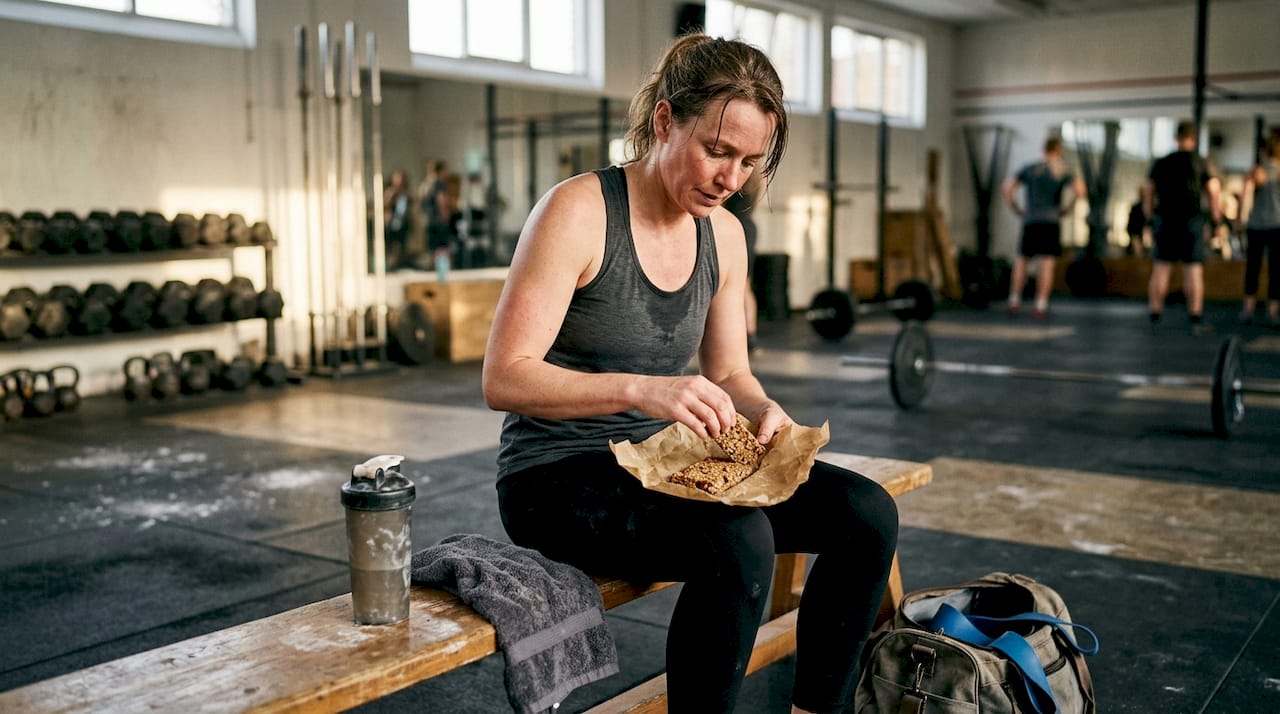
- Pre-workout (60 to 90 minutes before): Aim for a meal with moderate carbohydrates, moderate protein, and low fat. Think oats with Greek yoghurt, or rice cakes with nut butter and banana. This primes glycogen stores and reduces muscle breakdown.
- Intra-workout (during sessions over 90 minutes): If your session is under 90 minutes and you are well-fuelled beforehand, intra-workout nutrition is largely unnecessary. For longer sessions or fasted training, essential amino acids for women can protect muscle and sustain output.
- Post-workout (within 30 to 45 minutes): Prioritise protein and fast-digesting carbohydrates. This window is critical for muscle repair and glycogen replenishment. Research on post-workout protein recovery consistently supports hitting this window, particularly for women in perimenopause whose recovery window may be shorter.
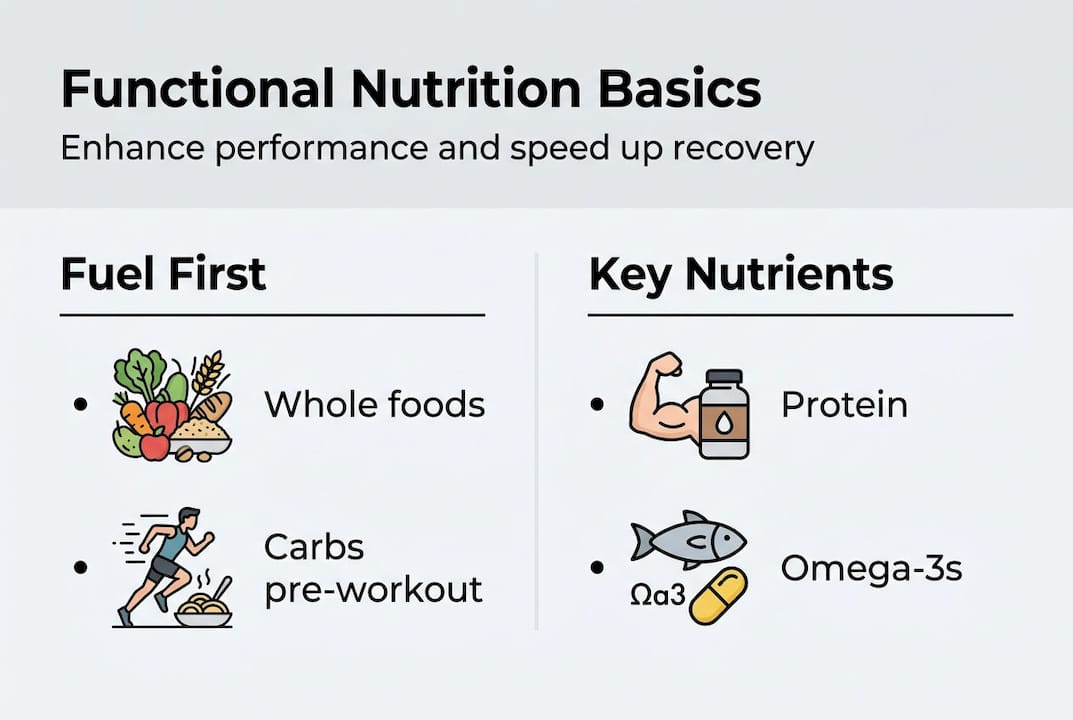
For macronutrient ratios, a 6-week HIFT programme showed strength and endurance improvements of 3 to 6% without protein supplementation in well-fed participants. This tells you that getting your base diet right matters far more than stacking supplements on top of it.
Carbohydrates are non-negotiable for high-intensity output. Your muscles run on glycogen, and glycogen comes from carbohydrates. Low-carb approaches may work for endurance athletes at lower intensities, but for functional training they blunt power, speed, and recovery.
Pro Tip: If you train in a caloric deficit or during the luteal phase of your cycle, peri-workout nutrition timing becomes even more important. Your body is under additional stress, so tightening your nutrition windows helps protect lean mass and hormonal balance.
Women in perimenopause should pay particular attention here. The recovery window shortens to 30 to 45 minutes post-training during this phase, meaning delayed post-workout nutrition has a bigger negative impact than it would for younger athletes. Explore the full breakdown of intra-workout nutrition steps if you want to fine-tune this further.
Whole foods vs. supplements: what truly works?
The supplement industry is worth billions, and it is built partly on convincing you that food is not enough. For most female functional athletes eating a varied, adequate diet, that is simply not true.
Whole foods provide nutrients in combinations your body recognises and absorbs efficiently. They also deliver fibre, phytonutrients, and anti-inflammatory compounds that no capsule replicates. The case for whole-food nutrition for athletes is strong, particularly when your training volume is moderate and your diet is consistent.
| Supplement | Food equivalent | When useful | Limitation |
|---|---|---|---|
| Whey protein | Chicken, eggs, Greek yoghurt | Low dietary protein | Rarely needed if diet is adequate |
| Creatine | Red meat, fish | Strength and power goals | Poorly represented in plant-based diets |
| Omega-3s | Oily fish, flaxseed | Inflammation, recovery | Absorption varies by source |
| Adaptogens | No direct food equivalent | Stress, hormonal balance | Evidence still emerging |
| Caffeine | Coffee, green tea | Pre-workout energy | Tolerance builds quickly |
Indicators that a supplement may actually be justified include:
- You follow a plant-based or restrictive diet with documented nutrient gaps
- Your training frequency exceeds five sessions per week with high intensity
- You are in perimenopause or menopause and experiencing disrupted recovery
- Blood work shows a deficiency (iron, vitamin D, B12 are common in active women)
- Your stress load is consistently high and affecting sleep and recovery
Protein supplementation during a 6-week HIFT programme did not add to performance gains in athletes who were already meeting their dietary needs. This is a significant finding. It means that spending money on protein powder when your diet is already adequate is largely wasted.
Pro Tip: “Natural” on a supplement label means very little without third-party testing. Always choose products that are batch-tested and certified by an independent body. Explore female sports nutrition steps for a practical checklist on vetting what you buy.
Choosing evidence-based natural supplements
If your diet has genuine gaps, or your training load is exceptionally high, some natural supplements do have meaningful evidence behind them. The key is knowing which ones actually work for women doing functional training, and which are mostly marketing.
| Supplement | Recommended dose | Proven effects | Evidence strength for women |
|---|---|---|---|
| Creatine monohydrate | 3 to 5g per day | Strength, power, recovery | Strong, women have lower baseline |
| Omega-3 fatty acids | 1 to 3g EPA/DHA daily | Inflammation, joint health | Moderate to strong |
| Rhodiola rosea | 200 to 400mg daily | Stress adaptation, fatigue | Emerging, promising |
| Ashwagandha | 300 to 600mg daily | Cortisol, recovery, sleep | Moderate |
| EAAs or BCAAs | 5 to 10g around training | Muscle preservation when fasted | Moderate, context-dependent |
| HMB | 3g per day | Muscle retention | Mixed, weak for HIFT |
Creatine is arguably the most underused supplement by women. Women have a lower creatine baseline than men, which means the relative benefit of supplementing at 3 to 5g per day is proportionally greater. It supports strength, power output, and recovery without the hormonal risks associated with many other performance supplements.
Adaptogens such as Rhodiola and Ashwagandha are gaining traction in functional fitness for good reason. They address something most performance supplements ignore: the cumulative stress load of training hard while managing work, family, and life. Explore how adaptogens for recovery fit into a functional athlete’s routine.
Only a small fraction of supplements on the market have robust evidence specifically for high-intensity functional training in women. Most are extrapolated from male or endurance athlete data.
For anything beyond creatine, omega-3s, and adaptogens, the evidence is mixed at best. HMB, astaxanthin, and fucoidan all show weak or inconsistent results in women doing HIFT. Before adding any supplement, ask whether it addresses a specific gap in your diet or training. If you cannot answer that clearly, check the best pre-workout supplements guide to see what the evidence actually supports.
The real-world challenge: what most guides miss
Here is what most nutrition articles will not tell you: the research is conducted in controlled environments with motivated participants and consistent schedules. Your life is not a lab. You have early starts, late finishes, children, stress, social dinners, and weeks where sleep is a distant memory.
Rigid meal plans fail most women not because of poor willpower but because they are built for ideal conditions that rarely exist. The athletes who see consistent progress are the ones who build flexible, adaptable strategies. They know their non-negotiables, eat well most of the time, and do not catastrophise when life disrupts the plan.
Perimenopause and menopause add another layer that most guides gloss over. Hormonal shifts change how you respond to training stress, how quickly you recover, and how your body handles carbohydrates and protein. Trusting how you feel, tracking patterns, and adjusting your approach is not a weakness. It is intelligent practice. Explore natural ways to boost focus if mental sharpness during training is also something you are working on. Consistency, not perfection, is what drives long-term results in functional fitness.
Find your best-fit nutrition support
If you have made it this far, you are already thinking about nutrition more strategically than most. The next step is putting it into practice with products and resources built specifically for high-intensity training.
Interval’s Starter Bundle for active women is designed for exactly this: clean, natural ingredients that support functional training without unnecessary additives or proprietary blends. Whether you are looking for a pre-workout that actually performs, or electrolytes that keep you going through longer sessions, it is a practical starting point. Visit Interval’s nutrition advice to explore further guides and build a nutrition strategy that evolves with your training.
Frequently asked questions
Is protein supplementation necessary for female functional athletes?
Protein supplementation is only necessary if your regular diet does not meet your needs. Protein supp during 6-week HIFT did not add to performance gains in women who were already well-nourished.
Which supplements actually benefit high-intensity female athletes?
Creatine, omega-3s, and adaptogens have the strongest evidence for strength and recovery. Women’s lower creatine baseline makes it particularly worth considering, while HMB and astaxanthin show mixed results.
How important is peri-workout nutrition timing for women?
Timing matters most when you train fasted, in a caloric deficit, or are perimenopausal. Perimenopause shortens the recovery window to 30 to 45 minutes post-training, making prompt post-workout nutrition more critical.
Do I need supplements if I eat a balanced diet?
For most women eating a varied, adequate diet, supplements are not essential. Whole foods are preferred as the foundation, with supplements filling specific, identified gaps rather than replacing good nutrition habits.
Recommended
- Post-Workout Recovery Process for Enhanced Athletic Results – Interval
- Sports Nutrition: Enhancing High-Intensity Results – Interval
- 7 Essential Steps for Intra-Workout Nutrition Checklist – Interval
- Performance Nutrition for Hyrox – Unlocking Endurance & Recovery – Interval
- Warum Ernährung den Trainingserfolg beeinflusst?